Outdoor and extreme venue WiFi deployment advisor
Model hardware specifications, weatherproofing ratings, and captive portal architectures for challenging outdoor environments.
Select the physical operating environment to view environmental specifications.
Adjust total exterior surface area requiring seamless client connectivity.
Point-to-multipoint 5 GHz or 60 GHz wireless links. Eliminates ground trenching costs.
Per AP (~20 W draw): 72-hour autonomy needs ~1.4 kWh usable storage (about 140 Ah of 12.8 V LiFePO4 at 80% depth of discharge) and roughly 300-800 W of panel, depending on latitude and season.
Mountain and high altitude deployment model
Sub-zero temperatures, snow loads, severe wind, and lightning exposure
Freezing temperatures reduce lithium battery capacity and increase cable brittleness
Offline-resilient captive portal caching for intermittent satellite backhaul
Speak with a wireless network engineer about site surveys, antenna patterns, and guest WiFi monetisation.
In January this year, there were more than 50 million public WiFi hotspots across the world - that equates to one WiFi hotspot for every 150 people on the planet!
But where are the world's most unusual WiFi hotspots?
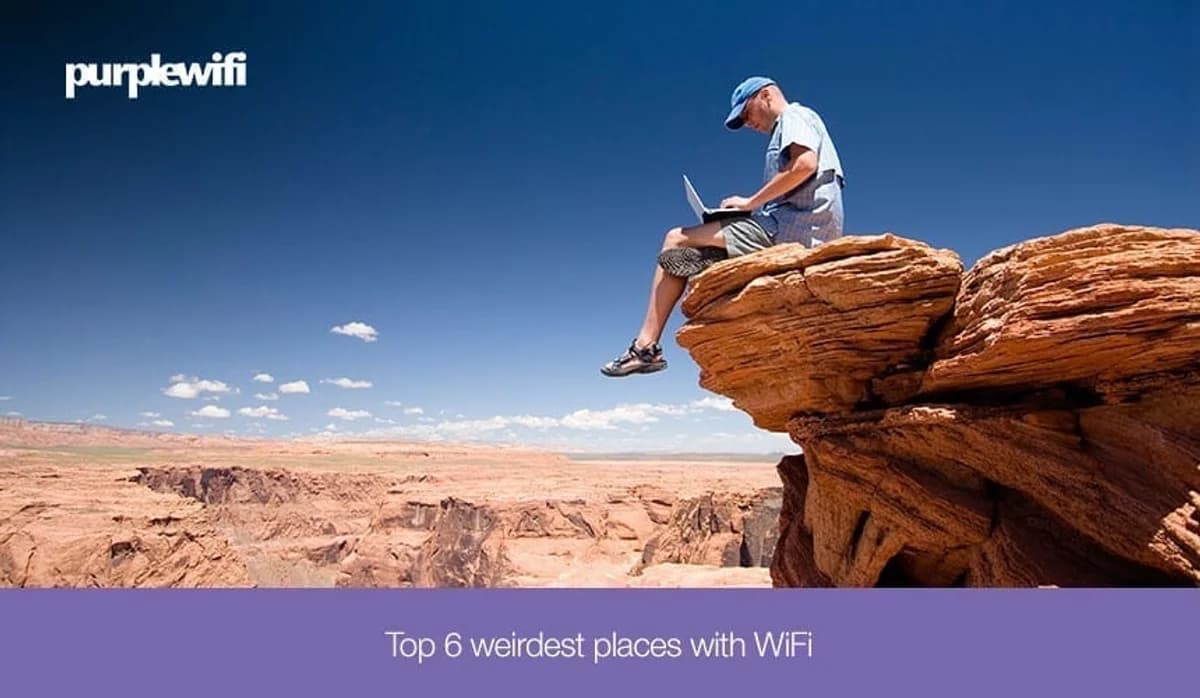
1) Mountains
In July it was announced that visitors to Japan's Mount Fuji would be able to access WiFi right at the summit. Now that's an eye-catching location for your Instagram updates. Actually, there are hotspots in eight locations around the mountain, including three cottages, the management centre and a tourist resort.
Mount Fuji wasn't the first mountain to get WiFi either. The world's highest mountain, Mount Everest, has WiFi hotspots at various points along the arduous climb. It's worth noting, however, that the last WiFi hotspot on the mountain is Everest Base Camp, which stands at 17,598ft. Unlike Mount Fuji, there is no WiFi right at the top of the mountain, so you're better off saving your summit selfies and uploading them after the trek back to Base Camp.
2) To infinity and beyond
Scientists were able to beam a WiFi signal all the way to the moon last year. Yes, you read that right, the moon. The idea was that if future generations of humans end up living on the moon, they'll be able to keep in touch with people back on Earth.
Those lucky enough to fly to the edge of space on Virgin Galactic (with their pockets feeling $250,000,000 lighter) will have WiFi access on SpaceShipTwo. Just imagine all those smug selfies showing an out-of-this-world view.
3) Ummm... donkeys?
Back down to Earth with a bump. In Kfar Kedem, Israel, WiFi is available in the most humble of places - on the backs of donkeys. Donkeys in a local amusement park have a small bag around their necks which contains a router, so tourists can document their journey. But what's the catch? Well, it turns out that the amusement park is a historical-themed resort, which attempts to give guests a taste of life in the first and second centuries AD. Pretty sure they didn't have WiFi then.
4) Cemeteries
It's probably not the cheeriest WiFi hotspot in the world, but visitors to San Jose Cemetery in Granada, Spain, can enjoy free internet access. It was introduced two years ago by popular demand - from the visitors, not the occupants I'd like to add!
Surprisingly, San Jose isn't the only cemetery with a free WiFi hotspot. A spokesperson for Oak Grove Cemetery in Paducah, Kentucky, said "It does sound strange to have a hotspot at a cemetery. But the purpose behind it makes sense. It is to help visitors with genealogy research."
5) Beaches
Sunseekers flocking to the white sands at Waikiki Beach in Hawaii have access to free WiFi should the urge to check emails and social media become too much to handle. It's probably best not to answer any work emails after a few piña coladas though. There's also WiFi access at hundreds of beaches around the world, including Britain's Brighton Beach, Rainbow Beach in Chicago and West Palm Beach in Florida to name a few.
6) The North Pole
Well, almost. In 2005, a pair of Intel employees set up a WiFi hotspot in what is ironically one of the coldest places on Earth. They were located at the Barneo Ice Camp, which is just 80 km from the North Pole. We'll let them off for not quite making it there - it's close enough.
It seems there's just no excuse for not being online in today's connected world.
Related Links