Hotel PMS and guest WiFi integration architecture evaluator
Model real-time guest authentication, room folio billing, and CRM profile synchronisation between leading hotel property management systems (PMS) and enterprise WiFi networks.
Oracle Hospitality Opera Cloud
Supports real-time room lookup, VIP code mapping, and automated guest room folio posting for premium WiFi tiers.
Cisco Meraki (MR series)
Meraki MR access points query the Purple captive portal. Authenticated guest sessions are authorised via RADIUS Access-Accept.
Running a hotel in 2026 without an integrated Property Management System (PMS) is like navigating a complex operation without instrumentation. A modern PMS provides the operational visibility needed to stay competitive, control costs, and maximize room revenue.
Understanding the technological needs of modern hotels requires specialized expertise, particularly when integrating core operational software with guest-facing amenities. When hoteliers explore smart digital touchpoints that elevate guest satisfaction, the PMS serves as the foundation upon which every guest interaction is built.
The core functions of a modern hotel PMS
To understand a Property Management System (PMS), view it as the central operational hub of your hotel. A modern PMS is not a single isolated tool; it is a suite of interconnected modules that handle every aspect of day-to-day hospitality operations.
When these functions operate in sync, they create a smooth experience for guests and hotel personnel. This unified architecture breaks down operational silos that frequently lead to guest frustration and front-desk friction.
Reservations and channel management
Every guest journey begins with a booking. A capable PMS includes a Central Reservation System (CRS) that acts as the single source of truth for room inventory. It aggregates bookings from all channels - including direct website engines, online travel agencies (OTAs) such as Booking.com and Expedia, phone reservations, and corporate booking tools - into a centralized dashboard.
Real-time synchronisation is essential. When a room is booked via an OTA, the PMS immediately updates availability across all connected distribution channels. This eliminates double-bookings, preventing operational strain and protecting guest trust.
Front desk and guest services
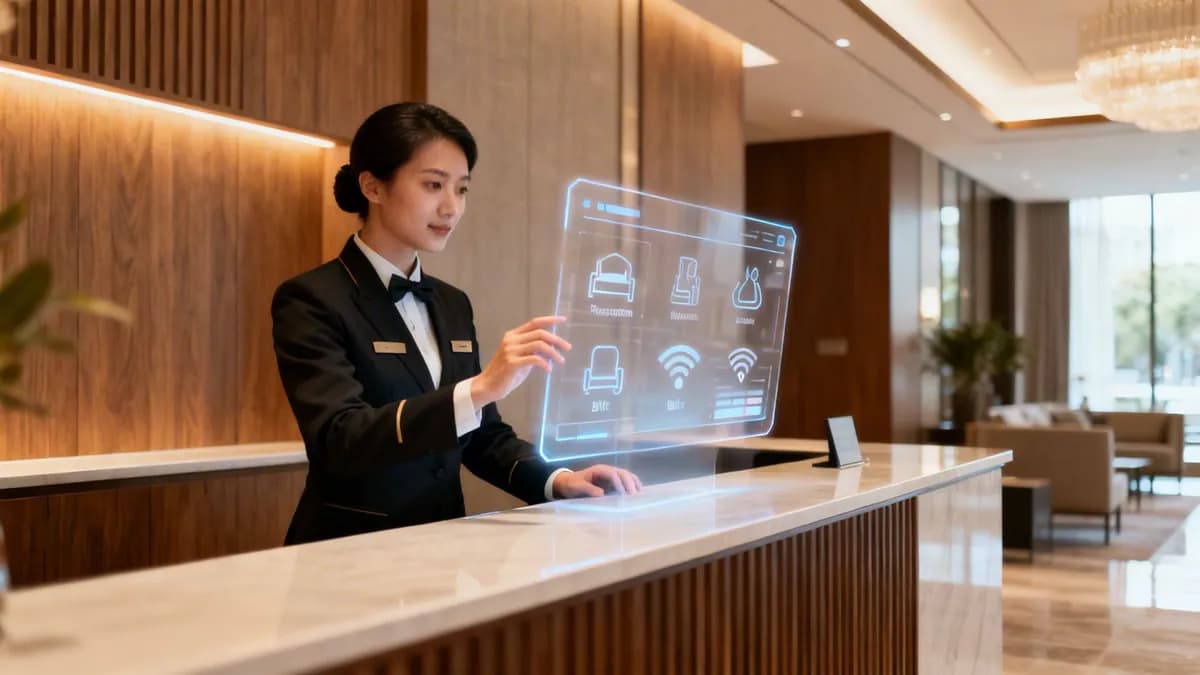
The front desk is the operational center of your hotel, and the PMS is its primary tool. It streamlines check-in and check-out procedures, transforming arrival queues into efficient, welcoming experiences.
Staff can retrieve reservations, assign clean rooms, process payments, and issue key cards in seconds. Modern PMS platforms also retain guest preference profiles - such as room location preferences or dietary needs - enabling front desk teams to deliver attentive, tailored service from the moment guests arrive.
Housekeeping and maintenance coordination
Arriving guests expect their rooms to be ready on schedule. An integrated PMS establishes a direct, real-time link between front desk personnel and housekeeping teams.
Housekeeping staff update room availability from "dirty" to "clean" or "inspected" via mobile devices. This status reflects immediately in the PMS, allowing front desk teams to assign rooms without delay and optimize daily turnover efficiency.
| Core Function | Primary Role | Key Benefit |
|---|---|---|
| Reservations Management | Centralises bookings from all direct and OTA channels. | Prevents overbooking and ensures accurate inventory control. |
| Front Desk Operations | Manages check-in, key issuance, and folio billing. | Speeds up check-in and enhances personalized guest service. |
| Housekeeping Sync | Tracks real-time room readiness via mobile updates. | Reduces room wait times and optimizes staff workflows. |
| Billing & Invoicing | Automates folio charges and payment processing. | Ensures financial accuracy and simplifies auditing. |
How a PMS and Guest WiFi integration creates a better stay
A Property Management System should not operate in isolation. Its full capability is realized when connected to your hotel network. Integrating your PMS with your hotel WiFi solutions transforms basic internet access into an automated tool for guest satisfaction and operational intelligence.
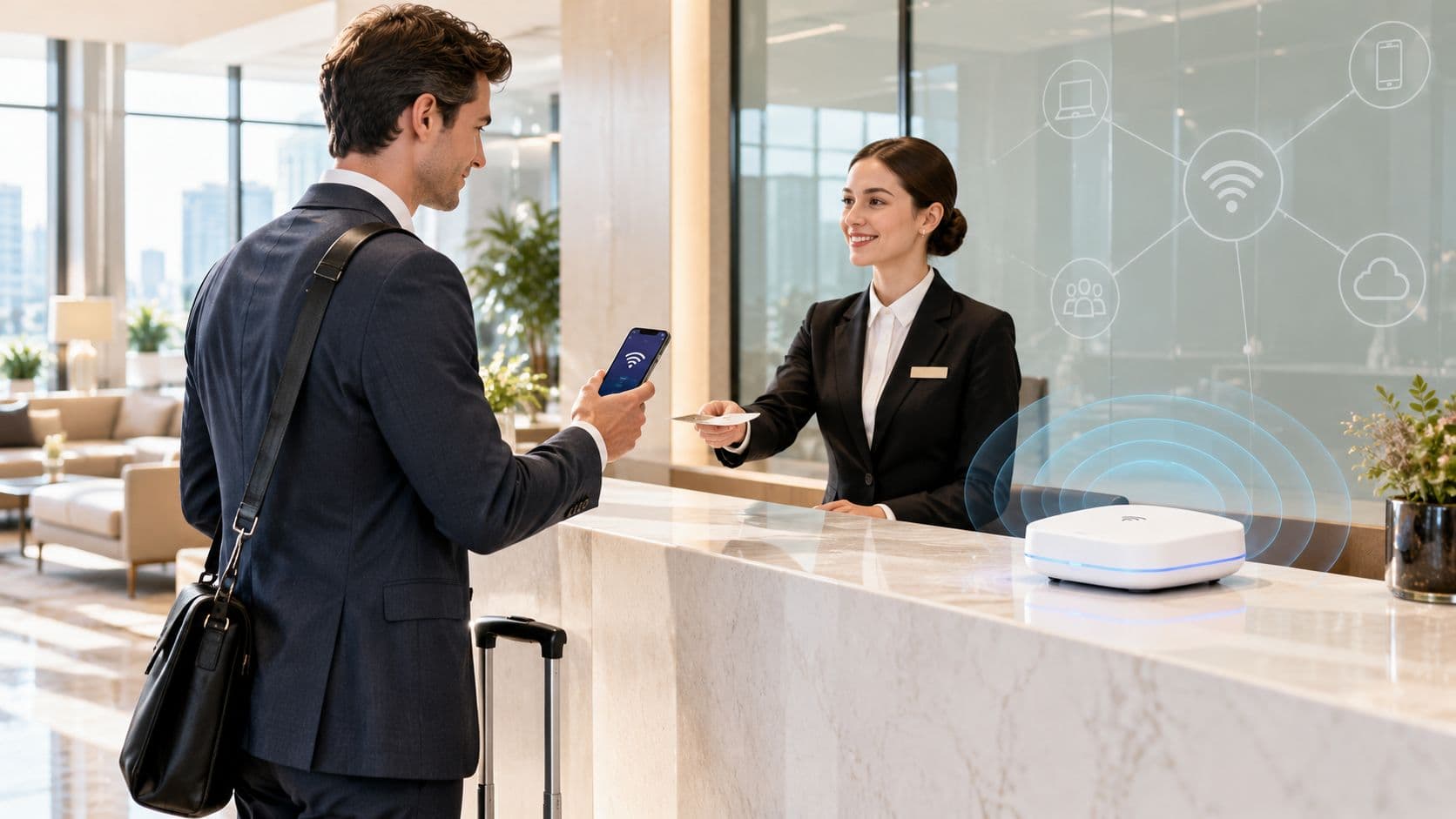
When a guest steps into the lobby, their device connects to the network automatically using PMS database verification. There is no need for printed login vouchers or manual front desk assistance.
Automating access and personalising the welcome
When your PMS and WiFi platform communicate, guest identity data grants network access securely. Authenticating via room number and guest surname or reservation ID ensures only registered guests access premium bandwidth tiering.
This integration also enables automated, targeted welcome communications. Upon connecting, guests can receive relevant digital welcome information - such as dining hours, spa promotions, or hotel amenity guides - directly on their screen. Discover more about building custom landing pages in our captive portal guide.
Turning connectivity into a strategic asset
In modern hospitality, high-speed WiFi is an essential service. Over 95% of hotel guests carry multiple connected devices and expect reliable connectivity for work and streaming. Connecting your PMS to your network transforms this utility into a valuable data source.
- Loyalty & Recognition: The network identifies returning guests upon arrival, enabling staff to deliver personalized greetings or loyalty credits.
- On-Site Footfall Analytics: Location analytics highlight high-density areas such as lounges, restaurants, or conference spaces, helping hoteliers optimize staffing and service hours. Learn how in our WiFi analytics guide.
- Targeted Post-Stay Marketing: Combining stay records with network engagement data helps marketing teams build relevant follow-up campaigns that drive direct repeat bookings.
Strengthening security and ensuring guest data privacy
A hotel PMS stores high-value data, including personal identification details, stay histories, contact information, and billing records. Protecting this data is both a legal mandatory and a vital component of brand trust.
Integrating a PMS with guest network authentication requires strict adherence to security frameworks, including GDPR, PCI-DSS, and ISO 27001 standards. Modern solutions isolate guest browsing traffic from internal hotel operational databases using VLAN segmentation, encrypted RADIUS authentication, and 802.1X protocols. Learn more on our data and security overview page.
Key data privacy safeguards for PMS integrations
- Zero-Trust Network Isolation: Guest devices are strictly segmented from the internal PMS database and point-of-sale (POS) networks.
- Encrypted Authentication: Credentials passed between the captive portal and the PMS database travel over encrypted TLS 1.3 channels.
- Automated Data Retention: Guest authentication logs and marketing opt-ins adhere to strict GDPR retention schedules and instant opt-out requests.
Leading hotel PMS platforms and integration standards
Modern hospitality platforms communicate through secure REST APIs and standard hotel technology protocols (such as HTNG standards). Leading PMS platforms that support deep WiFi integration include:
- Oracle Hospitality (Opera PMS): The enterprise standard for global hotel chains, supporting automated guest lookup and tiered bandwidth billing.
- Mews: A cloud-native PMS designed for modern boutique and multi-property operators with open API connectivity.
- Stayntouch: A mobile-first PMS enabling self-service check-in and mobile key access.
- Protel & Infor HMS: Scalable enterprise management platforms built for complex resort and hotel portfolio operations.
Frequently asked questions about hotel PMS and WiFi integration
What is a Property Management System (PMS) in hotel operations?
A Property Management System (PMS) is the core operational software used by hotels to manage room reservations, check-in and check-out workflows, housekeeping status, room pricing, and guest folio billing from a single centralized platform.
How does a hotel PMS integrate with Guest WiFi?
A hotel PMS integrates with Guest WiFi via secure APIs or RADIUS authentication protocols. When guests connect to the network, the login portal queries the PMS database to verify their room number and surname before granting access.
What are the top PMS platforms used in hospitality?
The leading hotel Property Management Systems include Oracle Hospitality (Opera PMS), Mews, Stayntouch, Protel, and Infor HMS. Each supports API integrations for guest WiFi authentication and marketing automation.
Is guest data secure when connecting PMS to WiFi authentication?
Yes. Enterprise PMS integrations use encrypted TLS 1.3 connections and VLAN network isolation to separate guest browsing traffic from internal PMS databases, ensuring compliance with GDPR and PCI-DSS standards.
How does PMS and WiFi integration increase direct hotel revenue?
Integrating PMS data with Guest WiFi allows hoteliers to capture verified first-party email profiles, deliver targeted on-site digital promotions, and run personalized post-stay marketing campaigns that drive direct bookings.