

LGPD del Brasile e WiFi per Ospiti: Una Guida alla Conformità
Questa guida di riferimento tecnica descrive in dettaglio come la LGPD del Brasile si applica alle implementazioni di WiFi per ospiti aziendali, concentrandosi sulla conformità del Captive Portal, sulle basi giuridiche per il trattamento e sull'intersezione con il Marco Civil da Internet. Fornisce indicazioni pratiche per l'implementazione a responsabili IT e architetti di rete per mitigare il rischio normativo mantenendo l'utilità della rete.
🎧 Ascolta questa guida
Visualizza trascrizione
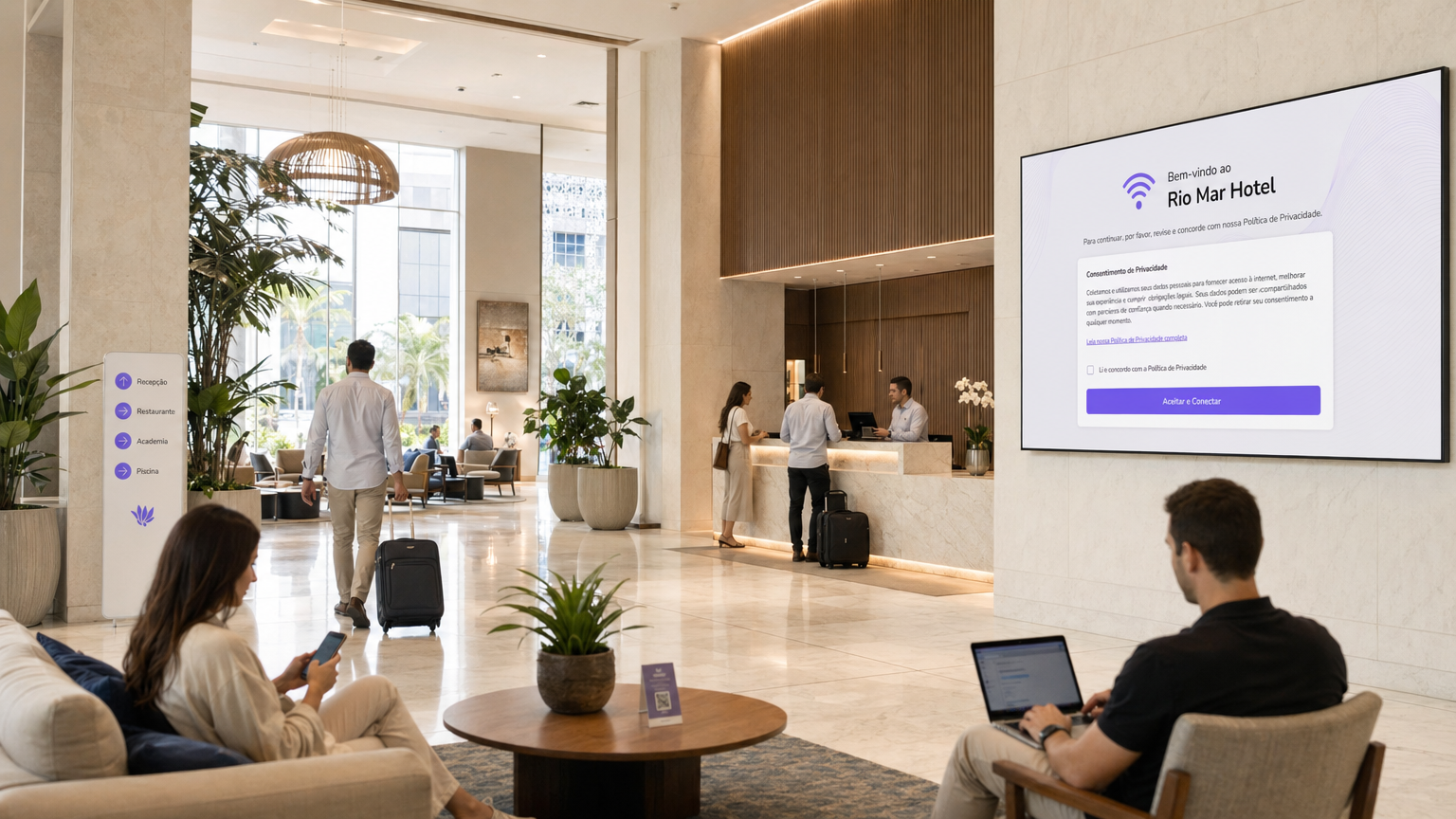
Riepilogo Esecutivo
Per i responsabili IT aziendali e gli architetti di rete che implementano WiFi per Ospiti nelle operazioni brasiliane, la Lei Geral de Proteção de Dados (LGPD) presenta una sfida di conformità distinta. Sebbene fortemente influenzato dal GDPR europeo, il quadro di protezione dei dati del Brasile contiene sfumature critiche, come un requisito obbligatorio per il Responsabile della Protezione dei Dati (DPO), finestre di risposta più strette per le richieste degli interessati e gli obblighi aggiuntivi del Marco Civil da Internet. L'Autoridade Nacional de Proteção de Dados (ANPD) ha costantemente intensificato la sua posizione di applicazione delle norme per tutto il 2024 e il 2025, passando da avvisi iniziali a sanzioni mirate. Questa guida fornisce un riferimento tecnico definitivo per strutturare l'autenticazione del Captive Portal, gestire i cicli di vita della conservazione dei dati e garantire una conformità robusta senza sacrificare l'intelligence operativa derivata dalla tua Analisi WiFi .
Approfondimento Tecnico: Il Quadro LGPD per gli Operatori di Rete
Quando un utente si connette a una rete pubblica o a una rete per ospiti aziendale, l'infrastruttura elabora intrinsecamente dati personali. Ai sensi della LGPD (Legge n. 13.709/2018), gli indirizzi MAC, le allocazioni IP, i timestamp delle sessioni e qualsiasi informazione raccolta tramite il Captive Portal costituiscono dati personali che richiedono una base giuridica per il trattamento.
Basi Giuridiche per l'Autenticazione del Captive Portal
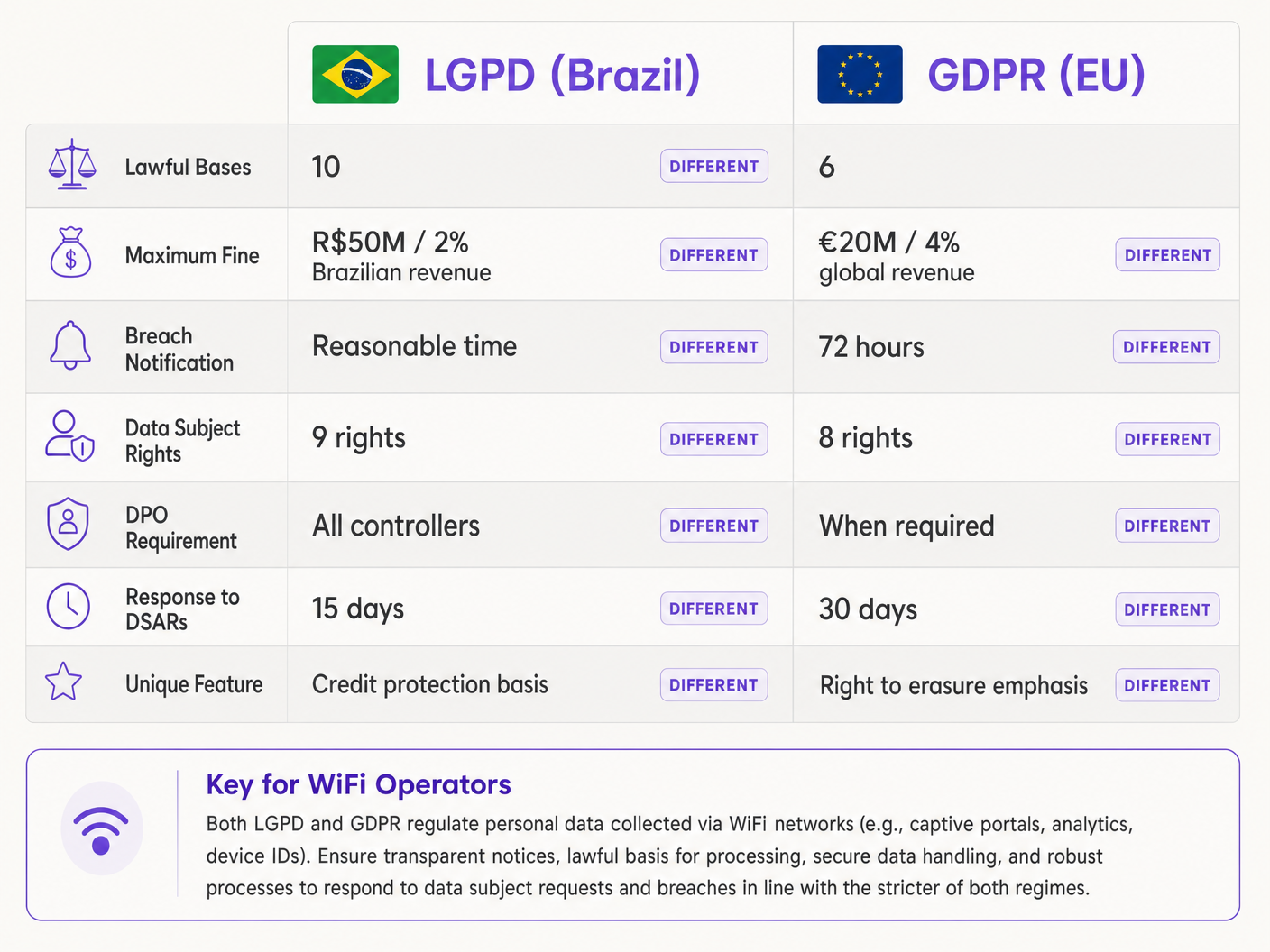
La LGPD stabilisce dieci basi giuridiche per il trattamento dei dati personali (Articolo 7). Per le implementazioni di WiFi per ospiti, gli architetti devono mappare attentamente i flussi di dati alla base appropriata:
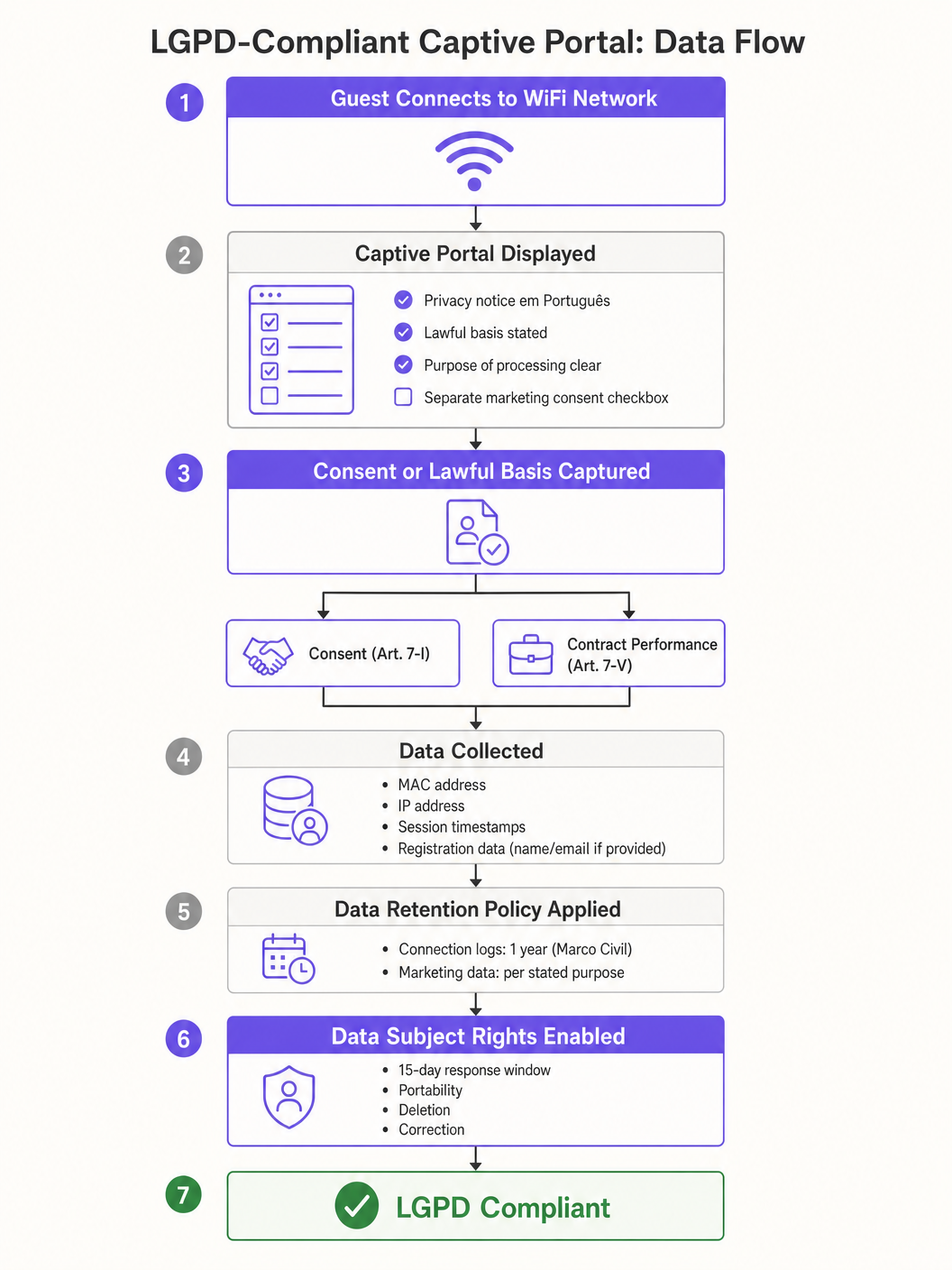
1. Consenso (Articolo 7, I) La base più comune per i luoghi pubblici (come gli ambienti Retail ). Il consenso deve essere libero, informato, inequivocabile e specifico. Il Captive Portal deve presentare una casella di controllo non selezionata che rimanda a un'informativa sulla privacy in lingua portoghese. Fondamentalmente, gli operatori non possono raggruppare il consenso all'accesso alla rete con il consenso al marketing; queste devono rimanere azioni distinte.
2. Esecuzione del Contratto (Articolo 7, V) Altamente rilevante per le implementazioni nel settore Ospitalità . Quando un ospite prenota una camera d'albergo che include esplicitamente l'accesso WiFi, il trattamento dei suoi dati di connessione è necessario per l'esecuzione di tale contratto. Ciò fornisce una base robusta per il provisioning di rete di base senza richiedere un consenso attivo tramite casella di controllo sul portale.
3. Interessi Legittimi (Articolo 7, IX) Questa base richiede un test di bilanciamento documentato che dimostri che gli interessi del titolare non prevalgono sui diritti fondamentali dell'interessato. Sebbene difendibile per la registrazione di base della sicurezza della rete e la mitigazione delle minacce, fare affidamento sugli interessi legittimi per l'analisi comportamentale o la profilazione di marketing comporta un rischio normativo significativo.
L'Intersezione con il Marco Civil da Internet
Un punto critico di fallimento per le implementazioni multinazionali è trattare la LGPD in isolamento. Il quadro dei diritti civili di internet del Brasile, il Marco Civil da Internet (Legge 12.965/2014), opera contemporaneamente. Ai sensi dell'Articolo 13 del Marco Civil, le entità che si qualificano come fornitori di connessione internet sono legalmente tenute a conservare i log di connessione per un minimo di un anno. Ciò prevale sui principi standard di minimizzazione dei dati della LGPD; una politica che afferma che "tutti i dati di connessione vengono eliminati dopo 30 giorni" è attivamente non conforme al Marco Civil.
Guida all'Implementazione: Architettare la Conformità
L'implementazione di un'architettura conforme richiede l'allineamento di controller di rete, provider di identità e piattaforme di analisi. Purple agisce come un provider di identità senza soluzione di continuità, consentendo un'autenticazione sicura e conforme, incluso il supporto per OpenRoaming con la licenza Connect, gestendo al contempo il ciclo di vita del consenso sottostante.
1. Configurazione del Captive Portal
- Localizzazione Linguistica: L'informativa sulla privacy e i meccanismi di consenso devono essere presentati in portoghese brasiliano.
- Architettura del Consenso Granulare: Implementare caselle di controllo distinte e non selezionate per (a) l'accettazione dei Termini di Servizio/Informativa sulla Privacy richiesta per l'accesso e (b) le comunicazioni di marketing opzionali.
- Identificazione del Titolare: Il portale deve identificare chiaramente il titolare del trattamento dei dati e fornire i dettagli di contatto diretti per il Responsabile della Protezione dei Dati (DPO) obbligatorio.
2. Gestione del Ciclo di Vita della Conservazione dei Dati
Configura politiche automatizzate per il ciclo di vita dei dati all'interno della tua piattaforma di analisi:
- Log di Connessione: Impostare la conservazione a esattamente un anno per soddisfare l'obbligo del Marco Civil, seguita da eliminazione automatica.
- Dati di Marketing/Profilo: Collegare la conservazione direttamente allo scopo dichiarato e garantire l'eliminazione immediata al ritiro del consenso.
3. Flusso di Lavoro per le Richieste di Accesso dell'Interessato (DSAR)
La LGPD impone una finestra di risposta di 15 giorni per le DSAR, la metà del tempo consentito dal GDPR. Gli operatori di rete devono implementare strumenti automatizzati per recuperare, esportare, correggere o anonimizzare i dati di un utente specifico nell'intera architettura WiFi entro questo lasso di tempo limitato.
Migliori Pratiche e Standard di Settore
Quando progetti la tua architettura di rete, considera queste migliori pratiche consolidate:
- Adottare l'Autenticazione Basata su Profilo: La transizione verso l'autenticazione basata su profilo (come Passpoint/OpenRoaming) riduce la dipendenza dalla raccolta ripetitiva di dati tramite Captive Portal, migliorando la sicurezza e semplificando l'impronta di conformità. Ciò si allinea con i moderni principi di Architettura dell'Internet delle Cose: Una Guida Completa .
- Nomina Obbligatoria del DPO: A differenza del GDPR, la LGPD richiede a tutti i titolari del trattamento di nominare un DPO. Assicurarsi che questo ruolo sia ricoperto e documentato pubblicamente secondo la Risoluzione ANPD 18.
- Valutazioni d'Impatto sulla Protezione dei Dati (DPIA): Condurre una DPIA formale prima di implementare analisi avanzate, come un Indoor Positioning System: UWB, BLE, & WiFi Guide , poiché il tracciamento della posizione comporta implicazioni significative per la privacy.
Risoluzione dei Problemi e Mitigazione del Rischio
Modalità di Errore Comuni
- La Trappola della Traduzione: Utilizzare il portoghese europeo invece del portoghese brasiliano per le informative sulla privacy, il che può invalidare il consenso informato.
- L'Eccesso di Cancellazione: Configurare politiche aggressive di cancellazione dei dati a 30 giorni che violano il mandato del Marco Civil di conservazione di un anno per i log di connessione.
- Il Pacchetto di Consenso: Costringere gli utenti ad accettare comunicazioni di marketing per ottenere l'accesso alla rete. Ciò viola il requisito della LGPD che il consenso sia dato liberamente.
La Realtà dell'Applicazione dell'ANPD
Sebbene le sanzioni iniziali dell'ANPD siano state relativamente basse rispetto all'ICO o al CNIL, la loro traiettoria di applicazione sta accelerando. Le azioni recenti hanno preso di mira la condivisione impropria dei dati e le misure di sicurezza inadeguate. La sanzione massima è del 2% del fatturato annuo brasiliano (con un limite di R$50 milioni per violazione), rendendo la conformità una priorità a livello di consiglio di amministrazione per gli operatori aziendali.
ROI e Impatto sul Business
Investire in un'architettura WiFi robusta e conforme alla LGPD offre un valore aziendale misurabile che va oltre la mitigazione del rischio. Un processo di autenticazione trasparente e sicuro crea fiducia negli utenti, aumentando i tassi di conversione del portale. Inoltre, utilizzando una piattaforma conforme come Purple, le sedi possono sfruttare in sicurezza la monetizzazione dei media retail e l'analisi operativa senza esporre l'azienda a sanzioni normative. Il ROI è calcolato non solo nelle multe evitate, ma nella capacità sostenuta di generare intelligence sui dati di prima parte nel mercato brasiliano.
Briefing Podcast
Ascolta il nostro briefing completo di 10 minuti sull'architettura della conformità LGPD per le reti WiFi aziendali:
Termini chiave e definizioni
Autoridade Nacional de Proteção de Dados (ANPD)
Brazil's national data protection authority, responsible for issuing guidance, auditing compliance, and enforcing administrative sanctions under the LGPD.
IT teams must monitor ANPD resolutions (such as Resolution 18 regarding DPOs) to ensure their technical configurations remain aligned with regulatory expectations.
Marco Civil da Internet
Brazil's internet civil rights framework (Law 12,965/2014) which mandates specific data retention periods for internet connection providers.
Network architects must configure storage systems to retain connection logs for one year to satisfy this law, running parallel to LGPD requirements.
Lawful Basis
The specific legal justification required under Article 7 of the LGPD to process personal data, such as Consent or Contract Performance.
Before deploying a captive portal, the IT team must document exactly which lawful basis applies to the data being collected to survive an ANPD audit.
Data Subject Access Request (DSAR)
A formal request from an individual to access, correct, anonymise, or delete their personal data held by a controller.
WiFi operators must have automated tooling to process these requests across all databases within the strict 15-day window mandated by the LGPD.
Data Protection Officer (DPO)
The individual designated by the controller to act as a communication channel between the controller, data subjects, and the ANPD.
Unlike GDPR, the LGPD requires all entities processing personal data to appoint a DPO and publicly display their contact information on the captive portal.
Profile-Based Authentication
A secure method of network access (e.g., OpenRoaming) where devices authenticate automatically using a cryptographic profile rather than a web-based captive portal.
Reduces compliance overhead by minimizing repetitive data collection and relying on established identity providers.
Connection Logs
Technical metadata generated during network access, including IP addresses, MAC addresses, and session timestamps.
Must be securely stored for exactly one year under the Marco Civil, requiring specific configuration in the network controller or analytics platform.
Anonymisation
The process of irreversibly altering personal data so that it can no longer be attributed to a specific individual.
Under the LGPD, users have an explicit right to request anonymisation of their data, which analytics platforms must support as an alternative to outright deletion.
Casi di studio
A multinational retail chain is expanding into São Paulo and needs to deploy guest WiFi across 50 stores. They currently use a standard GDPR captive portal that deletes all data after 90 days. How must they adapt this architecture for the Brazilian market?
The architecture requires three critical modifications. First, the data retention policy must be bifurcated: connection logs (IP, MAC, timestamps) must be retained for exactly one year to comply with Article 13 of the Marco Civil da Internet, while marketing data can follow the 90-day policy. Second, the privacy notice must be translated into Brazilian Portuguese and explicitly name the mandatory Data Protection Officer (DPO). Third, the automated DSAR response workflow must be reconfigured to ensure data retrieval or deletion is executed within 15 days, rather than the 30 days permitted under GDPR.
A luxury hotel in Rio de Janeiro wants to provide seamless WiFi to guests without requiring them to fill out a captive portal form every time they connect. How can they achieve this compliantly under the LGPD?
The hotel should leverage 'Contract Performance' (Article 7, V) as the lawful basis for processing connection data for registered guests, as internet access is a contracted amenity of the room booking. They can implement profile-based authentication (like Passpoint) tied to the guest's reservation profile. For non-guests (e.g., conference attendees or restaurant patrons), the network should segment them to a standard captive portal relying on explicit 'Consent' (Article 7, I).
Analisi degli scenari
Q1. Your marketing team wants to implement a new captive portal in your São Paulo locations that requires users to provide their email address and agree to receive promotional offers before they can access the free WiFi. As the network architect, how should you respond?
💡 Suggerimento:Consider the LGPD requirements for consent to be 'freely given' and the concept of consent bundling.
Mostra l'approccio consigliato
You must reject this architecture. Under the LGPD, consent must be freely given. Conditioning the provision of a service (WiFi access) on consent for an unrelated purpose (marketing communications) invalidates the consent. The portal must be redesigned with two separate checkboxes: one mandatory checkbox for accepting the network terms of service, and one optional, unchecked checkbox for marketing communications.
Q2. A user who connected to your stadium WiFi six months ago submits a formal request to have all their data deleted under the LGPD. Your automated system is configured to purge their CRM profile, but the network engineering team points out that deleting their connection logs violates the Marco Civil. How do you resolve this conflict?
💡 Suggerimento:Evaluate the hierarchy and interaction between the LGPD data subject rights and statutory retention obligations.
Mostra l'approccio consigliato
You must execute a partial deletion. Under the LGPD, the right to deletion is not absolute; it does not override statutory obligations. You must delete the user's marketing and profile data from the CRM and analytics platforms. However, you must retain the core connection logs (IP, MAC, timestamps) for the remainder of the 1-year period mandated by Article 13 of the Marco Civil. You must respond to the user within 15 days explaining exactly what was deleted and why the connection logs were retained.
Q3. You are migrating your European WiFi architecture to Brazil. Your current GDPR process allows 30 days to respond to Data Subject Access Requests (DSARs) and relies on manual database queries by the IT team. Why is this problematic for the Brazilian deployment?
💡 Suggerimento:Compare the statutory response windows between the two regulatory frameworks.
Mostra l'approccio consigliato
This is problematic because the LGPD mandates a 15-day response window for DSARs, exactly half the time allowed under GDPR. A manual query process that takes up to 30 days will result in compliance failures in Brazil. The IT team must implement automated tooling within the analytics platform to rapidly retrieve, compile, and export user data to meet the stricter 15-day SLA.




