
Die Rolle von SCEP und NAC in der modernen MDM-Infrastruktur
Dieser Leitfaden bietet eine umfassende technische Analyse der Integration von SCEP und NAC in MDM-Plattformen, um sicheren, berührungslosen Netzwerkzugriff auf Unternehmensebene zu ermöglichen. Er deckt die gesamte Architektur von der Zertifikatsausstellung bis zur 802.1X-Durchsetzung ab, ergänzt durch reale Implementierungsszenarien aus Hotellerie und Einzelhandel. Entwickelt für IT-Verantwortliche an großen Standorten, die Passwort-Schwachstellen eliminieren, die Gerätebereitstellung automatisieren und Compliance-Anforderungen in diesem Quartal erfüllen müssen.
Diesen Leitfaden anhören
Podcast-Transkript ansehen
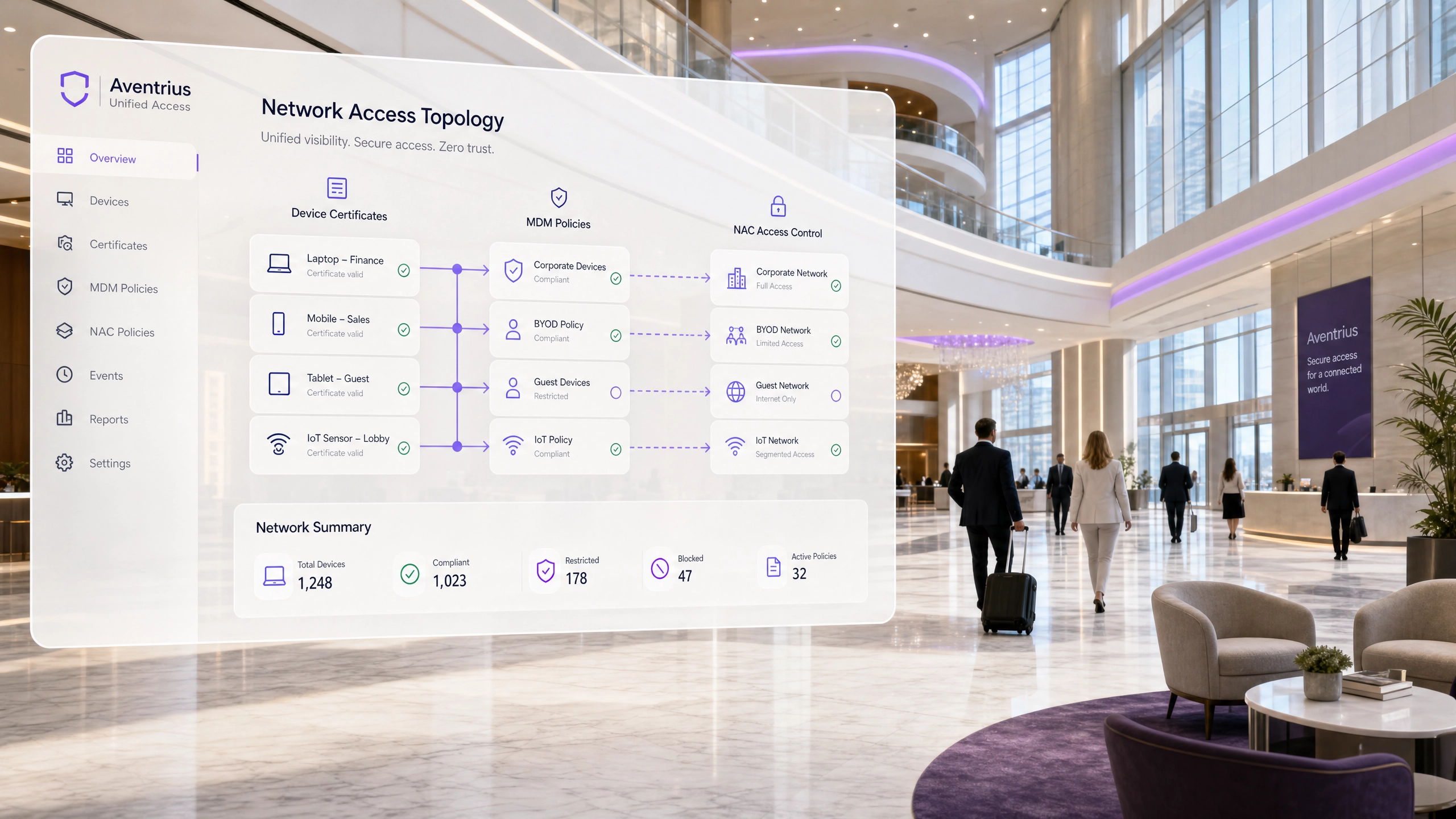
执行摘要
对于企业场所——从拥有 80,000 个座位的体育场到多站点零售连锁店——确保网络边缘的安全已果断地超越了预共享密钥和手动凭证管理。企业终端、BYOD 设备和物联网基础设施的激增要求采用零信任架构,该架构能够在不给 IT 服务台带来负担的情况下扩展。
本指南详细介绍了将简单证书注册协议(SCEP)和网络准入控制(NAC)与移动设备管理(MDM)基础设施集成的技术架构。通过利用 SCEP 自动分发 X.509 证书,并利用 NAC 强制执行 IEEE 802.1X EAP-TLS 身份验证,组织可以实现零接触配置、消除凭证窃取途径,并强制执行基于姿态的动态网络访问。虽然面向公众的访问通过专用的 Guest WiFi 解决方案进行管理,但此架构可确保关键的幕后操作安全,从而维持场所的正常运行。其结果是 IT 开销显著降低、PCI DSS 和 GDPR 下的合规性更强,以及网络边缘主动执行零信任原则。
技术深入探讨
三层架构
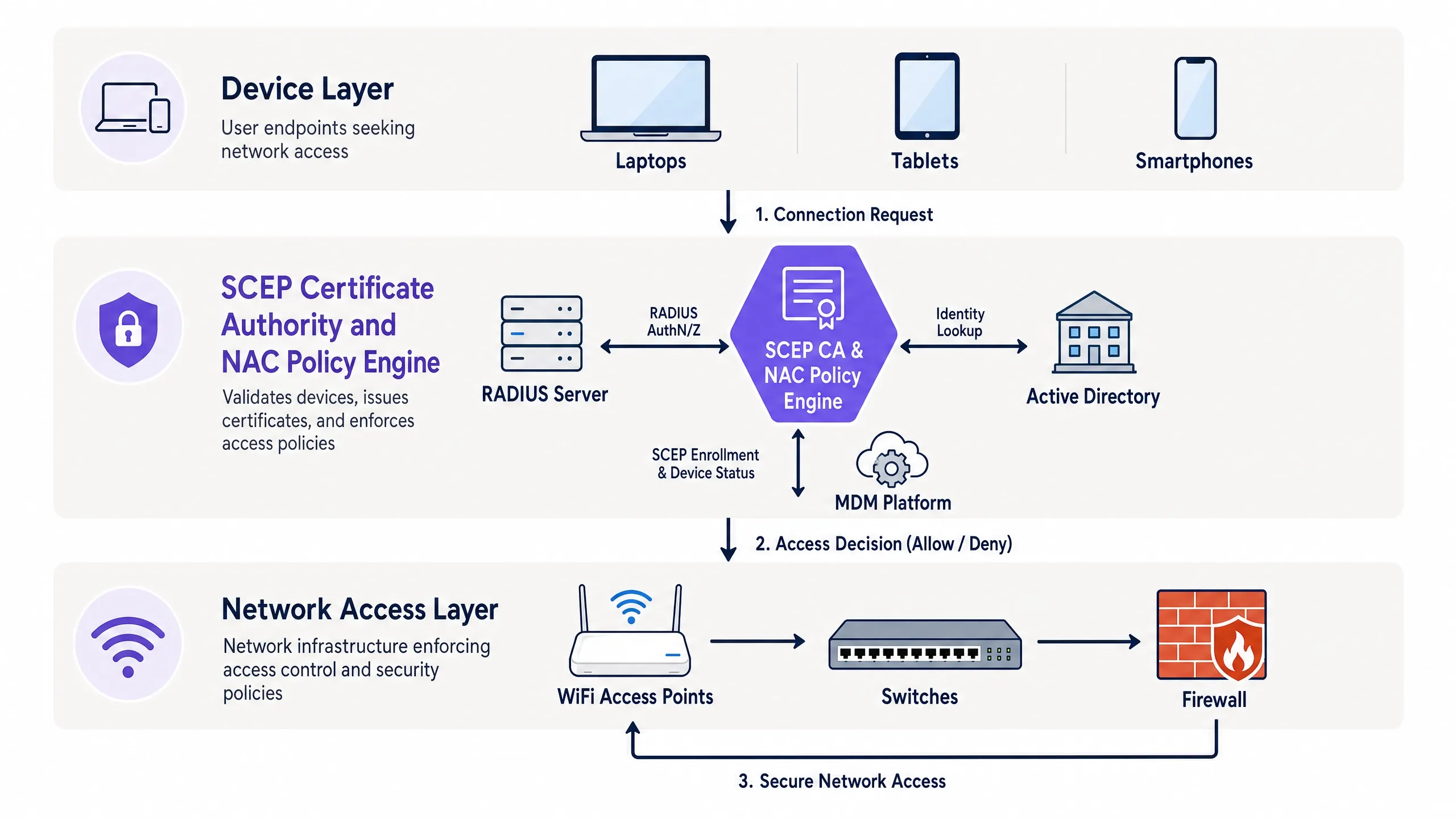
现代网络安全依赖于加密身份而非用户知识。SCEP-NAC-MDM 堆栈跨三个主要层面运行:
| 层面 | 组件 | 功能 |
|---|---|---|
| 设备管理 | MDM / UEM | 设备配置、合规性和生命周期的中央权威机构 |
| 身份与颁发 | PKI / SCEP / CA | 生成、颁发和管理数字证书 |
| 访问强制执行 | NAC / RADIUS | 在授予网络访问权限之前评估证书和设备姿态 |
这些层面并非顺序关系——它们在一个连续的反馈循环中运行。MDM 实时将合规性状态通知 NAC,而 NAC 可以在设备未通过姿态检查时触发 MDM 修复工作流。
SCEP 如何大规模自动化 PKI
手动部署证书在规模上操作上是不可能的。一个拥有 500 台设备的资产需要 IT 管理员为每台设备生成、签名和安装单独的 X.509 证书——这个过程每台设备需要几分钟,并且会引入重大的人为错误风险。SCEP 完全消除了这一点。
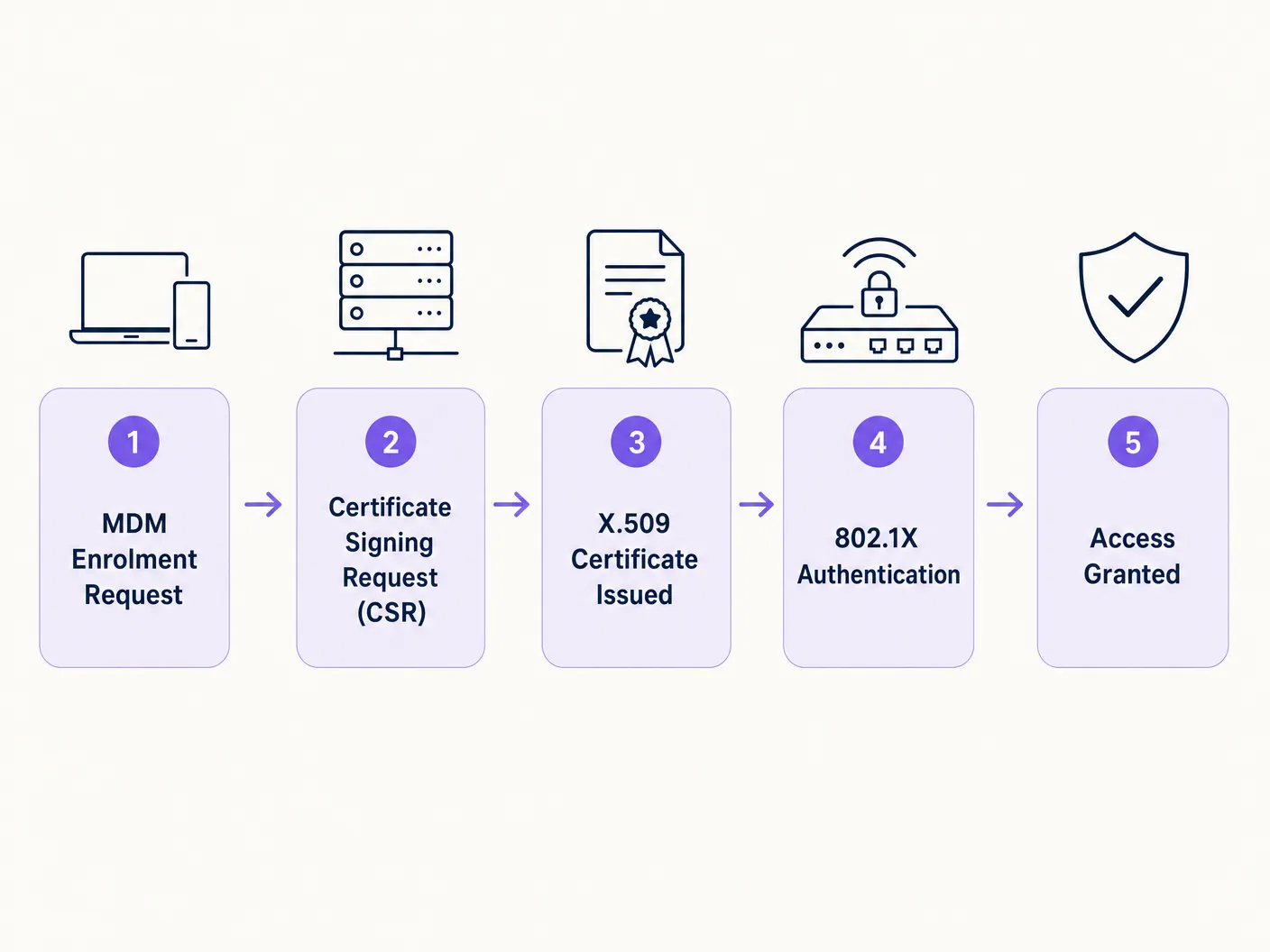
当设备在 MDM 中注册时,MDM 推送一个包含 SCEP 负载的配置描述文件。该负载指示设备在本地生成密钥对——关键的是,私钥永远不会离开设备——并向 SCEP 服务器提交证书签名请求(CSR)。SCEP 服务器(通常是微软的网络设备注册服务(NDES)或基于云的等效服务)根据 MDM 验证请求,以确认设备已获授权。然后,它将 CSR 转发给证书颁发机构(CA),CA 签发已签名的 X.509 证书。证书返回给设备并安装在其安全隔区或系统密钥库中。
整个过程静默地进行,通过无线方式完成,无需用户交互。对于部署 1,000 台设备,整个证书资产可以在 MDM 注册完成后的数小时内完成配置。
NAC 和 802.1X EAP-TLS:强制执行层
一旦设备持有有效证书,它就会尝试使用 IEEE 802.1X 连接到企业 SSID 或有线端口。接入点或交换机充当认证器,将请求转发给由 NAC 策略引擎控制的 RADIUS 服务器。最安全的 EAP 方法是 EAP-TLS,它要求相互认证——客户端和 RADIUS 服务器都必须提供有效证书,从而防止通过欺诈接入点进行的中间人攻击。 NAC 按顺序执行几项关键检查:
- **密码学验证:**证书在数学上是否有效,并且由受信任的根 CA 签名?
- **吊销检查:**证书是否列在证书吊销列表(CRL)中,或通过在线证书状态协议(OCSP)标记?
- **姿态评估:**通过 API 查询 MDM,NAC 询问:设备是否合规?操作系统是否达到所需的补丁级别?磁盘加密是否启用?
如果所有检查均通过,NAC 会发送 RADIUS 访问接受消息,通常附带供应商特定属性(VSA),这些属性动态地将设备分配到特定的 VLAN 或应用访问控制列表(ACL)。不合规的设备将被放入权限有限的修复 VLAN 中——通常仅足以触发 MDM 驱动的修复工作流。
访客网络隔离
在任何场所环境中,企业基础设施必须与面向公众的网络严格隔离。 Guest WiFi 平台完全运行在独立的 SSID 和 VLAN 上,没有路由到企业资源的路径。SCEP-NAC 架构管控企业层;访客层由强制门户认证和数据捕获工作流控制。对于部署 WiFi Analytics 的场所,这种隔离是前提条件——分析数据流经访客网络,而运营数据流经由证书认证的企业网络。有关支撑这两个网络的基础射频架构的更多背景信息,请参阅 Wi-Fi 频率:2026 年 Wi-Fi 频率指南 。
实施指南
部署此架构需要仔细排序,以避免在过渡期间将合法用户拒之门外。
第 1 步:PKI 和 SCEP 准备
建立强大的内部 PKI 或利用基于云的托管 PKI(mPKI)服务。部署并加固 SCEP 服务器——如果使用 Microsoft NDES,请确保它在专用服务器上运行,而不是与 CA 共置。配置 SCEP 服务器使用由 MDM 为每台设备生成的动态挑战口令,而不是静态共享密钥。这可以防止在发现 SCEP URL 时进行未经授权的证书请求。
第 2 步:MDM 配置
在您的 MDM 平台中创建 SCEP 负载。仔细定义主题备用名称(SAN)字段——SAN 必须包含唯一标识符(例如设备序列号或用户 UPN),NAC 将使用这些标识符进行策略决策。首先将配置文件推送到 IT 团队设备的测试组,并在更广泛推出之前验证完整的注册流程。
第 3 步:NAC 和 RADIUS 设置
配置您的 NAC 以信任签发了客户端证书的根 CA。在 RADIUS 服务器上安装服务器证书以进行 EAP-TLS 相互认证。根据证书属性和 MDM 合规性状态定义访问策略。实施动态 VLAN 分配规则:将合规的企业设备分配到企业 VLAN,将不合规的设备分配到修复 VLAN,将物联网设备分配到专用的、限制互联网访问的 VLAN。
第 4 步:网络基础设施集成
为 802.1X 配置交换机和无线接入点。对于 零售业 环境中拥有传统销售点硬件的场景,或 酒店业 场所中拥有智能房间控制器的场景,为无法参与 EAP-TLS 的设备实施 MAC 认证绕过(MAB)作为后备方案。将 MAB 限制到特定的交换机端口,并确保 MAC 地址数据库得到严格控制。对于 医疗保健 和 交通运输 环境,应配置姿态评估规则以满足特定行业的合规性要求。
第 5 步:并行部署和切换
切勿立即切换。与现有网络并行广播新的 802.1X SSID。通过 MDM 推送新的 WiFi 配置文件。监控采用情况并解决注册失败问题。一旦 95% 以上的设备在新的 SSID 上成功认证,就停用旧网络。
最佳实践
**强制使用 EAP-TLS。**绝不要接受 EAP-PEAP 或 EAP-TTLS 作为企业设备的主要认证方法。这些方法依赖于 TLS 隧道内的用户名/密码凭据,仍然容易受到凭据收集的攻击。EAP-TLS 完全消除了这种攻击面。
**实施实时吊销。**计划性的 CRL 下载会产生漏洞窗口。配置 NAC 实时执行 OCSP 检查。当设备被报告丢失或被盗时,在 CA 中吊销证书,设备将在下次认证尝试时失去网络访问权限——如果实施了更改授权(CoA),甚至可以立即断开。
**设置合理的证书有效期。**一年有效期,并在有效期届满前 30 天触发 SCEP 自动续订,这是行业标准。更长的有效期会增加证书被泄露时的漏洞窗口;更短的有效期会增加续订失败导致中断的风险。
**积极隔离物联网。**物联网设备绝不应与企业终端共享 VLAN。使用 NAC 在物联网 VLAN 上强制执行严格的 ACL,仅允许每个设备类型所需的特定协议和目的地。对于部署定位服务的场所,请参阅 室内 WiFi 定位系统:它们如何工作以及如何部署 ,以了解定位基础设施如何与更广泛的网络架构相集成。
**与 WPA3 保持一致。**在硬件支持的情况下,将企业 SSID 配置为使用 WPA3-Enterprise,该协议强制要求受保护的管理帧(PMF),并提供比 WPA2 更强的密码学保护。有关这如何融入更广泛的企业连接环境的详细信息,请参阅 SD-WAN 与 MPLS:2026 年企业网络指南 。
故障排除与风险缓解
| 故障模式 | 根本原因 | 缓解措施 |
|---|---|---|
| 设备在证书续订后 EAP-TLS 失败 | SCEP 续订静默失败 | 监控 SCEP 服务器日志;为失败的 CSR 提交设置警报 |
| 时钟偏差导致证书验证失败 | NTP 配置错误 | 在所有终端和基础设施上强制执行 NTP 同步 |
| 物联网设备无法认证 | 没有 802.1X 认证客户端 | 实施具有严格 MAC 地址控制和隔离 VLAN 的 MAB |
| CA 迁移后大量设备锁定 | 旧的根 CA 不受 NAC 信任 | 分阶段进行 CA 迁移;在吊销旧根 CA 之前,将新的根 CA 添加到 NAC 信任存储区 |
| 已吊销的设备仍保留网络访问权限 | 仅使用 CRL 吊销且下载间隔较长 | 实时实施 OCSP 和 CoA 以进行实时吊销 |
对于特定的基于 BLE 的物联网设备,认证架构与 WiFi 连接的终端有所不同。请参阅 面向企业的 BLE 低功耗解释 ,以了解适用于蓝牙低功耗基础设施的具体安全注意事项。
投资回报率与业务影响
当与替代方案的成本进行衡量时,SCEP-NAC-MDM 集成的商业案例是简单明了的。
| 指标 | 实施前 | 实施后 |
|---|---|---|
| IT 服务台工单(网络访问) | 高——密码重置、密钥轮换 | 接近零——自动化证书生命周期 |
| 吊销受损设备的平均时间 | 数小时(手动流程) | 数秒(OCSP + CoA) |
| PCI DSS 访问控制合规性 | 手动、审计密集 | 自动化、持续强制执行 |
| BYOD 入门时间 | 每台设备 15-30 分钟 | 不到 5 分钟,零 IT 参与 |
对于拥有 500 台设备的资产,消除手动证书管理和与密码相关的服务台工单,通常可将网络相关的 IT 支持开销降低 25-35%。风险缓解价值——避免一次基于凭据的泄露——通常超过整个实施成本。对于 GDPR 约束下的公共部门和医疗保健组织,能够展示自动化、可审计的访问控制是一项重要的合规资产。
Schlüsseldefinitionen
SCEP (Simple Certificate Enrollment Protocol)
Ein Protokoll, das die Ausstellung und den Widerruf digitaler Zertifikate auf Geräten ohne Benutzereingriff automatisiert und als Kommunikationsschicht zwischen der MDM-Plattform und der Zertifizierungsstelle fungiert.
Wird von MDM-Plattformen verwendet, um X.509-Zertifikate nahtlos und skaliert auf Tausenden von Endpunkten bereitzustellen. IT-Teams stoßen auf SCEP bei der Konfiguration von MDM-Profilen für die 802.1X WiFi-Authentifizierung.
NAC (Network Access Control)
Eine Sicherheitslösung, die Richtlinien auf Geräten durchsetzt, die auf die Netzwerkinfrastruktur zugreifen wollen, indem sie Authentifizierungsdaten, Zertifikatsgültigkeit und den Compliance-Status des Geräts bewertet, bevor der Zugriff gewährt wird.
Fungiert als Gatekeeper am Netzwerkrand. IT-Teams konfigurieren NAC-Richtlinien, um festzulegen, welche Geräte basierend auf ihren Zertifikatsattributen und dem MDM-Compliance-Status Zugriff auf welche VLANs erhalten.
MDM (Mobile Device Management)
Eine Software, die von IT-Abteilungen zur Überwachung, Verwaltung und Absicherung der Endpunkte von Mitarbeitern über mehrere Betriebssysteme hinweg eingesetzt wird und als zentrale Instanz für Geräteidentität und Compliance dient.
Der Initiator des SCEP-Registrierungsprozesses und die Quelle für Statusdaten, die vom NAC abgefragt werden. Ohne MDM-Integration kann das NAC keine statusbasierte Zugriffskontrolle durchführen.
IEEE 802.1X
Ein IEEE-Standard für portbasierte Network Access Control, der einen Authentifizierungsmechanismus für Geräte bereitstellt, die eine Verbindung zu einem LAN oder WLAN herstellen möchten, und eine erfolgreiche Authentifizierung erfordert, bevor der Port geöffnet wird.
Das zugrunde liegende Protokoll, das Geräte zur Authentifizierung zwingt, bevor der Switch oder Access Point Datenverkehr zulässt. Es wird sowohl auf der Netzwerkinfrastruktur als auch auf dem 802.1X-Supplicant des Geräts konfiguriert.
EAP-TLS (Extensible Authentication Protocol - Transport Layer Security)
Der sicherste EAP-Standard, der eine gegenseitige Authentifizierung erfordert, bei der sowohl das Client-Gerät als auch der RADIUS-Server gültige digitale Zertifikate vorlegen müssen, wodurch passwortbasierte Angriffe auf Anmeldedaten ausgeschlossen werden.
Der Goldstandard für drahtlose Sicherheit im Unternehmen. IT-Architekten sollten EAP-TLS gegenüber PEAP oder TTLS vorschreiben, wann immer eine Gerätezertifikatsinfrastruktur vorhanden ist.
CSR (Certificate Signing Request)
Ein Block aus kodiertem Text, der von einem Gerät generiert wird und dessen öffentlichen Schlüssel sowie Identitätsdaten enthält. Er wird an die Zertifizierungsstelle übermittelt, um ein signiertes X.509-Zertifikat anzufordern.
Wird vom Gerät während des SCEP-Registrierungsprozesses automatisch generiert. Der zum CSR gehörende private Schlüssel verlässt das Gerät nie, wodurch sichergestellt wird, dass das Zertifikat nicht dupliziert werden kann.
MAB (MAC Authentication Bypass)
Eine alternative Authentifizierungsmethode, bei der das Netzwerk die Hardware-MAC-Adresse des Geräts als Anmeldedaten verwendet. Sie wird für Geräte eingesetzt, die nicht über die Fähigkeit eines 802.1X-Supplicants verfügen.
Wird für ältere IoT-Geräte wie Drucker, Sensoren und intelligente Raumsteuerungen verwendet, die nicht an EAP-TLS teilnehmen können. Sollte immer zur Zuweisung zu einem stark eingeschränkten VLAN führen.
OCSP (Online Certificate Status Protocol)
Ein Internetprotokoll zur Abfrage des Widerrufsstatus eines digitalen X.509-Zertifikats in Echtzeit, das eine Alternative zum Herunterladen und Analysieren von Zertifikatswiderrufslisten darstellt.
Kritisch für NAC-Systeme, die den Netzwerkzugriff sofort sperren müssen, wenn ein Gerät kompromittiert oder als gestohlen gemeldet wird. OCSP bietet Echtzeit-Status; CRL-Downloads erzeugen ein Zeitfenster für den Widerruf.
CoA (Change of Authorization)
Eine RADIUS-Erweiterung (RFC 5176), die es dem NAC ermöglicht, eine aktive Netzwerksitzung dynamisch zu ändern oder zu beenden, ohne darauf zu warten, dass die Sitzung abläuft oder sich das Gerät erneut authentifiziert.
Wird verwendet, um ein Gerät sofort zu trennen, wenn sein Zertifikat widerrufen wird oder sich sein MDM-Compliance-Status ändert. Unerlässlich für die Durchsetzung von Zero-Trust in Echtzeit.
Ausgearbeitete Beispiele
Ein Luxusresort mit 500 Zimmern muss sein betriebsinternes Netzwerk absichern. Die Mitarbeiter nutzen gemeinsam genutzte Tablets für das Housekeeping-Management, und das Management verwendet Firmen-Laptops. Das aktuelle WPA2-PSK-Netzwerk war bereits mehrfach von Datenlecks beim Pre-Shared Key betroffen, was im vergangenen Jahr zu zwei Sicherheitsvorfällen führte. Wie sollte das IT-Team auf eine zertifikatsbasierte Authentifizierung umstellen, ohne den laufenden Betrieb zu stören?
Phase 1 — Vorbereitung (Woche 1–2): Implementieren Sie eine cloudbasierte RADIUS/NAC-Lösung und integrieren Sie diese in das bestehende MDM. Konfigurieren Sie ein SCEP-Profil im MDM, um gerätebasierte Zertifikate auf alle Tablets und Laptops zu übertragen. Verwenden Sie gerätebasierte Zertifikate (die an die Seriennummer des Geräts gebunden sind) anstelle von benutzerbasierten Zertifikaten, damit sich gemeinsam genutzte Tablets automatisch authentifizieren, unabhängig davon, welcher Mitarbeiter sie gerade verwendet. Phase 2 — Parallele Bereitstellung (Woche 3–4): Senden Sie eine neue, versteckte SSID aus, die für 802.1X EAP-TLS konfiguriert ist. Übertragen Sie das neue WiFi-Profil per MDM auf alle registrierten Geräte. Überwachen Sie das NAC-Dashboard auf erfolgreiche Authentifizierungen. Phase 3 — Umschaltung (Woche 5): Sobald sich mehr als 95 % der Geräte mit der neuen SSID verbunden haben, nehmen Sie das alte WPA2-PSK-Netzwerk außer Betrieb. Widerrufen Sie den alten PSK aus der gesamten Dokumentation und von allen Access Points.
Eine nationale Einzelhandelskette führt 3.000 neue Point-of-Sale-Terminals in 150 Filialen ein. Das Sicherheitsteam fordert eine strikte PCI DSS-Netzwerksegmentierung und Zero-Trust-Zugriff. Der Zeitrahmen für die Bereitstellung beträgt 8 Wochen. Wie können SCEP und NAC dies in großem Maßstab ermöglichen, ohne dass IT-Personal in jeder Filiale vor Ort sein muss?
Vor der Bereitstellung: Der POS-Anbieter registriert alle 3.000 Geräte vorab im MDM des Einzelhändlers über das Zero-Touch-Registrierungsprogramm des Anbieters. Das MDM wird mit einem SCEP-Profil konfiguriert, das beim ersten Booten automatisch gestartet wird. Bereitstellung: Wenn ein POS-Terminal in der Filiale eingeschaltet wird, verbindet es sich mit einer temporären Onboarding-SSID (nur Internet, kein Zugriff auf das Unternehmensnetzwerk). Das MDM-Profil wird übertragen, die SCEP-Payload wird ausgeführt, und das Gerät fordert sein X.509-Zertifikat von der CA an und erhält es. Das MDM überträgt anschließend das WiFi-Profil des Unternehmens. Netzwerkzugriff: Wenn sich das POS-Terminal mit dem Switch-Port der Filiale verbindet, initiiert der Switch 802.1X. Die NAC validiert das Zertifikat, fragt das MDM ab, um zu bestätigen, dass das POS-Terminal konform ist (Verschlüsselung aktiviert, MDM-Agent aktiv, kein Jailbreak erkannt), und weist den Switch-Port dynamisch dem PCI-DSS-VLAN zu. Das POS-Terminal ist nun betriebsbereit. In der Filiale war keinerlei IT-Personal erforderlich.
Übungsfragen
Q1. Ihre Organisation migriert von WPA2-Enterprise mit PEAP-MSCHAPv2 zu EAP-TLS. Während des Pilotprojekts stellen Windows-Laptops und iPhones erfolgreich eine Verbindung her, aber 200 Barcodescanner im Lager scheitern bei der Authentifizierung. Die Scanner unterstützen 802.1X, können aber die SCEP-Payload vom MDM nicht verarbeiten – sie laufen mit einem proprietären Embedded-Betriebssystem ohne Unterstützung für einen MDM-Agenten. Was ist die sicherste architektonische Lösung, die die Netzsegmentierung aufrechterhält, ohne dass die Scanner ausgetauscht werden müssen?
Hinweis: Ziehen Sie alternative Mechanismen zur Zertifikatsbereitstellung in Betracht, die keinen MDM-Agenten erfordern, sowie die Kontrollen zur Netzsegmentierung, die für Geräte gelten sollten, die nicht an einer vollständigen Zustandsprüfung (Posture Assessment) teilnehmen können.
Musterlösung anzeigen
Da die Scanner 802.1X, aber kein SCEP oder eine MDM-Registrierung unterstützen, besteht der sicherste Ansatz darin, Gerätezertifikate manuell über eine dedizierte Zertifikatsvorlage mit einem eingeschränkten Schlüsselverwendungsprofil bereitzustellen. Die Zertifikate werden einmalig während eines Wartungsfensters installiert. Die NAC wird so konfiguriert, dass sie diese Zertifikate akzeptiert, die Scanner jedoch einem dedizierten Lagerbetriebs-VLAN mit strengen ACLs zuweist – nicht dem vollständigen Unternehmens-VLAN –, da eine Zustandsprüfung nicht möglich ist. Falls die manuelle Zertifikatsbereitstellung betrieblich nicht skalierbar ist, konfigurieren Sie alternativ MAB als Fallback speziell für die MAC-OUIs der Scanner-Hardware, wobei die NAC sie demselben eingeschränkten VLAN zuweist. Dokumentieren Sie dies als bekannte Ausnahme in Ihrem Risikoregister und planen Sie den Austausch der Scanner im nächsten Hardware-Aktualisierungszyklus ein.
Q2. Ein Netzwerksicherheitsmanager stellt fest, dass das MDM einen Befehl zur Remote-Löschung sendet, wenn ein Mitarbeiter einen Laptop als gestohlen meldet, das Gerät jedoch noch bis zu 12 Stunden lang – dem aktuellen RADIUS-Sitzungs-Timeout – mit dem Unternehmens-WiFi verbunden bleibt. Während dieses Fensters könnte das Gerät zur Datenexfiltration genutzt werden. Wie sollte die Architektur geändert werden, um den Netzwerkzugriff sofort nach der Meldung eines Diebstahls zu beenden?
Hinweis: Die NAC muss sofort über die Statusänderung informiert werden, anstatt auf den nächsten Authentifizierungszyklus zu warten. Berücksichtigen Sie sowohl den Mechanismus zur Beendigung der Sitzung als auch den Mechanismus zur Verhinderung der erneuten Authentifizierung.
Musterlösung anzeigen
Implementieren Sie zwei komplementäre Kontrollen. Konfigurieren Sie erstens das MDM so, dass es sofort nach der Kennzeichnung eines Geräts als verloren oder gestohlen einen Webhook an die NAC sendet. Die NAC sendet dann eine RADIUS Change of Authorization (CoA) Disconnect-Request-Nachricht an den spezifischen Access Point oder Switch-Port, wodurch die aktive Sitzung sofort beendet wird. Zweitens widerrufen Sie das Zertifikat des Geräts in der CA und stellen Sie sicher, dass die NAC für die OCSP-Prüfung in Echtzeit anstelle einer CRL-basierten Sperrung konfiguriert ist. Dies bedeutet, dass die EAP-TLS-Authentifizierung selbst dann bei der OCSP-Prüfung fehlschlägt, wenn sich das Gerät vor der Verarbeitung der CoA erneut verbindet. Beide Kontrollen zusammen reduzieren das Risiko-Zeitfenster von 12 Stunden auf unter 60 Sekunden.
Q3. Bei einem Sicherheitsaudit des Netzwerks eines großen Konferenzzentrums wird festgestellt, dass der SCEP-Server über ein statisches Challenge-Passwort im öffentlichen Internet freigegeben ist, um eine Remote-Geräteregistrierung zu ermöglichen. Der Auditor stuft dies als kritische Schwachstelle ein. Wie sollte der SCEP-Registrierungsprozess neu konzipiert werden, um die Remote-Registrierungsfunktion beizubehalten und gleichzeitig das Risiko statischer Passwörter zu eliminieren?
Hinweis: Der SCEP-Server benötigt eine Möglichkeit, um zu überprüfen, ob das ein Zertifikat anfordernde Gerät tatsächlich vom MDM autorisiert ist, ohne sich auf ein gemeinsam genutztes Geheimnis zu verlassen, das aus einem Gerät extrahiert oder abgefangen werden könnte.
Musterlösung anzeigen
Ersetzen Sie das statische Challenge-Passwort durch dynamische, gerätespezifische Einmal-Challenge-Passwörter, die vom MDM generiert werden. Der Workflow sieht wie folgt aus: (1) Das MDM generiert während der Registrierung ein eindeutiges, zeitlich begrenztes Challenge-Passwort für jedes Gerät. (2) Das MDM fügt diese Challenge in die SCEP-Payload ein, die an das Gerät übertragen wird. (3) Das Gerät fügt die Challenge in seinen CSR ein. (4) Der SCEP-Server validiert die Challenge vor der Weiterleitung des CSR an die CA über eine API mit dem MDM. (5) Die Challenge wird sofort nach der Verwendung ungültig gemacht. Dies stellt sicher, dass nur vom MDM verwaltete Geräte erfolgreich ein Zertifikat erhalten können und dass ein Angreifer selbst bei Erkennung der SCEP-URL keine gültigen Zertifikate ohne eine gültige Einmal-Challenge generieren kann. Beschränken Sie den SCEP-Server zudem auf HTTPS und implementieren Sie nach Möglichkeit ein IP-Allowlisting für die Egress-IPs des MDM.
Weiterlesen in dieser Reihe
Mitarbeiter-WiFi vs. Gäste-WiFi: Best Practices für die Segmentierung von Unternehmensnetzwerken
Ein umfassender technischer Leitfaden für IT-Führungskräfte zur Segmentierung von Mitarbeiter- und Gäste-WiFi-Netzwerken. Er behandelt VLAN-Architektur, 802.1X-Authentifizierung, Firewall-Richtlinien und die geschäftlichen Auswirkungen eines sicheren Netzwerkdesigns.
WiFi-Lösungen für Apartments: Ein umfassender Leitfaden für Unternehmen
Dieser Leitfaden behandelt die Architektur, die Bereitstellung und den Business Case für WiFi-Lösungen in Apartments in Build to Rent- und Multi-Dwelling Unit-Immobilien. Er erklärt, wie die iPSK-Technologie (Identity Pre-Shared Key) sichere, isolierte Netzwerkblasen für jeden Bewohner erstellt und gleichzeitig Smart-Geräte und IoT unterstützt. Immobilienentwickler, Vermieter und BTR-Betreiber finden hier praxisnahe Bereitstellungsanleitungen, ROI-Daten und ausgearbeitete Implementierungsszenarien.
Cox Business Managed WiFi: Ein umfassender Leitfaden für Unternehmen
Dieser Leitfaden beschreibt detailliert, wie Immobilienentwickler und BTR-Betreiber skalierbare, sichere Netzwerke mit Cox Business Managed WiFi bereitstellen können. Er behandelt die Netzwerkarchitektur, die herstellerunabhängige Hardware-Bereitstellung und die geschäftlichen Auswirkungen des Übergangs von Konnektivität von einem betrieblichen Problem zu einer zuverlässigen Infrastruktur.