
Splash Page Design Best Practices für Guest WiFi
Dieser Leitfaden bietet IT-Managern, Netzwerkarchitekten und Leitern des Standortbetriebs eine definitive technische Referenz für das Design und die Bereitstellung von leistungsstarken Guest WiFi Splash Pages. Er behandelt die vier Kernsäulen eines effektiven Captive Portal Designs - Markenidentität, User Experience, Datenerfassung und Rechtskonformität - und übersetzt diese in praktische Bereitstellungsrichtlinien. Durch die Einhaltung dieser Best Practices können Unternehmen messbare Verbesserungen bei den Verbindungsraten der Gäste, dem Wachstum der Marketing-Datenbank und einen nachweisbaren ROI ihrer Guest WiFi Infrastruktur erwarten.
Diesen Leitfaden anhören
Podcast-Transkript ansehen
Teil unserer Kernserie: Captive Portal Guide →
Executive Summary
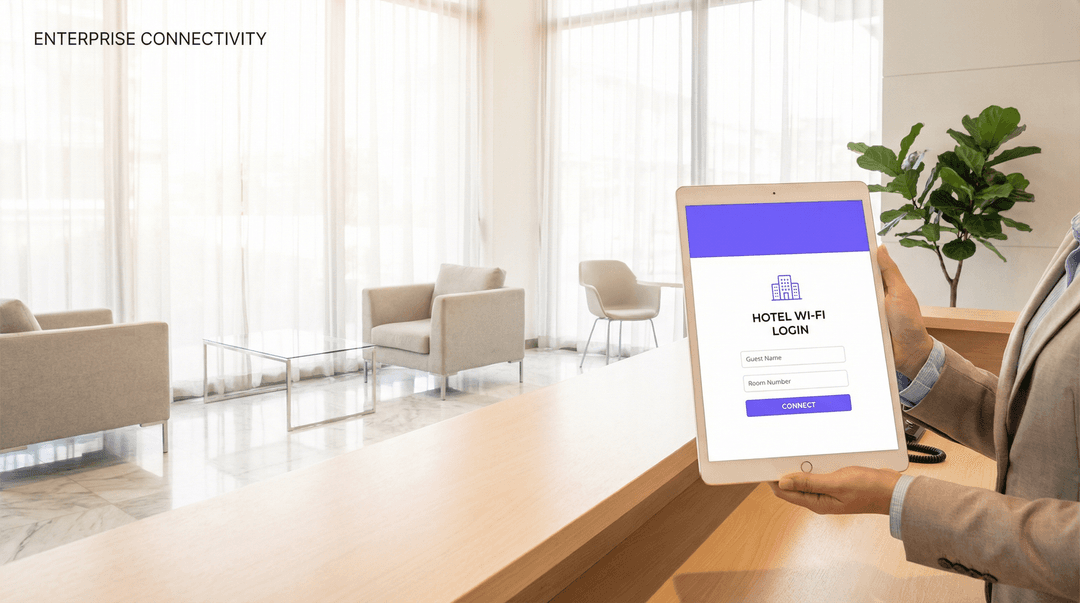
Die Gäste-WiFi-Splash-Page – oder das Captive Portal – ist der wichtigste Touchpoint bei der Bereitstellung von drahtlosen Netzwerken in jedem Veranstaltungsort. Sie ist die erste Interaktion, die ein Gast mit Ihrem Netzwerk hat, und entscheidet darüber, ob er sich überhaupt verbindet. Dennoch bleibt sie eine der am häufigsten vernachlässigten Komponenten der Enterprise-WiFi-Infrastruktur. Eine schlecht gestaltete Splash-Page frustriert nicht nur die Nutzer, sondern zerstört auch aktiv den kommerziellen Wert einer Netzwerkinvestition, die sich auf Hunderttausende von Pfund belaufen kann.
Dieser Leitfaden richtet sich an leitende IT- und Betriebsverantwortliche, die jetzt Implementierungsentscheidungen treffen müssen. Er behandelt die technische Architektur der Captive Portal-Authentifizierung, die UX-Prinzipien, die die Konversion fördern, die rechtlichen und Compliance-Verpflichtungen im Rahmen der GDPR und verwandter Richtlinien sowie die Branding-Anforderungen, die einen Login-Bildschirm in ein umsatzgenerierendes Asset verwandeln. Praxisnahe Bereitstellungsszenarien aus den Bereichen Hotellerie, Einzelhandel und Events sind enthalten, um jede Empfehlung in der betrieblichen Realität zu verankern. Das Kernargument ist einfach: Ihre Splash-Page ist kein bloßes Sicherheits-Häkchen. Sie ist ein strategisches Geschäftsinstrument und sollte auch so konzipiert sein.
Technical Deep-Dive
How Captive Portal Authentication Works
Ein Captive Portal arbeitet auf der Netzwerkzugriffsebene, fängt den gesamten HTTP- und HTTPS-Verkehr von einem nicht authentifizierten Client-Gerät ab und leitet ihn an die URL der Splash-Page weiter. Der zugrunde liegende Mechanismus basiert auf DNS-Hijacking und HTTP-302-Weiterleitungen. Wenn sich ein Gerät mit der Gäste-SSID verbindet, weist ihm der Access Point oder Wireless Controller eine eingeschränkte IP-Adresse zu und leitet den gesamten ausgehenden Datenverkehr an den Portal-Server weiter. Bis der Benutzer den Authentifizierungsprozess auf der Splash-Page abgeschlossen hat, verbleibt das Gerät in einem Quarantäne-VLAN, wobei der Zugriff auf die IP-Adresse des Portals und alle vorautorisierten Walled-Garden-Domains (wie Social-Login-Anbieter) beschränkt ist.
Nach erfolgreicher Authentifizierung – sei es per E-Mail-Eingabe, Social-Login, SMS-OTP oder Gutscheincode – aktualisiert der Controller oder RADIUS-Server den Autorisierungsstatus des Clients, verschiebt ihn in das entsprechende Zugriffs-VLAN und gewährt Internetkonnektivität. Dieser gesamte Ablauf muss transparent und schnell sein. Jede Latenz bei der Portal-Weiterleitung oder der Authentifizierungsantwort wird vom Benutzer als fehlerhaftes WiFi wahrgenommen.Aus Sicht der Standards ist die Captive Portal-Architektur herstellerneutral und arbeitet unabhängig vom zugrunde liegenden drahtlosen Sicherheitsprotokoll. Die SSID selbst sollte jedoch mit WPA3-Personal oder WPA3-Enterprise konfiguriert werden, sofern die Gerätekompatibilität dies zulässt, in Übereinstimmung mit der Spezifikation IEEE 802.11ax (WiFi 6). Die Captive Portal-Ebene übernimmt das Identitäts- und Zugriffsmanagement, während das zugrunde liegende drahtlose Protokoll die Übertragungssicherheit regelt. Dies sind unterschiedliche Funktionen, die separat konzipiert werden müssen.
Authentifizierungsmethoden: Eine vergleichende Analyse
Die Wahl der Authentifizierungsmethode ist die folgenschwerste Designentscheidung für jede Bereitstellung einer Splash Page. Jede Methode hat unterschiedliche Auswirkungen auf die Benutzerreibung, die Datendichte, den Compliance-Aufwand und das Sicherheitsniveau.
| Authentifizierungsmethode | Reibungsniveau | Datenqualität | GDPR-Komplexität | Best-Fit-Veranstaltungsort |
|---|---|---|---|---|
| Click-through (nur AGB) | Sehr niedrig | Minimal | Niedrig | Flughäfen, öffentliche Verkehrsmittel, Bibliotheken |
| E-Mail-Eingabe | Niedrig | Hoch (E-Mail, Besuchshäufigkeit) | Mittel | Hotels, Einzelhandel, Restaurants |
| Social Login (Facebook/Google) | Niedrig-Mittel | Sehr hoch (Demografie) | Hoch | Bars, Unterhaltungsstätten, Einzelhandel |
| SMS / OTP | Mittel | Hoch (verifizierte Mobilnummer) | Mittel | Premium-Hotellerie, Gesundheitswesen |
| Voucher / PIN-Code | Niedrig | Keine (anonym) | Sehr niedrig | Konferenzzentren, Co-Working-Spaces |
| RADIUS / Active Directory | Sehr niedrig (SSO) | Enterprise-Niveau | Niedrig (interne Benutzer) | Unternehmenscampus, Bildungswesen |
Für die meisten kommerziellen Bereitstellungen stellt die E-Mail-Eingabe die optimale Balance dar. Sie erfasst eine dauerhafte, marketingrelevante Kennung bei minimaler Reibung und ist unter den rechtmäßigen Grundlagen der GDPR einfach zu verwalten. Social Login ist aufgrund der Datendichte attraktiv, erfordert jedoch ein komplexeres Einwilligungs-Framework und führt zu einer Abhängigkeit von Drittanbieter-OAuth-Providern – ein Risiko, das in Unternehmenskontexten sorgfältig abgewogen werden sollte.
Walled Garden-Konfiguration
Ein Walled Garden ist die Gruppe von Domains und IP-Adressen, auf die ein nicht authentifizierter Client zugreifen darf, bevor er den Splash Page-Prozess abschließt. Dies ist ein kritisches Konfigurationselement. Der Walled Garden muss mindestens den Portal-Server selbst, alle CDN-Endpunkte, die Portal-Assets bereitstellen, und die OAuth-Endpunkte für alle verwendeten Social Login-Anbieter enthalten. Eine fehlerhafte Konfiguration des Walled Garden ist die häufigste Ursache für Fehler beim Social Login und eine wiederkehrende Quelle für Support-Tickets bei neuen Bereitstellungen.
HTTPS und Zertifikatsmanagement
All splash pages must be served over HTTPS. Modern mobile operating systems, including iOS 14+ and Android 11+, will display security warnings or block connections to HTTP captive portals. Your portal server must present a valid TLS certificate from a trusted Certificate Authority. Self-signed certificates are not acceptable in production deployments. Certificate expiry is a common operational failure mode; automated renewal via Let's Encrypt or your platform provider's managed certificate service should be standard practice.
Implementation Guide
Phase 1: Requirements Definition
Before opening a design tool, the project team must align on four parameters: the authentication method (informed by the comparative analysis above), the data fields to capture (apply the principle of data minimisation - collect only what you will actively use), the marketing consent model (opt-in vs. opt-out, with opt-in strongly recommended for GDPR compliance), and the brand assets to be incorporated (logo files in SVG format, hex colour codes, approved typefaces).
Phase 2: Splash Page Design
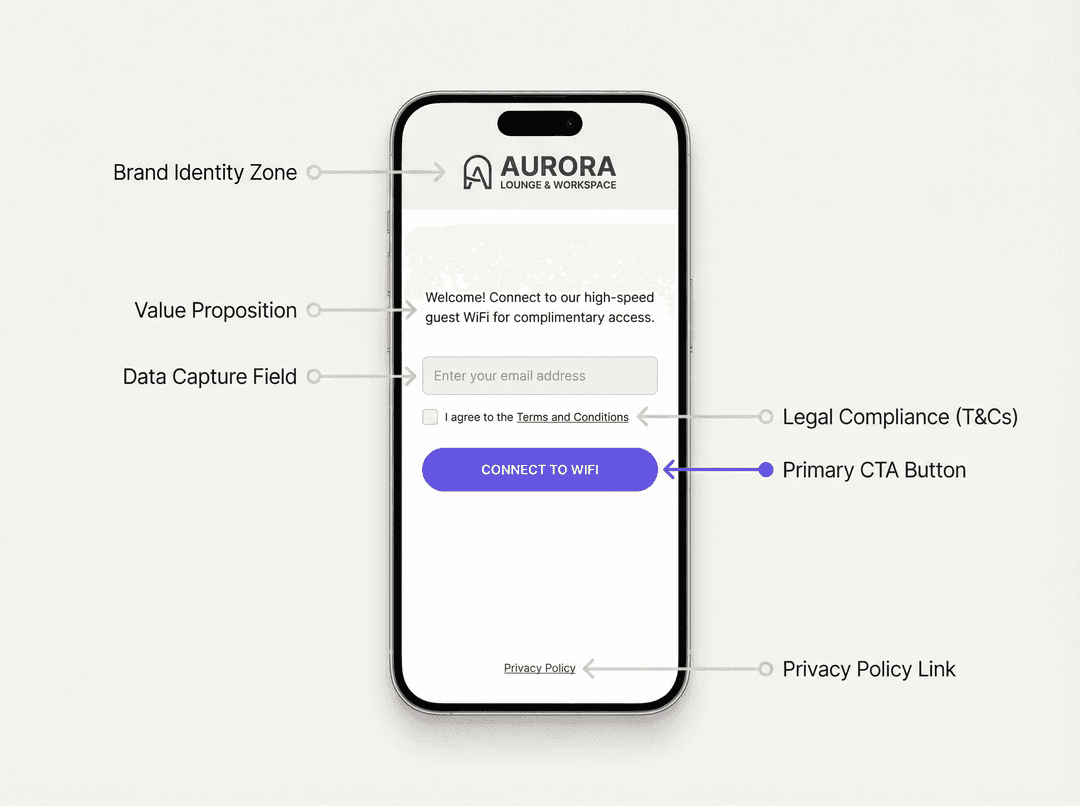
Effective WiFi splash page design follows a clear visual hierarchy. The brand identity zone occupies the top of the page and must load first. A concise value proposition - no more than one sentence - immediately follows. The authentication form is the central element and must be the most visually prominent interactive component. Legal compliance elements (T&Cs checkbox, privacy policy link) sit below the form. The call-to-action button is the final element and must be large, high-contrast, and unambiguous.
Page weight is a critical performance variable. The total uncompressed size of all splash page assets - HTML, CSS, JavaScript, images - should not exceed 200KB. Background images, if used, must be compressed and served in modern formats (WebP preferred). A page that takes more than three seconds to load on a 4G connection will see a measurable increase in abandonment rates. Test performance using tools such as Google PageSpeed Insights and target a Largest Contentful Paint (LCP) of under 2.5 seconds.
Responsive design is non-negotiable. The majority of guest WiFi connections originate from smartphones. The splash page must render correctly at viewport widths from 320px to 1440px. Use CSS media queries and a mobile-first design approach. Avoid fixed-width layouts.
Phase 3: Platform Configuration
Stellen Sie die Splash Page über Ihre Plattform zur Verwaltung von Gäste-WiFi bereit. Eine professionelle Plattform wie Purple bietet einen vorlagenbasierten Editor, mit dem Marketingteams Markenaktualisierungen ohne die Hilfe von Entwicklern verwalten können. Konfigurieren Sie die SSID so, dass sie auf die Portal-URL weiterleitet, legen Sie das Sitzungs-Timeout sowie Bandbreitenrichtlinien fest und definieren Sie die Walled-Garden-Domains. Führen Sie vor dem Live-Gang End-to-End-Tests auf mindestens drei Gerätetypen (iOS, Android, Windows-Laptop) durch.
Phase 4: Analysen und Optimierung
Versehen Sie die Splash Page nach der Bereitstellung mit einem Conversion-Tracking. Die wichtigsten Kennzahlen sind: Impression Rate (Geräte, die die SSID erkannt haben), Portal View Rate (Geräte, die die Splash Page geladen haben), Completion Rate (Geräte, die sich erfolgreich authentifiziert haben) und Drop-off Rate (die Differenz zwischen Aufrufen und Abschlüssen). Eine gesunde Completion Rate für einen E-Mail-Erfassungs-Flow liegt bei über 65 %. Raten unter 50 % weisen auf ein UX- oder Performance-Problem hin, das untersucht werden sollte.
Haben Sie Fragen zu Ihrem spezifischen Setup?
Unser Team arbeitet mit Standortbetreibern, IT-Managern und Netzwerktechnikern an über 80.000 Standorten zusammen. Buchen Sie ein 20-minütiges Gespräch und wir zeigen Ihnen, wie andere diese Herausforderungen gelöst haben.
Best Practices
Die folgenden Empfehlungen stellen die destillierten Erkenntnisse aus Enterprise-Bereitstellungen in der Hotellerie, im Einzelhandel und im öffentlichen Sektor dar.
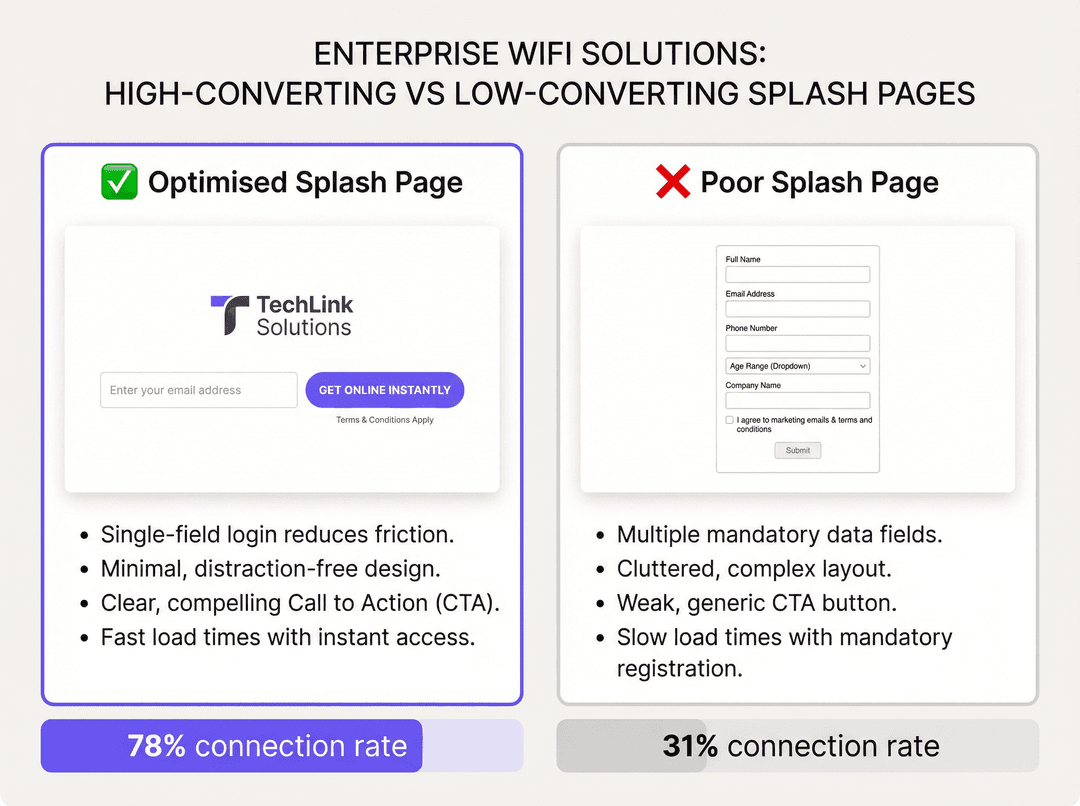
Formularfelder minimieren. Jedes zusätzliche Feld senkt die Abschlussrate. Zahlreiche A/B-Tests bei Großprojekten zeigen konsistent, dass der Wechsel von einem Formular mit zwei Feldern (Name + E-Mail) zu einem Formular mit nur einem Feld (nur E-Mail) die Abschlussrate um 15-25 Prozentpunkte erhöht. Sofern kein spezifischer Business Case eine zusätzliche Datenerfassung rechtfertigt, ist ein einzelnes E-Mail-Feld der richtige Standard.
Das Wertversprechen explizit machen. Nutzer füllen kein Formular aus, ohne zu verstehen, was sie im Gegenzug erhalten. Eine Überschrift wie „Mit kostenlosem Highspeed-WiFi verbinden“ oder „In Sekundenschnelle online gehen“ direkt über dem Formularfeld verbessert die Conversion erheblich. Unklare oder fehlende Wertversprechen sind eine der Hauptursachen für hohe Drop-off-Raten.
GDPR-konform durch Design. Die Splash Page muss einen klaren, entkoppelten Einwilligungsmechanismus für Marketingkommunikation bieten, der von der für den Netzwerkzugriff erforderlichen Zustimmung zu den AGB getrennt ist. Bereits angekreuzte Kontrollkästchen für die Marketing-Einwilligung sind gemäß GDPR Artikel 7 nicht zulässig. Die Datenschutzerklärung muss über einen klar gekennzeichneten Link zugänglich sein und präzise beschreiben, wie über WiFi gewonnene Daten verarbeitet, gespeichert und weitergegeben werden.
Sitzungsverwaltung korrekt implementieren. Definieren Sie angemessene Intervalle für das Sitzungs-Timeout und die erneute Authentifizierung. Eine 24-Stunden-Sitzung für Hotelgäste ist Standard. Eine 2-Stunden-Sitzung für ein Café ist angemessen. Eine erneute Authentifizierung alle 30 Minuten in einer Umgebung zu erzwingen, in der Gäste mehrere Stunden verweilen, ist ein erheblicher UX-Fehler und eine häufige Beschwerde in der Hotellerie.Testen Sie betriebssystemübergreifend. Der iOS Captive Network Assistant (CNA) und der Erkennungsmechanismus für Captive Portals unter Android verhalten sich unterschiedlich. iOS öffnet ein Mini-Browserfenster (den CNA), um das Portal anzuzeigen, was Einschränkungen wie fehlende JavaScript-Unterstützung in älteren Versionen und eine eingeschränkte Cookie-Verarbeitung mit sich bringt. Stellen Sie sicher, dass Ihr Portal in der CNA-Umgebung reibungslos funktioniert. Testen Sie auf aktuellen und N-1-Versionen von iOS und Android.
Isolieren Sie den Gast-Traffic. Das Gast-VLAN muss durch eine Firewall von allen internen Unternehmensnetzwerken, Verwaltungsschnittstellen und POS-Systemen isoliert sein. Dies ist eine grundlegende Anforderung an die Netzwerksicherheit und wird gemäß PCI DSS-Anforderung 1.3 für jeden Standort vorgeschrieben, der Kartenzahlungen verarbeitet. Die fehlende Segmentierung des Gast-Traffics stellt eine kritische Sicherheitslücke dar.
Fehlerbehebung & Risikominderung
Häufige Fehlermuster
Die folgende Tabelle listet die am häufigsten auftretenden Probleme bei der Bereitstellung von Captive Portals und deren Ursachen auf.
| Symptom | Ursache | Lösung |
|---|---|---|
| Portalseite erscheint nicht | DNS-Hijacking nicht konfiguriert; Client verwendet DoH/DoT | Sicherstellen, dass der Controller DNS abfängt; DNS-over-HTTPS an der Firewall blockieren |
| Social Login schlägt fehl | OAuth-Anbieter nicht im Walled Garden | Alle OAuth-Endpunkte und CDN-Domains zum Walled Garden hinzufügen |
| HTTPS-Warnung auf dem Portal | Abgelaufenes oder selbstsigniertes TLS-Zertifikat | Gültiges Zertifikat bereitstellen; automatische Verlängerung implementieren |
| iOS CNA zeigt leere Seite | JavaScript-Abhängigkeit im Portal; CNA-JS-Einschränkungen | Portal auf CNA-Kompatibilität prüfen; serverseitiges Rendering nutzen |
| Hohe Absprungrate | Zu viele Formularfelder; langsamer Seitenaufbau; unklarer CTA | Felder reduzieren; Assets optimieren; CTA-Texte A/B-testen |
| Benutzer können sich nach Ablauf der Sitzung nicht erneut verbinden | Sitzungs-Token nicht gelöscht; MAC-Adresse nicht neu bewertet | Konfiguration der Sitzungsverwaltung im Controller überprüfen |
| DSGVO-Audit-Feststellung | Bereits angekreuzte Einwilligungsboxen; fehlender Link zur Datenschutzerklärung | UX für Einwilligungen korrigieren; konformen Link zur Datenschutzerklärung hinzufügen |
Risikominderung: Die Compliance-Audit-Checkliste
Bevor eine Gast-WiFi-Bereitstellung live geht, müssen die folgenden Compliance-Punkte überprüft werden: Die Datenschutzerklärung ist aktuell und spiegelt die Datenverarbeitungsaktivitäten korrekt wider; die Marketing-Einwilligung erfolgt per Opt-in und ist von den AGB getrennt; Datenaufbewahrungsfristen sind definiert und werden durchgesetzt; es existiert ein Prozess zur Bearbeitung von Auskunftsbegehren (SARs) für über WiFi gewonnene Daten; und der Gast-Traffic ist vollständig von internen Netzwerken und PCI-relevanten Systemen isoliert.
ROI & geschäftliche Auswirkungen
Das wirtschaftliche Argument für die Investition in eine gut gestaltete Splash Page ist einfach. Gast-WiFi-Daten – in erster Linie E-Mail-Adressen und Daten zur Besuchshäufigkeit – gehören zu den wertvollsten First-Party-Daten, die ein Unternehmen erfassen kann. Da Third-Party-Cookies in den gängigen Browsern abgeschafft werden und mobile Werbe-IDs zunehmend eingeschränkt sind, ist die am WiFi-Anmeldepunkt erfasste E-Mail-Adresse ein dauerhaftes, einwilligungsbasiertes und eigenes Marketing-Asset. Betrachten Sie die Wirtschaftlichkeit einer Einzelhandelskette mit 200 Standorten. Wenn jeder Standort täglich 300 eindeutige Gast-WiFi-Nutzer bedient und die aktuelle Abschlussrate bei 35 % liegt, erfasst die Kette täglich etwa 21.000 E-Mail-Adressen. Durch die Optimierung der Splash Page auf eine Abschlussrate von 70 % – ein realistisches Ziel mit den in diesem Leitfaden beschriebenen Best Practices – verdoppelt sich diese Zahl auf 42.000 pro Tag. Auf ein Jahr hochgerechnet bedeutet dies zusätzliche 7,6 Millionen Opt-in-Kontakte, die in die Marketing-Datenbank einfließen. Bei einer konservativen Umsatzbeteiligung des E-Mail-Marketings von 0,10 £ pro Kontakt und Jahr ist diese Optimierung 760.000 £ an zusätzlichen jährlichen Einnahmen wert – und das bei einer Designänderung, deren Implementierung nur einen Bruchteil davon kostet.
Über den direkten Marketingwert hinaus ist die Splash Page der Einstiegspunkt zu einer umfassenderen Guest-Intelligence-Plattform. Verweildauer-Analysen, die Häufigkeit von Wiederholungsbesuchen, die Erfassung von Spitzenzeiten bei der Besucherfrequenz und die Analyse der Customer Journey haben alle ihren Ursprung im Authentifizierungsereignis. Diese Daten fließen in betriebliche Entscheidungen ein – Personalbesetzung, Ladenlayout, Timing von Werbeaktionen –, die messbare Auswirkungen auf die betriebliche Effizienz und den Umsatz pro Quadratmeter haben.
Die ROI-Berechnung für die Optimierung der Splash Page ist daher keine reine Marketingmaßnahme. Es ist eine Investition in die Dateninfrastruktur mit sich summierenden Erträgen.
Schlüsseldefinitionen
Captive Portal
Ein Mechanismus zur Netzwerkzugriffskontrolle, der den gesamten HTTP/HTTPS-Verkehr von einem nicht authentifizierten Client abfängt und auf eine Authentifizierungs-Webseite umleitet, bevor der Internetzugang gewährt wird. Funktioniert auf der Zugriffsebene über DNS-Hijacking und HTTP-302-Umleitungen.
IT-Teams stoßen auf diesen Begriff bei der Konfiguration von Wireless-Controllern, Access Points und Netzwerkmanagement-Plattformen. Es ist der technische Begriff für das, was Marketing-Teams als „Splash Page“ oder „WiFi-Anmeldeseite“ bezeichnen. Das Verständnis des Unterschieds zwischen dem Portal-Mechanismus und dem Design der Seite ist für eine effektive Fehlerbehebung unerlässlich.
Splash Page
Die Webseite, die einem Gast-WiFi-Nutzer über den Captive Portal-Mechanismus angezeigt wird. Sie ist die Benutzeroberfläche für die Authentifizierung und der primäre Punkt für Markenpräsenz, Datenerfassung und rechtliche Zustimmung bei einer Gast-WiFi-Bereitstellung.
Der Begriff wird im kommerziellen Kontext synonym mit „Captive Portal“ verwendet, obwohl die Splash Page streng genommen die Frontend-Designebene und das Captive Portal der zugrunde liegende Netzwerkmechanismus ist. IT-Manager sollten bei der Briefing von Designagenturen oder Plattformanbietern präzise auf diesen Unterschied achten.
Walled Garden
Eine definierte Gruppe von IP-Adressen, Domains und URLs, auf die ein nicht authentifiziertes Client-Gerät zugreifen darf, bevor der Authentifizierungsfluss der Splash Page abgeschlossen ist. Wird auf der Ebene des Wireless-Controllers oder der Firewall konfiguriert.
Tritt bei der ersten Bereitstellungskonfiguration und bei jeder Änderung des Splash Page-Designs auf. Ein falsch konfigurierter Walled Garden ist die häufigste Ursache für Fehler beim Social Login und eine fehlerhafte Darstellung der Portalseite. Muss überprüft und aktualisiert werden, wenn neue Authentifizierungsmethoden oder Drittanbieter-Skripte zur Splash Page hinzugefügt werden.
GDPR (General Data Protection Regulation)
EU-Verordnung 2016/679, im Vereinigten Königreich nach dem Brexit als UK GDPR anwendbar. Regelt die Erhebung, Verarbeitung, Speicherung und Übertragung personenbezogener Daten. Erfordert eine rechtmäßige Grundlage für die Verarbeitung, eine ausdrückliche und entkoppelte Einwilligung für Marketingkommunikation sowie das Recht von Personen auf Auskunft, Berichtigung und Löschung ihrer Daten.
Direkt anwendbar auf jede Splash Page, die personenbezogene Daten (E-Mail-Adressen, Namen, Geräte-IDs) erfasst. IT- und Marketing-Teams müssen sicherstellen, dass der Einwilligungsmechanismus, die Datenschutzrichtlinie und die Datenaufbewahrungspraktiken der Splash Page konform sind. Bei Nichteinhaltung drohen gemäß Artikel 83 Geldbußen von bis zu 4 % des weltweiten Jahresumsatzes.
WPA3 (WiFi Protected Access 3)
Das aktuelle, von der WiFi Alliance definierte Sicherheitsnetzwerkprotokoll, das WPA2 ablöst. Führt Simultaneous Authentication of Equals (SAE) für eine stärkere passwortbasierte Authentifizierung, verbesserten Schutz vor Offline-Wörterbuchangriffen und die obligatorische Verwendung von Protected Management Frames (PMF) ein.
Relevant bei der Festlegung der SSID-Sicherheitskonfiguration für Gastnetzwerke. WPA3-Personal wird für Gast-SSIDs empfohlen, sofern die Gerätekompatibilität dies zulässt. Beachten Sie, dass WPA3 die Übertragungssicherheit regelt und sich von der Captive Portal-Authentifizierungsschicht unterscheidet, die auf der Anwendungsebene arbeitet.
RADIUS (Remote Authentication Dial-In User Service)
Ein Netzwerkprotokoll, das eine zentrale AAA-Verwaltung (Authentication, Authorisation, and Accounting) für Benutzer bietet, die sich mit einem Netzwerk verbinden. Definiert in RFC 2865. Wird in WiFi-Bereitstellungen von Unternehmen verwendet, um Anmeldedaten mit einem zentralen Verzeichnis (z. B. Active Directory, LDAP) abzugleichen und Zugriffsrichtlinien durchzusetzen.
Tritt bei Implementierungen in Unternehmen und Bildungseinrichtungen auf, bei denen das Gast-WiFi in die bestehende Identitätsinfrastruktur integriert werden muss. Für reines Gast-WiFi mit E-Mail-Erfassung ist RADIUS in der Regel nicht erforderlich. Es wird relevant, wenn 802.1X-authentifizierte SSIDs für Mitarbeiter bereitgestellt oder in eine zentrale Richtlinienmanagement-Plattform integriert werden.
PCI DSS (Payment Card Industry Data Security Standard)
Eine Reihe von Sicherheitsstandards, die vom PCI Security Standards Council definiert wurden und Kontrollen für jede Organisation vorschreiben, die Karteninhaberdaten speichert, verarbeitet oder überträgt. Anforderung 1.3 schreibt eine Netzwerksegmentierung vor, um Karteninhaberdatenumgebungen von allen anderen Netzwerken, einschließlich des Gast-WiFi, zu isolieren.
Direkt anwendbar auf Hotels, Einzelhändler und alle Standorte, die Kartenzahlungen auf derselben physischen Netzwerkinfrastruktur wie das Gast-WiFi verarbeiten. IT-Teams müssen sicherstellen, dass das Gast-VLAN vollständig von POS-Systemen, Zahlungsterminals und allen Systemen im Rahmen von PCI DSS isoliert ist. Eine fehlende Segmentierung ist ein kritischer Befund bei PCI-Audits.
Progressive Profiling
Eine Datenerfassungsstrategie, bei der zusätzliche Benutzerattribute schrittweise über mehrere Sitzungen hinweg abgefragt werden, anstatt alle auf einmal während der ersten Authentifizierung. Jede nachfolgende Interaktion präsentiert eine kurze, optionale Eingabeaufforderung, um das Profil des Benutzers zu erweitern.
Sehr relevant für Bereitstellungen im Einzelhandel und im Gastgewerbe, bei denen detailliertere demografische Daten kommerziell wertvoll sind, das Vorab-Präsentieren eines langen Formulars jedoch die Verbindungsraten senken würde. Wird auf Plattformebene mit bedingter Logik implementiert, die wiederkehrende Geräte erkennt und entsprechende Eingabeaufforderungen anzeigt. Muss in der Datenschutzrichtlinie klar offengelegt werden.
Conversion Rate (WiFi Context)
Der Prozentsatz der Geräte, die die Splash Page laden und den Authentifizierungsfluss erfolgreich abschließen, ausgedrückt als: (Authentifizierte Sitzungen / Portalseitenaufrufe) x 100. Ein wichtiger Leistungsindikator für die Effektivität einer Splash Page.
Die primäre Kennzahl zur Bewertung der Performance einer Splash Page. IT- und Marketing-Teams sollten bei der Bereitstellung eine Baseline für die Conversion-Rate festlegen und diese kontinuierlich verfolgen. Eine Rate von unter 50 % bei einem E-Mail-Erfassungsfluss weist auf ein erhebliches UX- oder Performance-Problem hin. Raten von über 70 % sind mit optimierten Einzelfeld-Designs und klaren Nutzenversprechen erreichbar.
Ausgearbeitete Beispiele
Ein Business-Hotel mit 350 Zimmern im Zentrum von London führt eine neue Gäste-WiFi-Infrastruktur auf seinem gesamten Gelände ein. Das Marketingteam des Hotels möchte E-Mail-Adressen von Gästen für die Kommunikation nach dem Aufenthalt erfassen, während das IT-Team Bedenken hinsichtlich der GDPR-Konformität und der Netzwerksicherheit hat. Das Hotel veranstaltet auch Firmen-Events und muss Konferenzteilnehmer unterstützen, die eine nahtlose, schnelle Verbindung erwarten. Wie sollte das Captive Portal gestaltet und konfiguriert werden, um all diese Anforderungen zu erfüllen?
Die Bereitstellung sollte eine mehrstufige SSID-Architektur nutzen: eine primäre Gäste-SSID mit einem Captive Portal zur E-Mail-Erfassung für Hotelbewohner und allgemeine Gäste sowie eine separate Event-SSID mit Gutscheincode-Authentifizierung für Konferenzteilnehmer. Diese Trennung ermöglicht es dem Marketingteam, E-Mail-Adressen mit Einwilligung (Opt-in) von Hotelgästen zu sammeln, ohne Konferenzteilnehmer – die möglicherweise an einer Veranstaltung eines Drittanbieters teilnehmen – durch einen Datenerfassungsprozess zu zwingen, der GDPR-Komplikationen für den Veranstalter verursachen könnte.
Für das primäre Gäste-Captive Portal sollte das Design das Logo und die Markenfarben des Hotels prominent hervorheben, ein einzelnes E-Mail-Eingabefeld, ein klar gekennzeichnetes Opt-in-Kontrollkästchen für Marketingkommunikation (standardmäßig deaktiviert), ein obligatorisches Kontrollkästchen zur Annahme der AGB und eine kontrastreiche „Verbinden“-CTA-Schaltfläche enthalten. Die Seite sollte in unter 2 Sekunden geladen und vollständig responsiv sein. Das Sitzungs-Timeout sollte auf 24 Stunden festgelegt werden, wobei die automatische erneute Authentifizierung für wiederkehrende Geräte innerhalb eines 30-Tage-Fensters unterdrückt wird, um Reibungsverluste für wiederkehrende Gäste zu verringern.
Für die Event-SSID sollte das IT-Team des Hotels vorab eine Reihe von einmaligen oder zeitlich begrenzten Gutscheincodes generieren, die der Event-Koordinator an die Teilnehmer verteilt. Dies bietet kontrollierten Zugang ohne Verpflichtungen zur Datenerfassung. Das Event-VLAN muss in Übereinstimmung mit der PCI DSS-Anforderung 1.3 durch eine Firewall vom PMS (Property Management System) und der POS-Infrastruktur des Hotels isoliert werden.
Der gesamte Gästedatenverkehr muss über ein dediziertes Gäste-VLAN geleitet werden, das vom Betriebsnetzwerk des Hotels isoliert ist. Das Captive Portal muss über HTTPS mit einem gültigen Zertifikat bereitgestellt werden. Die vom Captive Portal verlinkte Datenschutzrichtlinie muss explizit auf die WiFi-Datenerfassung, Aufbewahrungsfristen (empfohlen werden 24 Monate) und das Recht auf Abmeldung von der Marketingkommunikation verweisen.
Eine nationale Einzelhandelskette mit 180 Filialen möchte ihr Gäste-WiFi-Netzwerk nutzen, um eine eigene Marketing-Datenbank aufzubauen und Besucheranalysen zu erhalten. Das aktuelle Captive Portal – das vom ISP bereitgestellt wird – ist unbrandet, fragt nach Name, E-Mail, Geburtsdatum sowie Postleitzahl und hat eine Verbindungsrate von 28 %. Der Marketingleiter hat sich eine Verbindungsrate von 65 % und 500.000 neue E-Mail-Opt-ins innerhalb von 12 Monaten zum Ziel gesetzt. Welche Änderungen sollten am Captive Portal vorgenommen werden und welche unterstützende Infrastruktur ist erforderlich?
Die unmittelbare Priorität besteht darin, das vom ISP bereitgestellte Portal durch eine gebrandete, plattformgesteuerte Lösung zu ersetzen. Das Formular muss auf ein einziges E-Mail-Feld reduziert werden. Die Entfernung von Name, Geburtsdatum und Postleitzahl wird die wirkungsvollste Einzelmaßnahme sein. Diese Felder erzeugen Reibungsverluste, ohne Daten zu liefern, die im Einzelhandelskontext sofort nutzbar sind; die E-Mail-Adresse allein reicht aus, um eine Welcome-Journey auszulösen, zukünftige Einkäufe zuzuordnen und die Besuchshäufigkeit zu messen.
Das neue Captive Portal-Design sollte die Markenidentität des Einzelhändlers einbeziehen – Logo, primäre Markenfarbe, freigegebene Schriftart – und eine Value-Proposition-Überschrift wie „Kostenloses WiFi. In Sekundenschnelle verbinden.“ enthalten. Die Links zu den AGB und Datenschutzrichtlinien müssen vorhanden und konform sein. Das Kontrollkästchen für das Marketing-Opt-in sollte standardmäßig deaktiviert sein und einen klaren Text wie „Ja, ich möchte exklusive Angebote per E-Mail erhalten.“ enthalten.
Um das Ziel von 500.000 Opt-ins zu erreichen, sollte die Kette außerdem eine progressive Profilierungsstrategie implementieren: Beim zweiten oder dritten Besuch eines Benutzers kann das Captive Portal eine optionale Aufforderung zur Vervollständigung seines Profils anzeigen (z. B. Hinzufügen eines Namens oder Bestätigen der Postleitzahl für lokale Angebote). Dieser Ansatz sammelt reichhaltigere Daten, ohne die anfängliche Verbindungsrate zu beeinträchtigen.
Die unterstützende Infrastruktur erfordert eine zentralisierte Gäste-WiFi-Management-Plattform mit Multi-Site-Management-Funktionen, eine CRM-Integration, um erfasste E-Mails und Einwilligungskennzeichen direkt in die Marketing-Automatisierungsplattform zu übertragen, und ein Echtzeit-Analyse-Dashboard zur Überwachung der Verbindungsraten pro Filiale und zur Identifizierung leistungsschwacher Standorte. Eine A/B-Testing-Funktion auf Plattformebene ist sehr wünschenswert, um eine kontinuierliche Optimierung der CTA-Texte und des Seitenlayouts zu ermöglichen.
Prognostiziertes Ergebnis: Basierend auf vergleichbaren Implementierungen erhöht der Wechsel von einem Formular mit fünf Feldern zu einem Formular mit einem Feld und gebrandetem Design die Abschlussrate typischerweise von 28 % auf 65–75 %. Bei 180 Filialen mit durchschnittlich 250 eindeutigen täglichen Besuchern generiert eine Abschlussrate von 65 % etwa 29.000 neue E-Mail-Opt-ins pro Tag, wodurch das Ziel von 500.000 in etwa 17 Betriebstagen erreicht wird – weit innerhalb des 12-Monats-Fensters.
Übungsfragen
Q1. Sie sind IT-Manager für ein Stadion mit 500 Plätzen, in dem jährlich 40 Veranstaltungen stattfinden, von Fußballspielen (allgemeines Publikum) bis hin zu Corporate-Hospitality-Events (Premium-Gäste). Das kommerzielle Team möchte das Gäste-WiFi nutzen, um eine Marketing-Datenbank aufzubauen, während das Security-Team auf minimaler Datenexposition besteht. Das bestehende Netzwerk des Stadions nutzt ein flaches Gäste-VLAN ohne Segmentierung. Wie gestalten Sie die Splash-Page-Strategie und die unterstützende Netzwerkarchitektur, um beide Teams zufrieden zu stellen?
Hinweis: Überlegen Sie, ob ein einziges Splash-Page-Design für beide Anwendungsfälle ausreicht, und prüfen Sie genau, welche Änderungen an der Netzwerksegmentierung erforderlich sind, bevor eine Optimierung der Splash-Page überhaupt sinnvoll ist.
Musterlösung anzeigen
Der richtige Ansatz ist eine Dual-SSID-Architektur: eine öffentliche SSID für allgemeine Besucher mit einer Splash-Page zur E-Mail-Erfassung und eine separate Corporate-SSID für Hospitality-Gäste mit einer Gutscheincode- oder Pre-Shared-Key-Authentifizierung. Dies erfüllt die Anforderungen des kommerziellen Teams an die Datenerfassung für das allgemeine Publikum, während es dem Security-Team einen kontrollierten Pfad mit geringer Datenexposition für Firmenkunden bietet. Bevor mit der Arbeit an der Splash-Page begonnen wird, muss das flache Gäste-VLAN segmentiert werden: Der allgemeine Gast-Traffic, der Corporate-Gast-Traffic und der Betriebs-/POS-Traffic müssen jeweils in separaten VLANs mit entsprechenden Firewall-Regeln dazwischen liegen. Dies ist eine Grundvoraussetzung, keine optionale Erweiterung. Die Splash-Page zur E-Mail-Erfassung sollte ein einziges Feld (E-Mail), ein nicht vorab ausgewähltes Marketing-Opt-in-Kontrollkästchen und einen klaren Link zu den AGB enthalten. Die Datenschutzerklärung muss den Stadionbetreiber als Datenverantwortlichen nennen und die Marketingnutzung der erfassten Daten beschreiben. Nach der Veranstaltung sollten die erfassten E-Mails innerhalb von 24 Stunden in die CRM-Plattform exportiert werden, um eine zeitnahe Follow-up-Kommunikation zu ermöglichen.
Q2. Eine regionale Bibliotheksbehörde stellt in 22 Filialen kostenloses öffentliches WiFi bereit. Das Rechtsteam der Behörde hat darauf hingewiesen, dass die Erfassung von E-Mail-Adressen von Bibliotheksnutzern im Widerspruch zu den Verpflichtungen der Behörde im Rahmen der Gleichstellungspflicht des öffentlichen Sektors und den Grundsätzen der Datenminimierung stehen könnte. Das IT-Team steht unter Druck, die Bereitstellung schnell umzusetzen. Welche Authentifizierungsmethode sollte verwendet werden und was sind die wichtigsten Anforderungen an das Design der Splash-Page in diesem öffentlich-rechtlichen Kontext?
Hinweis: Berücksichtigen Sie das Prinzip der Datenminimierung gemäß GDPR und die spezifischen Verpflichtungen einer öffentlichen Einrichtung. Ist die Erfassung von E-Mail-Adressen notwendig, um die Ziele der Behörde zu erreichen?
Musterlösung anzeigen
Für den Kontext einer öffentlichen Bibliothek ist eine Click-Through-Authentifizierung - die nur die Zustimmung zu den AGB ohne Datenerfassung erfordert - der am besten geeignete und rechtlich vertretbare Ansatz. Die Hauptverpflichtung der Behörde besteht darin, einen gerechten Zugang zu Informationen zu gewährleisten; die Datenerfassung ist kein Kernziel und birgt Compliance-Risiken ohne entsprechenden Nutzen. Die Splash-Page sollte einfach und barrierefrei sein: das Branding der Behörde, eine kurze Begrüßung, ein Kontrollkästchen zur Zustimmung der AGB und eine Schaltfläche "Verbinden". Die AGB müssen eine Richtlinie zur angemessenen Nutzung enthalten, die illegale Aktivitäten verbietet. Wenn die Behörde Nutzungsanalysen erfassen möchte, sollte dies auf Netzwerklebene (Gesamtdurchsatz, Spitzennutzungszeiten) und nicht auf der Ebene des einzelnen Nutzers erfolgen. Wenn die Erfassung von E-Mails später für ein bestimmtes Programm (z. B. eine Initiative für digitale Kompetenzen) als notwendig erachtet wird, muss dies als separater, eindeutig optionaler Ablauf mit einer dokumentierten Rechtsgrundlage gemäß GDPR implementiert werden.
Q3. Die Gäste-WiFi-Splash-Page Ihres Unternehmens hat eine Abschlussquote von 42 % gegenüber einem Zielwert von 65 %. Analysen zeigen, dass 85 % der Nutzer die Splash-Page laden, aber 43 % abbrechen, bevor sie auf "Verbinden" klicken. Die Seite fragt derzeit nach Vorname, Nachname, E-Mail-Adresse und Geburtsdatum und enthält ein 400 KB großes Hintergrundbild. Das Marketing-Team möchte das Feld für das Geburtsdatum nicht entfernen, da es zur Altersverifizierung für eine Werbeaktion im Zusammenhang mit Alkohol verwendet wird. Wie diagnostizieren und beheben Sie das Abbruchproblem?
Hinweis: Trennen Sie das Performance-Problem vom UX-Problem. Gehen Sie diese nacheinander an. Überlegen Sie, ob die Anforderung zur Altersverifizierung durch einen anderen Mechanismus erfüllt werden kann, der kein Formularfeld erfordert.
Musterlösung anzeigen
Die Diagnose identifiziert zwei unterschiedliche Probleme: ein Performance-Problem (das 400 KB große Hintergrundbild verursacht wahrscheinlich langsame Ladezeiten, was zu vorzeitigen Abbrüchen führt) und ein UX-Problem (vier Formularfelder liegen deutlich über dem optimalen Design mit nur einem Feld). Beheben Sie zuerst das Performance-Problem: Komprimieren Sie das Hintergrundbild im WebP-Format auf unter 50 KB oder ersetzen Sie es durch einen CSS-Verlauf, der sofort geladen wird. Dies allein kann die Abschlussquote um 5 bis 10 Prozentpunkte verbessern. Verhandeln Sie für das UX-Problem mit dem Marketing-Team, um Vorname, Nachname und Geburtsdatum aus dem Standard-Ablauf zu entfernen. Die Anforderung zur Altersverifizierung für die Alkohol-Werbeaktion kann effektiver durch einen separaten Altersprüfungs-Mechanismus (ein einfaches Kontrollkästchen "Ich bestätige, dass ich 18 Jahre oder älter bin") gelöst werden, anstatt durch ein Geburtsdatumsfeld, was eine unverhältnismäßige Datenerfassung für diesen Zweck darstellt und ein Problem mit der GDPR-Datenminimierung aufwirft. Implementieren Sie Progressive Profiling, um bei nachfolgenden Besuchen zusätzliche Daten abzufragen, falls ein detaillierteres Profiling tatsächlich erforderlich ist. Messen Sie nach diesen Änderungen die Abschlussquote über einen Zeitraum von 30 Tagen erneut. Wenn sie weiterhin unter 65 % bleibt, führen Sie Nutzertests durch, um verbleibende Reibungspunkte im Authentifizierungsablauf zu identifizieren.
Weiterlesen in dieser Reihe
Ubiquiti UniFi Guest Portal leitet nicht weiter: Ursachen und Lösungen
Dieser Leitfaden grenzt einen Fehler bei der Weiterleitung des UniFi Guest Portals ein, indem er nacheinander den Guest-Status, die Weiterleitung, die Pre-Authorisation-Route und die Controller-Autorisierung prüft. Er bietet IT-Teams vor Ort eine bewährte Methode, um Verwirrung zwischen Guest-Netzwerk und Hotspot, externe Portal-Übergaben, aktuelle UniFi OS Kontoanforderungen und DNS-Isolierungstests zu adressieren.
Cisco Meraki Splashpage funktioniert nicht: Ein Flussdiagramm zur Fehlersuche
Diese praktische Day-Two-Anleitung isoliert, wo ein Cisco Meraki Splash-Flow fehlgeschlagen ist: Client-Autorisierung, Initiierung der HTTP-Weiterleitung, Erreichbarkeit des Walled Garden oder RADIUS-Anmeldung. Sie bietet IT-Teams vor Ort einen kontrollierten Nachweisweg, um das Guest WiFi wiederherzustellen, ohne weitreichende Änderungen an einer Live-Infrastruktur vorzunehmen.
Enterprise Guest WiFi Einrichtungsleitfaden: VLAN Segmentierung, Sicherheit und Captive Portals
Dieser technische Leitfaden zeigt IT-Teams, wie sie Guest WiFi als kontrollierten Internetzugangsdienst unter Verwendung von VLAN Segmentierung, Firewall-Richtlinien und einem Captive Portal einrichten. Er erklärt zudem, wie die Registrierungsformulare und Onboarding-Steuerelemente von Purple eine angemessene Visitor Experience unterstützen, ohne die Sicherheitsgrenzen um Mitarbeiter-, Zahlungs- und Betriebssysteme zu schwächen.
Haben Sie Fragen zu Ihrem spezifischen Setup?
Unser Team arbeitet mit Standortbetreibern, IT-Managern und Netzwerktechnikern an über 80.000 Standorten zusammen. Buchen Sie ein 20-minütiges Gespräch und wir zeigen Ihnen, wie andere diese Herausforderungen gelöst haben.