

WiFi Marketing: पूर्ण मार्गदर्शिका
WiFi marketing संरचित डेटा कैप्चर और अभियान स्वचालन के माध्यम से अतिथि नेटवर्कों को एक शुद्ध लागत केंद्र से एक मापने योग्य राजस्व चालक में बदल देता है। यह मार्गदर्शिका IT लीडरों और स्थल संचालकों को सुरक्षित, अनुपालनशील और अत्यधिक लाभदायक WiFi मार्केटिंग समाधानों को तैनात करने के लिए आवश्यक तकनीकी वास्तुकला और रणनीतिक ढाँचा प्रदान करती है।
🎧 इस गाइड को सुनें
ट्रांसक्रिप्ट देखें
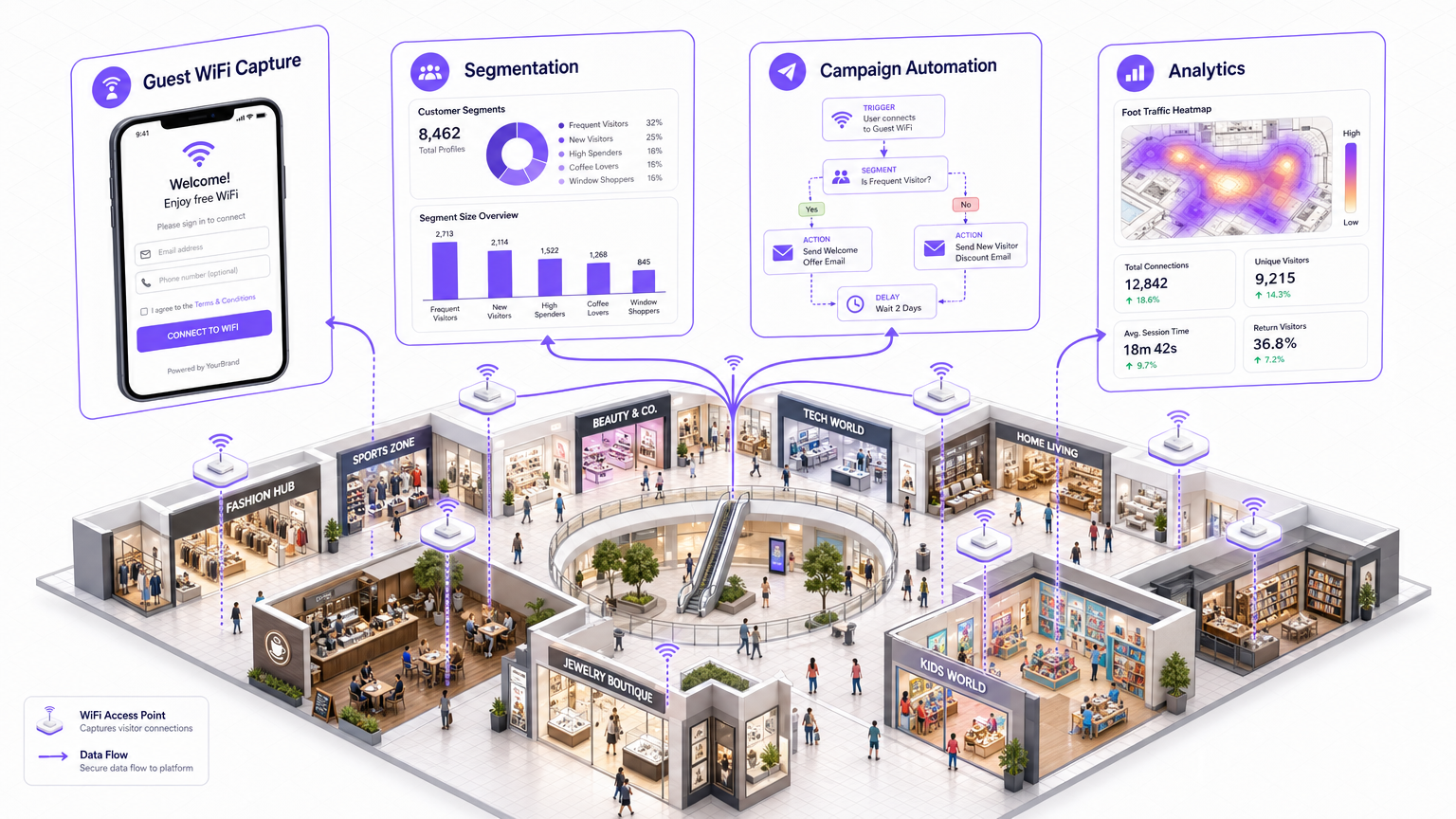
कार्यकारी सारांश
IT प्रबंधकों, नेटवर्क आर्किटेक्ट्स और स्थल संचालन निदेशकों के लिए, एंटरप्राइज़ अतिथि WiFi नेटवर्क एक महत्वपूर्ण, फिर भी अक्सर कम उपयोग की जाने वाली, रणनीतिक संपत्ति का प्रतिनिधित्व करता है। ऐतिहासिक रूप से एक अनिवार्य परिचालन व्यय के रूप में देखा जाता था—अतिथियों द्वारा मांगी जाने वाली एक बुनियादी सुविधा—आधुनिक WLAN इन्फ्रास्ट्रक्चर अब प्रथम-पक्ष डेटा अधिग्रहण और स्वचालित मार्केटिंग के लिए एक महत्वपूर्ण इंजन है।
WiFi marketing भौतिक स्थल उपस्थिति और डिजिटल ग्राहक जुड़ाव के बीच के अंतर को पाटता है। Captive Portal को एक सुरक्षित पहचान कैप्चर परत के रूप में उपयोग करके, संगठन समृद्ध, नियतात्मक ग्राहक प्रोफाइल बना सकते हैं। यह मार्गदर्शिका एक मजबूत WiFi मार्केटिंग समाधान को लागू करने के लिए आवश्यक तकनीकी वास्तुकला, परिनियोजन रणनीतियों और ROI माप ढाँचों की रूपरेखा तैयार करती है। हम यह जानेंगे कि डेटा को अनुपालनपूर्वक कैसे कैप्चर किया जाए (GDPR और PCI DSS का पालन करते हुए), उपस्थिति एनालिटिक्स का उपयोग करके दर्शकों को कैसे खंडित किया जाए, और स्वचालित अभियानों को कैसे ट्रिगर किया जाए जो मापने योग्य व्यावसायिक प्रभाव डालते हैं। चाहे एक ही स्टेडियम में या बहु-स्थान खुदरा संपत्ति में परिनियोजन किया जा रहा हो, यहाँ विस्तृत सिद्धांत IT को एक ऐसा समाधान प्रदान करने में सक्षम बनाएंगे जो सीधे लाभ को प्रभावित करता है।
तकनीकी गहन-विश्लेषण: वास्तुकला और मानक
अपने मूल में, WiFi marketing क्लाइंट एसोसिएशन प्रक्रिया को बाधित करने और पूर्ण नेटवर्क एक्सेस प्रदान करने से पहले प्रमाणीकरण लागू करने पर निर्भर करता है। यह नेटवर्क हार्डवेयर (Access Points और Controllers) और एक क्लाउड-आधारित Captive Portal और एनालिटिक्स प्लेटफॉर्म, जैसे Purple's Guest WiFi के संयोजन के माध्यम से प्राप्त किया जाता है।
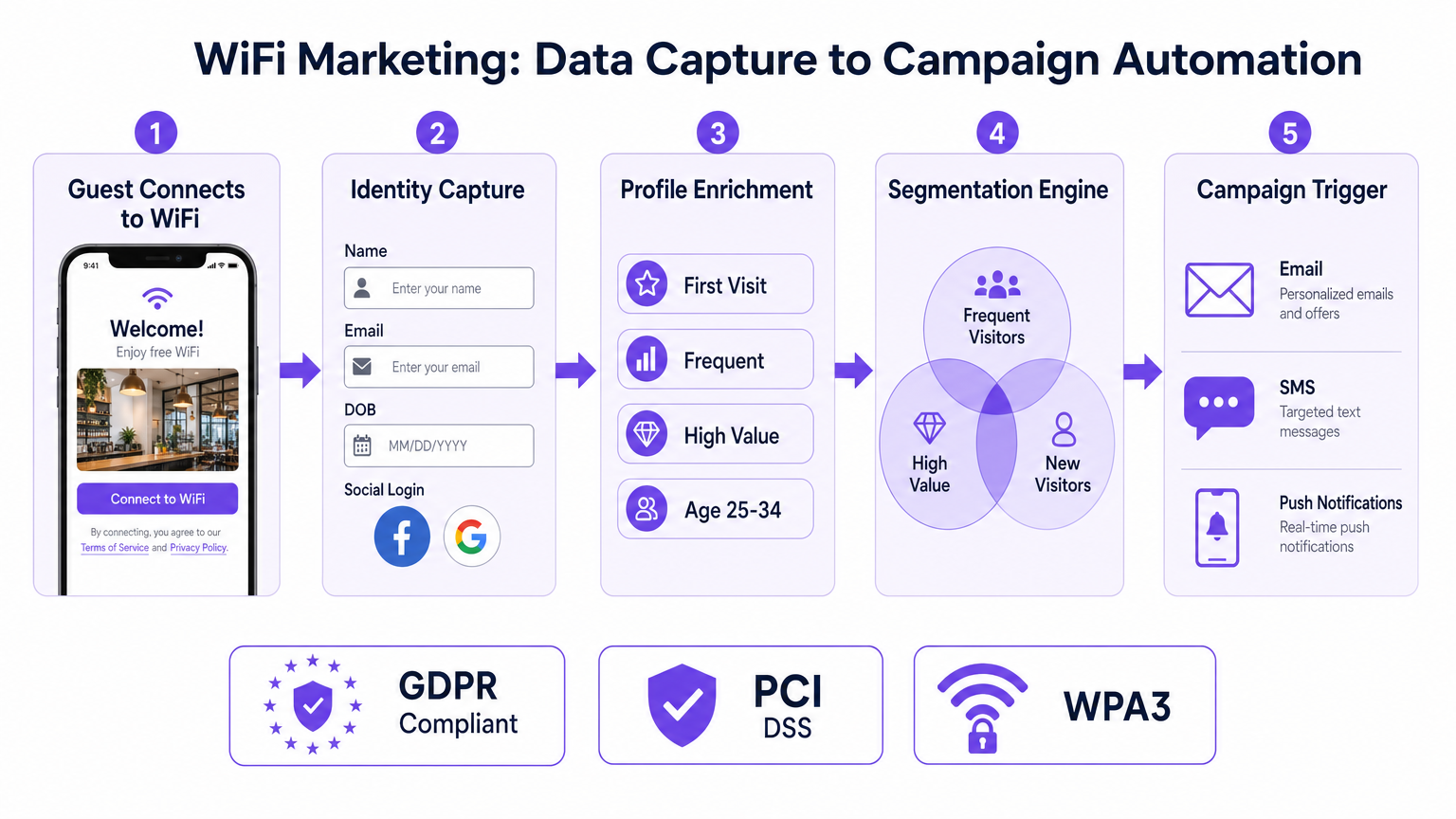
पहचान कैप्चर पाइपलाइन
- क्लाइंट एसोसिएशन: एक अतिथि डिवाइस (जैसे, स्मार्टफोन) खुले अतिथि SSID से जुड़ता है।
- ट्रैफिक इंटरसेप्शन: नेटवर्क कंट्रोलर या AP प्रारंभिक HTTP/HTTPS अनुरोध को बाधित करता है (अक्सर विशिष्ट प्रमाणीकरण डोमेन तक पहुंच की अनुमति देने के लिए एक 'वॉल्ड गार्डन' कॉन्फ़िगरेशन का उपयोग करके)।
- Captive Portal रीडायरेक्शन: क्लाइंट को एक होस्टेड Captive Portal स्प्लैश पेज पर रीडायरेक्ट किया जाता है।
- प्रमाणीकरण और डेटा कैप्चर: उपयोगकर्ता फॉर्म भरकर (नाम, ईमेल, जन्मतिथि) या OAuth (सोशल लॉगिन) के माध्यम से प्रमाणित करता है। यह चरण सत्यापित प्रथम-पक्ष डेटा कैप्चर करने के लिए महत्वपूर्ण है।
- RADIUS प्राधिकरण: सफल प्रमाणीकरण पर, प्लेटफ़ॉर्म कंट्रोलर को एक RADIUS Access-Accept संदेश भेजता है, MAC पते को अधिकृत करता है और उचित बैंडविड्थ नीतियां लागू करता है।
उन्नत प्रमाणीकरण: OpenRoaming और Passpoint
जबकि पारंपरिक Captive Portal प्रभावी हैं, उद्योग सहज, सुरक्षित प्रमाणीकरण की ओर बढ़ रहा है। Passpoint (Hotspot 2.0) और OpenRoaming जैसी प्रौद्योगिकियां उपकरणों को मैन्युअल हस्तक्षेप के बिना स्वचालित रूप से और सुरक्षित रूप से भाग लेने वाले नेटवर्कों से जुड़ने की अनुमति देती हैं। Purple Connect लाइसेंस के तहत OpenRoaming जैसी सेवाओं के लिए एक मुफ्त पहचान प्रदाता के रूप में कार्य करता है, जो आवश्यक उपस्थिति डेटा को कैप्चर करते हुए एक एन्क्रिप्टेड, घर्षण रहित ऑनबोर्डिंग अनुभव प्रदान करता है।
डेटा गोपनीयता और अनुपालन
IT टीमों को डेटा सुरक्षा विनियमों का कड़ाई से पालन सुनिश्चित करना चाहिए। एक अनुपालनशील WiFi मार्केटिंग प्लेटफ़ॉर्म करेगा:
- GDPR/CCPA अनुपालन सुनिश्चित करें: स्प्लैश पेज पर स्पष्ट ऑप्ट-इन तंत्र और पारदर्शी सेवा शर्तें लागू करें।
- स्थानीय PII स्टोरेज से बचें: स्थानीय एक्सेस पॉइंट पर व्यक्तिगत रूप से पहचान योग्य जानकारी (PII) कभी भी संग्रहीत न करें। डेटा को ट्रांज़िट में (TLS 1.2+) और एक सुरक्षित क्लाउड डेटाबेस के भीतर आराम पर एन्क्रिप्ट किया जाना चाहिए।
- PCI DSS बनाए रखें: अतिथि नेटवर्क (VLANs के माध्यम से) को कॉर्पोरेट और पॉइंट-ऑफ-सेल (POS) नेटवर्क से पूरी तरह से अलग करें।
कार्यान्वयन मार्गदर्शिका: परिनियोजन से स्वचालन तक
एक WiFi मार्केटिंग समाधान को तैनात करने के लिए सहज उपयोगकर्ता अनुभव और सटीक डेटा संग्रह सुनिश्चित करने के लिए सावधानीपूर्वक योजना की आवश्यकता होती है। यह विशेष रूप से जटिल वातावरणों के लिए प्रासंगिक है; विस्तृत वास्तुशिल्प विचारों के लिए How to Set Up WiFi in a Large Area or Multi-Site Estate पर हमारी मार्गदर्शिका देखें।
चरण 1: नेटवर्क कॉन्फ़िगरेशन और वॉल्ड गार्डन
अपने नेटवर्क कंट्रोलर (जैसे, Cisco, Aruba, Meraki) को RADIUS के माध्यम से बाहरी Captive Portal की ओर इंगित करने के लिए कॉन्फ़िगर करें। महत्वपूर्ण रूप से, 'वॉल्ड गार्डन' को कॉन्फ़िगर करें—IP पतों या डोमेन की एक सूची जिसे उपयोगकर्ता प्रमाणीकरण से पहले एक्सेस कर सकता है। इसमें पोर्टल URL, सोशल मीडिया प्रमाणीकरण डोमेन (यदि सोशल लॉगिन का उपयोग कर रहे हैं), और पोर्टल संपत्तियों को लोड करने के लिए आवश्यक कोई भी CDN एंडपॉइंट शामिल होना चाहिए।
चरण 2: स्प्लैश पेज डिज़ाइन और डेटा रणनीति
उपयोगकर्ता घर्षण के साथ डेटा कैप्चर को संतुलित करने के लिए स्प्लैश पेज डिज़ाइन करें। जो आपको चाहिए, वह पूछें, न कि वह सब कुछ जो आप चाहते हैं। एक विशिष्ट खुदरा परिनियोजन ईमेल और जन्मतिथि (जन्मदिन अभियानों के लिए) मांग सकता है। सुनिश्चित करें कि डिज़ाइन ब्रांड दिशानिर्देशों के अनुरूप हो और पूरी तरह से प्रतिक्रियाशील हो।
चरण 3: उपस्थिति एनालिटिक्स और सेगमेंटेशन
एक बार कनेक्ट होने के बाद, नेटवर्क उपस्थिति को ट्रैक करने के लिए डिवाइस के RSSI (Received Signal Strength Indicator) की लगातार निगरानी करता है। यह डेटा WiFi Analytics इंजन में फीड होता है, जो इसके आधार पर सेगमेंटेशन को सक्षम बनाता है:
- ठहरने का समय: अतिथि कितनी देर रुका।
- आवृत्ति: पहली बार आने वाला आगंतुक बनाम वफादार ग्राहक।
- गतिविधि: उन्होंने किन क्षेत्रों का दौरा किया (उन्नत स्थान सेवाओं की आवश्यकता है; देखें Indoor Positioning System: UWB, BLE, & WiFi Guide )।
चरण 4: API एकीकरण के माध्यम से अभियान स्वचालन
डेटा तभी मूल्यवान होता है जब उस पर कार्रवाई की जाती है। वेबहुक या REST API के माध्यम से WiFi प्लेटफ़ॉर्म को अपने CRM या मार्केटिंग ऑटोमेशन टूल (जैसे, Salesforce, HubSpot) के साथ एकीकृत करें। स्वचालित ट्रिगर बनाएं:
- ट्रिगर: अतिथि पहली बार लॉग इन करता है।
- कार्य: 10% छूट कोड के साथ एक 'स्वागत' ईमेल भेजें।
- ट्रिगर: वफादार ग्राहक 60 दिनों से नहीं आया हैहाँ।
- कार्यवाही: 'हम आपको याद करते हैं' का SMS ऑफ़र भेजें।
विशिष्ट वर्टिकल के लिए सर्वोत्तम अभ्यास
विभिन्न उद्योगों को WiFi मार्केटिंग के लिए अनुकूलित दृष्टिकोण की आवश्यकता होती है:
- खुदरा : लॉयल्टी डेटाबेस बनाने के लिए ईमेल पते कैप्चर करने और स्टोर लेआउट को अनुकूलित करने के लिए ठहरने के समय को ट्रैक करने पर ध्यान दें।
- आतिथ्य : मेहमानों को कमरे के नंबर और अंतिम नाम के माध्यम से प्रमाणित करने के लिए प्रॉपर्टी मैनेजमेंट सिस्टम (PMS) के साथ एकीकृत करें, जिसमें टियर-आधारित बैंडविड्थ (जैसे, मुफ्त बेसिक, सशुल्क प्रीमियम) की पेशकश की जाए।
- स्वास्थ्य सेवा : रोगी की गोपनीयता और सुरक्षित नेटवर्क सेगमेंटेशन को प्राथमिकता दें। अनुपालन विशिष्टताओं के लिए अस्पतालों में WiFi: सुरक्षित क्लिनिकल नेटवर्क के लिए एक मार्गदर्शिका देखें।
- परिवहन : उच्च-घनत्व, क्षणिक कनेक्शनों को संभालें। प्रायोजित स्प्लैश पेजों के माध्यम से त्वरित प्रमाणीकरण और मुद्रीकरण पर ध्यान दें। (यह भी प्रासंगिक: एंटरप्राइज़ इन-कार Wi-Fi समाधानों के लिए आपकी मार्गदर्शिका )।
समस्या निवारण और जोखिम न्यूनीकरण
- MAC Randomization: आधुनिक मोबाइल OSs ट्रैकिंग को रोकने के लिए MAC पते को रैंडमाइज करते हैं। हालांकि, वे आमतौर पर प्रति SSID एक सुसंगत रैंडमाइज्ड MAC का उपयोग करते हैं। सुनिश्चित करें कि आपकी नेटवर्क कॉन्फ़िगरेशन स्थिर रहे ताकि लौटने वाले उपकरणों को पहचाना जा सके।
- Captive Portal पॉप अप नहीं हो रहा है: अक्सर गलत तरीके से कॉन्फ़िगर किए गए वॉल्ड गार्डन या आक्रामक DNS इंटरसेप्शन के कारण होता है। सत्यापित करें कि क्लाइंट डिवाइस पोर्टल URL को हल कर सकता है और प्रमाणीकरण-पूर्व आवश्यक संसाधनों तक पहुंच सकता है।
- बैंडविड्थ हॉगिंग: उचित उपयोग सुनिश्चित करने और कोर नेटवर्क प्रदर्शन की रक्षा के लिए सख्त बैंडविड्थ शेपिंग और सत्र सीमाएं (जैसे, प्रति सत्र 2 घंटे, 5 Mbps डाउन/1 Mbps अप) लागू करें।
ROI और व्यावसायिक प्रभाव
WiFi मार्केटिंग नेटवर्क को लागत केंद्र से राजस्व जनरेटर में बदल देती है। ROI को क्लोज्ड-लूप एट्रिब्यूशन के माध्यम से मापा जाता है: डिजिटल अभियान को भौतिक विज़िट तक ट्रैक करना।
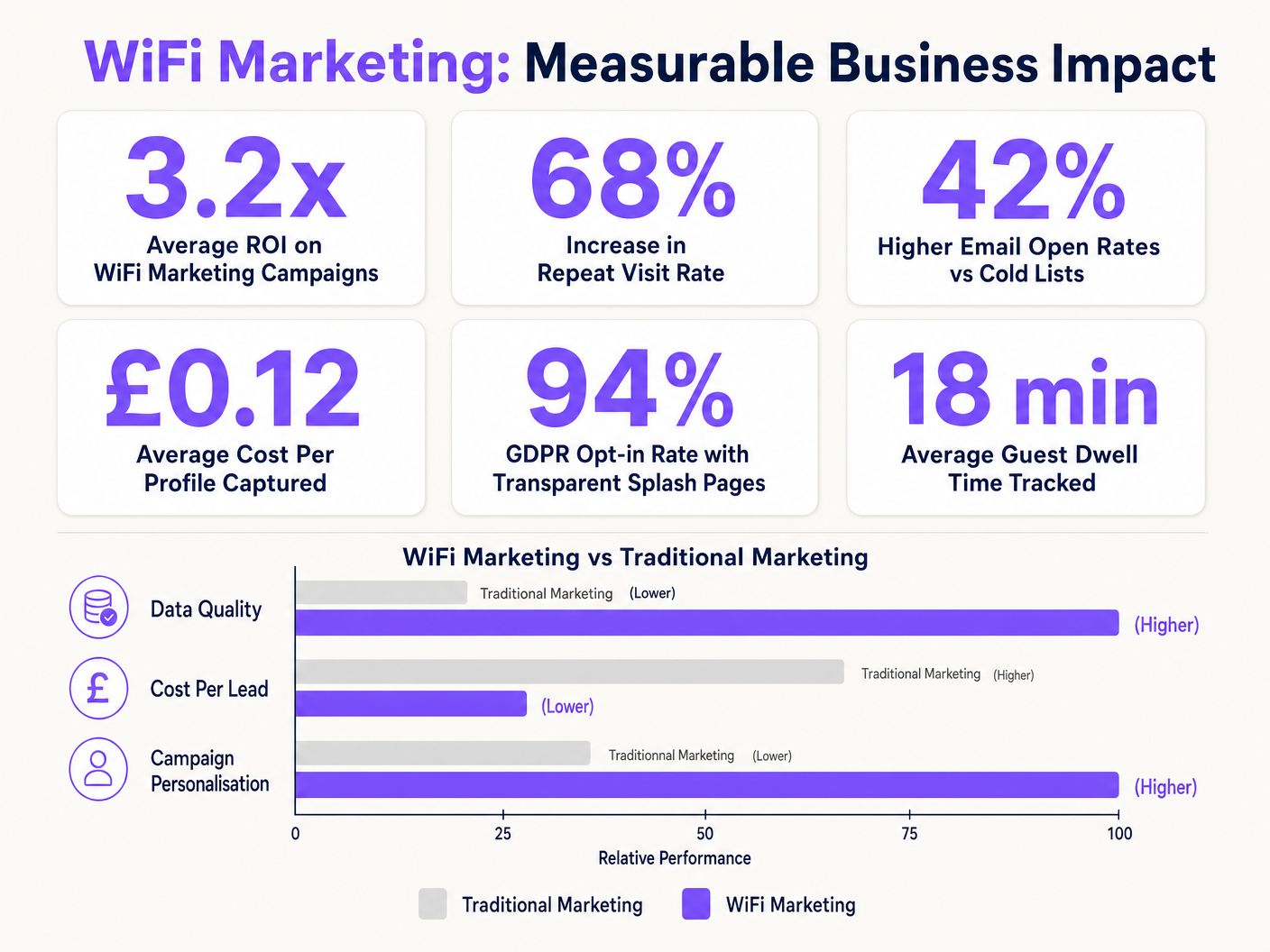
WiFi इंफ्रास्ट्रक्चर की लागत की तुलना स्वचालित अभियानों (जैसे, SMS ऑफ़र द्वारा प्रेरित लौटने वाले ग्राहक का मूल्य) से उत्पन्न राजस्व से करके, संगठन नेटवर्क के व्यावसायिक प्रभाव को स्पष्ट रूप से प्रदर्शित कर सकते हैं।
मुख्य शब्द और परिभाषाएं
Captive Portal
A web page that the user of a public-access network is obliged to view and interact with before access is granted.
This is the primary interface for identity capture and brand engagement in WiFi marketing.
Walled Garden
A restricted environment that controls the user's access to web content and services pre-authentication.
Essential for allowing devices to load the captive portal assets and access social login providers before full internet access is granted.
RADIUS (Remote Authentication Dial-In User Service)
A networking protocol that provides centralized Authentication, Authorization, and Accounting (AAA) management.
The core protocol used by the network controller to communicate with the cloud platform to authorise a user's MAC address after they complete the captive portal flow.
MAC Address (Media Access Control)
A unique identifier assigned to a network interface controller (NIC) for use as a network address.
The primary identifier used to track device presence and associate a physical device with a digital profile captured via the portal.
RSSI (Received Signal Strength Indicator)
A measurement of the power present in a received radio signal.
Used by access points to estimate the distance of a client device, enabling location analytics and dwell time calculations.
OpenRoaming
A roaming federation service enabling an automatic and secure WiFi experience globally.
Represents the future of seamless onboarding, replacing manual captive portal logins while still allowing venues to capture presence data securely.
Closed-Loop Attribution
The ability to track a marketing interaction (like an email open) directly to a physical business outcome (like a store visit).
The ultimate metric for proving the ROI of WiFi marketing, demonstrating that digital campaigns drive physical footfall.
VLAN (Virtual Local Area Network)
A logical subnetwork that groups a collection of devices from different physical LANs.
Critical for security; guest WiFi traffic must be isolated on a separate VLAN from corporate and Point-of-Sale (POS) systems.
केस स्टडीज
A 200-room hotel needs to implement guest WiFi that captures marketing data but also integrates with their Property Management System (PMS) to provide tiered internet access (free basic, paid premium for conferences).
- Deploy APs with dual SSIDs: one for corporate (802.1X) and one for guests (Open with Captive Portal).
- Configure the guest SSID to redirect to a cloud-hosted portal.
- Implement a PMS integration via API. On the splash page, guests enter their Room Number and Last Name.
- The portal queries the PMS to verify the guest. If verified, they receive standard bandwidth.
- For conference attendees or premium users, offer an 'Upgrade' path via a payment gateway integration (PCI compliant, offloaded from the local network), adjusting the RADIUS attributes to increase bandwidth limits.
A national retail chain with 50 locations wants to build a first-party data list to reduce reliance on expensive third-party advertising. They need to track the effectiveness of their email campaigns in driving physical store visits.
- Standardise the guest WiFi architecture across all 50 locations, pointing to a centralised captive portal.
- Design the splash page to require an Email Address and opt-in for marketing communications.
- Integrate the WiFi platform with the central CRM via API.
- When a marketing email is sent, the CRM tracks the digital open/click.
- When that customer later walks into any of the 50 stores, the APs detect their MAC address (previously linked to their email during initial login).
- The WiFi platform logs the physical visit and sends this data back to the CRM, attributing the visit to the email campaign.
परिदृश्य विश्लेषण
Q1. Your organisation is deploying guest WiFi across 10 retail locations. The marketing team wants to implement a Facebook Social Login option on the captive portal to capture rich demographic data. What critical network configuration step must the IT team perform to ensure this works?
💡 संकेत:Consider how the client device communicates before it has been fully authenticated by the RADIUS server.
अनुशंसित दृष्टिकोण दिखाएं
The IT team must configure the 'Walled Garden' on the network controller. They need to whitelist the specific IP ranges or domains associated with Facebook's authentication servers. Without this, the client device cannot reach Facebook to complete the OAuth process, and the captive portal will fail to load or authenticate the user.
Q2. A venue operations director reports that the new guest WiFi system is causing performance issues on the corporate network, specifically slowing down the Point-of-Sale (POS) terminals during peak hours. What architectural flaw is the likely cause, and how should it be resolved?
💡 संकेत:Think about network segmentation and resource allocation.
अनुशंसित दृष्टिकोण दिखाएं
The likely cause is a lack of proper network segmentation and bandwidth management. The guest WiFi traffic is likely sharing the same logical network or bandwidth pool as the corporate/POS traffic. To resolve this, IT must ensure the guest SSID is mapped to a dedicated VLAN, completely isolated from the POS network (crucial for PCI DSS compliance). Additionally, they must implement bandwidth shaping rules on the controller (e.g., capping guest traffic to 10% of total throughput or applying per-user rate limits).
Q3. The marketing department is frustrated because they are seeing a high drop-off rate on the captive portal; many users connect to the SSID but never complete the login process. The portal currently asks for Name, Email, Phone Number, Date of Birth, and Postal Code. What is the recommended strategy to improve conversion?
💡 संकेत:Balance the desire for rich data against user friction.
अनुशंसित दृष्टिकोण दिखाएं
The recommended strategy is to reduce user friction by simplifying the data capture form. The principle is 'ask for what you need, not what you want.' The IT/Marketing teams should implement a 'progressive profiling' approach. For the initial login, require only a single, high-value identifier (like Email). Once the device MAC is associated with that email, subsequent visits can be tracked seamlessly, or the portal can be configured to ask for one additional piece of information (like DOB) on the next visit.




