
DNS Over HTTPS (DoH): Implicações para a Filtragem em WiFi Público
Este guia de referência técnica explica como o DNS over HTTPS (DoH) ignora a filtragem tradicional de conteúdo na porta 53 em redes WiFi públicas. Ele fornece estratégias de mitigação práticas e neutras em relação a fornecedores para que arquitetos de rede e gerentes de TI recuperem a visibilidade, garantam a conformidade e protejam o acesso de convidados em ambientes corporativos.
Video overview
Ouça este guia
Ver transcrição do podcast
Parte da nossa série principal: Enterprise WiFi Security Guide →
Resumo Executivo
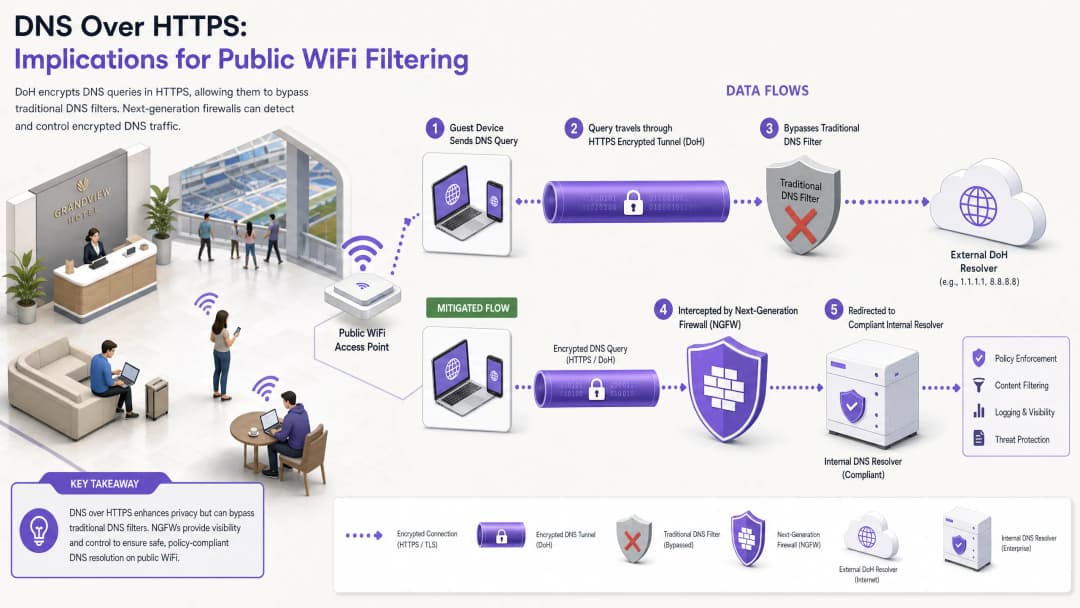
Por quase uma década, o filtragem tradicional de DNS na porta 53 serviu como o principal mecanismo para aplicar políticas de conteúdo e mitigar ameaças de malware em redes WiFi públicas. No entanto, a ampla adoção do DNS over HTTPS (DoH) por navegadores e sistemas operacionais populares interrompe fundamentalmente esse modelo. Ao encapsular as consultas DNS dentro do tráfego HTTPS padrão na porta 443, o DoH torna essas consultas invisíveis para as técnicas tradicionais de interceptação de rede.
Para gerentes de TI corporativos e arquitetos de rede que gerenciam WiFi de visitantes em Hospitality, Retail, estádios e locais do setor público, isso cria uma lacuna significativa de conformidade e segurança. Quando os dispositivos dos visitantes ignoram silenciosamente os resolvedores de DNS designados do local, as políticas de uso aceitável cuidadosamente elaboradas falham, expondo a rede a tráfego de malware de comando e controle (C2) e a conteúdo inadequado. Este guia detalha a mecânica do vetor de desvio de DoH e fornece uma arquitetura em camadas de defesa em profundidade para restaurar a visibilidade da rede, garantir a conformidade regulatória e manter uma segurança robusta de Guest WiFi.
Aprofundamento Técnico: Mecanismos de Desvio de DoH
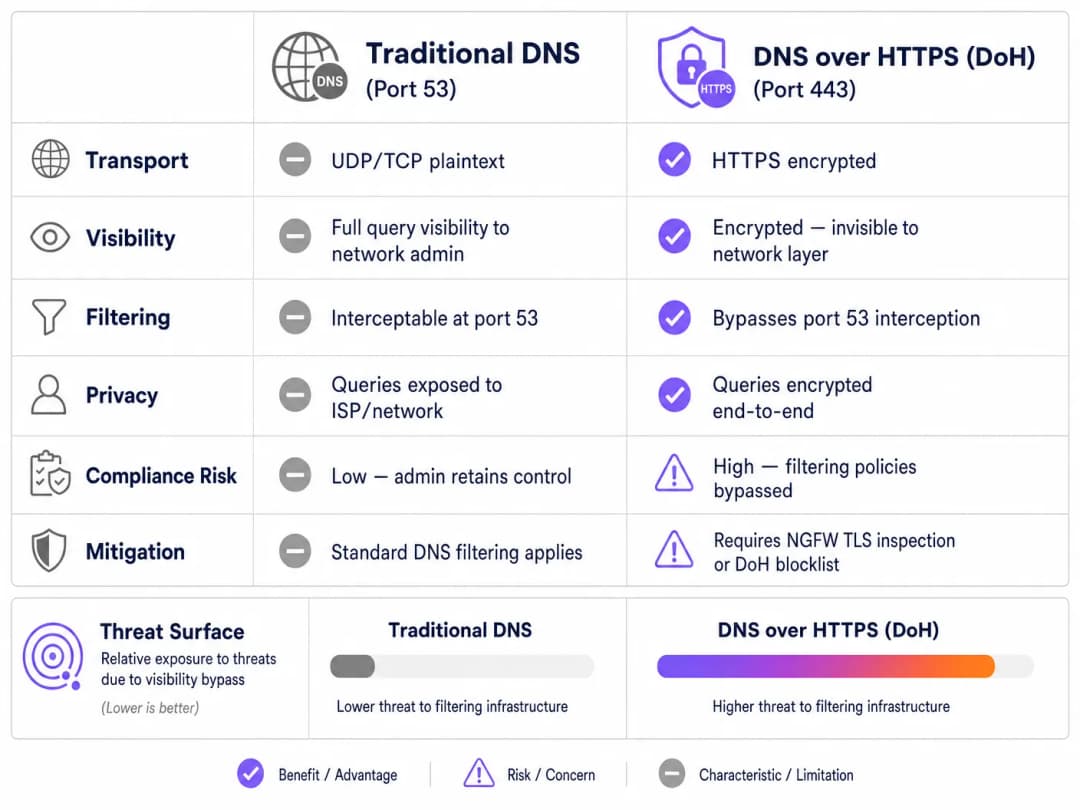
Para entender o vetor de ameaça do DoH, deve-se primeiro examinar a arquitetura de linha de base da filtragem tradicional de DNS. Historicamente, quando o dispositivo de um visitante se conectava a uma rede pública e solicitava um domínio, a consulta era transmitida em texto simples via UDP ou TCP na porta 53. Os administradores de rede podiam facilmente interceptar esse tráfego no firewall ou controlador sem fio e redirecioná-lo para um resolvedor de DNS em conformidade, que verificava o domínio solicitado em relação a feeds de inteligência de ameaças e políticas de categorização de conteúdo.
O DNS over HTTPS ignora todo esse plano de controle. Por design, o DoH criptografa a consulta DNS e a transmite para um resolvedor externo (como o 1.1.1.1 da Cloudflare ou o 8.8.8.8 do Google) usando criptografia TLS padrão na porta 443. Do ponto de vista da infraestrutura de rede do local, uma consulta DoH é indistinguível de um usuário navegando em um site seguro ou transmitindo vídeo.
Padrões de Implementação: DoH em Nível de Aplicativo vs Nível de SO
Os desafios para os administradores de rede são ainda mais agravados pela forma como o DoH é implementado em diferentes plataformas. Existem dois padrões principais de implantação:
- DoH em nível de aplicativo: Neste modelo, o aplicativo mantém sua própria configuração de DoH independentemente do sistema operacional host. O Mozilla Firefox é um exemplo clássico; quando o DoH está ativado, o Firefox ignora os servidores DNS atribuídos via DHCP e roteia todas as consultas para o seu provedor de DoH preferencial. As regras de interceptação da porta 53 do local são completamente ignoradas.
- DoH em nível de SO (Oportunista): Sistemas operacionais modernos, incluindo Windows 11 e Android, usam DoH oportunista. O SO verifica se o resolvedor DNS atribuído por DHCP possui um endpoint DoH conhecido. Se uma correspondência for encontrada, o SO atualiza automaticamente a conexão para DoH. Embora isso preserve a escolha do resolvedor do administrador, ele desvia o tráfego para a porta 443, o que pode burlar ferramentas de monitoramento legadas que esperam tráfego na porta 53.
Além disso, os administradores devem considerar o DNS over TLS (DoT), que opera na porta 853. Embora o DoT seja mais fácil de bloquear devido à sua porta dedicada, ele é o padrão para o recurso "DNS Privado" do Android e representa um risco de desvio semelhante se a porta 853 permanecer aberta na VLAN de visitantes.
Guia de Implementação: Uma Arquitetura de Defesa em Profundidade
Recuperar o controle sobre a resolução de DNS exige uma estratégia de mitigação em várias camadas. Confiar em um único ponto de controle é insuficiente contra protocolos modernos e criptografados. Para proteger o acesso de visitantes e garantir a conformidade com frameworks como PCI DSS e GDPR, os arquitetos de rede devem implementar a seguinte arquitetura.
Camada 1: Bloquear Endpoints de Resolvedores DoH Conhecidos
A mitigação mais imediata e eficaz é bloquear o tráfego HTTPS de saída para resolvedores DoH públicos conhecidos na borda da rede. Embora o tráfego DoH se misture com o HTTPS padrão, os endereços IP de destino e os domínios dos principais provedores de DoH são bem conhecidos.
Ao configurar firewalls de próxima geração (NGFWs) para descartar conexões com esses endpoints específicos (por exemplo, dns.google, cloudflare-dns.com), os administradores forçam a falha da resolução DoH do dispositivo cliente. Na maioria das implementações, quando o DoH falha, o cliente volta naturalmente para o DNS tradicional e não criptografado na porta 53, que pode então ser interceptado e filtrado.
Nota de Implementação: Esta abordagem requer a manutenção de uma lista de bloqueio atualizada. Os fornecedores de firewalls empresariais frequentemente oferecem feeds de ameaças dinâmicos que atualizam automaticamente os endpoints DoH conhecidos, reduzindo significativamente a sobrecarga operacional.
Camada 2: Impor Interceptação e Redirecionamento da Porta 53
Bloquear o DoH só é eficaz se o tráfego de fallback for gerenciado corretamente. A rede deve ser configurada para interceptar todo o tráfego UDP e TCP de saída na porta 53 originado da VLAN de visitantes. Esse tráfego deve ser redirecionado obrigatoriamente (via regras de NAT/redirecionamento de porta) para o resolvedor DNS autorizado e em conformidade do local.
Esta etapa é crucial porque muitos dispositivos ou aplicativos maliciosos codificam servidores DNS públicos (como 8.8.8.8) diretamente em suas pilhas de rede, ignorando as configurações fornecidas pelo DHCP. Sem a interceptação forçada, esses dispositivos burlarão com sucesso as políticas de filtragem do local, mesmo que o DoH esteja bloqueado.
Camada 3: Bloquear a Porta 853 (DNS over TLS)
Para mitigar o vetor de bypass via DoT, os administradores devem bloquear explicitamente o tráfego de saída na porta TCP 853 da rede de convidados. Semelhante à mitigação de DoH, o bloqueio do DoT força os dispositivos Android e outros clientes compatíveis com DoT a recorrerem ao DNS padrão da porta 53.

Tem dúvidas sobre a sua configuração específica?
A nossa equipa trabalha com operadores de espaços, gestores de TI e engenheiros de rede em 80.000 locais. Agende uma chamada de 20 minutos e mostraremos como outros profissionais na sua situação o resolveram.
Melhores Práticas e Considerações de Conformidade
A implementação da mitigação de DoH não é apenas uma tarefa técnica; é um requisito fundamental para manter a conformidade regulatória e aplicar políticas de uso aceitável.
- Documentação de Políticas: Certifique-se de que os termos e condições do Captive Portal do local declarem explicitamente que a filtragem de DNS está ativa para fins de segurança e conformidade. Isso fornece respaldo legal sob a GDPR e o Online Safety Act do Reino Unido ao bloquear protocolos de DNS criptografados.
- Segmentação de Rede: Isole rigidamente o WiFi de convidados das redes corporativas e de pagamento usando VLANs e regras de firewall. Este é um requisito essencial da PCI-DSS v4.0, que também exige o monitoramento robusto do tráfego de rede - monitoramento que se torna impossível se o DoH puder ignorar os controles de segurança.
- Monitoramento Contínuo: Aproveite os recursos de relatório do seu serviço corporativo de filtragem de DNS para monitorar os volumes de consultas e detectar padrões anômalos. Uma queda repentina no tráfego da porta 53 de uma sub-rede específica geralmente indica que os dispositivos dos clientes estão utilizando um novo resolvedor DoH não bloqueado.
- Integração com Analytics: Ao implementar o acesso seguro para convidados, considere como os fluxos de autenticação se integram aos objetivos de negócios mais amplos. O uso de um WiFi Assistant para autenticação segura baseada em perfil garante que os usuários se conectem com segurança, ajudando o local a entender a frequência e o tempo de permanência usando o WiFi Analytics, assim como o Offline Maps Mode melhora a experiência do visitante.
Resolução de Problemas e Mitigação de Riscos
Ao implantar a mitigação de DoH, as equipes de rede frequentemente encontram modos de falha específicos. Antecipar esses problemas minimiza o tempo de inatividade e a inconveniência dos convidados.
Regras de Interceptação Incompletas
A falha de implantação mais comum é a interceptação incompleta da porta 53. Os administradores podem configurar o servidor DHCP para fornecer os IPs de DNS corretos, mas falhar em implementar as regras de NAT de firewall necessárias para capturar solicitações de DNS codificadas rigidamente. Mitigação: Sempre teste a implantação configurando um dispositivo cliente com um servidor DNS externo estático (por exemplo, 9.9.9.9) e verifique se as solicitações ainda são roteadas com sucesso para o serviço de filtragem do local.
Negligência do IPv6
À medida que as redes transitam para configurações de pilha dupla, as regras de firewall são frequentemente escritas exclusivamente para IPv4. Se as listas de bloqueio DoH e as regras de interceptação da porta 53 não cobrirem o IPv6, os dispositivos modernos ignorarão perfeitamente os controles IPv4 usando sua pilha IPv6. Mitigação: Certifique-se de que todas as listas de bloqueio DoH, regras de redirecionamento da porta 53 e regras de descarte da porta 853 sejam aplicadas igualmente em ambas as tabelas de roteamento IPv4 e IPv6.
Interrupção de Aplicativos
O bloqueio agressivo de DoH pode ocasionalmente quebrar aplicativos móveis específicos que dependem exclusivamente de suas próprias implementações de DoH e se recusam a retornar ao DNS padrão. Mitigação: Mantenha um processo de exceção documentado. Se um aplicativo essencial para os negócios parar de funcionar, em vez de liberar o DoH globalmente, use a inspeção TLS (se disponível no NGFW) para permitir seletivamente o tráfego DoH para o resolvedor daquele aplicativo específico.
Retorno sobre o Investimento e Impacto nos Negócios
A justificativa de negócios para uma mitigação robusta de DoH baseia-se na prevenção de riscos e na garantia de conformidade. Um único incidente - como uma investigação regulatória resultante de um visitante acessando conteúdo ilegal, ou um dispositivo IoT comprometido estabelecendo uma conexão C2 via DoH - pode gerar custos que excedem em muito o tempo de engenharia necessário para implementar os controles adequados.
Para uma empresa que opera em vários locais, a padronização da arquitetura de mitigação de DoH garante a aplicação consistente de políticas. Essa padronização reduz a carga operacional nas equipes de suporte de TI, pois as notificações de abuso dos ISPs caem para zero e o desempenho da rede é mantido ao bloquear conteúdos inadequados de alta largura de banda. No final, proteger a camada de DNS garante que o investimento do local em Guest WiFi permaneça um ativo seguro e em conformidade, em vez de uma responsabilidade.
Definições principais
DNS over HTTPS (DoH)
Um protocolo para realizar a resolução remota do Sistema de Nomes de Domínio (DNS) por meio do protocolo HTTPS, criptografando os dados entre o cliente DoH e o resolvedor DNS baseado em DoH.
Quando as equipes de TI implantam a filtragem de conteúdo, o DoH age como um mecanismo de desvio, ocultando as consultas de DNS dentro do tráfego web criptografado padrão.
DNS over TLS (DoT)
Um protocolo de segurança para criptografar e empacotar consultas e respostas de DNS por meio do protocolo Transport Layer Security (TLS), operando em uma porta dedicada (853).
Frequentemente ativado por padrão em dispositivos Android modernos (DNS Privado), o DoT deve ser bloqueado no firewall para garantir que as consultas retornem ao DNS filtrado do local.
DoH Oportunista
Um comportamento em que um sistema operacional ou navegador atualiza automaticamente as consultas de DNS padrão para DoH se detectar que o resolvedor DNS configurado suporta o protocolo criptografado.
Esse recurso, comum no Windows 11 e Chrome, significa que mesmo se um local atribuir um IP de DNS padrão, o tráfego ainda pode mudar para a porta criptografada 443, ignorando o monitoramento legado.
Interceptação de Porta 53
Uma configuração de firewall de rede que captura todo o tráfego de saída na porta UDP/TCP 53 e o redireciona obrigatoriamente para um resolvedor DNS designado, independentemente do IP de destino solicitado pelo cliente.
Essencial para capturar consultas de DNS de dispositivos com configurações de DNS codificadas ou daqueles que retornaram de uma conexão DoH com falha.
Next-Generation Firewall (NGFW)
Um dispositivo de segurança de rede que oferece recursos além de um firewall tradicional de inspeção de estado, incluindo inspeção profunda de pacotes, reconhecimento de aplicativos e descriptografia TLS/SSL.
NGFWs são críticos para a mitigação de DoH, pois podem identificar e bloquear o tráfego DoH com base em assinaturas de aplicativos, em vez de apenas endereços IP.
Comportamento de Fallback
A resposta programada de um dispositivo cliente quando seu protocolo DNS criptografado preferido (DoH ou DoT) falha ao se conectar, geralmente resultando na reversão do dispositivo para o DNS padrão não criptografado.
Arquitetos de rede dependem desse comportamento; ao quebrar intencionalmente as conexões DoH/DoT, eles forçam o dispositivo a usar a porta 53, que pode ser interceptada.
Comando e Controle (C2)
A infraestrutura utilizada por invasores para se comunicar com dispositivos comprometidos (malware/botnets) dentro de uma rede alvo.
Malwares modernos usam cada vez mais DoH para ocultar comunicações de C2 dos monitores de rede corporativa, tornando a mitigação de DoH um requisito de segurança crítico.
Captive Portal
Uma página web que o usuário de uma rede de acesso público é obrigado a visualizar e interagir antes que o acesso seja concedido.
O Captive Portal é o local legalmente apropriado para informar aos usuários que seu tráfego DNS está sendo filtrado e que os protocolos DNS criptografados estão bloqueados.
Exemplos práticos
Um hotel de 400 quartos implantou recentemente um serviço de filtragem de DNS baseado em nuvem para cumprir os padrões da marca relacionados a conteúdos adequados para famílias. No entanto, o gerente de TI percebe que uma parte significativa do tráfego de convidados ainda está acessando sites de conteúdo adulto, e o painel de filtragem de DNS mostra volumes de consultas abaixo do esperado. Como o arquiteto de rede deve remediar essa falha de segurança?
- Auditar Regras de Firewall: O arquiteto deve primeiro verificar se a porta de saída TCP/UDP 53 está sendo interceptada e redirecionada via NAT para o serviço de DNS em nuvem.
- Bloquear Resolvedores DoH: Implementar uma lista de bloqueio no NGFW para descartar o tráfego de saída HTTPS (porta 443) destinado a provedores de DoH conhecidos (ex: Cloudflare, Google, Quad9).
- Bloquear DoT: Adicionar uma regra de firewall para descartar todo o tráfego de saída da porta TCP 853 para evitar o desvio do DNS privado do Android.
- Verificar IPv6: Garantir que todas as regras acima sejam aplicadas tanto ao tráfego IPv4 quanto ao IPv6.
Uma rede de varejo com 150 locais precisa implementar filtragem de DNS para bloquear malware e phishing no seu WiFi de convidados. Eles usam firewalls básicos de filial sem recursos avançados de inspeção TLS. Como eles podem mitigar o DoH de forma eficaz sem atualizar o hardware?
Sem a inspeção TLS, a rede deve depender de roteamento robusto e listas de bloqueio.
- Implantar uma lista dinâmica de bloqueio de IPs/Domínios DoH nos firewalls das filiais, configurada para atualizar automaticamente por meio de um feed externo de ameaças.
- Implementar redirecionamento NAT estrito da porta 53 para o filtro de DNS corporativo.
- Bloquear totalmente a porta 853.
- Atualizar os Termos de Serviço do Captive Portal para declarar explicitamente que os protocolos de DNS criptografados são bloqueados para garantir o cumprimento das políticas de segurança da rede.
Questões práticas
Q1. Um engenheiro de rede de um estádio configura o servidor DHCP para fornecer o endereço IP do seu serviço DNS seguro e filtrado para todos os dispositivos de visitantes. No entanto, os testes revelam que dispositivos com configurações de DNS inseridas manualmente (por exemplo, 8.8.8.8) estão ignorando o filtro com sucesso. Qual é a correção de arquitetura mais apropriada?
Dica: Considere a diferença entre sugerir uma rota e impor uma rota na borda da rede.
Ver resposta modelo
O engenheiro deve implementar uma regra de encaminhamento de porta NAT no firewall do estádio. Essa regra deve interceptar todo o tráfego de saída UDP e TCP na porta 53 originado da VLAN de visitantes e traduzir obrigatoriamente o IP de destino para o endereço IP do serviço DNS seguro. Isso garante que, independentemente da configuração local do cliente, o tráfego seja roteado através da política de filtragem.
Q2. Após a implementação de uma lista de bloqueio estrita de DoH, o suporte de TI de um centro de convenções recebe relatos de que um aplicativo de gerenciamento de eventos específico e personalizado não está carregando para os participantes. A captura de pacotes mostra que o aplicativo está tentando usar seu próprio resolvedor DoH codificado no sistema, que está bloqueado, e o aplicativo se recusa a reverter para o DNS padrão. Como isso deve ser resolvido?
Dica: Equilibre a política de segurança com a continuidade dos negócios. O firewall consegue distinguir entre o tráfego DoH geral e o tráfego para um endpoint específico aprovado?
Ver resposta modelo
O administrador deve criar uma exceção na política do NGFW. Em vez de desativar a lista de bloqueio de DoH globalmente, ele deve identificar o endereço IP ou domínio específico do resolvedor DoH usado pelo aplicativo de gerenciamento de eventos e liberá-lo. Se o firewall for compatível com inspeção na camada de aplicação (Camada 7), uma solução mais robusta é criar uma política que permita o tráfego DoH apenas se o destino corresponder à infraestrutura do aplicativo aprovado, garantindo que as tentativas gerais de desvio de DoH permaneçam bloqueadas.
Q3. Uma organização do setor público está auditando a conformidade do seu WiFi de visitantes. Eles bloquearam com sucesso a porta 853 (DoT) e implementaram a interceptação da porta 53. No entanto, eles não têm orçamento para um NGFW com inspeção TLS avançada ou listas de bloqueio dinâmicas de DoH. Qual é a estratégia restante mais eficaz para mitigar o DoH?
Dica: Se listas dinâmicas não estiverem disponíveis, como você pode lidar com a grande maioria do tráfego DoH oportunista?
Ver resposta modelo
A organização deve implementar uma lista de bloqueio estática em seu firewall existente, visando os endereços IP e domínios dos provedores públicos de DoH mais comuns (ex: Cloudflare, Google, Quad9). Embora isso exija manutenção manual e não capture resolvedores DoH obscuros, pesquisas mostram que a grande maioria do tráfego DoH adota como padrão um punhado de grandes provedores. Isso fornece uma solução "80/20" altamente eficaz dentro de suas limitações orçamentárias.
Continue a ler esta série
Responsabilidade em WiFi Público: Por Que o Filtro de Conteúdo é Obrigatório
Este guia de referência técnica descreve os riscos legais e operacionais de fornecer WiFi público sem filtragem, detalhando por que o filtro de conteúdo é um requisito de implantação obrigatório para operadores de locais. Ele fornece estratégias de arquitetura acionáveis, etapas de implementação e táticas de mitigação de riscos para proteger as redes contra atividades ilegais, violação de direitos autorais e descumprimento regulatório. Operadores de locais e CTOs encontrarão estudos de caso concretos, frameworks de decisão e orientações de configuração para implementar um ambiente de Guest WiFi em conformidade e defensável.
Bloqueando Malware e Phishing na Borda da Rede
Este guia de referência técnica descreve a arquitetura, a implantação e o impacto nos negócios da implementação de proteção contra ameaças em nível de rede para proteger dispositivos IoT e de convidados não gerenciados na borda da rede. Ele fornece orientações práticas para que líderes de TI bloqueiem malware e phishing de forma proativa.
Conformidade com o IWF para Redes WiFi Públicas no Reino Unido
Este guia autoritativo detalha os requisitos técnicos, arquitetura e estratégias de implantação para implementar redes WiFi públicas em conformidade com o IWF em locais no Reino Unido. Ele fornece aos líderes de TI frameworks práticos para mitigar riscos jurídicos enquanto mantêm o acesso à rede de alto desempenho.
Tem dúvidas sobre a sua configuração específica?
A nossa equipa trabalha com operadores de espaços, gestores de TI e engenheiros de rede em 80.000 locais. Agende uma chamada de 20 minutos e mostraremos como outros profissionais na sua situação o resolveram.