
GDPR and Guest WiFi:场所营销人员与 IT 合规指南
本指南为 IT 经理和场所运营商提供了一个实用框架,以确保 Guest WiFi 服务完全符合 GDPR。内容涵盖技术架构、同意机制、数据保留,以及如何将合规性转化为安全的第一方数据资产。
收听本指南
查看播客转录
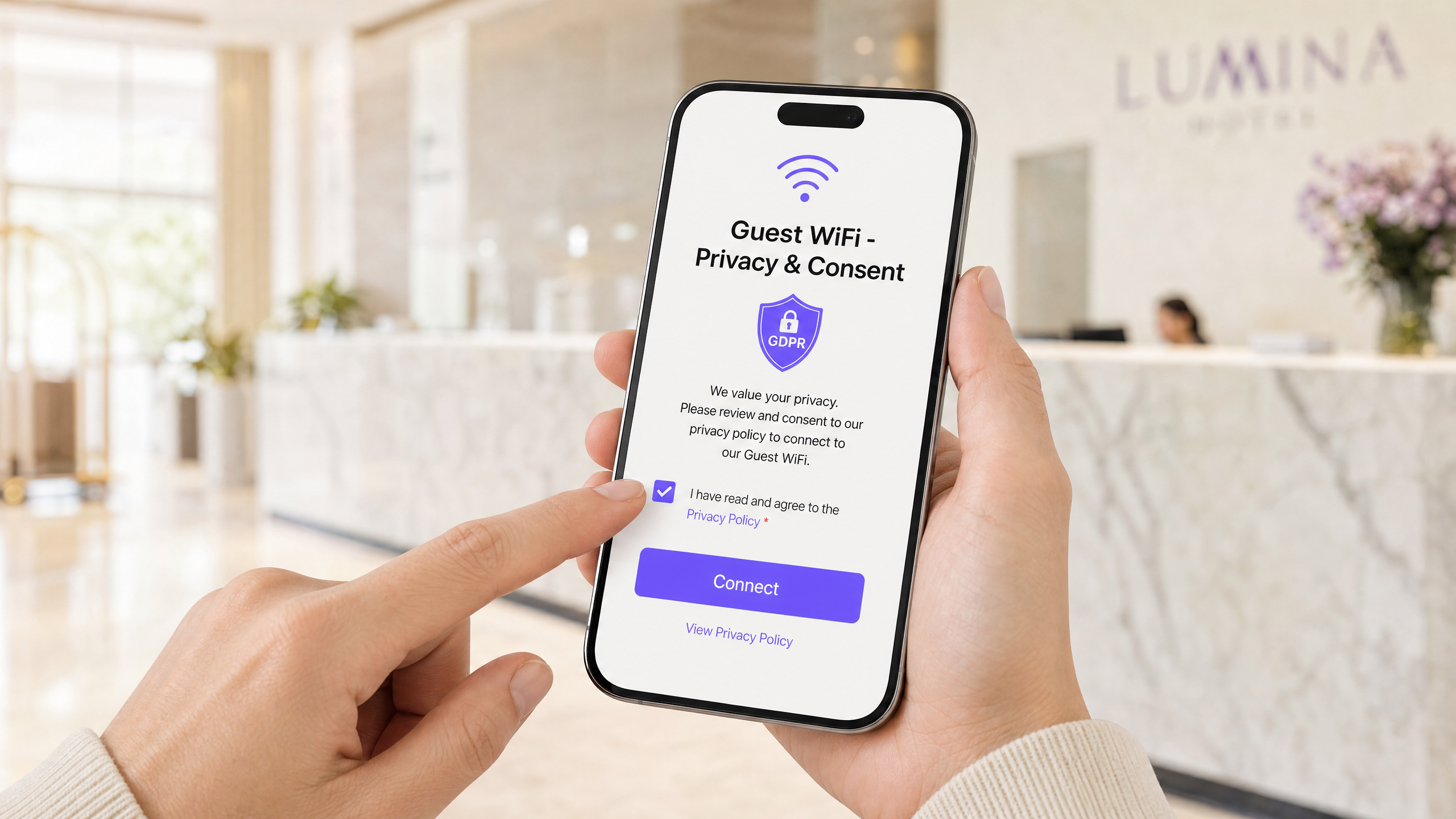
执行摘要
Guest WiFi 是一个受监管的数据收集终端。在访客连接的瞬间,任何提供公共网络访问的酒店、零售连锁店、体育场和会议中心都会成为《通用数据保护条例》(GDPR)下的数据控制者(Data Controller)。对于违规行为,英国信息专员办公室(ICO)可处以最高 2000 万欧元或全球年营业额 4% 的罚款。万豪国际集团(Marriott International)在发生数据泄露后,曾收到 ICO 拟处以 1.24 亿美元罚款的通知。
本指南为 IT 经理、网络架构师和场所运营商提供了一个实用且可操作的框架,以确保其 Guest WiFi 服务完全合规。我们将探讨通过 Guest WiFi 收集的具体数据类型、关于同意和数据处理的法律要求,以及实施合规解决方案的厂商中立最佳实践。对于首席技术官(CTO),本文概述了如何降低法律和财务风险。对于运营总监,它展示了合规的 Guest WiFi 部署如何增强客户信任,并提供有价值的、符合伦理来源的商业智能。
技术深度解析
了解 Guest WiFi 的 GDPR 合规性,首先要对所处理的数据进行清晰的评估。根据该条例,个人数据的定义非常广泛,指与已识别或可识别的自然人相关的任何信息。在 Guest WiFi 网络的背景下,这涵盖了比许多组织想象的更广泛的数据点。
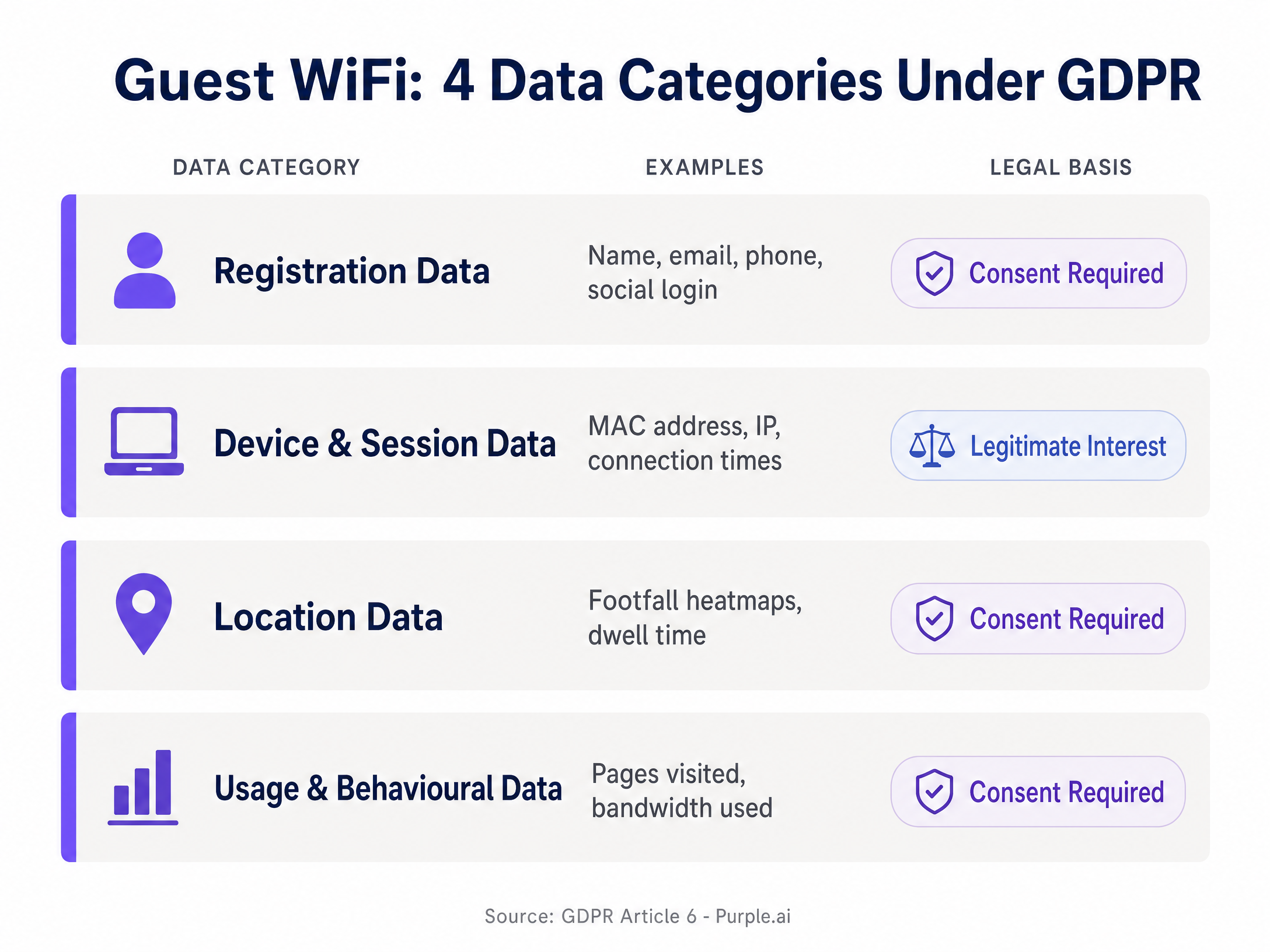
Guest WiFi 中的数据类别
通过 Guest WiFi 网络收集的数据可以分为四个主要类别。每个类别对 GDPR 合规性都有不同的影响,特别是涉及处理的法律依据和所需的保留期限。
- 注册数据:姓名、电子邮件地址、电话号码和社交媒体个人资料数据。法律依据是同意。您必须获得明确的同意才能收集这些数据,并应用数据最小化原则,仅索取绝对必要的信息。
- 设备和会话数据:MAC 地址、IP 地址、连接时间和会话持续时间。法律依据通常是用于网络安全和故障排除的正当利益,前提是您进行并记录了正当利益评估(Legitimate Interest Assessment)。
- 位置数据:客流量热力图和停留时间跟踪。法律依据是同意。即使是汇总数据,从单个设备进行的初始收集也属于个人数据。
- 使用和行为数据:访问的页面和消耗的带宽。法律依据是同意。您必须明确说明您正在收集什么以及原因。
Captive Portal 同意机制
Captive Portal 是您的主要合规界面。它是访客在访问互联网之前看到的欢迎页面(Splash Page)。最常见的合规失败是捆绑(bundling),即场所要求访客必须接受营销邮件才能上网。根据 GDPR,同意必须是自愿给出的。如果您将网络访问与营销同意捆绑在一起,则该同意是无效的。
您的 Captive Portal 必须至少呈现两个独立的同意要素:
- 一个用于接受网络访问服务条款的强制性复选框。
- 一个用于同意接收营销信息的可选且未勾选的复选框。
GDPR 前言第 32 条明确禁止预先勾选的框。除了同意结构之外,您的门户必须在用户提交任何数据之前提供清晰简明的隐私声明。它必须说明您收集什么数据、为什么要收集、保留多长时间以及与谁共享。您的系统必须记录每一次同意事件:谁同意了、何时同意的、同意了什么,以及他们看到的隐私声明的确切版本。这种同意审计追踪是您的合规证明。
网络架构与安全
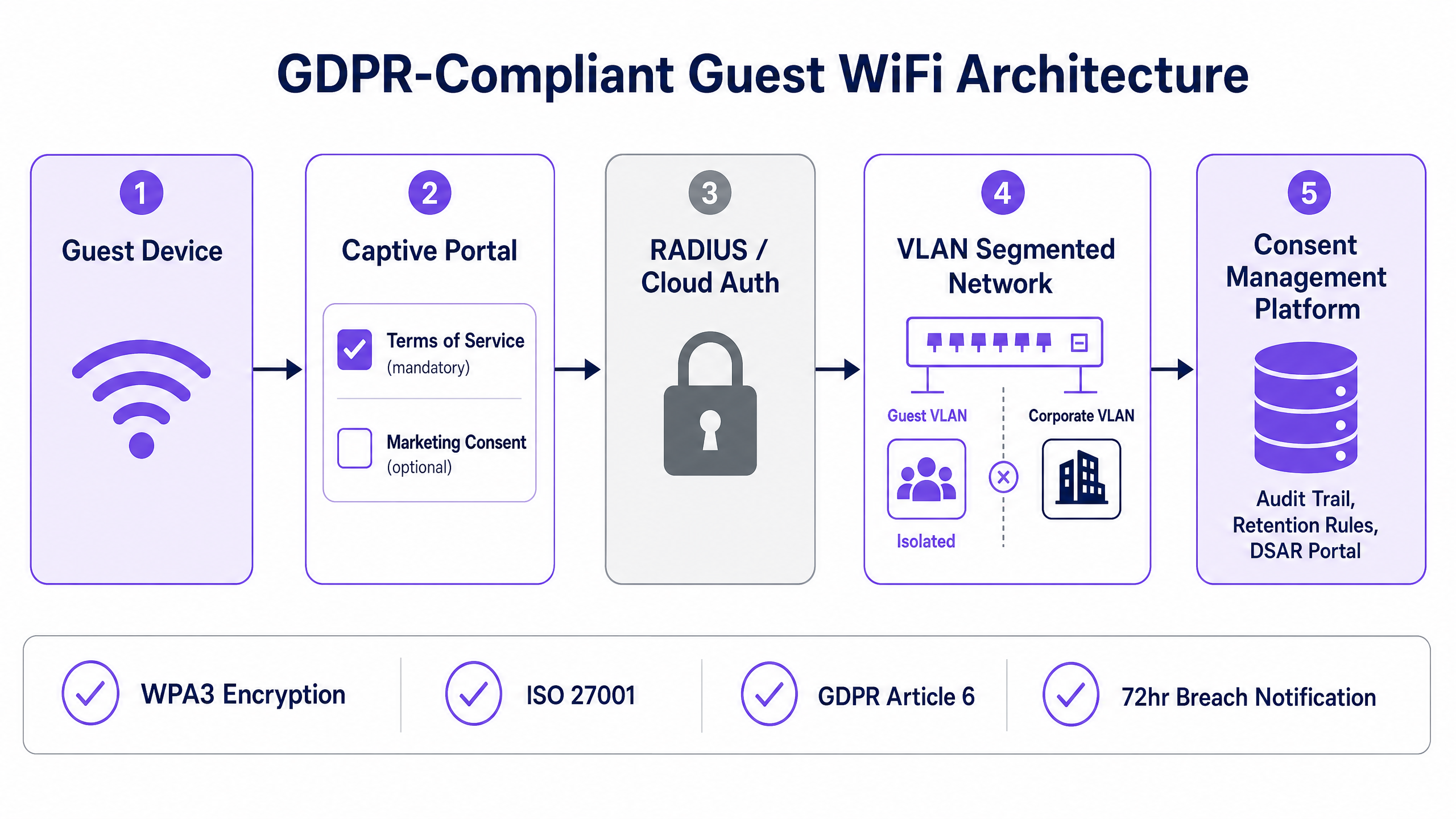
从网络架构的角度来看,VLAN 隔离是不可妥协的。Guest WiFi 流量必须隔离在专用的 VLAN 上,与您的企业网络完全分开。使用访问控制列表(ACL)阻止访客设备访问内部子网,并启用客户端隔离,使访客设备之间无法相互通信。无论您部署的是 Cisco Meraki、HPE Aruba、Ruckus、Juniper Mist 还是 Ubiquiti UniFi,这都适用。
对于身份验证,请将您的无线局域网控制器(WLC)与云 RADIUS 服务器集成。当用户完成 Captive Portal 流程时,平台会向控制器发送 RADIUS Access-Accept 消息,从而授予网络访问权限。这在身份验证层和数据收集层之间创建了清晰的分离。
关于加密:在硬件支持的情况下部署 WPA3。WPA3 使用对等同时身份验证(SAE),消除了 WPA2 四次握手中的漏洞,并针对离线字典攻击提供了更强的保护。至少应强制执行采用 AES 加密的 WPA2。您的 Captive Portal 必须通过带有有效 TLS 证书的 HTTPS 提供服务。通过 HTTP 提供收集个人数据的表单是严重的安全漏洞。
实施指南
部署合规的 Guest WiFi 解决方案需要精心的规划和执行。以下步骤概述了厂商中立的实施方法。
步骤 1:审计当前数据流
准确绘制您当前的 Guest WiFi 网络收集了哪些数据。识别每一个字段 在您的 Captive Portal 上、由您的无线控制器生成的每个日志文件以及每个第三方集成。记录每个数据点的用途。如果您无法证明收集特定数据点的合理性,请将其删除。
步骤 2:重新设计 Captive Portal
实施符合合规要求的 Captive Portal,其中网络条款和营销同意书应配有独立的、未勾选的复选框。确保语言通俗易懂,价值交换清晰明了。直接链接到您完整的隐私政策。
步骤 3:自动化数据保留
在您的 WiFi Analytics 平台中配置自动删除策略。大规模的手动删除是不可行的。
- 会话日志:30 天后清除。
- 网络安全日志:保留最多 12 个月。
- 同意记录:在服务关系存续期间保留,外加两年。
- 营销画像:用户撤回同意时立即删除。
步骤 4:保护网络边缘
将访客流量隔离到专用 VLAN 中。实施客户端隔离。在支持的情况下强制执行 WPA3 加密。确保您的 Captive Portal 通过 HTTPS 提供服务。
步骤 5:实施偏好中心
为访客提供一个自助服务偏好中心,他们可以在其中管理自己的同意设置并提交数据主体访问请求 (DSAR)。这可以减轻您 IT 团队的运营负担,并确保您能够高效地履行数据主体权利。
最佳实践
为了保持合规并构建强大的 Guest WiFi 策略,请遵循以下行业标准最佳实践:
- 进行 DPIA:在部署任何大规模位置跟踪或行为画像功能之前,根据 GDPR 第 35 条,数据保护影响评估在法律上是强制性的。
- 签署 DPA:确保与代表您处理访客数据的每个第三方平台都签署了数据处理附录。
- 最小化数据收集:只索取您实际需要并打算使用的数据。如果您是一家 零售 场所,您真的需要访客的出生日期来提供互联网接入吗?
- 为数据泄露做好准备:72 小时通知时钟从您意识到泄露的那一刻开始。将此时间表纳入您的事件响应计划,并确保您的团队知道在 72 小时内通知 ICO,即使调查尚未完成。
故障排除与风险缓解
Guest WiFi 部署中的常见失败模式通常源于对 GDPR 要求的误解。
失败模式:同意疲劳 如果您的门户过于复杂,访客将放弃连接或盲目点击。保持语言通俗易懂。清晰地解释价值交换。例如,"提供您的电子邮件以获取快速、免费的 WiFi 以及我们不定期提供的优惠。"
失败模式:忽视数据主体权利 根据 GDPR,访客有权访问、纠正和删除其数据。如果您缺乏处理这些请求的流程,您将面临重大风险。自助服务偏好中心是最有效的缓解策略。
失败模式:无限期保留数据 无限期保留数据直接违反了 GDPR 的存储限制原则。如果您没有制定自动删除策略,那么您每天都在累积风险。在您的平台中配置保留规则,以便在记录达到保留期结束时自动清除。
投资回报率与业务影响
针对 Guest WiFi 的 GDPR 合规不仅是一项成本,更是一个战略赋能工具。合规的平台可以降低监管罚款的风险,建立客户信任,并提供合乎道德的商业智能。
当访客通过合规的 Captive Portal 主动选择接收营销信息时,该联系方式的质量明显高于捆绑式选择。明确表示同意的访客更有可能参与后续的沟通,从而为您的营销活动带来更高的转化率。
此外,一个架构良好的 Guest WiFi 平台可以提供有关访客行为的有价值洞察。在 酒店业 环境中,这些数据可以为人员配置水平提供参考、优化布局并改善整体访客体验。通过将合规性视为 Guest WiFi 策略的基础要素,您可以将监管要求转化为可衡量的业务资产。
收听我们的播客,深入探讨这些话题:
关键定义
Data Controller
The entity that determines the purposes and means of processing personal data. When you provide Guest WiFi, you are the Data Controller.
This designation makes the venue legally responsible for compliance, regardless of which vendor supplies the WiFi hardware or software.
Data Processor
The entity that processes personal data on behalf of the Data Controller. Your WiFi analytics vendor is a Data Processor.
A signed Data Processing Addendum (DPA) is legally required before sharing data with a Processor.
MAC Address
Media Access Control address. A unique identifier assigned to a network interface controller for use as a network address in communications within a network segment.
Under GDPR, a MAC address is considered personal data when it can be linked to an identifiable individual.
Captive Portal
A web page that the user of a public-access network is obliged to view and interact with before access is granted.
This is the primary interface for collecting consent and serving privacy notices to guests.
VLAN Segmentation
The practice of dividing a physical network into multiple logical networks.
Guest WiFi traffic must be isolated on a dedicated VLAN to prevent access to the corporate network.
Legitimate Interest
A lawful basis for processing personal data when the processing is necessary for your legitimate interests or the legitimate interests of a third party, unless there is a good reason to protect the individual's personal data which overrides those legitimate interests.
Often used as the basis for basic session logging for network security and troubleshooting.
Data Subject Access Request (DSAR)
A request made by an individual to access the personal data an organisation holds about them.
Venues must have a process to handle DSARs efficiently, often facilitated by a self-service preference centre.
WPA3
Wi-Fi Protected Access 3. The latest security certification program developed by the Wi-Fi Alliance.
Provides stronger encryption and protection against offline dictionary attacks compared to WPA2. Should be deployed where hardware supports it.
应用实例
A 200-room hotel wants to collect guest emails to drive loyalty programme sign-ups. Their current system requires guests to accept marketing to get online.
Deploy a compliant captive portal with separate consent checkboxes. The mandatory checkbox covers terms of service. The optional, unticked checkbox covers marketing consent. The hotel will likely see a lower raw volume of marketing opt-ins compared to the bundled approach, but the quality and legality of the list improves dramatically. Guests who actively opt in are far more likely to engage with subsequent communications. Premier Inn, which uses Purple across its estate, operates exactly this model.
A stadium IT team wants to use WiFi analytics to monitor crowd density and manage safety, but the legal team is concerned that tracking device locations without consent is a GDPR violation.
Update the captive portal privacy notice to explicitly disclose that location data is processed for crowd management and safety purposes. Implement MAC address pseudonymisation at the edge, on the access points themselves, before the data reaches the cloud analytics platform. The analytics system then works with pseudonymous identifiers rather than raw MAC addresses.
练习题
Q1. A retail chain wants to implement WiFi footfall tracking across 50 stores to measure dwell time. The IT Director suggests logging raw MAC addresses centrally for analysis. Is this compliant?
提示:Consider the definition of personal data and the principle of data minimisation.
查看标准答案
No, this is high risk. Raw MAC addresses are personal data. The recommended approach is to implement MAC address pseudonymisation at the edge (on the access points) before transmitting the data to the central analytics platform. Additionally, a Data Protection Impact Assessment (DPIA) must be conducted before deployment, and clear signage must inform shoppers that analytics are in operation.
Q2. During an audit, you discover that your captive portal requires users to accept both the network terms of service and marketing emails via a single checkbox to connect to the WiFi. What is the immediate required action?
提示:Review the requirements for valid consent under GDPR Article 6.
查看标准答案
Immediately redesign the captive portal to unbundle the consent. Implement two separate checkboxes: a mandatory one for the network terms of service, and an optional, unticked checkbox for marketing consent. The current bundled approach renders all collected marketing consent invalid under GDPR.
Q3. A guest submits a Data Subject Access Request (DSAR) asking for all data your venue holds on them, including WiFi session logs. Your current retention policy is to keep session logs indefinitely. What are the implications?
提示:Consider the storage limitation principle.
查看标准答案
Keeping session logs indefinitely violates the GDPR storage limitation principle. You must fulfill the DSAR by providing the requested data, but you must also urgently implement an automated data retention policy. Session logs should typically be purged after 30 days. Holding them indefinitely exposes the venue to significant regulatory risk.
继续阅读本系列
SCEP 企业指南:部署简单证书注册协议以实现自动化校园 WiFi 安全
本技术参考指南为使用 SCEP 的企业 WiFi 证书部署提供了权威的架构蓝图和逐步实施策略。它涵盖了 SCEP 与 PKCS 之间的关键区别、成功部署所需的精确步骤顺序,以及面向 IT 领导者的实际风险规避策略。
为什么我的访客 WiFi 无法连接?Captive Portal 问题排查
本权威技术参考指南解释了 Captive Portal 检测的底层机制,并详细介绍了导致访客 WiFi 无法连接的六种主要故障模式。它为 IT 经理和网络架构师提供了一个实用的排查框架,以解决 HTTP 重定向问题、DNS 冲突和 MAC 随机化带来的挑战。
如何实施 SCEP 以实现自动化 WiFi 证书注册
本指南介绍了如何在企业场所实施 SCEP(简单证书注册协议)以实现自动化 WiFi 证书注册。它涵盖了完整的架构蓝图——从 PKI 设计和 MDM 集成到必不可少的三个步骤部署顺序——并向 IT 经理和网络架构师展示了如何在大规模场景下消除共享凭据、自动化证书生命周期管理,并满足 PCI DSS 和 GDPR 要求。