
Flughafen-WiFi-Sicherheit: So schützen Sie Passagiere auf öffentlichen Netzwerken
Dieser technische Leitfaden beschreibt detailliert die spezifische Bedrohungslandschaft von Flughafen-WiFi, einschließlich Evil-Twin-Access-Points, Rogue-Hardware und Man-in-the-Middle-Angriffen. Er bietet IT-Managern, Netzwerkarchitekten und Leitern des Standortbetriebs umsetzbare Architekturstrategien - einschließlich WPA3-Implementierung, VLAN-Segmentierung, WIPS-Bereitstellung und DSGVO-konformem Captive Portal Design -, um Passagiere und Unternehmensinfrastrukturen in großem Maßstab zu schützen. Die Gast-WiFi- und Analyseplattform von Purple wird durchgehend konkret auf jeden Problembereich übertragen.
Diesen Leitfaden anhören
Podcast-Transkript ansehen
Teil unserer Kernserie: Leitfaden für Enterprise WiFi Sicherheit →
Management-Zusammenfassung
Für CTOs und IT-Leiter, die hochfrequentierte öffentliche Umgebungen verwalten, ist die Frage "Ist Flughafen-WiFi sicher?" nicht nur eine häufige Verbraucherfrage - sie ist eine Compliance- und Infrastruktur-Herausforderung mit direkten Haftungskonsequenzen. Flughafen-Netzwerke weisen eine einzigartige und dynamische Angriffsfläche auf: Tausende von vorübergehenden Verbindungen pro Stunde, ein breites Spektrum an Endgeräten vom Standard-Mobiltelefon bis zum Enterprise-Laptop sowie ein Mix aus Datenverkehr von Gästen, Mitarbeitern, Einzelhandelsmietern und Betriebstechnik auf einer Infrastruktur, die den aktuellen Sicherheitsstandards oft um Jahre hinterherhinkt.
Die Hauptbedrohungen - Evil Twin Access Points (APs) und unbefugte Hardware-Installationen - sind kostengünstige Angriffe mit hoher Wirkung, die nur minimale technische Fachkenntnisse erfordern. Bleiben diese ungelöst, riskieren Passagiere den Diebstahl von Zugangsdaten und Finanzbetrug, während dem Flughafenbetreiber GDPR-Sanktionen und Reputationsschäden drohen. Durch die Implementierung von WPA3 mit Opportunistic Wireless Encryption, die Durchsetzung einer strikten VLAN-Segmentierung, den Einsatz von Wireless Intrusion Prevention Systems (WIPS) und die Integration einer sicheren, GDPR-konformen guest WiFi Plattform können Betreiber Passagierdaten schützen und gleichzeitig eine nahtlose Konnektivität gewährleisten. Die WiFi analytics Ebene von Purple ergänzt dieses Sicherheitsfundament um betriebliche Intelligenz und verwandelt ein sicheres Onboarding in einen messbaren kommerziellen ROI.
Technische Tiefenanalyse: Die WiFi-Bedrohungslage an Flughäfen
Flughafenumgebungen gehören zu den am stärksten gefährdeten öffentlichen Bereichen für Wireless-Angriffe. Die hohe Anzahl an Passagieren, wechselnde Nutzer, die Probleme selten melden, und Geschäftsreisende, die sensible Daten übertragen - all dies schafft eine ideale Umgebung für böswillige Akteure. Das Verständnis der spezifischen Bedrohungsvektoren ist Voraussetzung für den Entwurf einer effektiven Sicherheitsarchitektur.
Evil Twin Access Points
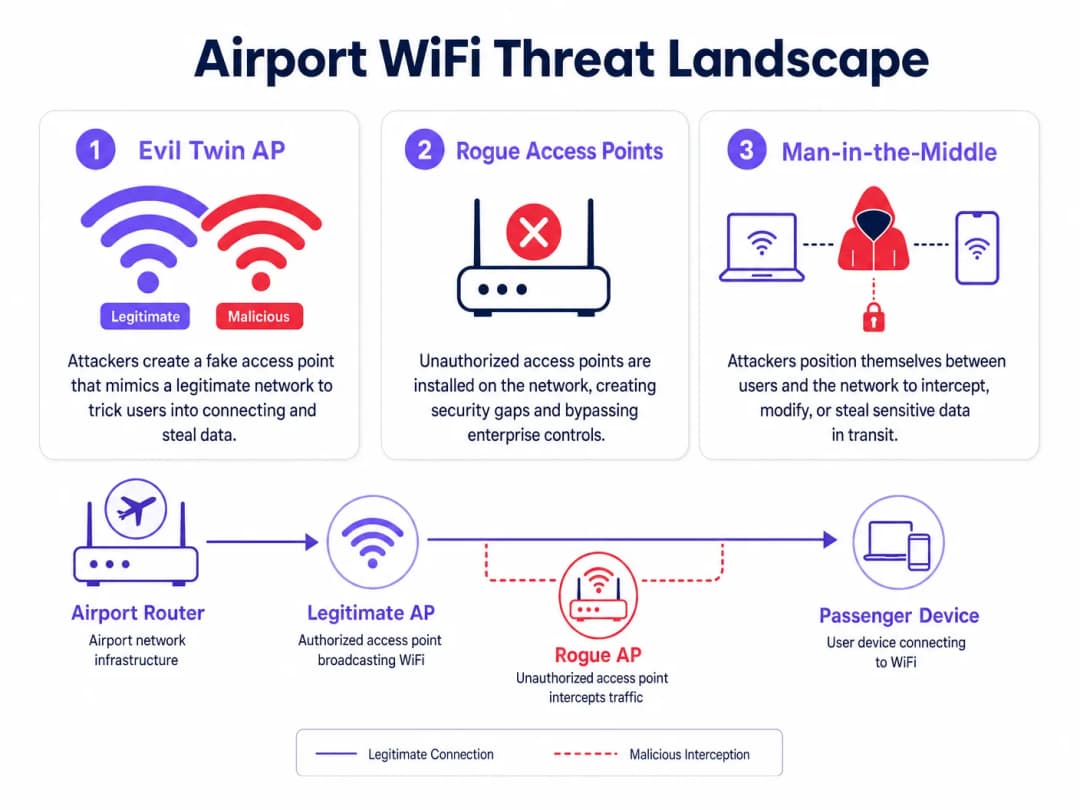
Ein Evil Twin ist ein manipulierter AP, der so konfiguriert ist, dass er genau dieselbe SSID des legitimen Flughafen-Netzwerks ausstrahlt - zum Beispiel "Airport Free WiFi" oder "LHR_Passenger_WiFi". Da Standard-Endgeräte eine automatische Netzwerkauswahl basierend auf SSID-Übereinstimmung und Signalstärke durchführen, bevorzugt das Gerät eines Passagiers die Verbindung zum Evil Twin, wenn dieser ein stärkeres Signal liefert als die legitime Infrastruktur. Dies lässt sich leicht umsetzen: Ein mobiler Router, der von einem nahe gelegenen Sitzplatz aus mit maximaler Leistung sendet, übertönt problemlos einen an der Decke montierten Enterprise AP, der mit kontrollierten Leistungspegeln arbeitet.
Sobald sich ein Client mit dem Evil Twin verbindet, kann der Angreifer verschiedene Klassen von Angriffen starten. Passives Abfangen erfasst unverschlüsselten HTTP-Verkehr, DNS-Anfragen und Session-Cookies. SSL Stripping herabstuft HTTPS-Verbindungen in Echtzeit auf HTTP und legt Anmeldedaten auf Websites offen, die kein HTTP Strict Transport Security (HSTS) erzwingen. DNS Spoofing leitet Benutzer auf Phishing-Seiten um, die Bankportale oder Buchungssysteme von Fluggesellschaften imitieren. Der Fluggast sieht eine normale Verbindung ohne Warnhinweise, da der Evil Twin den tatsächlichen Internetzugang über seine eigene Upstream-Verbindung bereitstellt - der Angriff bleibt für den Endbenutzer völlig transparent.
Die Betriebskosten für einen Angreifer sind minimal: ein handelsüblicher Reise-Router, ein Laptop mit Open-Source-Tools und ein Sitzplatz in der Abflughalle. Dieser Angriff erfordert keinen physischen Zugriff auf die Infrastruktur des Flughafens.
Rogue Access Points
Rogue APs sind nicht autorisierte Geräte, die physisch an die kabelgebundene Netzwerkinfrastruktur des Flughafens angeschlossen sind. Im Gegensatz zu Evil Twins, die vollständig über die Luft arbeiten, stellen Rogue APs einen Insider-Bedrohungsvektor dar - sie erfordern physischen Zugriff auf einen Netzwerkport. In einer großen Flughafenumgebung mit Hunderten von Einzelkonzessionen, Dienstleistern und Reinigungskräften ist es jedoch nicht schwierig, physischen Zugriff auf einen Netzwerkport zu erhalten.
Die häufigste Quelle für Rogue APs ist kein böswilliger Akteur, sondern gutmeinendes Personal. Ein Einzelhändler, der in Terminal 3 eine schlechte WiFi-Abdeckung hat, kauft einen handelsüblichen Router und schließt ihn an den Ethernet-Port hinter seiner Theke an. Der Router sendet seine eigene SSID und umgeht dabei die Enterprise-Firewall, die Network Access Control (NAC) Richtlinien und die WPA3 Enterprise Konfigurationen. Dies schafft einen direkten, unmanaged Pfad aus dem öffentlichen Internet in das interne Netzwerk des Flughafens. Von diesem Zeitpunkt an erhält jedes Gerät, das mit dem Rogue AP verbunden ist - sei es das POS-Terminal des Händlers oder ein Fluggast, der sich versehentlich verbunden hat - potenziellen Zugriff auf Netzwerkebene auf Systeme, die völlig isoliert bleiben sollten.
Für Transport-Betreiber und Flughafen-IT-Teams wird das Problem der Rogue APs durch die schiere Größe der Umgebung weiter erschwert. In einem großen internationalen Flughafen können Hunderte von Netzwerkports über Terminals, Einzelhandelsflächen, Lounges und Back-Office-Bereiche verteilt sein. Eine manuelle Überprüfung ohne automatisierte Erkennungstools ist unpraktisch.
Man-in-the-Middle-Angriffe
Sowohl Evil Twin - als auch Rogue AP-Szenarien ermöglichen Man-in-the-Middle-Angriffe (MitM), bei denen sich der Angreifer zwischen dem Client-Gerät und dem legitimen Netzwerk positioniert. In einem MitM-Szenario kann der Angreifer den Datenverkehr in beide Richtungen abfangen, lesen und manipulieren. Moderne TLS-Verschlüsselung reduziert die Auswirkungen von MitM-Angriffen auf HTTPS-Datenverkehr erheblich, aber die Angriffsfläche bleibt beträchtlich: Unverschlüsselte Protokolle, falsch konfigurierte TLS-Implementierungen und die Nutzung von Altsystemen, die keine Zertifikatsprüfung erzwingen - all dies schafft Lücken, die leicht ausgenutzt werden können.
Für Geschäftsreisende - die einen erheblichen Teil der Flughafen-WiFi-Nutzer ausmachen - stellen MitM-Angriffe, die auf das Erfassen von VPN-Anmeldedaten oder das Kapern von geschäftlichen E-Mail-Sitzungen abzielen, einen hochgradig wertvollen Angriffsvektor dar, der den Schaden weit über den einzelnen Passagier hinaus vervielfacht.
Haben Sie Fragen zu Ihrem spezifischen Setup?
Unser Team arbeitet mit Standortbetreibern, IT-Managern und Netzwerktechnikern an über 80.000 Standorten zusammen. Buchen Sie ein 20-minütiges Gespräch und wir zeigen Ihnen, wie andere diese Herausforderungen gelöst haben.
Implementierungshandbuch: Sichere Architektur
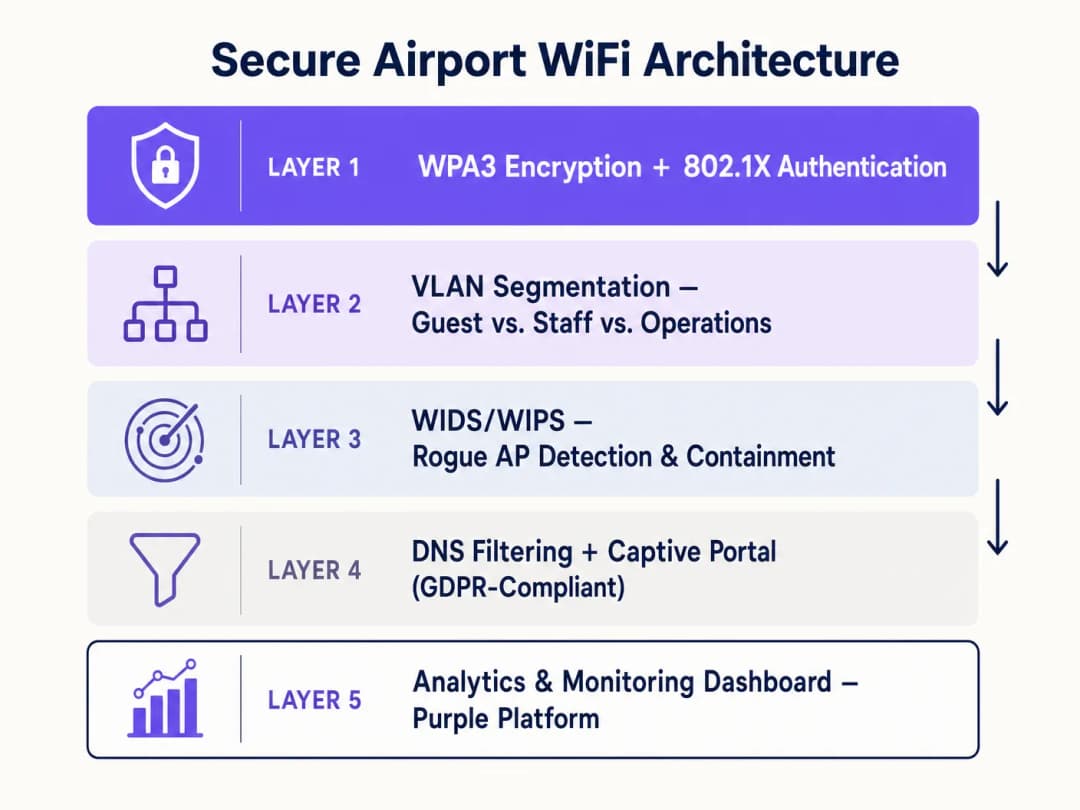
Die Bewältigung der Bedrohungslandschaft von Flughafen-WiFi erfordert eine vielschichtige Deep-Defense-Architektur. Eine einzelne Kontrollmaßnahme reicht nicht aus; das Ziel besteht darin, jede nachfolgende Angriffsebene schrittweise schwieriger und erkennbarer zu machen.
Ebene 1: Verschlüsselungs- und Authentifizierungsstandards
Die Umstellung auf WPA3 ist eine grundlegende Voraussetzung. Für offene öffentliche Netzwerke führt WPA3 Opportunistic Wireless Encryption (OWE) ein, definiert in IEEE 802.11-2020. OWE bietet eine individuelle Verschlüsselung für jede Client-Sitzung, ohne dass ein gemeinsames Passwort oder ein Pre-Shared Key erforderlich ist. Jede Client-AP-Verbindung handelt einen eindeutigen Diffie-Hellman-Schlüsselaustausch aus. Das bedeutet, dass ein Angreifer, selbst wenn er den gesamten Funkverkehr des gesamten Terminals erfasst, keine spezifische Sitzung entschlüsseln kann. Dies entschärft passives Abhören direkt und eliminiert den primären Angriffsvektor des Abfangens in offenen Netzwerken.
Für authentifizierte Netzwerksegmente - Personal, Betrieb, Einzelhandelspartner - ist IEEE 802.1X mit RADIUS-Authentifizierung der richtige Standard. 802.1X erzwingt eine Authentifizierung pro Gerät, bevor der Netzwerkzugriff gewährt wird, wobei jedes Authentifizierungsereignis für Compliance- und Audit-Zwecke protokolliert wird. In Kombination mit dem zertifikatsbasierten Extensible Authentication Protocol (EAP-TLS) werden auf Anmeldedaten basierende Angriffe auf Personalnetzwerke vollständig eliminiert.
Für Veranstaltungsorte, die eine nahtlose Anmeldung von Passagieren anstreben, bietet OpenRoaming - der Standard für föderierte Identitäten der Wireless Broadband Alliance - eine profilbasierte Authentifizierung, die Passagiere automatisch und ohne manuelle SSID-Auswahl mit verifizierten Netzwerken verbindet. Purple agiert im Rahmen seiner Connect-Lizenz als kostenloser Identitätsanbieter innerhalb des OpenRoaming-Ökosystems. Dies ermöglicht es Flughäfen, eine nahtlose und sichere Konnektivität anzubieten, und eliminiert menschliche Fehler bei der Netzwerkauswahl. Dies ist direkt relevant für die Bedrohung durch Evil Twins: Wenn sich das Gerät eines Passagiers automatisch über ein verifiziertes Profil verbindet, stellt es keine Verbindung zu einem Evil Twin her, der dieselbe SSID ausstrahlt.
Ebene 2: Netzwerksegmentierung und Client-Isolierung
Eine strikte VLAN-Kennzeichnung auf AP-Ebene muss verwendet werden, um den Gast-Datenverkehr vollständig von der Betriebstechnologie (OT), den Mitarbeiternetzwerken und den POS-Systemen des Einzelhandels zu isolieren. Ein Mindestsegmentierungsmodell für eine Flughafenumgebung sollte Folgendes umfassen: ein öffentliches Gast-VLAN (nur Internetzugang, kein internes Routing), ein Mitarbeiter-VLAN (authentifiziert über 802.1X, Zugriff auf interne Systeme), ein VLAN für Einzelhandelsmieter (sowohl vom Gast- als auch vom Mitarbeiternetzwerk isoliert, Internetzugang für POS-Systeme) und ein Betriebs-VLAN (physisch getrennt oder streng durch eine Firewall geschützt, für digitale Beschilderung, Gebäudemanagement und luftseitige Systeme).
Client-Isolierung - die Ebene-2-Isolierung zwischen Geräten im selben VLAN - muss für das Gast-VLAN aktiviert sein. Ohne Client-Isolierung können zwei Passagiere, die mit demselben Gast-WiFi verbunden sind, direkt auf IP-Ebene miteinander kommunizieren, was Angriffe von Gerät zu Gerät ermöglicht. Dies ist eine Konfigurationseinstellung auf dem Wireless-Controller, die bei älteren Bereitstellungen oft übersehen wird.
Für Umgebungen im Gastgewerbe und im Einzelhandel, die innerhalb von Flughafenterminals betrieben werden, gelten dieselben Segmentierungsprinzipien. Unabhängig von der Geschäftsbeziehung mit dem Flughafenbetreiber muss eine Flughafenlounge eines Hotels oder eine Einzelhandelskonzession als nicht vertrauenswürdiges Netzwerksegment behandelt werden.
Ebene 3: Drahtlose Angreifererkennung und -abwehr (WIDS/WIPS)
Ein Wireless Intrusion Prevention System ist die primäre automatisierte Verteidigung sowohl gegen Evil Twin- als auch gegen Rogue AP-Bedrohungen. WIPS muss so konfiguriert sein, dass es die Funkfrequenzumgebung über alle Kanäle und Bänder (2,4 GHz, 5 GHz und 6 GHz für WiFi 6E-Bereitstellungen) kontinuierlich auf unbefugte SSIDs, MAC-Adress-Spoofing und De-Authentifizierungs-Flood-Angriffe scannt.
Bei Erkennung eines Evil Twin - gekennzeichnet durch eine übereinstimmende SSID und eine BSSID, die mit keinem autorisierten AP in der verwalteten Infrastruktur übereinstimmt - sollte das WIPS automatisch eine Eindämmung einleiten. Die Eindämmung umfasst das Senden gezielter IEEE 802.11-De-Authentifizierungs-Frames an Clients, die versuchen, sich mit dem bösartigen AP zu verbinden, um eine erfolgreiche Verbindung zu verhindern. Dies ist eine automatisierte Reaktion in Maschinengeschwindigkeit, die weitaus schneller ist als jeder Eingriff eines menschlichen Operators.
Für die Erkennung von Rogue APs korreliert WIPS Beobachtungen über die Luft mit der verkabelten Netzwerktopologie. Ein über die Luft sendender AP, der auch als verbundenes Gerät im verkabelten Netzwerk erscheint - aber nicht im autorisierten AP-Inventar enthalten ist - wird als Rogue markiert. Das System kann dann eine automatisierte Port-Abschaltung auf dem verwalteten Switch auslösen, um das Gerät physisch zu trennen.
Layer 4: DNS-Filterung und sicheres Captive Portal Design
Unabhängig vom Sicherheitsstatus des Geräts selbst bietet die Filterung auf DNS-Ebene eine entscheidende Kontrollmöglichkeit, um Benutzer vor bösartigen Domänen zu schützen. Durch die Weiterleitung aller DNS-Anfragen über einen filternden Resolver kann das Netzwerk die Auflösung bekannter Phishing-Domänen, Command-and-Control-Infrastrukturen und Malware-Verbreitungsseiten blockieren. Dies ist besonders im Flughafenkontext wertvoll, da Passagiere infizierte Geräte verbinden könnten, die bereits vor der Ankunft kompromittiert wurden.
Wie in unserem Leitfaden zur Sicherung Ihres Netzwerks mit starkem DNS und Sicherheit ausführlich beschrieben, verhindert die Implementierung von DNS über HTTPS (DoH) oder DNS über TLS (DoT) für Resolver-Verbindungen, dass DNS-Anfragen während der Übertragung abgefangen oder manipuliert werden - ein wichtiger Aspekt, wenn die WIPS-Eindämmung nicht jeden Evil Twin sofort erkennt.
Das Captive Portal ist der primäre Onboarding-Touchpoint für Passagiere und muss so konzipiert sein, dass Sicherheit an erster Stelle steht und nicht erst nachträglich bedacht wird. Das Portal muss über HTTPS mit einem gültigen Zertifikat einer vertrauenswürdigen Zertifizierungsstelle bereitgestellt werden. Onboarding-Formulare sollten nur die für den angegebenen Zweck erforderlichen Daten erfassen (Grundsatz der Datenminimierung gemäß DSGVO-Artikel 5), mit klaren, granularen Einwilligungsmechanismen für jegliche Marketingnutzung. Die Captive Portal Plattform von Purple ist speziell für diese Compliance-Anforderungen entwickelt worden und bietet eine nahtlose Integration mit DSGVO-konformer Datenerfassung, Einwilligungsmanagement und Analyseschichten. Weitere Informationen darüber, wie sich dies in Flughafenumgebungen mit mehreren Terminals skalieren lässt, finden Sie unter Airport WiFi: How Operators Provide Connectivity Across Terminals und der italienischen Version WiFi Aeroportuale.
Layer 5: Analysen, Überwachung und kontinuierliche Verbesserung
Sicherheit ist keine einmalige Bereitstellung; sie erfordert kontinuierliche Überwachung und iterative Verbesserung. Die WiFi-Analyse-Plattform von Purple bietet die betriebliche Transparenzebene, die Rohverbindungsdaten in verwertbare Erkenntnisse umwandelt. Durch die Überwachung von Geräteverbindungsmustern, Verweilzeiten und Sitzungsanomalien können Netzwerksicherheitsteams Indikatoren für Kompromittierungen identifizieren - wie ungewöhnliche Verbindungsspitzen, Geräte, die sich von unerwarteten physischen Standorten aus verbinden, oder Muster von Authentifizierungsfehlern, die auf einen Scan-Angriff hindeuten.Die Analyseebene liefert zudem die wirtschaftliche Rechtfertigung für Sicherheitsinvestitionen. Höhere Anmelderaten der Passagiere - angetrieben durch ein vertrauenswürdiges, sicheres Onboarding - generieren wertvollere First-Party-Datensätze. Diese Daten ermöglichen zielgerichtetes Marketing, Analysen der Besucherströme im Einzelhandel und die Optimierung des Terminal-Layouts, was einen messbaren ROI für Infrastrukturinvestitionen liefert. Für healthcare Umgebungen, die das WiFi in medizinischen Einrichtungen von Flughäfen verwalten, gilt dasselbe Analyse-Framework mit zusätzlichen DSGVO-Kontrollen für sensible Daten.
Best Practices und Risikominderung
Setzen Sie Netzwerkrichtlinien für Mieter im Einzelhandel auf technischer Ebene durch. Richtliniendokumente allein reichen nicht aus. Einzelhandelskonzessionen müssen einen verwalteten, segmentierten Netzwerkzugriff erhalten - ein dediziertes VLAN mit Internetzugang und ohne internes Routing - und die physischen Netzwerkports in ihren Einheiten müssen so konfiguriert sein, dass sie nicht autorisierte Hardware über eine 802.1X Port-Authentifizierung oder MAC-Adressen-Allowlisting abweisen. Eliminieren Sie den Anreiz für die Bereitstellung von Rogue APs, indem Sie eine angemessene, verwaltete Konnektivität bereitstellen.
Führen Sie regelmäßige RF-Standortvermessungen durch. Vierteljährliche physische und RF-Standortvermessungen identifizieren nicht autorisierte Hardware, die WIPS aufgrund von Signaldämpfung, physischen Hindernissen oder absichtlicher RF-Abschirmung möglicherweise übersehen hat. Eine Vermessung sollte alle Terminals, Lounges, Einzelhandelsgeschäfte und Back-Office-Bereiche abdecken. Dokumentieren Sie den autorisierten AP-Bestand und vergleichen Sie ihn mit den Umfrageergebnissen.
Implementieren Sie eine Standleitung oder eine dedizierte Business-Internetverbindung für kritische Infrastrukturen. Wie in unserem Leitfaden über What is a Leased Line? Dedicated Business Internet beschrieben, stellt die Trennung des kritischen Betriebsverkehrs auf einer dedizierten, störungsfreien Verbindung sicher, dass ein DDoS-Angriff oder eine Bandbreitenerschöpfung im Gastnetzwerk die betrieblichen Systeme im Sicherheitsbereich nicht beeinträchtigen kann.
Testen Sie die Incident-Response-Prozesse. Führen Sie Tabletop-Übungen durch, die das Erkennen eines Evil Twin simulieren. Überprüfen Sie, ob die WIPS-Eindämmung funktioniert, das NOC-Team die Eskalationsverfahren kennt und die Kommunikation mit den Passagieren für ein Szenario vorbereitet ist, in dem das Gastnetzwerk vorübergehend abgeschaltet werden muss.
ROI und geschäftliche Auswirkungen
Die Sicherung des Netzwerks ist das Fundament für den kommerziellen Wert und kein isolierter Kostenfaktor. Ein sicheres, zuverlässiges und vertrauenswürdiges Gäste-WiFi steigert direkt die Anmelderaten der Passagiere über das Captive Portal. Höhere Anmelderaten generieren größere und qualitativ hochwertigere First-Party-Datensätze. Diese Daten ermöglichen es dem Flughafenbetreiber, personalisierte Werbeaktionen für den Einzelhandel anzubieten, die Terminal-Layouts auf der Grundlage realer Besucherströme zu optimieren und Treueprogramme aufzubauen, die die Kundenbindung nachhaltig stärken.
Die Kosten eines Sicherheitsvorfalls - GDPR-Durchsetzungsmaßnahmen, Reputationsschäden und die betrieblichen Kosten der Reaktion auf Vorfälle - übersteigen die Kosten für die Implementierung der in diesem Leitfaden beschriebenen Sicherheitskontrollen bei Weitem. Das UK Information Commissioner's Office (ICO) hat unter der UK GDPR Geldbußen von bis zu 17,5 Millionen £ für Datenschutzverletzungen verhängt. Für einen großen internationalen Flughafen, der jährlich Millionen von Passagierverbindungen verarbeitet, ist das Risikopotenzial erheblich.
Die Plattform von Purple ist so konzipiert, dass sie Sicherheitsinvestitionen mit kommerziellen Ergebnissen in Einklang bringt. Das sichere Captive Portal, die GDPR-konforme Datenerfassung und die Analyseebene sind eine einzige integrierte Implementierung - nicht drei separate Beschaffungsprozesse. Dies senkt die Gesamtbetriebskosten und beschleunigt gleichzeitig die Wertschöpfung sowohl für IT- als auch für Marketingteams.
Schlüsseldefinitionen
Evil Twin Access Point
Ein böswilliger drahtloser Access Point, der sich als legitimes Netzwerk ausgibt, indem er dieselbe SSID aussendet, mit dem Ziel, Benutzerdaten über Man-in-the-Middle-Angriffe abzufangen.
Häufig in Flughafen-Terminals, wo Angreifer Geräte ausnutzen, die sich basierend auf der Signalstärke automatisch mit bekannten SSIDs verbinden. Abgemildert durch OWE-Verschlüsselung und WIPS-Eindämmung.
Rogue Access Point
Ein nicht autorisierter drahtloser Access Point, der physisch mit dem kabelgebundenen Unternehmensnetzwerk verbunden ist und Sicherheitskontrollen wie Firewalls, NAC-Richtlinien und WiFi-Konfigurationen des Unternehmens umgeht.
Häufig von Einzelhandelsmietern oder Mitarbeitern installiert, die eine bessere Abdeckung wünschen. Gelöst durch 802.1X-Port-Authentifizierung an allen Ethernet-Ports und automatisierte WIPS-Erkennung.
Opportunistic Wireless Encryption (OWE)
Eine in IEEE 802.11-2020 definierte WPA3-Funktion, die eine individuelle, sitzungseindeutige Verschlüsselung für offene Netzwerke ohne die Erfordernis eines gemeinsamen Passworts mittels Diffie-Hellman-Schlüsselaustausch bereitstellt.
Der richtige Verschlüsselungsstandard für öffentliche Flughafen-Gastnetzwerke. Eliminiert passives Abhören, ohne zusätzliche Hürden bei der Authentifizierung für Passagiere zu schaffen.
Wireless Intrusion Prevention System (WIPS)
Netzwerkinfrastruktur, die das Hochfrequenzspektrum kontinuierlich auf nicht autorisierte Access Points, Evil Twins und Angriffssignaturen überwacht und automatisch Gegenmaßnahmen wie Deauthentifizierungs-Frames einleitet.
Die primäre automatisierte Abwehr gegen Evil Twin und Rogue AP-Bedrohungen in Umgebungen mit hoher Dichte. Muss so konfiguriert sein, dass alle Frequenzbänder einschließlich 6 GHz für WiFi 6E-Bereitstellungen abgedeckt sind.
Client Isolation
Eine drahtlose Netzwerkkonfiguration, die verhindert, dass mit derselben SSID verbundene Geräte auf Layer 2 direkt miteinander kommunizieren, wodurch der gesamte Datenverkehr auf das Gateway beschränkt wird.
Zwingend erforderlich für Gast-VLANs, um Angriffe von Gerät zu Gerät zu verhindern. Eine einfache Konfigurationseinstellung, die in Altsystemen häufig fehlt.
VLAN-Segmentierung
Die Praxis, ein physisches Netzwerk mithilfe von IEEE 802.1Q-VLAN-Tags in mehrere logische Netzwerke zu unterteilen, um Datenverkehrstypen zu isolieren und Zugriffskontrollgrenzen durchzusetzen.
Wird verwendet, um nicht vertrauenswürdigen Gastverkehr vom sicheren Flughafenbetrieb, den Systemen der Mitarbeiter und der POS-Infrastruktur des Einzelhandels zu trennen. Eliminiert das Risiko lateraler Bewegungen von kompromittierten Gastgeräten.
IEEE 802.1X
Ein IEEE-Standard für portbasierte Netzwerkzugriffskontrolle, der erfordert, dass sich Geräte vor der Gewährung des Netzwerkzugriffs authentifizieren, in der Regel über einen RADIUS-Server.
Der Authentifizierungsstandard für Mitarbeiter- und Betriebs-VLANs sowie für die Durchsetzung auf Port-Ebene an Einzelhandels-Ethernet-Ports, um die Bereitstellung von Rogue APs zu verhindern.
OpenRoaming
Ein Föderationsstandard der Wireless Broadband Alliance, der eine automatische, nahtlose WiFi-Authentifizierung über teilnehmende Netzwerke hinweg mithilfe vorab bereitgestellter Geräteprofile ohne manuelle SSID-Auswahl ermöglicht.
Mindert Evil Twin-Angriffe direkt, indem die manuelle Netzwerkauswahl entfällt. Purple fungiert als kostenloser Identitätsanbieter innerhalb des OpenRoaming-Ökosystems unter seiner Connect-Lizenz.
Man-in-the-Middle (MitM) Attack
Ein Angriff, bei dem der Täter heimlich die Kommunikation zwischen zwei Parteien abfängt, weiterleitet und potenziell modifiziert, die glauben, direkt miteinander zu kommunizieren.
Das Hauptziel von Evil Twin-Bereitstellungen. Abgemildert durch OWE-Verschlüsselung auf der Funkschicht und HSTS-Durchsetzung auf der Anwendungsschicht.
Captive Portal
Eine Webseite, die neuen Benutzern eines öffentlichen Netzwerks angezeigt wird, bevor ihnen ein Internetzugang gewährt wird. Sie dient der Authentifizierung, der Zustimmung zu Nutzungsbedingungen und der Datenerfassung.
Der primäre Berührungspunkt für das Onboarding von Passagieren. Muss über HTTPS mit einem gültigen Zertifikat bereitgestellt werden und für die GDPR-Konformität einschließlich expliziter Einwilligungsmechanismen ausgelegt sein.
Ausgearbeitete Beispiele
Ein großer internationaler Flughafen modernisiert Terminal 3. Das aktuelle Netzwerk ist flach - alle Geräte, einschließlich Kassensysteme im Einzelhandel, digitale Beschilderungen und Passagiergeräte, nutzen dieselbe Broadcast-Domäne. Einzelhändler beschweren sich häufig über eine schlechte Verbindung, was sie dazu veranlasst, eigene Router für Endverbraucher zu installieren. Der IT-Leiter benötigt ein Redesign, das die Sicherheit verbessert, ohne den kommerziellen Betrieb während einer schrittweisen Einführung zu stören.
Phase 1 - VLAN-Architektur: Entwerfen Sie vier VLANs: Öffentlicher Gastzugang (nur Internet, Client-Isolierung aktiviert), Personal (802.1X-authentifiziert, interner Zugriff), Einzelhandelsmieter (nur Internet, isoliert von Gästen und Personal, 802.1X-Port-Authentifizierung auf allen Ethernet-Ports des Einzelhandels) und Betrieb (physisch getrennt, für Beschilderung und Gebäudemanagement). Phase 2 - Eliminierung von Rogue-APs: Aktivieren Sie die 802.1X-Port-Authentifizierung auf allen Ethernet-Ports des Einzelhandels. Jedem Gerät ohne gültiges Zertifikat wird der Netzwerkzugriff verweigert, wodurch die Möglichkeit, unbefugte Router anzuschließen, ausgeschlossen wird. Bieten Sie den Einzelhandelsmietern gleichzeitig eine verwaltete Einzelhandels-SSID mit ausreichender Signalabdeckung an, um den Anreiz für Rogue-Hardware zu nehmen. Phase 3 - WIPS-Bereitstellung: Konfigurieren Sie den Wireless-Controller so, dass er nach unbefugten SSIDs sucht und Evil Twins automatisch eindämmt. Richten Sie Alarmierungen an das NOC für alle erkannten Rogue-AP-Ereignisse ein. Phase 4 - Captive Portal und Analysen: Implementieren Sie das Captive Portal von Purple im Gast-VLAN mit DSGVO-konformer Registrierung, OWE-Verschlüsselung und Analyse-Integration.
Passagiere an einem regionalen Flughafen erhalten Browser-Warnungen, wenn sie sich mit dem Captive Portal des Gast-WiFi verbinden, und das Marketing-Team berichtet, dass die Opt-In-Raten in den letzten sechs Monaten um 40 % gesunken sind. Das IT-Team vermutet, dass das SSL-Zertifikat auf dem Captive Portal abgelaufen ist. Wie sollte dies gelöst werden und welche umfassenderen Verbesserungen sollten an der Onboarding-Architektur vorgenommen werden?
Sofortige Behebung: Erneuern Sie das SSL-Zertifikat auf dem Captive Portal Server und implementieren Sie eine automatisierte Zertifikatsverlängerung (z. B. über Let's Encrypt mit automatischer Skripterstellung), um ein erneutes Auftreten zu verhindern. Umfassendere Verbesserungen: 1) Aktualisieren Sie die Gast-SSID auf WPA3 mit OWE, um eine Verschlüsselung auf der Funkschicht bereitzustellen, was moderne mobile Betriebssysteme als positives Vertrauenssignal anzeigen. 2) Implementieren Sie HSTS auf der Domain des Captive Portals, um SSL-Stripping-Angriffe zu verhindern. 3) Integrieren Sie die Captive Portal Plattform von Purple, die den Zertifikatslebenszyklus, die DSGVO-Einwilligungsabläufe und Analysen als verwalteten Service übernimmt und so das interne Team von der operativen Last befreit. 4) Erwägen Sie eine auf OpenRoaming-Profilen basierende Authentifizierung für wiederkehrende Passagiere, wodurch die Interaktion mit dem Portal für angemeldete Nutzer vollständig entfällt.
Übungsfragen
Q1. Ihr WIPS-Dashboard alarmiert Sie über einen neuen AP, der die offizielle Gäste-SSID des Flughafens aus einem Café im Terminal 2 ausstrahlt. Die BSSID des APs wird nicht in Ihrem Inventar autorisierter APs aufgeführt, und er ist nicht mit Ihrem kabelgebundenen Netzwerk verbunden. Um welche Art von Bedrohung handelt es sich, wie reagiert das WIPS automatisch und welche Folgemaßnahmen sollte das NOC-Team ergreifen?
Hinweis: Überlegen Sie, ob das Gerät physisch an Ihre kabelgebundene Infrastruktur angeschlossen ist oder vollständig über die Luft betrieben wird. Dieser Unterschied bestimmt sowohl die Bedrohungsklassifizierung als auch den Weg zur Behebung.
Musterlösung anzeigen
Es handelt sich um einen Evil Twin AP. Da er nicht mit dem kabelgebundenen Netzwerk verbunden ist, versucht er, Client-Verbindungen über die Luft abzufangen, indem er die legitime SSID imitiert. Die automatische WIPS-Reaktion sollte darin bestehen, Deauthentifizierungs-Frames an Clients zu senden, die versuchen, sich mit dieser spezifischen BSSID zu verbinden, um einen erfolgreichen Verbindungsaufbau zu verhindern. Das NOC-Team sollte den Sicherheitsdienst vor Ort zum Café schicken, um das Gerät zu identifizieren und zu entfernen, den Vorfall für das Sicherheitsprotokoll dokumentieren und prüfen, ob sich Clients erfolgreich mit dem Evil Twin verbunden haben, bevor die Eindämmung aktiviert wurde - diese Sitzungen sollten als potenziell kompromittiert behandelt werden.
Q2. In sechs Monaten wird ein neues Terminal eröffnet. Der Betriebsleiter wünscht sich ein völlig offenes Netzwerk ohne Captive Portal, um den Passagierkomfort zu maximieren. Der Marketingleiter wünscht eine maximale Datenerfassung mit Einwilligung. Der CISO fordert GDPR-Konformität und Verschlüsselung. Wie stellen Sie alle drei Stakeholder in einer einzigen Architektur zufrieden?
Hinweis: Berücksichtigen Sie WPA3 OWE für die Verschlüsselungsanforderung, OpenRoaming für die nahtlose Authentifizierungsanforderung und die Plattform von Purple für die Datenerfassung und Compliance-Anforderung. Diese schließen sich nicht gegenseitig aus.
Musterlösung anzeigen
Stellen Sie WPA3 mit OWE auf der öffentlichen SSID bereit - dies bietet Verschlüsselung ohne Passwort, wodurch die Verschlüsselungsanforderung des CISOs erfüllt wird, während die offene, reibungslose Benutzererfahrung beibehalten wird, die der Betriebsleiter wünscht. Implementieren Sie OpenRoaming über die Identity-Provider-Funktion von Purple, sodass sich wiederkehrende Passagiere mit bestehenden Profilen automatisch und sicher ohne manuelle Interaktion verbinden. Neuen Passagieren präsentieren Sie ein schlankes, GDPR-konformes Captive Portal, das die Einwilligung und Profildaten erfasst - dies erfüllt die Anforderungen des Marketingleiters. Das Ergebnis ist ein standardmäßig verschlüsseltes Netzwerk, das für wiederkehrende Benutzer nahtlos ist, Daten von neuen Benutzern erfasst und die Anforderungen der GDPR vollständig erfüllt.
Q3. Bei einer vierteljährlichen RF-Standortmessung entdeckt Ihr Team in einem Servicekorridor im Backoffice-Bereich einen AP, der mit dem kabelgebundenen Netzwerk verbunden ist, aber nicht im Inventar der autorisierten APs aufgeführt wird. Er strahlt eine versteckte SSID aus und ist laut Switch-Port-Protokollen seit etwa drei Monaten aktiv. Wie lautet die Bedrohungsklassifizierung, wie sieht die sofortige Eindämmungsmaßnahme aus und was bedeutet das Drei-Monats-Fenster für Ihren Incident-Response-Prozess?
Hinweis: Dieses Gerät hat Zugriff auf das kabelgebundene Netzwerk, wodurch es sich um eine andere Bedrohungsklasse handelt als ein Evil Twin. Das Drei-Monats-Fenster hat spezifische Auswirkungen auf die Meldepflichten bei Datenschutzverletzungen gemäß GDPR.
Musterlösung anzeigen
Dies ist ein Rogue AP mit kabelgebundenem Netzwerkzugriff - ein Vorfall mit hohem Schweregrad. Sofortige Eindämmung: Schalten Sie den Switch-Port, an den das Gerät angeschlossen ist, sofort ab, entfernen Sie das Gerät physisch und sichern Sie es als Beweismittel. Das dreimonatige aktive Zeitfenster impliziert, dass ein unbekannter Akteur etwa 90 Tage lang dauerhaften Netzwerkzugriff hatte. Gemäß UK GDPR Artikel 33 muss eine Verletzung des Schutzes personenbezogener Daten innerhalb von 72 Stunden nach dem Bekanntwerden an die ICO gemeldet werden, sofern sie voraussichtlich zu einem Risiko für die Rechte und Freiheiten natürlicher Personen führt. Das Incident Response Team muss unverzüglich prüfen, auf welche Daten von diesem Netzwerksegment aus zugegriffen werden konnte, ob ein Datenabfluss stattgefunden hat (Überprüfung der NetFlow/IPFIX-Protokolle für den Switch-Port) und eine Datenschutzverletzungsmeldung vorbereiten, falls die Prüfung ein Risiko ergibt. Dieser Vorfall weist zudem auf eine Lücke in der WIPS-Konfiguration hin - das System hätte die kabelgebundene Präsenz des Rogue AP und die drahtlose Übertragung innerhalb von Stunden nach der Installation erkennen müssen, nicht erst drei Monate später.
Weiterlesen in dieser Reihe
CIPA-Compliance: Checkliste für Betreiber von Veranstaltungsorten
Sie können entscheiden, ob CIPA für Ihr WiFi bindend ist, dann Netzwerke segmentieren, den DNS-Verkehr über Purple Shield leiten und Umgehungswege schließen. Sie wissen zudem, welche Nachweise Sie für die Zertifizierung nach Form 486 oder Form 479 aufbewahren müssen. Die Checkliste weist jeder Anforderung einen Verantwortlichen zu, damit bei Ihrer nächsten Zertifizierung für das Förderjahr nichts fehlt.
WPA3 Transition Mode Verbindungsfehler: Eine Bereitstellungs-Checkliste für Cisco Meraki, HPE Aruba und Ruckus
Nutzen Sie diese Checkliste, um zu diagnostizieren, warum Geräte auf einer WPA3 SAE Transition Mode SSID fehlschlagen, und beheben Sie das Problem auf Cisco Meraki, HPE Aruba oder Ruckus. Sie werden 802.11 Status-Codes den Ursachen zuordnen, PMF-, 802.11r- und 6GHz-Probleme isolieren und entscheiden, wann der Wechsel zu einer reinen WPA3 SSID sinnvoll ist.
Bestes DNS-Filtering: Ein umfassender Leitfaden für Unternehmen
Dieser technische Leitfaden erklärt, wie DNS-Filtering für Unternehmen öffentliche Netzwerke sichert, indem schädliche Domains auf der Auflösungsebene blockiert werden - noch bevor eine Verbindung hergestellt wird. Er bietet IT-Leitern, Netzwerkarchitekten und Standort-Betriebsteams die Bereitstellungsarchitektur, Firewall-Konfiguration und den Compliance-Kontext, die sie benötigen, um Guest WiFi in der Hotellerie, im Einzelhandel und im öffentlichen Sektor zu schützen. Purple Shield blockiert Malware, Botnetze und unangemessene Inhalte auf DNS-Ebene an über 80.000 Live-Standorten.
Haben Sie Fragen zu Ihrem spezifischen Setup?
Unser Team arbeitet mit Standortbetreibern, IT-Managern und Netzwerktechnikern an über 80.000 Standorten zusammen. Buchen Sie ein 20-minütiges Gespräch und wir zeigen Ihnen, wie andere diese Herausforderungen gelöst haben.