Guest WiFi sponsorship and ad revenue calculator
Model the recurring advertising revenue your physical venue network generates through sponsored captive portal logins.
High repeat footfall with retail shoppers looking for tenant deals and exclusive in-store discounts.
Sessions, not footfall. Only a fraction of the visitors to a venue connect, so take this from your portal reporting rather than from door counts - every figure below is derived from it.
Engagement and click-through rate (CTR) comparison vs traditional ad channels
Purple operates under ISO 27001, ISO 27701, GDPR, and CCPA certification. Guest internet access is never gated by marketing opt-in: visitors enjoy full connectivity regardless of consent choice, delivering clean, unbundled consent records for brand sponsors.
Ready to monetise venue network access or launch a targeted brand sponsorship?
Discover how Purple’s captive portal monetisation platform connects enterprise venue operators with premium brand advertising budgets while maintaining complete GDPR and CCPA compliance.
Executive summary
Physical venues and commercial brands face rising digital advertising costs and declining display engagement. Standard display banner ads suffer from banner blindness and ad blockers, averaging click-through rates (CTRs) below 0.5%. Meanwhile, social media feeds force advertisers to bid for fractions of a second in crowded timelines. Guest WiFi sponsorship solves these limitations by turning physical captive portal access into a dedicated, high-intent digital advertising channel.
Across more than 100,000 venues in 140 countries processing over 440 million annual logins, Purple data demonstrates that captive portal sponsorship campaigns achieve average click-through rates between 8% and 15% - more than 15 times higher than standard Google Display ads. Furthermore, over 80% of connecting visitors provide verified marketing consent, allowing venues and brand sponsors to capture compliant first-party CRM profiles at a fraction of the cost of paid search or social media acquisition.
This technical guide details the 5 core benefits of WiFi sponsorship, outlines the captive portal ad journey, provides an ad channel comparison matrix, and explains how venues and brands monetise physical footfall.
What is WiFi sponsorship?
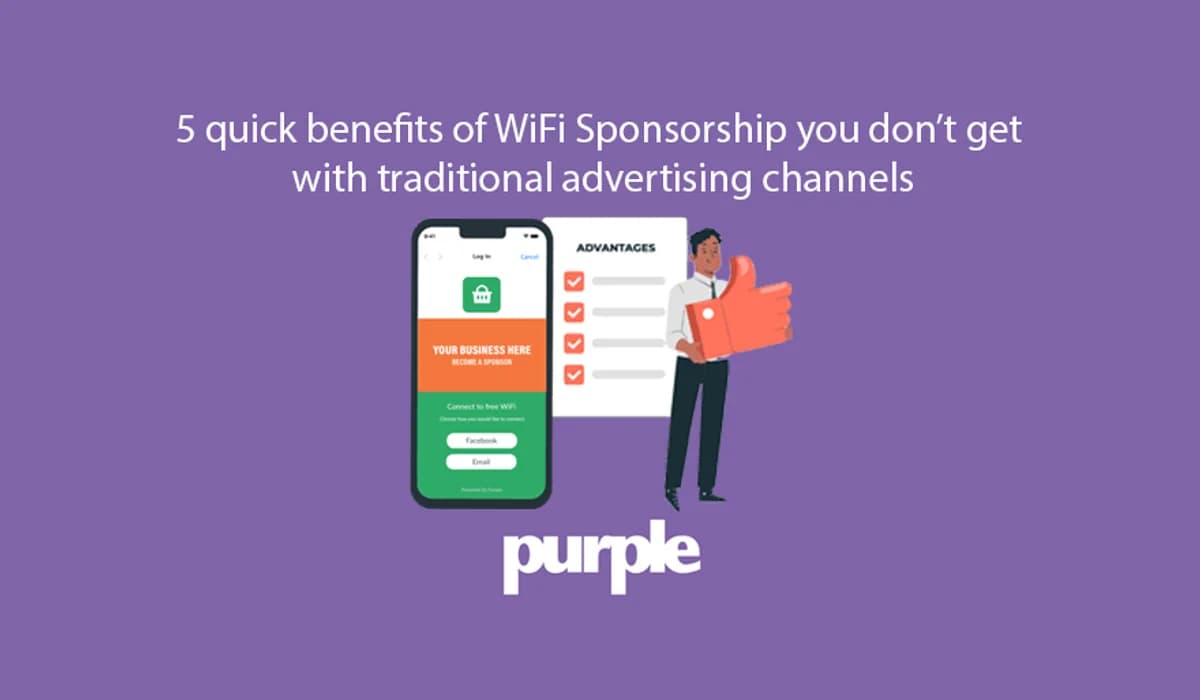
WiFi sponsorship is a commercial media model where a brand sponsors the guest WiFi infrastructure of a physical venue - such as a shopping mall, airport, stadium, hotel, or retail chain. In exchange for underwriting network operating costs or paying media fees to the venue, the sponsor gains exclusive advertising placements within the guest connection onboarding flow.
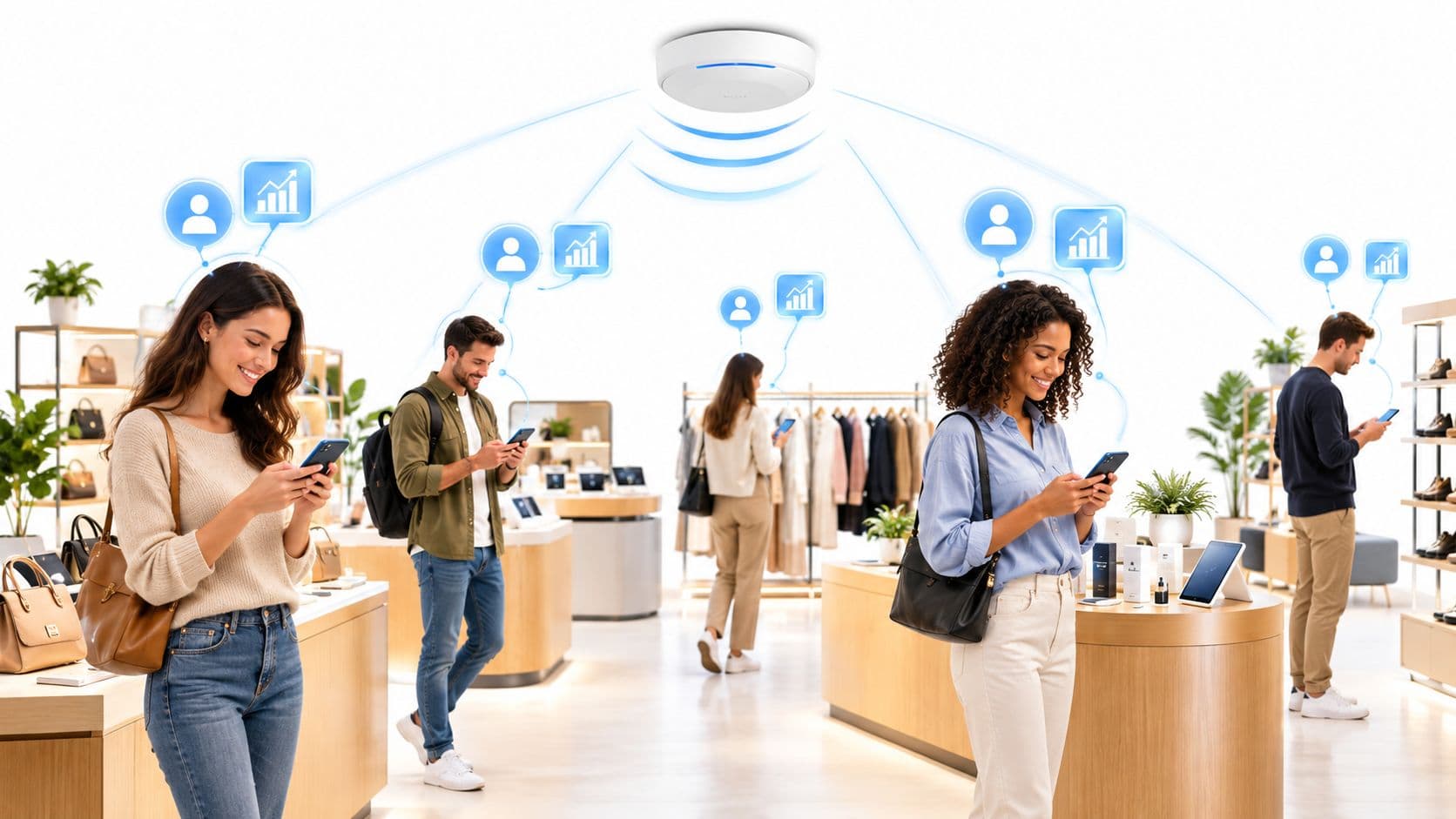
When a visitor connects their smartphone, tablet, or laptop to the venue SSID, the wireless access point redirects the client browser to a cloud-hosted captive portal splash page. The visitor views the sponsor's branded creative, message, or video before receiving high-speed internet connectivity.
The 3 high-impact WiFi sponsorship ad placements
A standard captive portal access journey provides three distinct digital advertising touchpoints that visitors must interact with during connection onboarding:
1. Pre-authentication splash page banner
Displayed on the initial captive portal screen above the sign-in form. This static or animated display unit commands 100% of the mobile viewport, introducing the brand sponsor with clear visual branding, promotional coupon codes, or call-to-action buttons.
2. Unskippable interstitial video (5 to 10 seconds)
Played during the authentication handshake while the RADIUS server authenticates the client MAC address. The user views a brief 5 to 10-second video message before internet access is granted. Because the video plays directly within the captive browser micro-window, it cannot be hidden by third-party browser ad blockers.
3. Post-authentication landing page redirect
Once login is approved, the captive network assistant automatically directs the visitor's default mobile browser to a designated sponsor URL, app store download page, or promotional microsite. This drives immediate online conversion while the visitor is physically present on site.
5 key benefits of WiFi sponsorship vs traditional advertising channels
Sponsoring venue WiFi networks provides five distinct advantages over legacy print, out-of-home (OOH), pay-per-click (PPC), and paid social campaigns.
1. Guaranteed 100% viewability on captive portal access journeys
Traditional digital banner ads on web pages are frequently pushed below the fold, scrolled past instantly, or hidden entirely by browser ad-blocking extensions. In contrast, captive portal splash pages command 100% viewability. Every visitor seeking internet access must open and view the captive portal screen to complete authentication. There is zero ad fraud, zero bot traffic, and zero wasted impressions.
2. Verified first-party data capture with 80%+ opt-in rates
With third-party tracking cookies phase-outs and stricter mobile privacy frameworks, capturing clean first-party customer data is vital. Purple captive portals collect verified email addresses, mobile phone numbers, demographic data, and visit timestamps with explicit, unbundled GDPR and CCPA consent. Across the Purple global network, over 80% of users opt in to receive marketing communications, giving sponsors high-quality CRM records that can be synced directly into HubSpot, Salesforce, or Mailchimp.
3. Hyper-local venue audience targeting and physical context
Online programmatic ads rely on probabilistic IP geolocation that often misidentifies user whereabouts by miles. WiFi sponsorship delivers deterministic physical attribution. A sporting goods brand can sponsor WiFi in a major athletics stadium during a tournament, an airline can reach high-net-worth passengers in international airport departure lounges, or a cosmetics retailer can target shoppers standing directly outside their mall store.
4. Zero competitor ad clutter and exclusive share of voice
On search engines and social media platforms, brands compete against dozens of rival advertisers on the same results page. A single user query displays competing sponsored links, shopping widgets, and banner banners. With guest WiFi sponsorship, the brand receives 100% exclusive share of voice across the venue network during their campaign window. No rival advertisements appear on the captive portal screen.
5. Rapid, turn-key deployment with zero hardware changes
Traditional in-venue advertising requires physical billboard printing, installation labor, or costly digital signage displays. WiFi sponsorship runs entirely in the cloud, integrating with existing enterprise wireless hardware - including Cisco Meraki, HPE Aruba Networking, Ruckus Wireless, Ubiquiti UniFi, and Extreme Networks. Campaigns can be configured, targeted by venue location or SSID, and deployed live across thousands of locations within minutes.
WiFi sponsorship vs traditional advertising channels: comparison matrix
The table below summarizes how guest WiFi sponsorship compares against Google Ads, social media timeline ads, and physical print signage across key performance benchmarks:
| Channel | Average CTR | Viewability Rate | First-Party Lead Capture | Ad-Block Susceptibility | Location Precision |
|---|---|---|---|---|---|
| Guest WiFi Sponsorship | 8.0% - 15.0% | 100% (Full screen) | High (80%+ opt-in rate) | 0% (Immune to ad blockers) | 100% Exact physical venue |
| Google Display Network | 0.47% | 50% - 65% (Fold-dependent) | Low (Requires click + form) | High (Ad blockers active) | City / Postcode probabilistic |
| Meta / Paid Social Feed | 0.90% | Variable (Rapid scrolling) | Medium (Lead gen forms) | Low | Interest / Demographic model |
| Print Signage & Posters | Unmeasurable | Passive glance only | None (Requires manual QR scan) | None | Fixed physical location |
Proven venue monetization benchmarks and ROI
Enterprise operators deploy Purple to transform guest WiFi from an operational IT cost into a recurring revenue centre:
- Resorts World Birmingham: Generated over 120,000 new verified CRM customer profiles and monetised captive portal ad inventory across retail, dining, and casino zones.
- Domino's Pizza: Deployed Purple guest WiFi across national store networks, capturing first-party mobile and email contacts to drive immediate app downloads and automated post-visit promotional ordering.
- Manchester Airport Group: Scaled digital passenger onboarding across international airport terminals, providing duty-free retail partners and airline sponsors with high-engagement digital ad touchpoints.
How to launch a WiFi sponsorship campaign with Purple
- Define campaign objectives: Select your target audience demographics, venue locations, and campaign goals (such as brand awareness, app downloads, or direct voucher redemption).
- Select creative ad formats: Upload splash page header banners (PNG/JPEG/SVG), a 5-second MP4 video interstitial, and specify the post-authentication redirect URL.
- Configure targeting rules: Set scheduling by daypart, day of the week, venue zone, or visitor loyalty tier (first-time vs repeat visitor).
- Monitor real-time analytics: Track impressions, click-through rates, opt-in conversion rates, and device metrics through Purple's cloud analytics dashboard.
To learn more about monetising your venue network or launching a targeted brand campaign, explore our WiFi Marketing & First-Party Data Guide or schedule a consultation with our network monetization team.
Frequently asked questions
What is WiFi sponsorship and how does it work?
WiFi sponsorship is an advertising model where brands sponsor physical guest WiFi networks in high-footfall venues like malls, airports, hotels, and stadiums. In return, visitors view the sponsor's branded message, splash page banner, or 5-second video before receiving internet access.
Why does WiFi sponsorship have higher click-through rates than Google Display or Meta ads?
Unlike digital banner ads that suffer from ad blockers and banner blindness (0.47% average CTR), guest WiFi captive portal ads deliver 100% viewability on full-screen mobile viewports during active onboarding, generating typical CTRs between 8% and 15%.
How do venues monetize their guest WiFi network with brand sponsorships?
Venues monetize guest WiFi by offering premium captive portal ad inventory (splash banners, unskippable 5-second video interstitials, and post-login landing page redirects) to brand partners and local sponsors on a monthly retainer or CPM basis (£15 to £35 CPM).
Is guest WiFi advertising compliant with GDPR and data privacy regulations?
Yes. Purple operates under ISO 27001, ISO 27701, GDPR, and CCPA certification. Users are presented with clear, unbundled opt-in consent checkboxes for marketing communications, yielding average verified opt-in rates over 80% with automated privacy request handling.
What hardware is required to deploy WiFi sponsorship advertising?
No additional advertising hardware is required. Purple integrates directly into existing enterprise access points (including Cisco Meraki, Aruba, Ruckus, Ubiquiti UniFi, and Extreme Networks) via cloud RADIUS and API connectors.