For decades, enterprise location services were limited to outdoor satellite GPS navigation and basic RFID scan gates. However, because standard GPS signals attenuate and scatter when entering indoor environments, facility operators faced an operational blind spot inside physical properties.
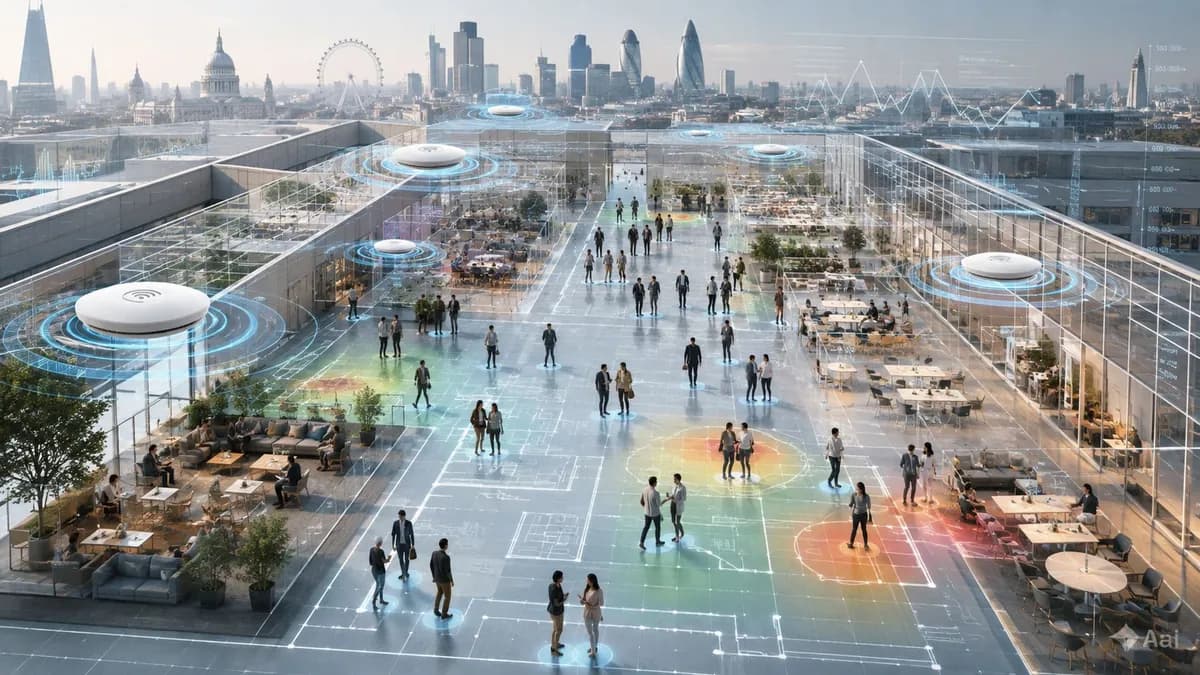
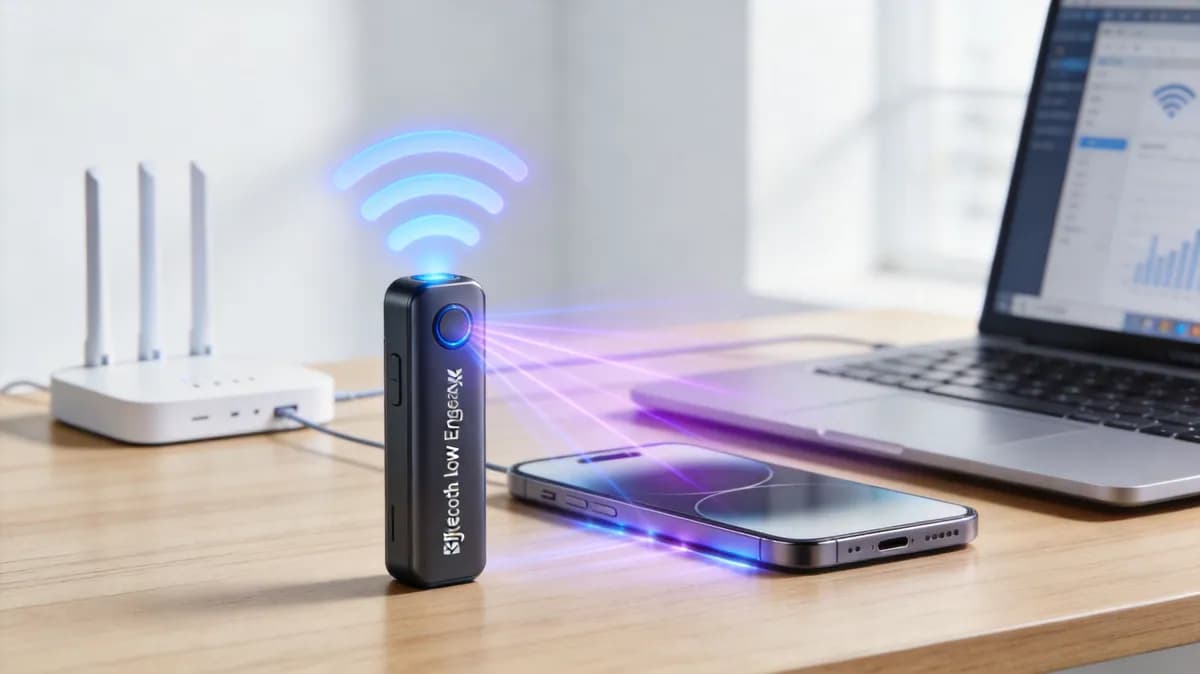
Today, modern indoor positioning systems (IPS) and Real-Time Location Services (RTLS) utilize existing enterprise wireless infrastructure - including Cisco Meraki, Aruba, Ruckus, Extreme Networks, and Fortinet access points - alongside low-power Bluetooth Low Energy (BLE 5.2/5.3) beacons and Ultra-Wideband (UWB) sensors. By processing signal strength, time-of-flight, and arrival angles, venues transform physical spaces into responsive digital environments.
Across more than 80,000 commercial venues worldwide, organizations deploy location technologies to solve complex operational, safety, and commercial challenges. Here are five practical applications delivering measurable return on investment.
Comparison of enterprise location technologies
Selecting the right indoor location architecture depends on required localization precision, latency, hardware density, and tag battery longevity.
| Technology | Standard / Protocol | Accuracy Range | Hardware Requirement | Primary Use Case |
|---|---|---|---|---|
| WiFi RTLS | IEEE 802.11k/v/az & RSSI | 10 - 16 feet (Zone level) | Zero new hardware (Existing APs) | Footfall heatmaps, presence analytics, device counts |
| BLE Beacons & AoA | Bluetooth Core 5.2 / 5.3 AoA/AoD | 3 - 6 feet (Sub-room level) | Low-cost battery tags & AP gateways | Hospital asset tracking, indoor wayfinding, proximity offers |
| Ultra-Wideband (UWB) | IEEE 802.15.4z Time-of-Flight (ToF) | 4 - 12 inches (Surgical precision) | Dedicated synchronized PoE anchors | Industrial AGVs, robotics, surgical tool localization |
| Passive RFID | EPC Gen2 / ISO 18000-6C | Chokepoint detection (Portal) | Fixed doorway readers & adhesive tags | Inventory dock intake, linen tracking, pallet checkout |
1. High-value asset tracking and equipment recovery
In large-scale healthcare facilities, distribution centers, and manufacturing plants, finding critical equipment creates substantial labor overhead. Studies show nurses spend an average of 30 to 45 minutes per 12-hour shift searching for IV pumps, telemetry units, crash carts, and wheelchairs.
By affixing compact, battery-powered BLE tags to physical assets, location engines track the real-time position of each item across building zones. Access points with integrated Bluetooth radios capture beacon broadcasts and calculate coordinates using Received Signal Strength Indicator (RSSI) and Angle-of-Arrival (AoA) algorithms.
- Loss prevention: Healthcare networks recover up to 85% of misplaced or stolen equipment, saving hundreds of thousands in replacement capital expenditures.
- Automated maintenance alerts: Geofencing triggers notifications when mobile equipment enters sterilization zones or exceeds usage runtime thresholds.
- Asset utilization auditing: Facility teams identify underutilized devices across departments, allowing reallocation before purchasing redundant units.
2. Digital indoor wayfinding and blue-dot navigation
Complex multi-story venues - such as university campuses, international airports, hospital centers, and corporate headquarters - present significant navigation challenges for first-time visitors.
Traditional static signage cannot adapt to temporary closures, flight gate changes, or individualized accessibility needs. Digital indoor wayfinding solves this by delivering an interactive, browser-based or mobile application map featuring real-time "blue dot" positioning.
- Reduced missed appointments: Hospitals implementing digital wayfinding report up to a 34% reduction in late and missed patient outpatient appointments.
- ADA and accessibility compliance: Accessible routing algorithms direct mobility-impaired visitors through elevator paths while avoiding escalators and stairwells.
- Zero-app web integration: Modern positioning platforms allow visitors to scan a QR code or connect to the guest WiFi captive portal to load venue maps instantly in a mobile web browser without app store downloads.
3. Spatial footfall analytics and queue management
Physical retail stores, transportation terminals, and entertainment stadiums require accurate spatial occupancy data to balance staffing levels, manage lines, and optimize floor layouts.
WiFi location analytics listens for unassociated Probe Request frames and associated client signals from consumer cell phones. By trilaterating signal strengths across nearby access points, the platform constructs real-time occupancy counts and heatmaps.
- Queue dwell alerts: When line dwell times at airport security lines, retail checkout banks, or ticket turnstiles exceed preset thresholds (e.g., 6 minutes), automated alerts dispatch extra staff.
- Floor layout optimization: Merchandisers compare customer pathing data to identify prime footfall corridors, measure window display capture rates, and evaluate end-cap exposure.
- HVAC and energy efficiency: Real-time occupancy density metrics feed directly into building management systems (BMS), modulating airflow, heating, and lighting in unoccupied zones to cut commercial utility overhead.
4. Lone worker protection and staff duress safety
Ensuring the physical safety of employees working in hazardous industrial environments, expansive warehouse facilities, psychiatric wards, and hotel guest rooms is a core compliance mandate under OSHA and international duty-of-care standards.
Wearable BLE personnel badges and smart duress pendants provide instantaneous sub-meter emergency localization. When a worker activates a silent panic button or a built-in accelerometer detects a "man-down" fall event, the location system immediately broadcasts the worker's exact room and floor coordinates to central security dispatch.
- Accelerated emergency response: Dispatching security directly to the precise room number reduces emergency intervention times from minutes to seconds.
- Zone-based access restriction: Automatic alerts notify safety supervisors if unqualified contractors or staff enter high-voltage or hazardous chemical containment areas.
- Mustering during fire evacuations: During emergency roll calls, the location platform verifies that personnel have successfully reached designated outdoor muster points.
5. Contextual proximity marketing and guest engagement
Traditional billboard and print advertisements broadcast static messages to untargeted audiences. In contrast, location-aware wireless networks enable physical venues to deliver personalized, hyper-local engagement at the exact moment of commercial intent.
When a visitor connects to a venue captive portal, their device associates with the local wireless network. As they walk near specific departments, concession stands, or exhibition booths, the system triggers localized splash banners, SMS notifications, or app alerts based on geographic proximity.
- High engagement rates: Proximity-triggered contextual promotions achieve conversion rates exceeding 40%, far outpacing traditional email open rates.
- Sponsorship revenue generation: Stadiums and convention centers monetize captive portal interstitial ad inventory by offering brand partners geofenced promotional slots.
- Post-visit feedback automation: When location sensors detect a customer departing a store or dining area, the platform triggers a single-question NPS micro-survey to capture real-time satisfaction feedback.
Data privacy compliance and MAC randomization
Modern mobile operating systems - including Apple iOS Private WiFi Address and Android MAC Randomization - rotate hardware MAC addresses when scanning for wireless networks to safeguard consumer privacy.
Enterprise location platforms account for these privacy controls through ethical, privacy-first system design:
- Statistical signal deduplication: Unassociated presence analytics engines apply machine learning clustering to group signal signatures into aggregate trends without tracking individual identities.
- Explicit opt-in consent: Personal identification and CRM enrichment occur exclusively when visitors authenticate through a compliant captive portal with explicit CCPA/CPRA consent checkboxes.
- Data minimization and hashing: Raw hardware identifiers are cryptographically hashed and automatically scrubbed in compliance with ISO 27001 data retention standards.
Frequently asked questions
What are the primary location technologies used in enterprise venues?
Enterprise venues primarily use WiFi RTLS (802.11az / RSSI), Bluetooth Low Energy (BLE 5.2/5.3 AoA/AoD), and Ultra-Wideband (UWB). WiFi RTLS leverages existing access points for zone-level analytics (9-16 feet), BLE provides sub-room accuracy (3-6 feet) for wayfinding and asset tags, and UWB delivers surgical centimeter-level precision (<1 foot) for mission-critical tracking.
Can venues implement location tracking without installing new hardware?
Yes. Using WiFi RTLS, venues can calculate client device coordinates and spatial heatmaps directly through existing enterprise access points (such as Cisco Meraki, Aruba, Ruckus, Extreme, and Fortinet) without deploying additional physical sensors or running new Ethernet cabling.
How does indoor wayfinding work without GPS?
GPS signals attenuate and scatter when penetrating concrete and steel structures. Indoor wayfinding replaces GPS by triangulating signals from fixed BLE beacons and WiFi access points, providing a real-time blue dot location on mobile devices with turn-by-turn routing through web browsers or venue apps.
How does location technology improve hospital and healthcare operations?
Healthcare facilities use location technology for real-time asset tracking of crash carts, IV pumps, and wheelchairs, reducing equipment search time by over 600 staff hours per month and preventing up to 85% of asset loss while providing patients with accessible step-by-step clinic wayfinding.
How do modern location platforms handle mobile MAC address randomization?
Modern location analytics engines use advanced statistical clustering and RSSI signal signature analysis to measure aggregate footfall, dwell times, and flow patterns accurately without tracking or storing individual personal data, ensuring full CCPA/CPRA and HIPAA compliance.