Enterprise 5G vs WiFi 6E & 7 architecture and TCO calculator
Model your facility area, building attenuation, and latency goals to calculate indoor access point requirements, compare 3-year total cost of ownership, and receive an actionable convergence blueprint.
Method: WiFi cells of 4,500 / 3,500 / 2,200 sq ft per AP for low / moderate / high wall loss (x0.6 for high-density venues); private 5G small cells of 6,000 / 4,500 / 3,000 sq ft. 3-year TCO assumes $1,150 per WiFi 7 AP (AP, multi-gig PoE port, cloud management licence) plus $2,500 set-up, against a $24,000 5G core, $3,200 per radio node, $792 per node for spectrum access and SIM management over 36 months, and $4,500 for client modems. Indicative US list pricing; cabling, survey and labour are excluded.
Converged WiFi 7 with Passpoint cellular offload
WiFi 7 provides superior indoor throughput, seamless BYOD device onboarding, and drastically lower capital expenditure. Deploy Passpoint (Hotspot 2.0) and OpenRoaming to automate cellular offload from major mobile carriers.
- Deploy multi-gigabit (2.5GbE/5GbE) PoE+ switching to eliminate WiFi 7 backhaul bottlenecks
- Enable Passpoint (Hotspot 2.0) profile with WPA3-Enterprise 802.1X for zero-friction cellular carrier offload
- Isolate guest and contractor traffic via dynamic VLAN steering and captive portal access
Ready to design your enterprise wireless architecture?
Speak with a Purple wireless specialist to evaluate WiFi 7 AP density, Passpoint cellular offload integration, and 802.1X Cloud RADIUS for your corporate headquarters & enterprise campus.
The arrival of 5G mobile technology sparked continuous debate regarding the future of Wireless Local Area Networks (WLANs). With promises of multi-gigabit throughput and ultra-low latency, some observers questioned whether 5G cellular networks would render WiFi obsolete. However, real-world deployment data demonstrates that 5G and modern WiFi standards (WiFi 6E and WiFi 7) are not competitors - they are complementary technologies designed for distinct connectivity environments.
As organizations expand their digital infrastructure, understanding the architectural differences, economic tradeoffs, and integration points between 5G and enterprise WiFi is critical for IT leaders and network architects.
What is the Difference Between 4G, 5G, and Modern WiFi?
To evaluate how 5G impacts wireless strategy, it is helpful to compare cellular generations alongside the concurrent evolution of IEEE 802.11 WiFi standards.
5G represents the fifth generation of cellular network technology, operating across sub-6 GHz frequencies and high-frequency millimeter wave (mmWave) bands. Compared to legacy 4G LTE, 5G delivers peak data rates over 10 Gbps, latency below 5 milliseconds, and high device connection density for outdoor smart cities and wide-area industrial IoT.
Concurrently, WiFi has undergone its own massive generational leap. The introduction of WiFi 6 (802.11ax) brought Orthogonal Frequency-Division Multiple Access (OFDMA) for high-density congestion management. WiFi 6E unlocked 1,200 MHz of clean spectrum in the 6 GHz band, and WiFi 7 (802.11be) introduced Multi-Link Operation (MLO) capable of delivering speeds up to 46 Gbps.
5 Key Reasons Why 5G Will Not Replace Enterprise WiFi
While 5G offers outstanding wide-area coverage for mobile devices, several structural and financial factors ensure WiFi remains the dominant indoor connectivity standard for businesses, healthcare facilities, education campuses, and venue operators.
1. Client Device Ubiquity and Legacy Compatibility
Over 18 billion WiFi devices are currently active globally, including laptops, tablets, smart TVs, barcode scanners, desktop computers, and IoT sensors. The vast majority of laptop computers and peripherals do not include cellular 5G modems or SIM card slots due to cost and battery constraints. Transitioning an entire corporate hardware fleet to 5G-only devices would require astronomical capital expenditure.
2. Indoor Building Penetration and Attenuation
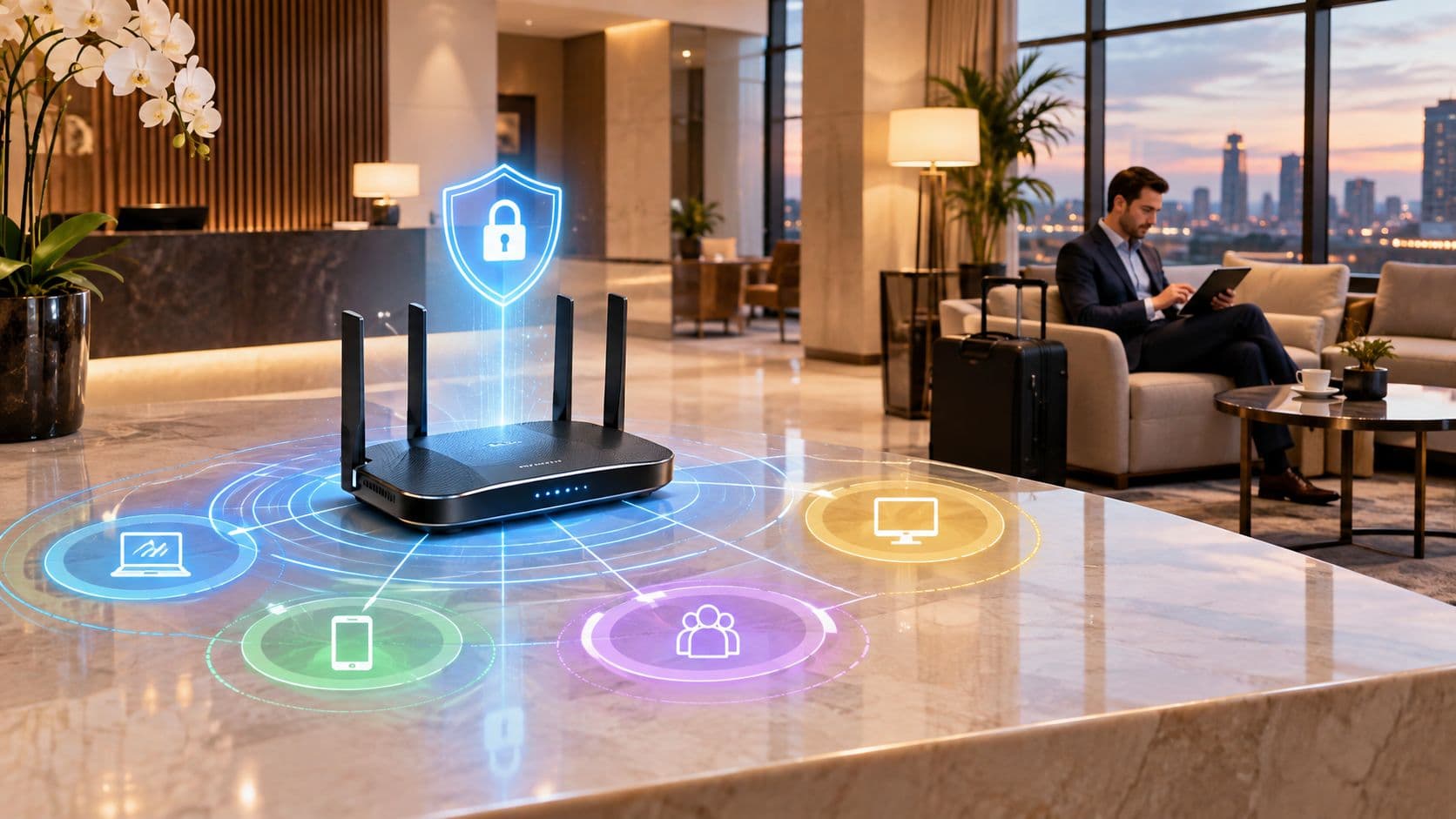
High-frequency cellular signals - particularly mmWave 5G - suffer severe attenuation when passing through modern energy-efficient building materials such as low-E coated glass, reinforced concrete, and steel framing. Achieving reliable indoor 5G coverage requires installing Distributed Antenna Systems (DAS) or indoor small cells, which involves complex carrier coordination and high installation costs. Managed WiFi access points provide cost-effective, granular indoor coverage tailored to specific floor plans.
OfCourse.3. Total Cost of Ownership (TCO) and Spectrum Licensing
WiFi operates in unlicensed frequency spectrum (2.4 GHz, 5 GHz, and 6 GHz), allowing organizations to deploy, manage, and upgrade their networks without recurring spectrum fees or cellular data subscriptions. Private 5G deployments using shared spectrum like CBRS (Citizens Broadband Radio Service) require dedicated core EPC (Evolved Packet Core) software, SIM provision management, and specialized cellular expertise, resulting in significantly higher TCO for indoor spaces.
4. Local Area Network (LAN) Control and Asset Access
Enterprise WiFi integrates directly into an organization's local LAN architecture. This allows network administrators to enforce 802.1X RADIUS authentication, apply role-based Dynamic VLAN segmentation, and grant secure access to local resources such as internal servers, network-attached storage (NAS), IP printers, and point-of-sale (POS) systems. Cellular 5G routes client traffic out to carrier core networks, requiring complex VPN tunnels or cloud proxies to access local LAN assets.
5. Guest Engagement, Captive Portals, and Foot Traffic Analytics
For customer-facing industries such as retail, hospitality, transportation hubs, and healthcare, guest WiFi provides a vital interaction channel. When guests connect to an enterprise WiFi network, businesses can present branded captive portals, gather compliant first-party marketing data, and leverage WiFi presence analytics to understand foot traffic patterns, dwell times, and repeat visits. Cell phone 5G connections bypass the venue's local infrastructure entirely, preventing venue operators from engaging visitors or collecting spatial insights.
Optimize Your Enterprise WiFi Investment
While 5G powers wide-area connectivity, Purple turns your indoor enterprise WiFi infrastructure into a revenue-generating guest engagement and analytics engine. Discover how leading venue operators capture first-party data and streamline access.
Request a Demo →How 5G and WiFi 6E/7 Coexist in Enterprise Networks
Rather than replacing one another, enterprise network strategy increasingly focuses on seamless convergence between 5G cellular networks and indoor WiFi networks.
Key convergence technologies include:
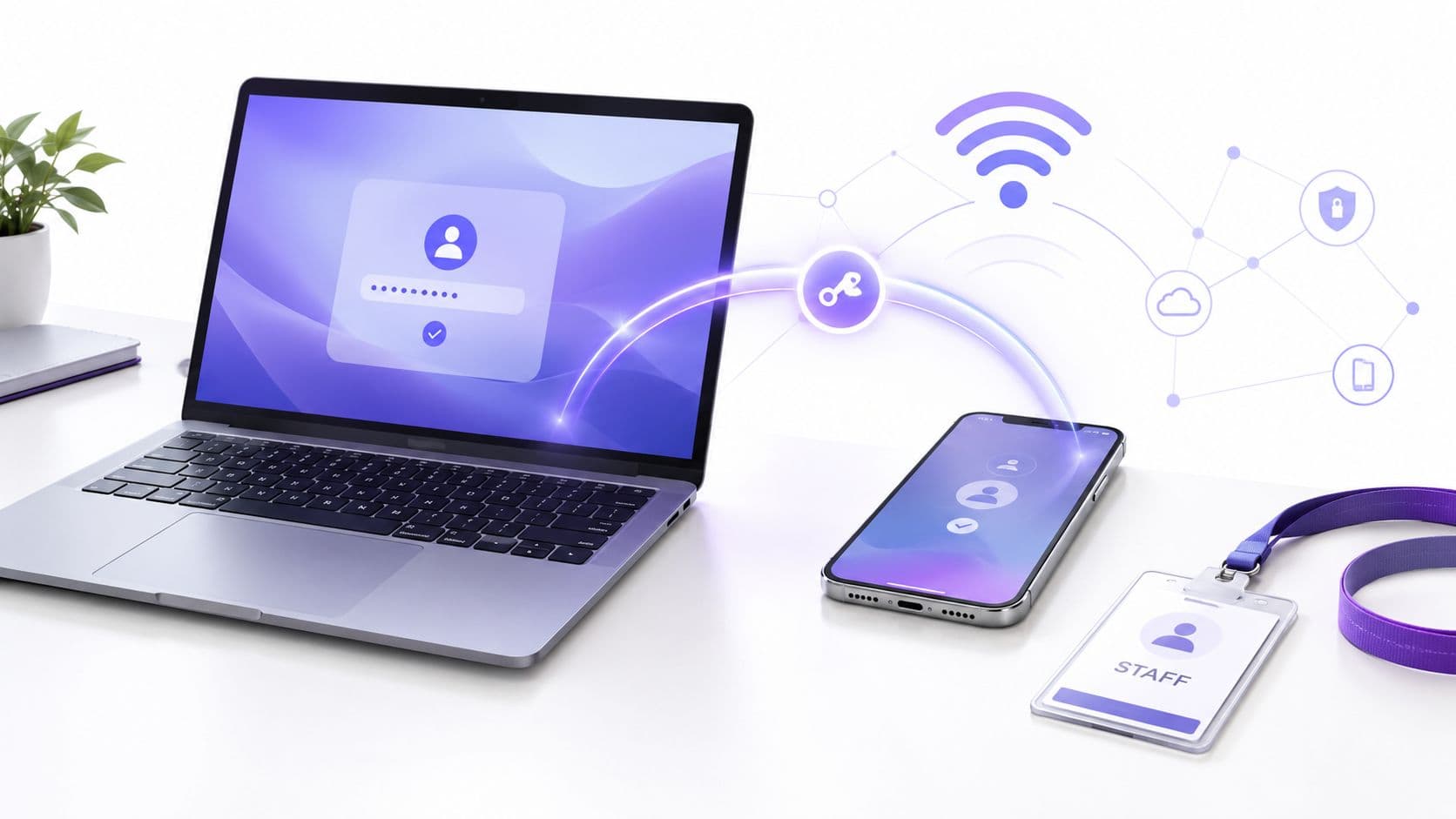
N include:- Passpoint (Hotspot 2.0) and OpenRoaming: Standardized by the Wireless Broadband Alliance (WBA), OpenRoaming allows mobile subscriber devices to automatically and securely transition from 5G cellular towers to enterprise WiFi networks without requiring manual login screens or password entry.
- Cellular Data Offloading: Mobile network operators rely on enterprise WiFi networks to offload heavy cellular data traffic in high-density venues like stadiums, airports, and shopping centers, reducing congestion on outdoor cellular towers.
- Hybrid Enterprise Architecture: Facilities utilize Private 5G for long-range outdoor perimeter coverage, autonomous vehicle navigation, or heavy industrial robotics, while utilizing WiFi 6E/7 for high-density indoor office spaces, guest networks, and employee workstations.
Frequently Asked Questions: 5G vs WiFi
Is 5G faster than WiFi 6 and WiFi 7?
No. While public 5G networks typically offer download speeds between 100 Mbps and 1 Gbps (with mmWave peak bursts up to 10 Gbps), WiFi 6 supports speeds up to 9.6 Gbps, and WiFi 7 offers theoretical peak speeds up to 46 Gbps. In indoor multi-user environments, WiFi 6E and WiFi 7 deliver higher bandwidth per user than standard 5G connections.
Do I need WiFi if I have unlimited 5G data?
Yes. Unlimited 5G cellular data does not provide access to internal company servers, local LAN printers, or local network security policies. Additionally, indoor 5G signal strength often drops inside large buildings, shopping malls, and basements, making WiFi essential for reliable indoor connectivity.
Will 6 GHz WiFi (WiFi 6E/7) interfere with 5G?
No. WiFi 6E and WiFi 7 operate in unlicensed 6 GHz spectrum (5.925 GHz to 7.125 GHz) under strict regulatory guidelines. Cellular 5G operates in dedicated licensed bands (Sub-6 GHz and mmWave 24-39 GHz) or designated shared bands like CBRS (3.5 GHz), ensuring no frequency overlap or signal interference.