

भारत DPDP अधिनियम: भारतीय स्थानों के लिए गेस्ट WiFi अनुपालन
यह आधिकारिक तकनीकी संदर्भ मार्गदर्शिका उन भारतीय स्थानों के लिए डिजिटल पर्सनल डेटा प्रोटेक्शन (DPDP) अधिनियम 2023 को विस्तार से समझाती है जो गेस्ट WiFi संचालित करते हैं। यह कार्रवाई योग्य अनुपालन रणनीतियाँ, Captive Portal के लिए वास्तुशिल्प संबंधी विचार, और डेटा प्रतिधारण तथा सीमा-पार स्थानांतरण के लिए व्यावहारिक ढाँचे प्रदान करती है।
🎧 इस गाइड को सुनें
ट्रांसक्रिप्ट देखें

कार्यकारी सारांश
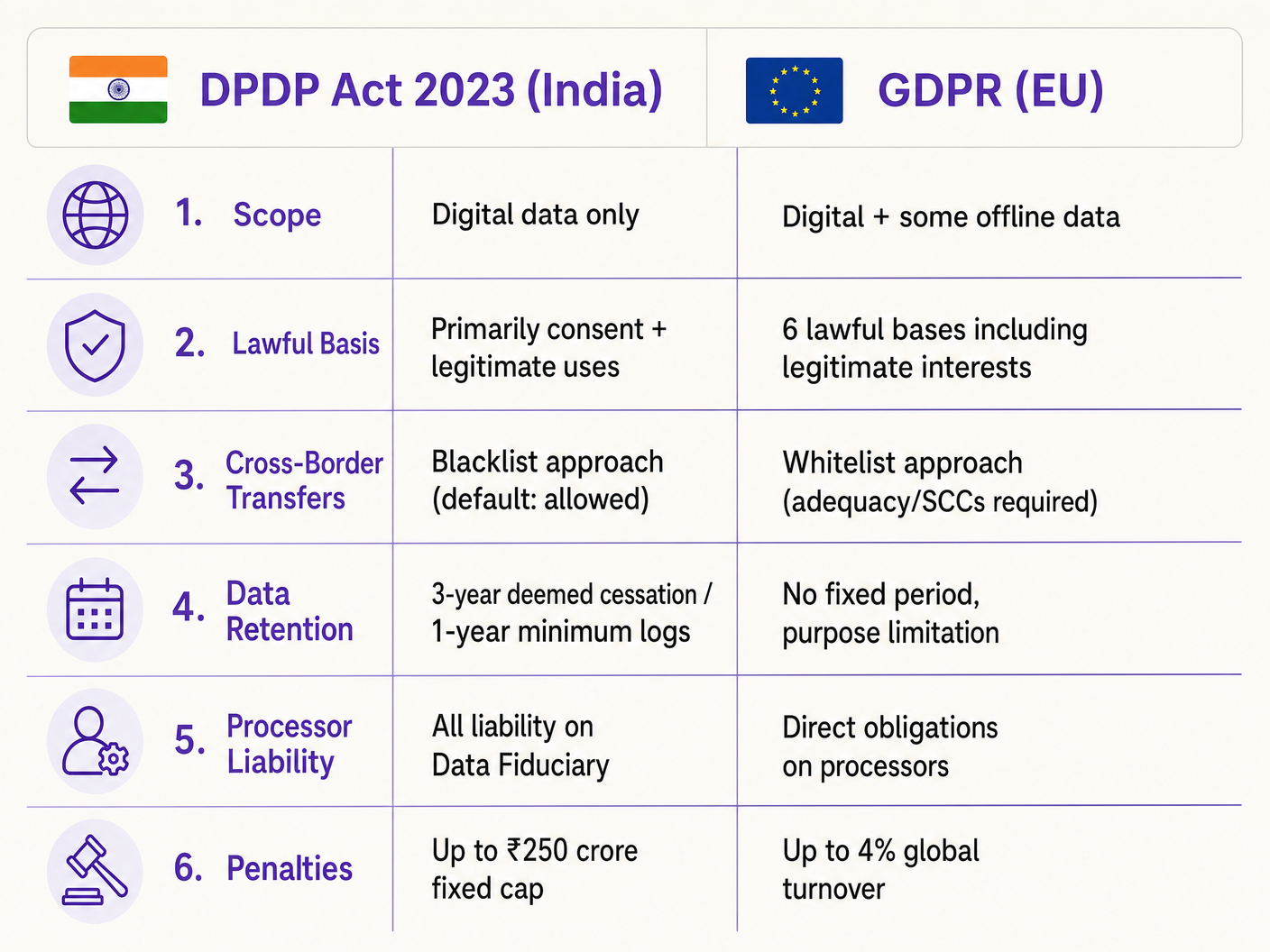
डिजिटल पर्सनल डेटा प्रोटेक्शन अधिनियम 2023 (DPDP अधिनियम) मौलिक रूप से बदलता है कि भारतीय स्थान—आतिथ्य समूहों से लेकर खुदरा संपत्तियों तक—को गेस्ट WiFi डेटा को कैसे संभालना चाहिए। IT प्रबंधकों और नेटवर्क आर्किटेक्ट्स के लिए, यह केवल एक कानूनी अपडेट नहीं है; इसके लिए Captive Portal, सहमति प्रबंधन डेटाबेस और डेटा जीवनचक्र स्वचालन में महत्वपूर्ण वास्तुशिल्प परिवर्तनों की आवश्यकता है। GDPR के विपरीत, DPDP अधिनियम सभी अनुपालन दायित्व को सीधे डेटा प्रत्ययी (स्थान) पर रखता है, जिसका अर्थ है कि आप अपने WiFi प्लेटफ़ॉर्म प्रदाता को जोखिम हस्तांतरित नहीं कर सकते। इसके अलावा, अधिनियम सहमति के लिए सख्त बिना शर्तता प्रस्तुत करता है और तीव्र, उद्देश्य-संचालित डेटा मिटाने का आदेश देता है। यह मार्गदर्शिका एक विक्रेता-तटस्थ अनुपालन प्लेबुक प्रदान करती है, जिसमें दानेदार सहमति प्रवाह, मजबूत ऑडिट ट्रेल और स्वचालित प्रतिधारण नीतियों के तकनीकी कार्यान्वयन का विवरण दिया गया है, जो गैर-अनुपालन से जुड़े पर्याप्त वित्तीय जोखिमों को कम करने के लिए आवश्यक हैं।
तकनीकी गहन-विश्लेषण: गेस्ट WiFi के लिए DPDP अधिनियम वास्तुकला
गेस्ट WiFi के लिए DPDP अनुपालन लागू करने के लिए निष्क्रिय डेटा संग्रह से सक्रिय, सत्यापन योग्य सहमति प्रबंधन की ओर बदलाव की आवश्यकता है। तकनीकी वास्तुकला को दानेदार सहमति कैप्चर, अपरिवर्तनीय ऑडिट ट्रेल और स्वचालित डेटा जीवनचक्र प्रबंधन का समर्थन करना चाहिए।
Captive Portal सहमति प्रवाह
DPDP धारा 6 के तहत पारंपरिक "शर्तें स्वीकार करने के लिए क्लिक करें" Captive Portal अप्रचलित है। सहमति "स्वतंत्र, विशिष्ट, सूचित, बिना शर्त और स्पष्ट" होनी चाहिए। बिना शर्त सहमति की आवश्यकता का अर्थ है कि स्थान नेटवर्क एक्सेस के लिए मार्केटिंग संचार को एक पूर्व शर्त नहीं बना सकते हैं।
जब कोई अतिथि SSID से जुड़ता है और Captive Network Assistant (CNA) पोर्टल को ट्रिगर करता है, तो RADIUS प्रमाणीकरण टोकन प्रदान करने से पहले वास्तुशिल्प प्रवाह को अनुपालन सुनिश्चित करना चाहिए।
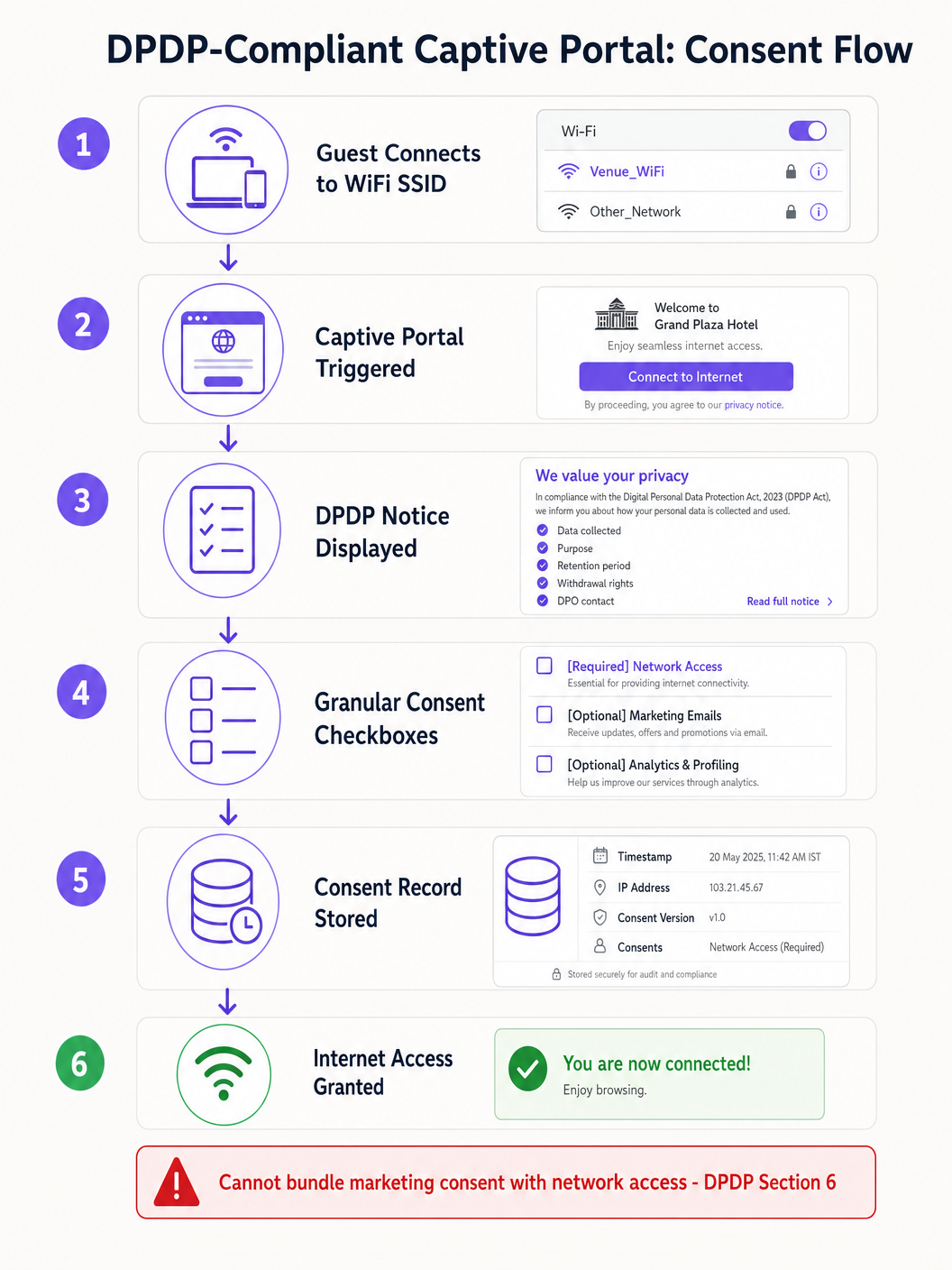
तकनीकी कार्यान्वयन को CNA सीमाओं का ध्यान रखना चाहिए। उदाहरण के लिए, Apple CNA, Android Connectivity Check, Microsoft NCSI: How Captive Portal Detection Actually Works बताता है कि मिनी-ब्राउज़र वातावरण अक्सर कुकीज़ और रीडायरेक्ट को प्रतिबंधित करता है। इसलिए, CNA विंडो को खारिज करने से पहले, फॉर्म सबमिशन के तुरंत बाद, डिवाइस MAC पते या उपयोगकर्ता पहचानकर्ता के विरुद्ध सहमति स्थिति को सुरक्षित रूप से सर्वर-साइड पर प्रेषित और संग्रहीत किया जाना चाहिए।
अपरिवर्तनीय सहमति ऑडिट ट्रेल
यदि डेटा प्रोटेक्शन बोर्ड किसी शिकायत की जांच करता है, तो स्थान को यह साबित करना होगा कि एक विशिष्ट डेटा प्रिंसिपल ने एक विशिष्ट तिथि पर विशिष्ट प्रसंस्करण के लिए सहमति दी थी। WiFi प्लेटफ़ॉर्म के डेटाबेस को एक अपरिवर्तनीय ऑडिट ट्रेल बनाए रखना चाहिए। प्रत्येक सहमति रिकॉर्ड में शामिल होना चाहिए:
- एक अद्वितीय सत्र पहचानकर्ता।
- टाइमस्टैम्प (IST में)।
- क्लाइंट IP पता और MAC पता।
- प्रदर्शित गोपनीयता सूचना का विशिष्ट संस्करण।
- जिन सटीक उद्देश्यों के लिए सहमति दी गई थी (उदाहरण के लिए, नेटवर्क एक्सेस बनाम मार्केटिंग)।
डेटा प्रत्ययी बनाम डेटा प्रोसेसर दायित्व
DPDP धारा 8 के तहत, स्थान डेटा प्रत्ययी के रूप में कार्य करता है, जबकि WiFi विक्रेता (उदाहरण के लिए, Purple) डेटा प्रोसेसर के रूप में कार्य करता है। महत्वपूर्ण रूप से, डेटा प्रत्ययी अनुपालन के लिए पूर्ण, गैर-हस्तांतरणीय दायित्व वहन करता है। धारा 8(2) डेटा प्रोसेसर के साथ एक वैध अनुबंध अनिवार्य करती है। IT निदेशकों को अपने विक्रेता समझौतों का ऑडिट करना चाहिए ताकि यह सुनिश्चित हो सके कि उनमें विशिष्ट DPDP डेटा प्रोसेसिंग ऐडेंडम शामिल हैं, क्योंकि पुराने अनुबंधों पर निर्भर रहने से स्थान को गंभीर दंड का सामना करना पड़ता है।
कार्यान्वयन मार्गदर्शिका: परिनियोजन रणनीतियाँ
DPDP-अनुरूप गेस्ट WiFi समाधान तैनात करने के लिए नेटवर्क इन्फ्रास्ट्रक्चर, पहचान प्रबंधन और मार्केटिंग ऑटोमेशन सिस्टम के समन्वय की आवश्यकता होती है।
चरण 1: प्रमाणीकरण को मार्केटिंग से अलग करना
प्रमाणीकरण परत (RADIUS/802.1X) को मार्केटिंग डेटाबेस से तार्किक रूप से अलग किया जाना चाहिए। जब कोई उपयोगकर्ता प्रमाणित होता है, तो सिस्टम को सहमति फ़्लैग की जांच करनी चाहिए। यदि उपयोगकर्ता ने केवल नेटवर्क एक्सेस के लिए सहमति दी है, तो उनकी पहचान डेटा को अलग किया जाना चाहिए और CRM या मार्केटिंग ऑटोमेशन प्लेटफ़ॉर्म पर सिंक होने से रोका जाना चाहिए।
चरण 2: डेटा जीवनचक्र का कार्यान्वयन
DPDP धारा 8(7) के अनुसार, जब निर्दिष्ट उद्देश्य पूरा नहीं होता है या सहमति वापस ले ली जाती है, तो डेटा मिटाना आवश्यक है। स्थान संचालकों के लिए, "उद्देश्य समाप्ति" को परिभाषित करने के लिए स्वचालित वर्कफ़्लो की आवश्यकता होती है।
उदाहरण के लिए, Retail वातावरण में WiFi Analytics का उपयोग करते हुए, यदि कोई ग्राहक 24 महीनों में नेटवर्क से नहीं जुड़ा है, तो एक स्वचालित स्क्रिप्ट को सॉफ्ट-डिलीट वर्कफ़्लो को ट्रिगर करना चाहिए। नियम 8(3) इसे जटिल बनाता है क्योंकि इसमें प्रोसेसिंग लॉग को न्यूनतम एक वर्ष के लिए बनाए रखने की आवश्यकता होती है। इसलिए, डेटाबेस वास्तुकला को टियरर्ड डिलीशन का समर्थन करना चाहिए: व्यक्तिगत रूप से पहचान योग्य जानकारी (PII) को हटाना जबकि ऑडिट उद्देश्यों के लिए अनाम कनेक्शन लॉग को बनाए रखना।
चरण 3: सीमा-पार स्थानांतरणों को संभालना
GDPR के जटिल पर्याप्तता तंत्रों के विपरीत, DPDP धारा 16 "ब्लैकलिस्ट" दृष्टिकोण का उपयोग करती है। भारत के बाहर डेटा स्थानांतरण डिफ़ॉल्ट रूप से अनुमत हैं जब तक कि केंद्र सरकार स्पष्ट रूप से किसी विशिष्ट देश को प्रतिबंधित न करे। भारत के बाहर AWS/Azure क्षेत्रों में होस्ट किए गए क्लाउड-प्रबंधित WiFi नियंत्रकों (उदाहरण के लिए, Cisco Aruba, Meraki) या एनालिटिक्स प्लेटफ़ॉर्म को तैनात करने वाले IT आर्किटेक्ट्स के लिए, यह वर्तमान में घर्षण को कम करता है। हालांकि, यदि सरकारी सूचनाएं बदलती हैं तो डेटा निवास को माइग्रेट करने के लिए आर्किटेक्चर पर्याप्त रूप से चुस्त रहना चाहिए।
सर्वोत्तम अभ्यास और उद्योग मानक
अनुपालन के लिए वास्तुकला बनाते समय, अनुकूलित समाधानों के बजाय स्थापित मानकों पर भरोसा करें।
- एज पर अनामीकरण: फुटफॉल गणना और Indoor Positioning Systems , क्लाउड कंट्रोलर तक डेटा पहुंचने से पहले एक्सेस पॉइंट स्तर पर MAC एड्रेस हैशिंग लागू करें। यदि डेटा वास्तव में गुमनाम है, तो यह DPDP के दायरे से बाहर है।
- केंद्रीकृत सहमति प्रबंधन: यदि उपयोगकर्ता अन्य चैनलों (जैसे, एक होटल बुकिंग इंजन) के माध्यम से स्थान के साथ इंटरैक्ट करता है, तो WiFi प्लेटफॉर्म पर सत्य के एकमात्र स्रोत के रूप में निर्भर न करें। एक मास्टर कंसेंट API लागू करें जो स्टैक में प्राथमिकताओं को सिंक करता है।
- सुरक्षित API एकीकरण: सुनिश्चित करें कि Guest WiFi प्लेटफॉर्म और डाउनस्ट्रीम सिस्टम के बीच सभी डेटा ट्रांसफर TLS 1.3 का उपयोग करते हैं और API कुंजी रोटेशन की आवश्यकता होती है, जो PCI DSS और ISO 27001 सिद्धांतों के अनुरूप है।
समस्या निवारण और जोखिम न्यूनीकरण
अनुपालन परिनियोजन में विफलता के तरीके अक्सर मुख्य WiFi प्लेटफॉर्म के बजाय सिस्टम एकीकरण अंतराल से उत्पन्न होते हैं।
सामान्य विफलता मोड: डाउनस्ट्रीम सिस्टम में अनाथ डेटा जब कोई उपयोगकर्ता captive portal के माध्यम से सहमति वापस लेता है, तो WiFi प्लेटफॉर्म अपने डेटाबेस को अपडेट करता है। हालांकि, यदि CRM को API वेबहुक विफल हो जाता है, तो मार्केटिंग टीम उपयोगकर्ता को ईमेल करना जारी रख सकती है, जिसके परिणामस्वरूप DPDP का उल्लंघन होगा। न्यूनीकरण: WiFi डेटाबेस और CRM के बीच मजबूत वेबहुक रिट्राई लॉजिक और दैनिक सुलह स्क्रिप्ट लागू करें।
सामान्य विफलता मोड: सहमति सिंक से पहले CNA बर्खास्तगी इंटरनेट एक्सेस के लिए उत्सुक उपयोगकर्ता "Done" बटन के प्रकट होते ही Apple CNA विंडो को बंद कर सकते हैं, जिससे API कॉल बाधित हो सकती है जो उनकी विस्तृत सहमति प्राथमिकताओं को लॉग करती है। न्यूनीकरण: सुनिश्चित करें कि captive portal बैकएंड सहमति पेलोड को अतुल्यकालिक रूप से संसाधित करता है और डेटाबेस प्रतिबद्धता की पुष्टि होने के बाद ही RADIUS सफलता संदेश लौटाता है।
ROI और व्यावसायिक प्रभाव
जबकि DPDP अनुपालन के लिए निवेश की आवश्यकता होती है, यह महत्वपूर्ण परिचालन लाभ प्रदान करता है। स्वच्छ, सहमति-सत्यापित डेटा केवल संलग्न उपयोगकर्ताओं को लक्षित करके मार्केटिंग ROI में सुधार करता है, बाउंस दरों को कम करता है और प्रेषक की प्रतिष्ठा में सुधार करता है। इसके अलावा, मजबूत डेटा सुरक्षा का प्रदर्शन विश्वास बनाता है। Healthcare और Hospitality जैसे क्षेत्रों में, जहाँ डेटा संवेदनशीलता सर्वोपरि है, एक पारदर्शी, अनुपालन-योग्य WiFi ऑनबोर्डिंग अनुभव एक प्रतिस्पर्धी अंतर बन जाता है।
हालांकि, अंतिम व्यावसायिक प्रभाव जोखिम न्यूनीकरण है। सुरक्षा विफलताओं के लिए DPDP दंड ₹250 करोड़ तक पहुंचने के साथ, एक अनुपालन-योग्य समाधान तैयार करने की लागत नियामक जोखिम की तुलना में नगण्य है।
ब्रीफिंग सुनें
इन आवश्यकताओं के संक्षिप्त अवलोकन के लिए, हमारी तकनीकी पॉडकास्ट ब्रीफिंग सुनें:
मुख्य शब्द और परिभाषाएं
Data Fiduciary
The entity that determines the purpose and means of processing personal data.
In the context of guest WiFi, the venue operator (e.g., the hotel or mall) is the Data Fiduciary and holds all legal liability.
Data Processor
Any person who processes personal data on behalf of a Data Fiduciary.
The WiFi platform vendor (like Purple) acts as the Data Processor and must operate under a strict contract.
Data Principal
The individual to whom the personal data relates.
The guest or customer connecting to the WiFi network.
Unconditional Consent
Consent that is not made contingent on the provision of a good or service.
Venues cannot force guests to accept marketing emails in exchange for free WiFi.
Deemed Cessation
The legal presumption that the purpose for data collection is no longer served after a period of inactivity.
Forces IT teams to implement automated data erasure workflows for inactive WiFi users.
Blacklist Transfer Approach
A regulatory model where cross-border data transfers are allowed by default, unless explicitly restricted.
Simplifies cloud architecture for Indian venues, as they can use foreign data centres unless the government issues a specific restriction.
Captive Network Assistant (CNA)
The mini-browser triggered by mobile operating systems when they detect a captive portal.
CNA limitations require careful technical implementation of consent forms to ensure data is captured reliably before the window closes.
Granular Consent
Providing separate options for different types of data processing.
Required on captive portals to separate necessary network access from optional marketing and analytics.
केस स्टडीज
A 200-room business hotel in Mumbai wants to offer free guest WiFi. They currently require guests to provide their email address and agree to receive promotional offers before granting internet access. How must they re-architect this flow for DPDP compliance?
The hotel must decouple network access from marketing consent. They should deploy a captive portal with two distinct checkboxes. Checkbox 1 (Required): 'I agree to the terms of service for network access.' Checkbox 2 (Optional, unchecked by default): 'I consent to receive promotional offers via email.' The backend RADIUS server must grant access if only Checkbox 1 is ticked. The system must log the exact consent state (timestamp, IP, and which boxes were ticked) in an immutable database.
A large Indian retail chain uses WiFi probes to track customer footfall and dwell time across 50 stores. They capture device MAC addresses. How should they handle this data under the DPDP Act?
The IT team should implement edge-level anonymisation. The WiFi access points should be configured to hash and salt the MAC addresses before transmitting the data to the central analytics server. If the data is irreversibly anonymised and cannot identify a Data Principal, it falls outside the scope of the DPDP Act. For identified analytics (e.g., tracking a specific registered user's journey), they must obtain explicit consent via the captive portal when the user connects to the network.
परिदृश्य विश्लेषण
Q1. Your marketing director requests that the captive portal be updated to require users to provide their date of birth to access the WiFi, aiming to build better demographic profiles. How should you, as the IT Director, respond based on DPDP principles?
💡 संकेत:Consider the principles of data minimisation and unconditional consent.
अनुशंसित दृष्टिकोण दिखाएं
You should reject the request to make it mandatory. Under the DPDP Act's data minimisation principles, you should only collect data necessary for the specified purpose (providing network access). Date of birth is not required for network routing. Furthermore, making it mandatory violates the 'unconditional' consent rule. You can include the date of birth field, but it must be entirely optional, and the user must be able to connect to the WiFi even if they leave it blank.
Q2. A guest who used your stadium WiFi six months ago emails your support desk demanding that all their personal data be deleted immediately under their DPDP rights. What technical steps must your team take?
💡 संकेत:Consider both the primary database and downstream systems, as well as Rule 8(3) exceptions.
अनुशंसित दृष्टिकोण दिखाएं
- Verify the identity of the Data Principal. 2. Locate their record in the WiFi platform's database. 3. Execute a soft-delete or anonymisation of their PII (name, email, phone). 4. Trigger webhooks/APIs to ensure this deletion propagates to any downstream systems (CRM, email marketing platforms). 5. Crucially, under Rule 8(3), you must retain the anonymised processing logs (connection times, data volume) for a minimum of one year from the date of processing for audit purposes. 6. Respond to the user within the mandatory 90-day window confirming the erasure.
Q3. Your multinational hotel group uses a central CRM hosted in a data centre in Singapore. Can you transfer Indian guest WiFi data to this server under the DPDP Act?
💡 संकेत:Recall the difference between DPDP's blacklist approach and GDPR's whitelist approach.
अनुशंसित दृष्टिकोण दिखाएं
Yes, you can. The DPDP Act utilizes a 'blacklist' approach for cross-border data transfers. This means transfers are permitted to any country by default, unless the Central Government of India has issued a specific notification restricting transfers to that territory. Since Singapore is not currently restricted, the transfer is legally permissible without requiring complex adequacy mechanisms like Standard Contractual Clauses (SCCs) used under GDPR. However, you must still ensure the data is protected with reasonable security safeguards during transit and at rest.




