

GDPR e WiFi: Una guida alla conformità per le aziende
Una guida completa per i responsabili IT e gli operatori di strutture sulla gestione della conformità GDPR all'interno delle reti WiFi aziendali. Copre la mappatura dei dati, le basi giuridiche per il trattamento, la progettazione del consenso della splash page e le politiche di conservazione automatizzate.
🎧 Ascolta questa guida
Visualizza trascrizione
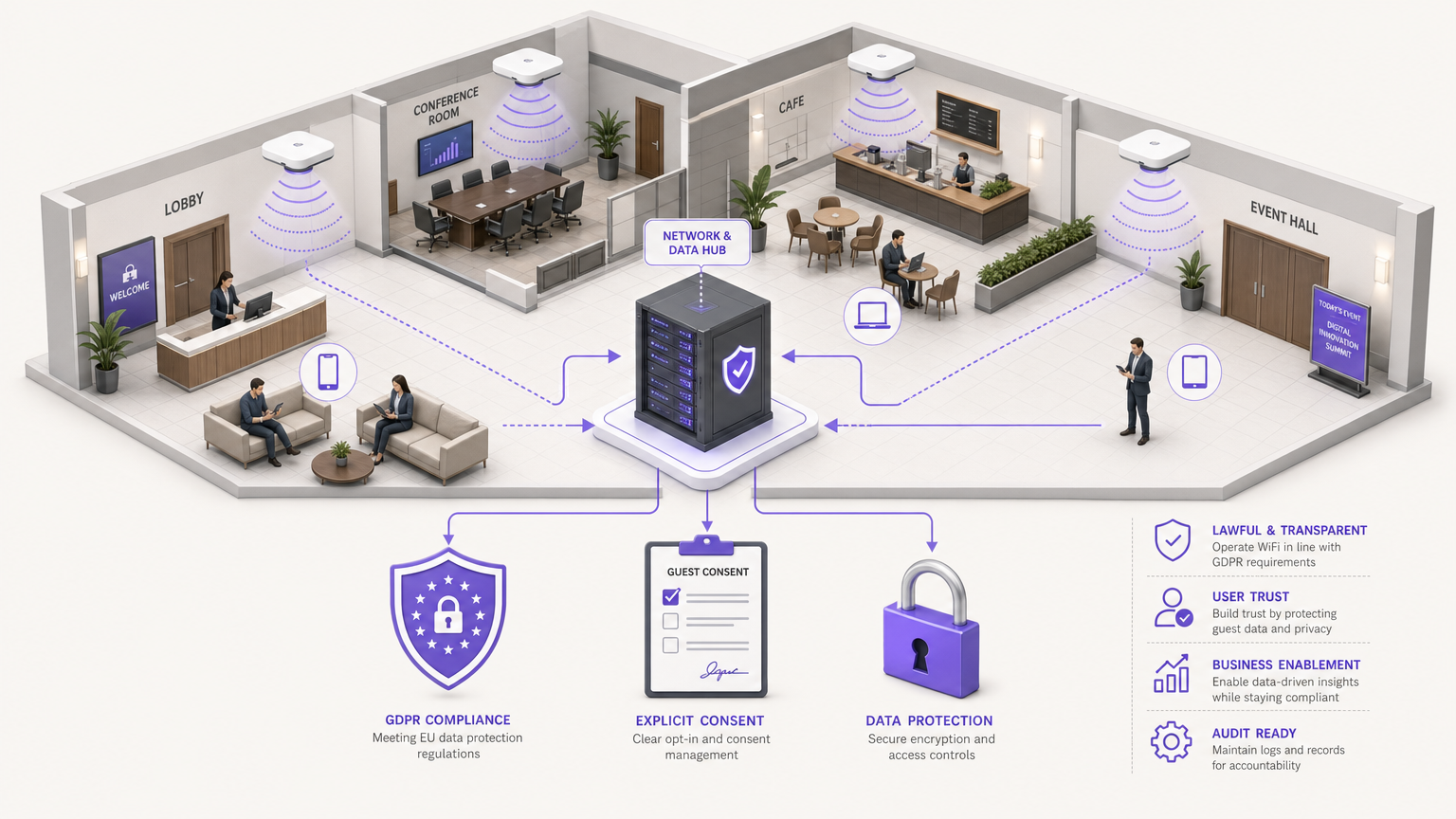
Sintesi Esecutiva
Per i CTO, i responsabili IT e i direttori delle operazioni delle strutture, il WiFi per gli ospiti è un'arma a doppio taglio. Da un lato, è un'utilità fondamentale per l'esperienza degli ospiti e un potente motore per WiFi Analytics . Dall'altro, rappresenta una superficie significativa per il rischio di protezione dei dati. Se gestisci Guest WiFi nel Retail , nell' Hospitality o nel Transport , stai trattando dati personali ai sensi del Regolamento Generale sulla Protezione dei Dati (GDPR).
Questa guida elimina il gergo legale per fornire un quadro pratico e tecnico per la conformità. Trattiamo i punti dati specifici acquisiti dall'infrastruttura di rete, come progettare Captive Portal che soddisfino la soglia per il consenso esplicito e come implementare politiche di conservazione automatizzate che proteggano la tua organizzazione dall'applicazione normativa consentendo al contempo preziose intuizioni di business.
Ascolta il nostro briefing esecutivo di 10 minuti:
Approfondimento Tecnico: Quali Dati Stai Effettivamente Raccogliendo?
Un errore comune tra gli architetti di rete è che gli indirizzi MAC e gli indirizzi IP siano identificatori puramente tecnici. Ai sensi del GDPR, se un punto dati può essere utilizzato – direttamente o indirettamente – per identificare una persona fisica, costituisce dato personale.
Quando un dispositivo si associa a un Access Point WiFi, il controller di rete registra l'indirizzo MAC. Quando l'utente passa attraverso il Captive Portal, gli viene assegnato un indirizzo IP. Entrambi sono dati personali. Se la tua splash page include un modulo di registrazione, stai anche acquisendo informazioni esplicitamente identificabili come nomi, indirizzi email e potenzialmente dati demografici.
Base Giuridica per il Trattamento
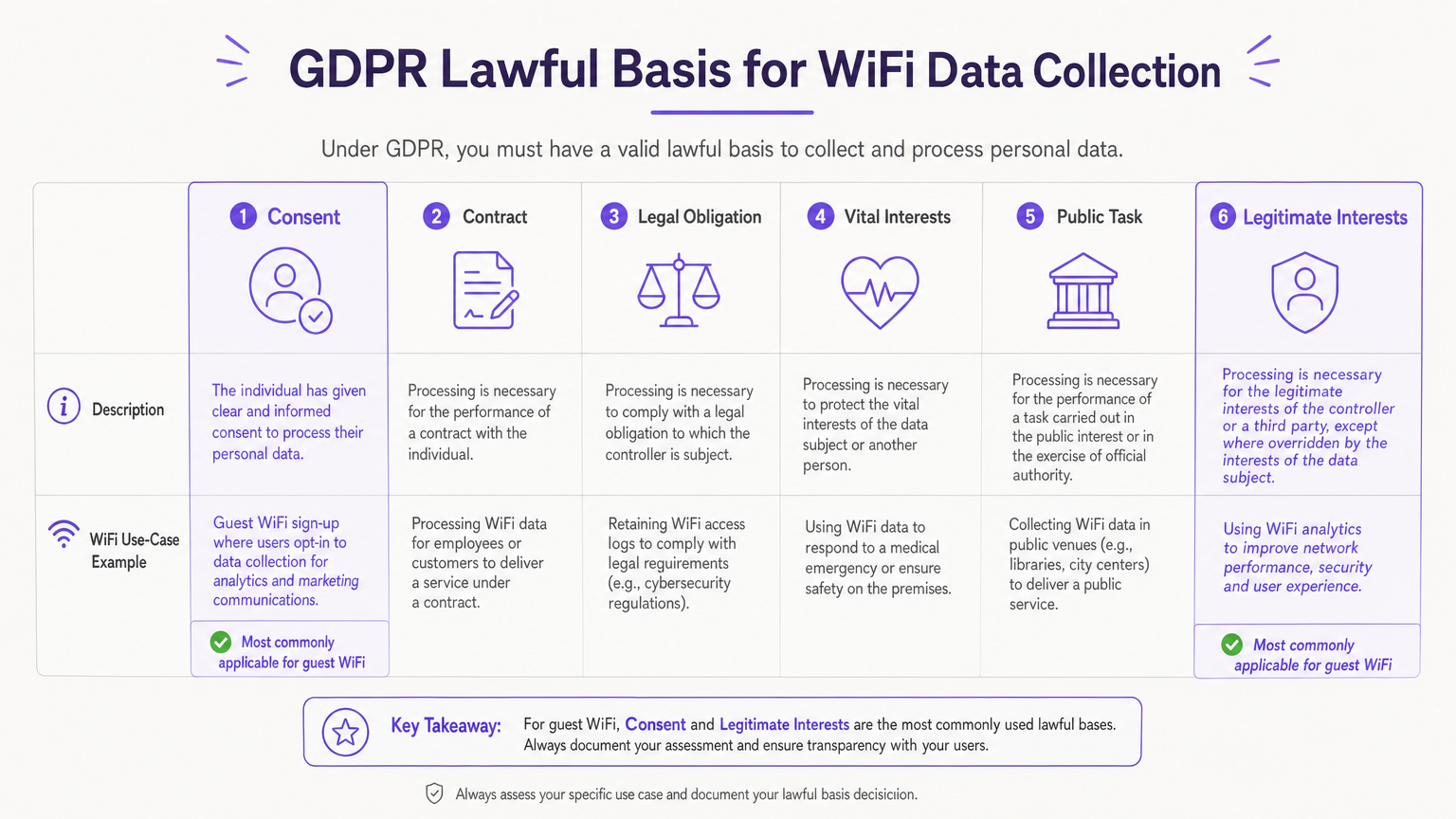
L'articolo 6 del GDPR richiede una base giuridica per il trattamento di qualsiasi dato personale. Per le implementazioni di Guest WiFi, due basi sono principalmente rilevanti:
- Interessi Legittimi: Spesso utilizzati per il trattamento dei dati di connessione di rete sottostanti (indirizzi MAC, log di sessione) necessari per fornire un servizio sicuro e funzionale. Ciò richiede una Valutazione degli Interessi Legittimi (LIA) documentata.
- Consenso: La base obbligatoria per il trattamento dei dati a fini di marketing diretto. Il consenso deve essere liberamente dato, specifico, informato e inequivocabile.
Architettura della Splash Page e Progettazione del Consenso
La splash page è l'interfaccia critica per la conformità GDPR. Un'architettura conforme deve separare l'accettazione dei termini e delle condizioni dal consenso al marketing.
- Nessuna Casella Pre-selezionata: Le opzioni di marketing devono richiedere un'azione deliberata da parte dell'utente.
- Consenso Svincolato: Non è possibile subordinare l'accesso alla rete all'accettazione di ricevere comunicazioni di marketing.
- Granularità: Se stai raccogliendo dati per scopi multipli (ad esempio, email marketing, SMS marketing, condivisione con terze parti), ciascuno richiede un meccanismo di consenso separato.
- Trasparenza: Un link chiaro all'Informativa sulla Privacy della tua organizzazione deve essere presente prima che l'utente si connetta.
Guida all'Implementazione: Un Approccio Passo-Passo
L'implementazione di una soluzione Guest WiFi conforme richiede di andare oltre le politiche statiche per arrivare all'applicazione tecnica.
Fase 1: Mappatura dei Dati e ROPA
Prima di configurare qualsiasi sistema, mappa il flusso dei dati. Documenta esattamente quali dati raccolgono i tuoi access point, controller e piattaforme di analisi. Questo costituisce il tuo Registro delle Attività di Trattamento (ROPA) ai sensi dell'articolo 30.
Fase 2: Configurare il Captive Portal
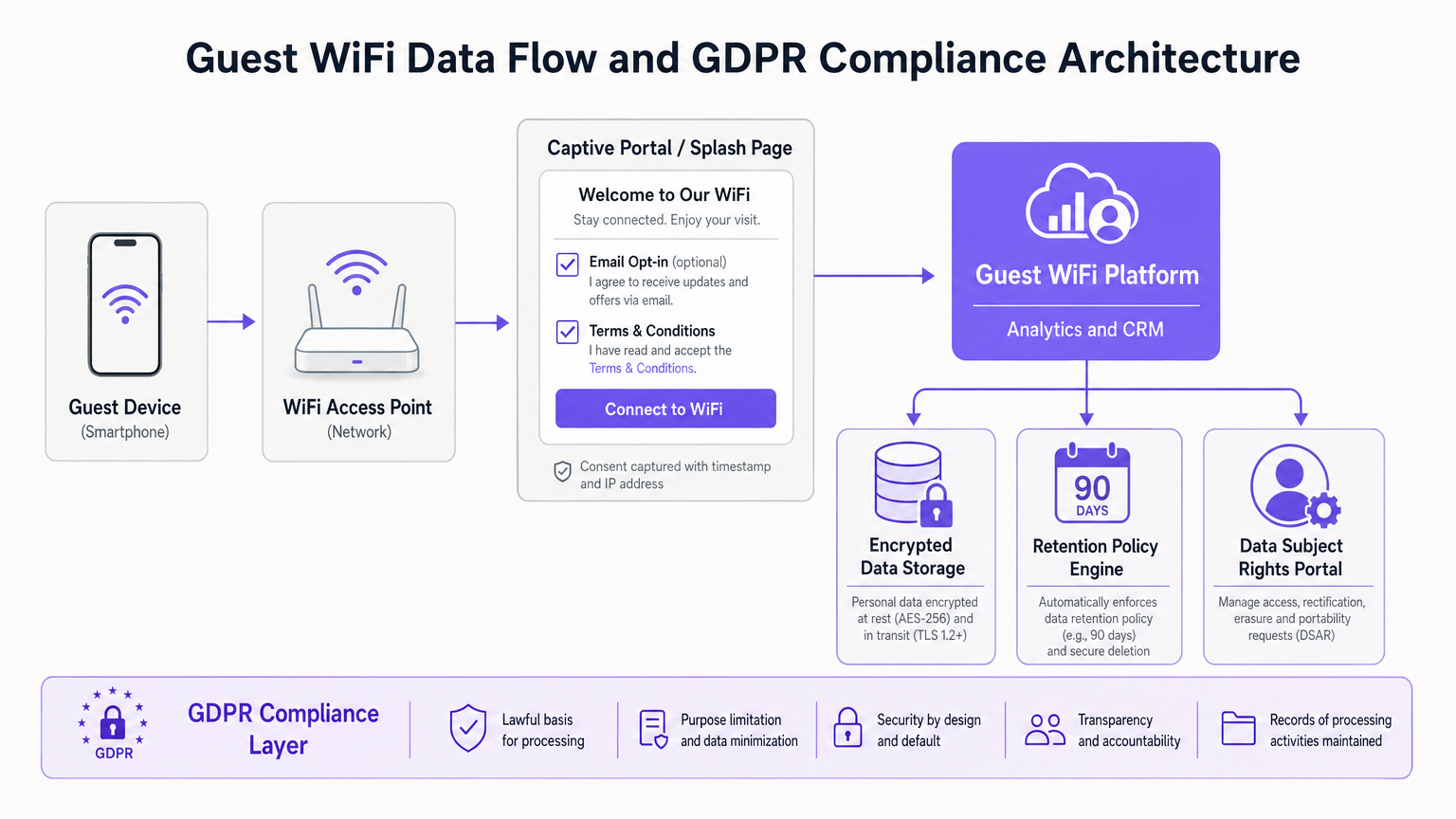
Implementa una splash page che aderisca rigorosamente ai principi di progettazione del consenso sopra descritti. Assicurati che la piattaforma acquisisca un timestamp verificabile e un indirizzo IP insieme a qualsiasi consenso dato, creando una traccia di audit immutabile.
Fase 3: Implementare la Conservazione Automatica dei Dati
L'articolo 5(1)(e) stabilisce che i dati non devono essere conservati più a lungo del necessario. I processi di eliminazione manuale sono soggetti a errori. Configura la tua piattaforma Guest WiFi per eliminare automaticamente i log di rete (ad esempio, dopo 90 giorni per scopi di sicurezza) e i contatti di marketing non coinvolti secondo il tuo programma di conservazione definito.
Fase 4: Eseguire gli Accordi sul Trattamento dei Dati (DPA)
Se utilizzi un fornitore terzo per l'analisi WiFi o la gestione del Captive Portal, questi agisce come Responsabile del Trattamento dei Dati. L'articolo 28 impone un DPA firmato che dettagli l'ambito, la natura e lo scopo del trattamento, nonché le misure di sicurezza che il responsabile del trattamento deve implementare.
Migliori Pratiche
- Anonimizzazione e Aggregazione: Quando si utilizzano WiFi Analytics per l'analisi del traffico o del tempo di permanenza, assicurarsi che i dati siano anonimizzati o aggregati per mitigare i rischi per la privacy.
- Audit Regolari: Tratta la conformità GDPR come un programma continuo. Conduci audit annuali della configurazione della tua splash page, delle impostazioni di conservazione e dei DPA dei fornitori.
- Diritti dell'Interessato: Assicurati di avere un processo chiaro per la gestione delle Richieste di Accesso dell'Interessato (DSAR) e delle richieste di cancellazione (il diritto all'oblio) entro il termine legale di un mese.
Risoluzione dei Problemi e Mitigazione del Rischio
Modalità di Fallimento Comuni: "Muri del Consenso" Molte strutture tentano di forzare il consenso al marketing nascondendo il pulsante "Connetti" finché la casella di marketing non viene spuntata. Ciò invalida il conssecondo il GDPR, in quanto non è "liberamente dato." Soluzione: Offrire opzioni chiare e separate. Fornire un incentivo per l'opt-in marketing (ad es. un codice sconto), ma assicurare un percorso per connettersi senza effettuare l'opt-in.
Modalità di Errore Comune: Dati Obsoleti L'accumulo di anni di dati degli ospiti senza un meccanismo di eliminazione aumenta il profilo di rischio in caso di violazione. Soluzione: Sfruttare piattaforme come Purple che offrono motori di policy di conservazione automatizzati per applicare programmaticamente le regole del ciclo di vita dei dati.
ROI e Impatto sul Business
La conformità è spesso vista come un centro di costo, ma una distribuzione WiFi ben architettata e conforme al GDPR genera effettivamente valore aziendale. Costruendo fiducia attraverso pratiche di dati trasparenti, le sedi ottengono una raccolta dati di qualità superiore. Quando gli ospiti scelgono esplicitamente di partecipare, il database di marketing risultante è altamente coinvolto, portando a migliori tassi di conversione per promozioni al dettaglio o programmi fedeltà dell'ospitalità. Per maggiori informazioni su come massimizzare questo valore, consulta la nostra guida su Come Raccogliere Dati di Prima Parte Tramite WiFi .
Termini chiave e definizioni
Captive Portal
The web page that users are directed to before gaining access to a public WiFi network, used for authentication and consent capture.
This is the primary interface where IT teams must implement GDPR-compliant consent mechanisms.
Data Controller
The entity that determines the purposes and means of the processing of personal data.
The venue operator (e.g., the hotel or retailer) is typically the Data Controller and holds primary legal responsibility.
Data Processor
An entity that processes personal data on behalf of the controller.
Third-party vendors, such as cloud WiFi analytics platforms (like Purple), act as Data Processors and require a DPA.
Data Processing Agreement (DPA)
A legally binding contract between a Data Controller and a Data Processor regulating how personal data is handled.
IT managers must ensure a signed DPA is in place with every vendor in the WiFi technology stack.
Lawful Basis
The legal justification under Article 6 of the GDPR required to process personal data.
IT teams must document whether they are relying on Consent, Legitimate Interests, or another basis for each data type collected.
Legitimate Interests Assessment (LIA)
A documented risk assessment demonstrating that the processing of personal data is necessary and balanced against the individual's rights.
Required when retaining network logs for security purposes without explicit user consent.
Record of Processing Activities (ROPA)
A formal document detailing all personal data processing activities within an organisation.
The output of the initial data mapping exercise, required by Article 30 for most enterprise deployments.
Data Subject Access Request (DSAR)
A request from an individual to access the personal data an organisation holds about them.
IT teams must have technical mechanisms in place to extract and provide a user's WiFi session and registration data within one month.
Casi di studio
A 200-room hotel needs to implement guest WiFi. The marketing director wants to capture email addresses to promote the hotel restaurant, but the IT director is concerned about GDPR compliance regarding network logs.
- The IT team configures the network controllers to retain MAC addresses and session data for 90 days under the lawful basis of 'Legitimate Interests' (for network security and troubleshooting), documenting this in an LIA.
- The captive portal is designed with two distinct sections: a mandatory checkbox for accepting the Terms of Service, and an optional, unticked checkbox for restaurant marketing emails.
- The hotel updates its Privacy Notice to clearly state these two distinct processing activities and links to it from the splash page.
A large retail chain uses WiFi analytics to track customer footfall and dwell time across 50 stores. They want to ensure this tracking doesn't violate GDPR.
The retail chain configures their WiFi analytics platform to immediately hash or pseudonymise MAC addresses upon collection. They use this aggregated data to generate heatmaps and footfall trends without identifying individual shoppers. They also place clear signage at store entrances informing customers that anonymised WiFi analytics are in use.
Analisi degli scenari
Q1. Your marketing team wants to increase the size of their email database. They propose changing the guest WiFi splash page so that the 'Connect to Internet' button only becomes active after the user ticks a box agreeing to receive promotional offers. Is this compliant?
💡 Suggerimento:Consider the GDPR definition of 'freely given' consent.
Mostra l'approccio consigliato
No, this is not compliant. This creates a 'consent wall' or bundled consent. Under GDPR, consent must be freely given. If access to the service (the WiFi) is made conditional on consenting to marketing, the consent is invalid. The marketing opt-in must be separate and optional.
Q2. A guest requests a copy of all data your venue holds on them (a DSAR). Your IT team exports their CRM profile showing their name and email, but ignores the WiFi controller logs containing their MAC address and connection times. Have you fulfilled the DSAR?
💡 Suggerimento:Think about what constitutes 'personal data' under GDPR.
Mostra l'approccio consigliato
No. Because MAC addresses and connection logs can be linked to the identified individual (especially since they registered via the captive portal), those logs constitute personal data. A complete DSAR response must include the network-level data associated with their device.
Q3. You are migrating to a new cloud-based WiFi analytics provider. The vendor provides a standard Terms of Service document online. Is this sufficient for GDPR compliance?
💡 Suggerimento:Review the requirements for engaging third-party data processors.
Mostra l'approccio consigliato
No. Under Article 28, you must have a formal, written Data Processing Agreement (DPA) in place with the vendor. The DPA must specifically detail the nature, purpose, and duration of the processing, the types of personal data involved, and the security obligations of the processor.




