
Conformità IWF per le reti WiFi pubbliche nel Regno Unito
Questa guida autorevole descrive in dettaglio i requisiti tecnici, l'architettura e le strategie di implementazione per le reti WiFi pubbliche conformi a IWF nelle sedi del Regno Unito. Fornisce ai responsabili IT framework operativi per mitigare i rischi legali mantenendo al contempo un accesso alla rete ad alte prestazioni.
Ascolta questa guida
Visualizza trascrizione del podcast
कार्यकारी सारांश
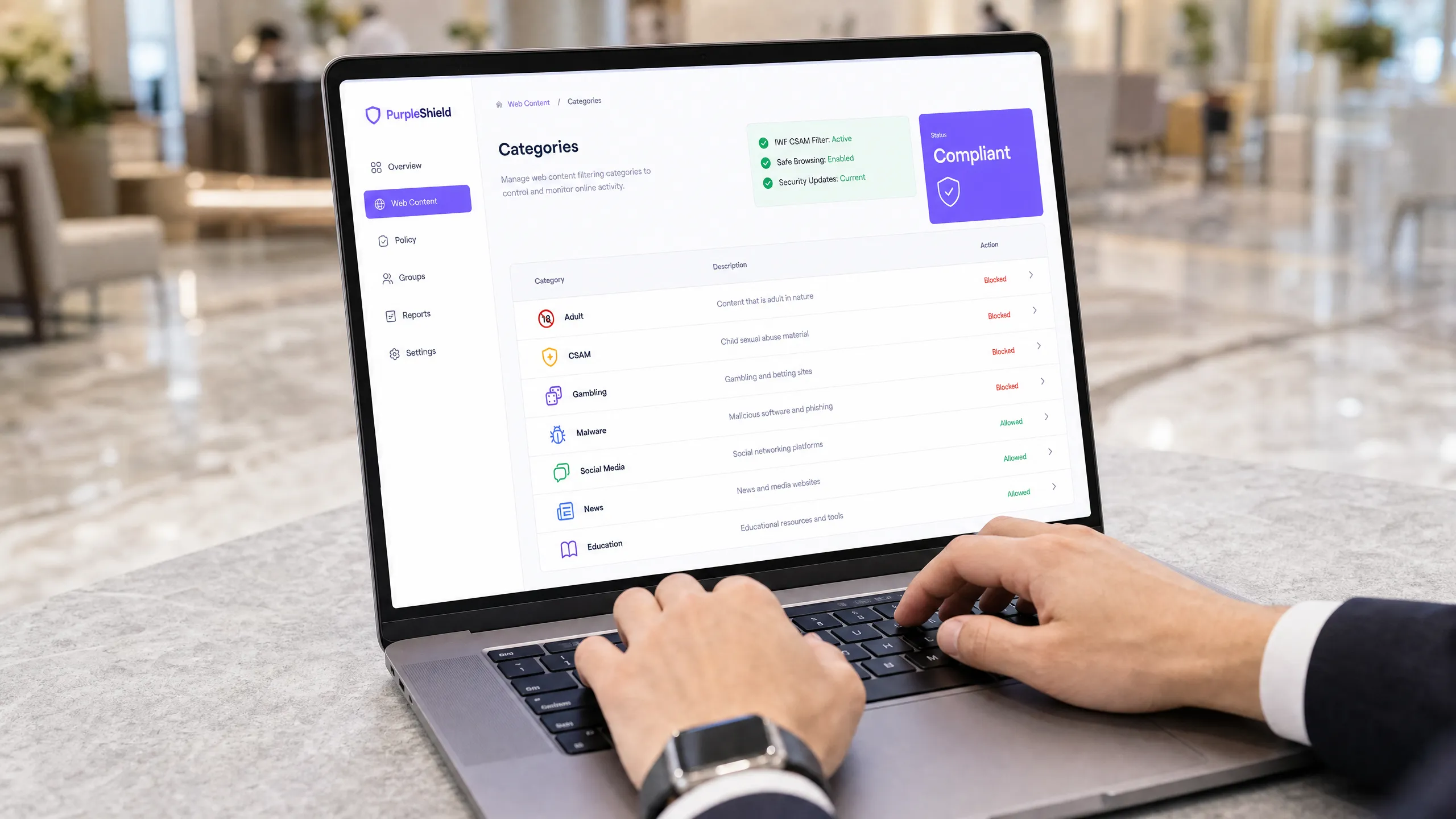
यूके में पब्लिक WiFi का प्रावधान अब केवल अतिथियों की सुविधा न रहकर एक महत्वपूर्ण अनुपालन (compliance) आवश्यकता बन गया है। Retail , Hospitality , और सार्वजनिक क्षेत्र के वातावरण का प्रबंधन करने वाले IT निदेशकों और CTOs के लिए, मजबूत कंटेंट फ़िल्टरिंग के बिना ओपन नेटवर्क तैनात करना संगठन को महत्वपूर्ण कानूनी और प्रतिष्ठा संबंधी जोखिमों में डालता है। इंटरनेट वॉच फाउंडेशन (IWF) बाल यौन शोषण सामग्री (CSAM) के लिए निश्चित ब्लॉकलिस्ट बनाए रखता है। नेटवर्क एज पर इस सूची को एकीकृत करना केवल एक सर्वोत्तम अभ्यास नहीं है; यह जिम्मेदार वेन्यू संचालन के लिए एक बुनियादी आवश्यकता है。
यह मार्गदर्शिका IWF अनुपालन प्राप्त करने के लिए आवश्यक तकनीकी आर्किटेक्चर की रूपरेखा तैयार करती है, जिसमें DNS और HTTP लेयर्स पर परिनियोजन (deployment) रणनीतियों का विवरण दिया गया है। यह नेटवर्क थ्रूपुट या उपयोगकर्ता अनुभव को कम किए बिना प्रमाणित वेब फ़िल्टरिंग लागू करने पर कार्रवाई योग्य, वेंडर-न्यूट्रल सलाह प्रदान करता है। Guest WiFi को सुरक्षित करने से लेकर IEEE 802.1X और OpenRoaming जैसे आधुनिक प्रमाणीकरण मानकों के साथ एकीकृत करने तक, हम यह पता लगाते हैं कि एक अनुपालक, उच्च-प्रदर्शन वाला नेटवर्क कैसे बनाया जाए।
तकनीकी डीप-डाइव: IWF अनुपालन आर्किटेक्चर
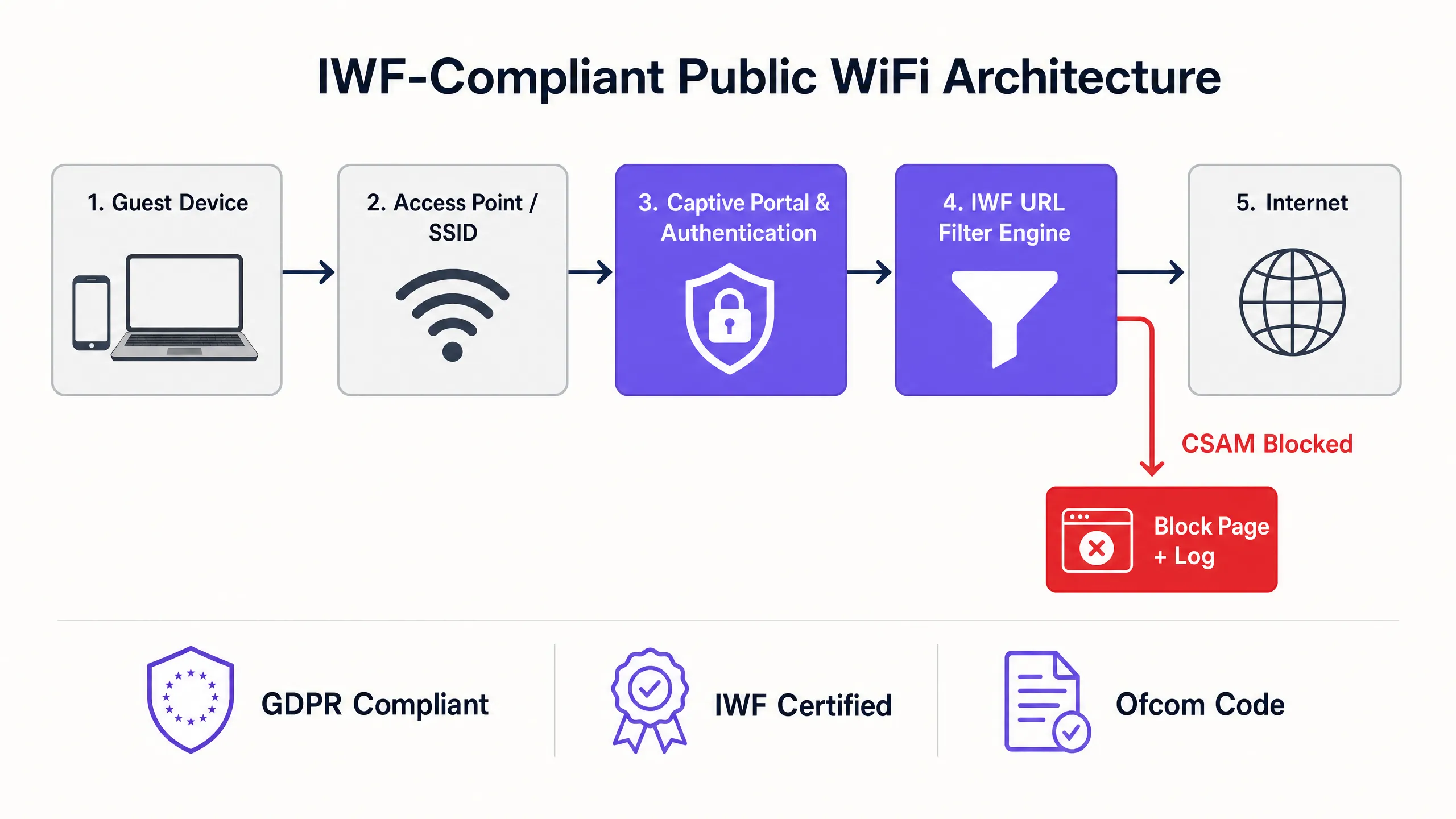
IWF अनुपालन को लागू करने के लिए नेटवर्क सुरक्षा के प्रति बहु-स्तरीय दृष्टिकोण की आवश्यकता होती है। मुख्य आवश्यकता वेन्यू के वेब फ़िल्टरिंग इंजन में IWF URL सूची का डायनामिक एकीकरण है। यह कोई स्थिर, मैन्युअल रूप से अपडेट की गई सूची नहीं हो सकती; इसके लिए IWF डेटाबेस के साथ रीयल-टाइम या नियर-रीयल-टाइम सिंक्रोनाइज़ेशन की आवश्यकता होती है।
लेयर 1: DNS फ़िल्टरिंग
सबसे बुनियादी स्तर पर, DNS फ़िल्टरिंग ज्ञात CSAM डोमेन के अनुरोधों को इंटरसेप्ट करती है और उन्हें ब्लॉक पेज या नल रूट पर रिज़ॉल्व करती है। अत्यधिक कुशल और कम-लेटेंसी वाली होने के बावजूद, केवल DNS फ़िल्टरिंग अपर्याप्त है क्योंकि यह डोमेन स्तर पर काम करती है, जबकि IWF सूची अक्सर सटीक URLs निर्दिष्ट करती है। केवल DNS पर निर्भर रहने से ओवर-ब्लॉकिंग (एक आपत्तिजनक URL के कारण पूरे वैध डोमेन को ब्लॉक करना) या अंडर-ब्लॉकिंग (IP-आधारित एक्सेस को ब्लॉक करने में विफल होना) हो सकता है।
लेयर 2: HTTP/HTTPS डीप पैकेट इंस्पेक्शन (DPI)
IWF URL सूची को सटीक रूप से लागू करने के लिए, फ़िल्टरिंग इंजन को संपूर्ण HTTP अनुरोध पथ का निरीक्षण करना चाहिए। एन्क्रिप्टेड HTTPS ट्रैफ़िक के लिए, यह एक चुनौती प्रस्तुत करता है। आधुनिक दृष्टिकोण में विशिष्ट, उच्च-जोखिम वाली श्रेणियों के लिए लक्षित SSL डिक्रिप्शन के साथ सर्वर नेम इंडिकेशन (SNI) निरीक्षण शामिल है। हालाँकि, सार्वजनिक नेटवर्क पर SSL डिक्रिप्शन तैनात करने से गंभीर गोपनीयता और प्रमाणपत्र विश्वास (certificate trust) संबंधी समस्याएं उत्पन्न होती हैं। इसलिए, सार्वजनिक वेन्यू के लिए मानक परिनियोजन मॉडल उन्नत SNI फ़िल्टरिंग और डायनामिक IP वर्गीकरण पर निर्भर करता है, जिसे IWF URL डेटाबेस के साथ क्रॉस-रेफरेंस किया जाता है।
प्रमाणीकरण और एनालिटिक्स के साथ एकीकरण
अनुपालन केवल ब्लॉक करने तक सीमित नहीं है; इसके लिए जवाबदेही की आवश्यकता होती है। फ़िल्टरिंग इंजन को Captive Portal के साथ एकीकृत करने से यह सुनिश्चित होता है कि उपयोगकर्ता एक्सेस प्राप्त करने से पहले एक स्वीकार्य उपयोग नीति (AUP) स्वीकार करते हैं। इसके अलावा, नेटवर्क एक्सेस को मजबूत WiFi Analytics से जोड़ने से IT टीमों को ब्लॉक इवेंट्स की निगरानी करने, संभावित सुरक्षा घटनाओं की पहचान करने और ऑडिट के दौरान अनुपालन प्रदर्शित करने की अनुमति मिलती है। Wi Fi Frequencies: A Guide to Wi-Fi Frequencies in 2026 को समझना भी महत्वपूर्ण है, क्योंकि डीप पैकेट इंस्पेक्शन द्वारा उत्पन्न होने वाली मामूली लेटेंसी को संभालने के लिए विभिन्न बैंड्स को विशिष्ट QoS कॉन्फ़िगरेशन की आवश्यकता होती है।
कार्यान्वयन मार्गदर्शिका: IWF फ़िल्टरिंग तैनात करना
वितरित वातावरणों—जैसे कि एक राष्ट्रीय Transport हब या Healthcare सुविधाओं की एक श्रृंखला—में IWF-अनुपालक फ़िल्टरिंग तैनात करने के लिए एक संरचित दृष्टिकोण की आवश्यकता होती है।
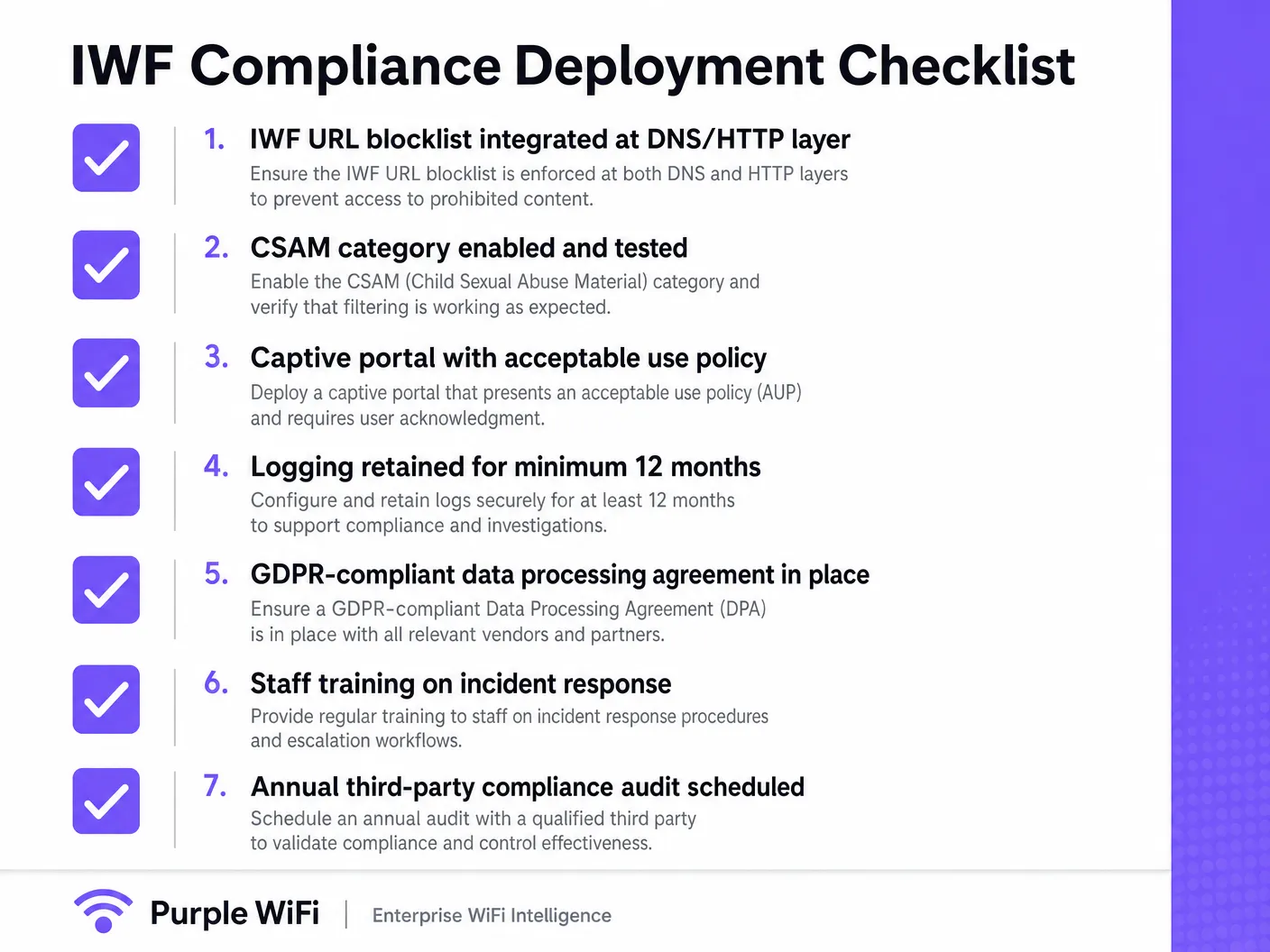
- प्रमाणित वेंडर चुनें: सुनिश्चित करें कि आपका वेब फ़िल्टरिंग प्रदाता एक आधिकारिक IWF सदस्य है और उनके डायनामिक फ़ीड का उपयोग करता है। कस्टम (bespoke) एकीकरण बनाने का प्रयास न करें।
- नेटवर्क एज कॉन्फ़िगरेशन: सभी अतिथि DNS ट्रैफ़िक को अनुपालक फ़िल्टरिंग सेवा पर बाध्य करने के लिए वेन्यू राउटर्स या एक्सेस पॉइंट्स को कॉन्फ़िगर करें। उपयोगकर्ताओं को कस्टम DNS सर्वर का उपयोग करके फ़िल्टर को बायपास करने से रोकने के लिए आउटबाउंड पोर्ट 53 और 853 (DoT) को ब्लॉक करें。
- Captive Portal अलाइनमेंट: Captive Portal AUP को अपडेट करें ताकि यह स्पष्ट रूप से बताया जा सके कि कंटेंट फ़िल्टरिंग लागू है और अवैध सामग्री तक पहुंच की निगरानी और उसे ब्लॉक किया जाता है।
- परीक्षण और सत्यापन: परीक्षण के लिए वास्तविक IWF URLs का उपयोग न करें। IWF यह सत्यापित करने के लिए विशिष्ट, सुरक्षित परीक्षण URLs प्रदान करता है कि फ़िल्टरिंग इंजन प्रतिबंधित सामग्री को सही ढंग से इंटरसेप्ट और ब्लॉक कर रहा है।
- लॉगिंग और रिटेंशन: GDPR और स्थानीय कानून प्रवर्तन आवश्यकताओं के अनुरूप, कम से कम 12 महीनों के लिए ब्लॉक किए गए एक्सेस प्रयासों के लॉग बनाए रखने के लिए फ़ायरवॉल या फ़िल्टरिंग सेवा को कॉन्फ़िगर करें।
सार्वजनिक वेन्यू के लिए सर्वोत्तम अभ्यास
नेटवर्क आर्किटेक्चर डिज़ाइन करते समय, IT लीडर्स को सुरक्षा और उपयोगकर्ता अनुभव के बीच संतुलन बनाना चाहिए।
- ओवर-ब्लॉकिंग से बचें: सुनिश्चित करें कि फ़िल्टरिंग नीति सख्ती से अवैध सामग्री (CSAM) और अत्यधिक दुर्भावनापूर्ण श्रेणियों (मैलवेयर, फ़िशिंग) पर लक्षित है। अत्यधिक आक्रामक फ़िल्टरिंग (जैसे, वैध सोशल मीडिया या स्ट्रीमिंग को ब्लॉक करना) उपयोगकर्ता की निराशा और सपोर्ट टिकटों में वृद्धि का कारण बनती है।
- एन्क्रिप्टेड DNS को संभालें: DNS ओवर HTTPS (DoH) के बढ़ने के साथ, उपयोगकर्ताओं के ब्राउज़र स्थानीय DNS फ़िल्टर को बायपास करने का प्रयास कर सकते हैं। फ़ायरवॉल स्तर पर ज्ञात DoH रिज़ॉल्वर (जैसे 8.8.8.8 या 1.1.1.1) को ब्लॉक करने के लिए नेटवर्क नीतियां लागू करें, जिससे वेन्यू के सुरक्षित DNS पर फ़ॉलबैक करने के लिए बाध्य किया जा सके।
- निर्बाध प्रमाणीकरण: ओपन नेटवर्क से सुरक्षित प्रमाणीकरण फ्रेमवर्क में संक्रमण (transition) पर विचार करें। हालांकि Passpoint/OpenRoaming भविष्य हैं, इन नेटवर्क पर मजबूत फ़िल्टरिंग सुनिश्चित करना सर्वोपरि है। जटिल एंटरप्राइज़ सेटअप के प्रबंधन पर जानकारी के लिए, Resolving Roaming Issues in Corporate WLANs देखें।
समस्या निवारण और जोखिम न्यूनीकरण
पब्लिक WiFi अनुपालन में सबसे आम विफलता मोड "बायपास" है। उपयोगकर्ता, जानबूझकर या अनजाने में, फ़िल्टरिंग नियंत्रणों को दरकिनार कर देते हैं।
- रोग एक्सेस पॉइंट्स (Rogue APs): रोग APs के लिए नियमित जांच आवश्यक है। एक अनुपालक वायर्ड नेटवर्क बेकार है यदि कोई कर्मचारी अनमैनेज्ड, अनफ़िल्टर्ड कंज्यूमर राउटर प्लग इन करता है।
- VPN का उपयोग: हालांकि होटलों जैसे वेन्यू में सभी VPN ट्रैफ़िक को ब्लॉक करना अक्सर अव्यावहारिक होता है जहाँ व्यावसायिक यात्रियों को कॉर्पोरेट एक्सेस की आवश्यकता होती है, IT टीमों को अत्यधिक, निरंतर एन्क्रिप्टेड टनल की निगरानी करनी चाहिए जो दुरुपयोग का संकेत दे सकते हैं।
- लेटेंसी स्पाइक्स: यदि फ़िल्टरिंग इंजन क्लाउड-आधारित है, तो सुनिश्चित करें कि क्षेत्रीय POPs का उपयोग किया जाता है। लंदन के होटल से यूएस-आधारित फ़िल्टरिंग सर्वर पर ट्रैफ़िक रूट करने से अस्वीकार्य लेटेंसी आएगी। एक निर्बाध अनुभव बनाए रखने के लिए रूटिंग को अनुकूलित करें, ठीक उसी तरह जैसे कोई Office Wi Fi: Optimize Your Modern Office Wi-Fi Network के लिए करेगा।
ROI और व्यावसायिक प्रभाव
हालांकि अनुपालन को अक्सर एक लागत केंद्र (cost center) के रूप में देखा जाता है, मजबूत IWF फ़िल्टरिंग ब्रांड की रक्षा करती है। अवैध डाउनलोड या CSAM वितरण से जुड़े होने पर किसी वेन्यू की प्रतिष्ठा को होने वाला नुकसान परिनियोजन लागतों से कहीं अधिक है। इसके अलावा, स्थान-आधारित सेवाओं के लिए BLE Low Energy Explained for Enterprise जैसी उन्नत तकनीकों का लाभ उठाने के लिए एक सुरक्षित, अनुपालक नेटवर्क एक शर्त है, क्योंकि ट्रैकिंग और एनालिटिक्स का विकल्प चुनने से पहले उपयोगकर्ताओं को अंतर्निहित बुनियादी ढांचे पर भरोसा होना चाहिए। सफलता को शून्य अनुपालन उल्लंघनों, न्यूनतम फॉल्स-पॉजिटिव सपोर्ट टिकटों और निर्बाध नेटवर्क प्रदर्शन द्वारा मापा जाता है।
Definizioni chiave
Internet Watch Foundation (IWF)
Un'organizzazione con sede nel Regno Unito che compila un elenco dinamico di URL contenenti materiale pedopornografico (CSAM).
L'integrazione con la lista IWF è lo standard di base per la conformità del WiFi pubblico nel Regno Unito.
Server Name Indication (SNI)
Un'estensione del protocollo TLS che indica a quale nome host il client sta tentando di connettersi all'inizio del processo di handshake.
L'ispezione SNI consente ai team IT di bloccare specifici siti web dannosi sulle connessioni HTTPS senza dover decrittografare l'intero flusso di traffico.
DNS over HTTPS (DoH)
Un protocollo per eseguire la risoluzione remota del Domain Name System tramite il protocollo HTTPS, crittografando le query DNS.
Il DoH può aggirare i tradizionali filtri web basati su DNS, richiedendo agli amministratori di rete di bloccare gli endpoint DoH noti per garantire la conformità.
Captive Portal
Una pagina web che l'utente di una rete ad accesso pubblico è obbligato a visualizzare e con cui deve interagire prima che venga concesso l'accesso.
Cruciale per applicare l'Acceptable Use Policy (AUP) e stabilire il quadro legale per l'utilizzo della rete.
Acceptable Use Policy (AUP)
Un documento che stabilisce i vincoli e le pratiche che un utente deve accettare per accedere a una rete aziendale o a Internet.
Fornisce la copertura legale ai gestori dei locali per bloccare i contenuti e terminare le sessioni degli utenti non conformi.
Segmentazione VLAN
La pratica di suddividere una rete fisica in più reti logiche.
Essenziale per separare il traffico ospiti non attendibile (che richiede il filtraggio IWF) dal traffico aziendale o POS attendibile.
Deep Packet Inspection (DPI)
Una forma di filtraggio dei pacchetti di rete informatica che esamina la parte dei dati di un pacchetto mentre passa attraverso un punto di ispezione.
Utilizzato per identificare e bloccare specifiche applicazioni o protocolli (come BitTorrent o VPN) che potrebbero essere utilizzati per aggirare i filtri standard.
Falso positivo
Quando un sito web legittimo viene categorizzato e bloccato erroneamente dal motore di filtraggio.
Gli elevati tassi di falsi positivi comportano reclami da parte degli utenti e sovraccarico per il supporto IT; la scelta di un fornitore altamente accurato e certificato IWF riduce al minimo questo problema.
Esempi pratici
Un hotel da 200 camere deve implementare il filtraggio IWF, ma ha riscontrato un volume elevato di ospiti che utilizzano il DNS over HTTPS (DoH) tramite browser moderni, aggirando l'attuale filtro basato su DNS.
Il team IT deve implementare un approccio a due livelli. In primo luogo, configurare il firewall perimetrale per bloccare il traffico in uscita verso i provider DoH noti (ad esempio, bloccando gli IP degli endpoint DoH di Cloudflare, Google e Quad9). In secondo luogo, utilizzare l'ispezione SNI (Server Name Indication) sul firewall per intercettare l'handshake TLS iniziale e bloccare gli URL inclusi nell'elenco IWF prima che venga stabilita la sessione crittografata.
Una grande catena di vendita al dettaglio sta implementando il WiFi gratuito per gli ospiti in 500 negozi e deve garantire la conformità riducendo al minimo la latenza al Point of Sale (POS).
L'architetto di rete segmenta le VLAN. La VLAN Guest viene instradata attraverso un filtro web certificato IWF basato su cloud utilizzando POP regionali ridondanti per ridurre al minimo la latenza. La VLAN POS è rigorosamente isolata e utilizza una allow-list (whitelisting) esplicita per i gateway di pagamento e i sistemi di inventario, aggirando completamente il filtro web per garantire un impatto di latenza pari a zero sulle transazioni.
Domande di esercitazione
Q1. Stai implementando un WiFi per gli ospiti in un importante centro congressi. Il team di marketing desidera utilizzare un SSID generico e aperto senza Captive Portal per ridurre l'"attrito". Come rispondi dal punto di vista della conformità?
Suggerimento: Considera il requisito legale per il consenso dell'utente e la responsabilità.
Visualizza risposta modello
Sconsiglierei un SSID aperto e senza attriti. Senza un Captive Portal, gli utenti non possono accettare la Politica di Utilizzo Accettabile (AUP). Ciò lascia la struttura legalmente esposta in caso di attività illegali sulla rete. Un Captive Portal è un gate di controllo obbligatorio per far rispettare i termini di servizio e registrare gli indirizzi MAC a fronte delle sessioni accettate, il che è fondamentale per la risposta agli incidenti.
Q2. Durante un audit di rete, scopri che il 15% del traffico degli ospiti riesce a bypassare il filtro web utilizzando server DNS personalizzati configurati sui loro dispositivi. Qual è l'intervento tecnico correttivo immediato?
Suggerimento: Esamina le configurazioni delle porte del firewall perimetrale.
Visualizza risposta modello
La soluzione immediata consiste nel configurare il firewall perimetrale per bloccare il traffico in uscita sulla porta UDP/TCP 53 e sulla porta TCP 853 (DNS over TLS) dalla VLAN Ospiti verso qualsiasi indirizzo IP esterno. Tutte le richieste DNS devono essere forzate (o instradate tramite proxy trasparente) verso i server DNS sicuri e integrati con IWF della struttura.
Q3. Il responsabile IT di un hotel suggerisce di utilizzare la decrittografia SSL completa (SSL Inspection/Termination) sulla rete ospiti per garantire una visibilità al 100% del traffico HTTPS ai fini della conformità IWF. Perché questo è un approccio errato per il WiFi pubblico?
Suggerimento: Considera la fiducia nei dispositivi e la privacy degli utenti.
Visualizza risposta modello
La decrittografia SSL completa richiede l'installazione di un certificato root personalizzato su ogni dispositivo ospite. In uno scenario WiFi pubblico, questo è impossibile da applicare, causerà gravi errori di certificato del browser per tutti gli utenti e rappresenta una massiccia violazione della privacy. L'approccio corretto consiste nell'affidarsi al filtraggio DNS combinato con l'ispezione SNI (Server Name Indication), che consente la categorizzazione del traffico crittografato senza interrompere il tunnel TLS.
Continua a leggere questa serie
DNS Over HTTPS (DoH): implicazioni per il filtraggio del WiFi pubblico
Questa guida di riferimento tecnico spiega come il DNS over HTTPS (DoH) aggiri il tradizionale filtraggio dei contenuti sulla porta 53 nelle reti WiFi pubbliche. Fornisce strategie di mitigazione pratiche e indipendenti dai fornitori per consentire ad architetti di rete e responsabili IT di ripristinare la visibilità, garantire la conformità e proteggere l'accesso degli ospiti negli ambienti aziendali.
Public WiFi Liability: perché il Content Filtering è obbligatorio
Questa guida tecnica di riferimento illustra i rischi legali e operativi derivanti dall'offerta di un servizio WiFi pubblico non filtrato, spiegando in dettaglio perché il content filtering rappresenta un requisito di implementazione obbligatorio per i gestori delle location. Fornisce strategie di architettura attuabili, passaggi di implementazione e tattiche di mitigazione del rischio per proteggere le reti da attività illegali, violazioni del copyright e non conformità normativa. I gestori delle location e i CTO troveranno casi di studio concreti, framework decisionali e linee guida di configurazione per implementare un ambiente Guest WiFi difendibile e conforme.
Bloccare malware e phishing all'edge della rete
Questa guida di riferimento tecnico illustra l'architettura, l'implementazione e l'impatto aziendale dell'adozione di una protezione dalle minacce a livello di rete per proteggere i dispositivi IoT e guest non gestiti all'edge della rete. Fornisce indicazioni pratiche per i responsabili IT per bloccare in modo proattivo malware e phishing.