First-party data readiness & venue ROI calculator
Model how transitioning from third-party cookies to direct, captive WiFi first-party data capture builds an owned customer database, eliminates privacy liability, and generates measurable repeat revenue.
32,256 verified customer profiles captured per year
Direct first-party data ownership immune to browser tracking bans
14% of opted-in profiles return 1.6 extra times a year at your average spend
At an assumed £2.10 paid-media cost per equivalent contact
Primary vs second-party vs third-party data comparison
Understand why physical venues must prioritise primary (first-party) capture over rented third-party audiences.
Primary / first-party data
First-party data is the most dependable marketing data a venue can hold. Collected directly from visitors with timestamped consent, it gives you owned customer records that browser changes cannot take away, subject to each person’s right to withdraw consent or ask for erasure.
Direct customer interactions (Guest WiFi, captive portals, POS, native apps)
High (provided directly by the customer and verifiable)
High (consent captured at source, with a timestamped record)
Owned by your business
- ✓Unaffected by third-party cookie blocking and browser tracking protections
- ✓Verified contact records (double-opted emails, validated SMS numbers)
- ✓Rich physical context: dwell time, visit frequency, and venue location
- ✓Enriches your CRM (Salesforce, HubSpot, Klaviyo) with zero data loss
Automated CRM & marketing cloud integrations
Purple streams verified first-party visitor profiles and physical presence telemetry directly into your existing marketing tech stack in real time.
Marketing Automation & CRM
Sync captive portal contacts, trigger automated post-visit email journeys, and segment by dwell time.
Enterprise CRM & CDP
Create custom in-store visitor objects, enrich unified customer IDs, and power omnichannel journeys.
E-commerce & Retail Email
Bridge offline store visits with online e-commerce profiles for unified repeat customer flows.
Email & SMS Marketing
Auto-subscribe verified guest WiFi opt-ins with automated tags for venue location and frequency.
Enterprise ERP & Insights
Stream real-time visitor event telemetry into Customer Insights for predictive retention modelling.
Customer Data Platform (CDP)
Route clean first-party physical events into your data warehouse (Snowflake, BigQuery) in real time.
Ready to build an owned first-party data pipeline?
Discover how Purple enables global brands to capture verified opt-ins, enrich CRMs, and replace expiring cookies across existing WiFi hardware.
First-party data capture & cookieless readiness calculator
Estimate your monthly verified customer profile capture rate, compliance posture, and acquisition cost savings using guest WiFi captive portals.
Strategic recommendation: Retail venues capture verified shopper profiles at captive portal login, syncing consent-backed attributes straight into loyalty systems without relying on third-party tracking pixels.
Executive summary
Physical venue operators and enterprise marketers face an unprecedented data collection challenge. With third-party cookies deprecated across web browsers and mobile operating systems implementing aggressive privacy controls - including Apple MAC address randomisation, Private Relay, and Android sandbox restrictions - legacy digital tracking methods no longer provide reliable audience intelligence. For brick-and-mortar brands in retail, hospitality, transport, and healthcare, physical captive portal onboarding has emerged as the most resilient channel for first-party data capture.
Across more than 100,000 commercial venues in 140 countries, Purple captures millions of verified customer records every month with explicit consent. By turning guest WiFi access into an unbundled, GDPR-compliant onboarding journey, venues achieve opt-in rates between 25% and 35%, syncing rich behavioral records directly into CRM platforms like Salesforce, HubSpot, and Klaviyo. This technical guide examines first-party data collection strategies for cookieless environments, privacy architecture, and measurable marketing ROI.
What is first-party data and why is it replacing cookies?
First-party data (also referred to as primary data) is customer information gathered directly from an audience with explicit consent during direct interactions. In physical venues, this includes email addresses, mobile numbers, visit timestamps, and dwell durations captured through guest WiFi captive portals, mobile apps, and point-of-sale registrations.
Unlike third-party data - which is aggregated by external brokers from scraped sources and probabilistic tracking - first-party data is deterministic, accurate, and owned entirely by your organisation. In a cookieless ecosystem, first-party physical data provides three critical advantages:
- Complete data ownership: Eliminates reliance on volatile ad networks and third-party tracking pixels.
- Unmatched accuracy: Verified directly against active network authentication rather than estimated web cookies.
- Strict regulatory compliance: Captured with explicit, unbundled opt-in records satisfying GDPR, PECR, and CCPA requirements.
Primary vs second-party vs third-party data: comparison matrix
The matrix below outlines the core differences between primary, second-party, and third-party data collection architectures:
| Data type | Collection source | Accuracy & reliability | Privacy & compliance risk | Cookieless resilience |
|---|---|---|---|---|
| Primary / first-party data | Direct guest WiFi captive portal, CRM, mobile app | High (verified contact & device login) | Lowest (explicit unbundled consent) | 100% immune to cookie deprecation |
| Second-party data | Trusted partner data sharing / joint ventures | Moderate to high (partner verified) | Moderate (requires dual-consent framework) | High (first-party to partner) |
| Third-party data | Ad broker data exchanges & scraping networks | Low (inferred, modeled, probabilistic) | Highest (severe regulatory scrutiny) | Obsolete (blocked by modern browsers & OS) |
How guest WiFi captive portals drive first-party data collection
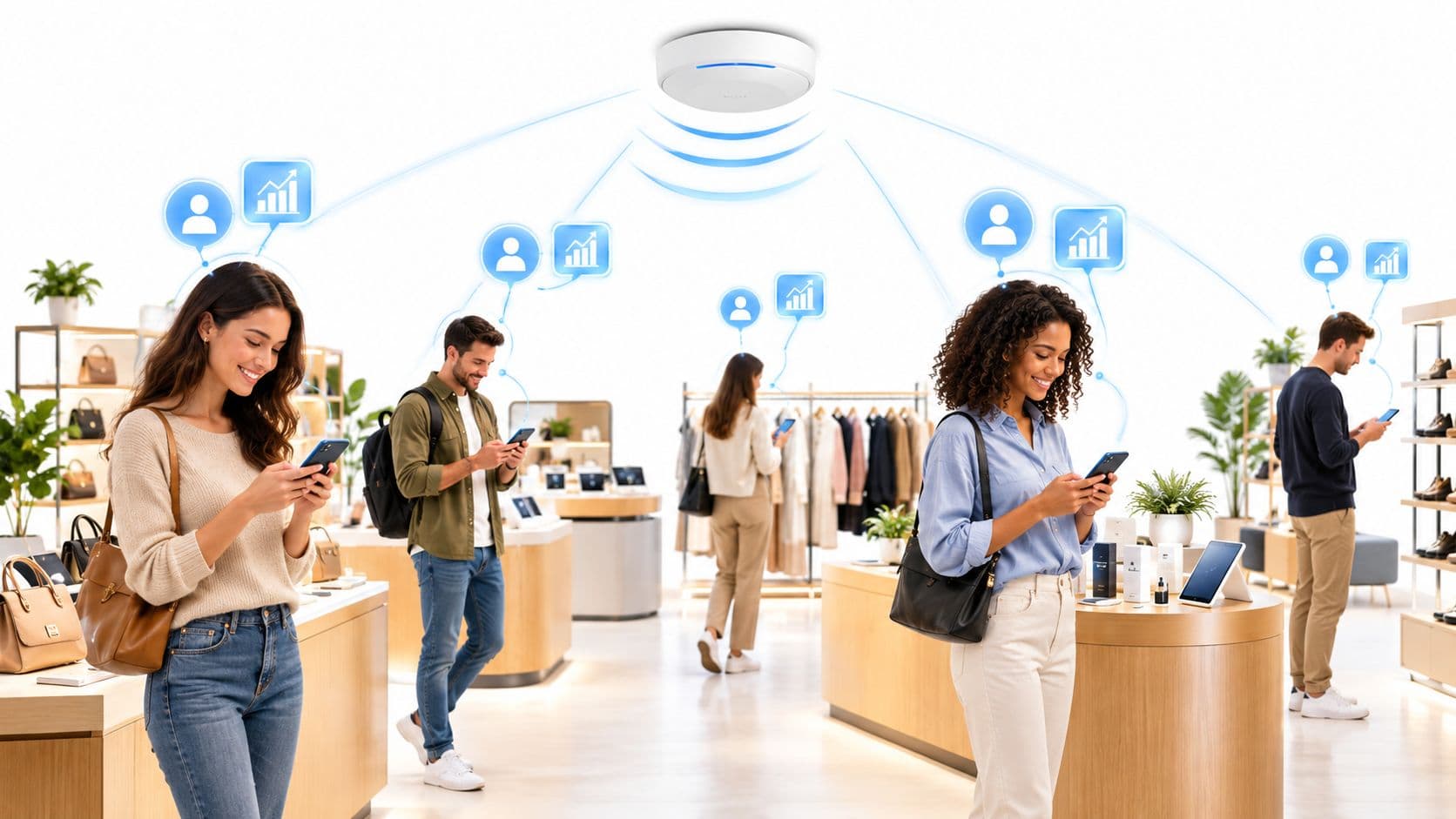
Captive portal splash pages transform physical footfall into active digital relationships. When a visitor joins the guest network, the wireless controller redirects their device to an encrypted cloud authentication portal. The visitor completes a streamlined 20-second onboarding form before receiving high-speed internet access.
1. Verified contact detail capture
Visitors authenticate using email address, mobile SMS verification, or social login (Google, Apple, Microsoft). Real-time email validation algorithms verify domain MX records at submission, filtering out syntax errors and invalid addresses before data enters the marketing database.
2. Granular, unbundled consent controls
To comply with GDPR and privacy mandates, marketing opt-in checkboxes are strictly separate from terms of service. Visitors can opt into venue newsletters, loyalty promotions, or SMS alerts voluntarily. Across Purple customer networks, clear value propositions (such as instant discounts or high-speed connectivity) generate verified marketing opt-in rates averaging over 80% among connecting guests.
3. Automated CRM and marketing automation integration
Every authenticated record instantly syncs to your central marketing stack via native webhooks and API connectors. Compatible platforms include:
- CRM & Marketing Clouds: Salesforce Marketing Cloud, HubSpot, Klaviyo, Microsoft Dynamics 365, Mailchimp.
- Property Management Systems (PMS): Oracle Opera, protel, Mews for hospitality environments.
- Data Warehouses: Snowflake, Google BigQuery, Amazon Redshift for unified customer data platform (CDP) enrichment.
Overcoming mobile OS privacy controls and MAC randomisation
Modern mobile operating systems - including Apple iOS 14+ and Android 10+ - employ private MAC address rotation by default, changing the device hardware identifier across networks. Relying on passive MAC sniffing to track repeat visitors is no longer viable.
Captive portal authentication solves this challenge by tying network sessions to authenticated identity records (email, phone, or loyalty ID) rather than hardware MAC addresses. When a returning customer logs in, the platform reconciles their profile across visits and multiple devices, maintaining accurate customer lifetime value (LTV) records without violating device privacy sandbox boundaries.
Measurable ROI: first-party venue data vs digital ad spend
Organisations shifting marketing budget from third-party programmatic ads to first-party captive portal activation observe measurable performance improvements:
- 38% lower customer acquisition costs: Re-engaging verified in-venue visitors via automated email flows eliminates costly paid search bidding.
- 3.5x higher email engagement: First-party campaigns triggered by physical venue visits achieve 35%+ open rates compared to industry averages of 18%.
- Zero ad-blocker loss: Captive portal onboarding operates at the network protocol level, completely bypassing browser ad-blocking extensions.