
活动 WiFi:规划和部署临时无线网络
本指南为 IT 经理、网络架构师和场馆运营总监提供了在任何规模的活动中规划和部署临时 WiFi 网络的完整技术参考。内容涵盖容量规划、硬件选择、VLAN 架构、Captive Portal 集成、GDPR 合规性以及活动后数据分析 - 并附带来自酒店业和大型会议环境的具体案例研究。对于活动制作商和视听(AV)公司,它绘制了活动 WiFi 业务从初始现场勘测到拆卸和报告的完整生命周期。
收听本指南
查看播客转录
核心系列的一部分:Guest WiFi Guide →
核心摘要
活动 WiFi 是一门独特的工程学科。与永久性的企业部署不同,临时无线网络必须在紧凑的时间内承受极高的客户端密度,在借用或租用的基础设施上运行,并满足合规性义务 - 同时还要提供直接影响活动品牌的无缝用户体验。在 3,000 人的会议上,网络故障不仅是带来不便,更是一起声誉和商业事故。
本指南涵盖了整个部署生命周期:容量建模、硬件租用、回程带宽调配、VLAN 架构、Captive Portal 设计以及现场管理。本指南专为需要在本季度做出采购和架构决策的 IT 专业人员编写,而非对无线标准的理论概述。在 Purple 的 Guest WiFi 和 WiFi Analytics 平台能够增值的地方 - 尤其是围绕 Captive Portal 管理、符合 GDPR 的数据采集以及活动后报告 - 我们都明确指出了这些集成点。
技术深度剖析
为什么活动 WiFi 如此独特
活动 WiFi 的根本挑战在于高密度与并发性。在标准办公室部署中,您可能在 1,000 平方米的范围内分布有 100 台设备,且在整个工作日内连接时间错开。而在会议主题演讲中,当与会者涌入大厅时,可能会有 2,000 台设备在 5 分钟的窗口期内尝试关联。RF 环境、DHCP 基础设施和认证后端都需要针对这种峰值负载(而非平均负载)进行工程设计。
在活动部署中,有三个变量决定了每个架构决策:客户端数量、每位用户吞吐量要求以及活动持续时间。如果在规划阶段弄错这些数据,现场的任何故障排查都无法挽回局面。
容量规划:关键数据
高密度 WiFi 的行业基准是每个接入点对应 25 到 50 个并发用户,但这个数据需要进行重要修正。该比例取决于 AP 的射频能力、2.4 GHz 和 5 GHz 客户端的预期比例,以及活动是否涉及高媒体消耗(现场直播、视频通话)还是较轻量的浏览和即时通讯流量。
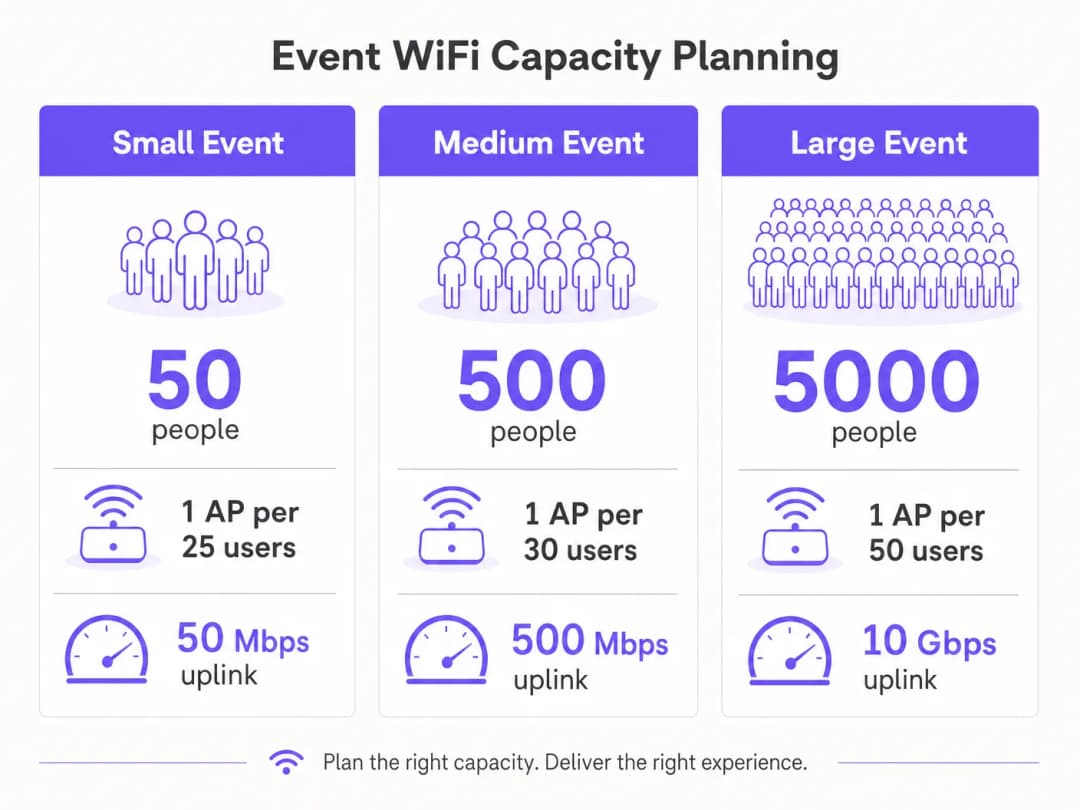
对于吞吐量规划,一般会议或展览使用中,保守估计每位活跃用户 1-2 Mbps 是合适的。对于有直播或广播级视频需求的项目(例如产品发布会或新闻发布会),生产 VLAN 上每位活跃用户需预算 5-10 Mbps。您的上行链路带宽必须能够同时容纳所有 VLAN 的聚合流量,并留有至少 20% 的余量。
| 活动规模 | 参会人数 | 推荐 AP 数量 | 最小上行链路 | DHCP 范围 |
|---|---|---|---|---|
| 小型 | 100 人以下 | 4–6 | 50 Mbps | /24 |
| 中型 | 100–500 | 15–25 | 200–500 Mbps | /23 |
| 大型 | 500–2,000 | 50–100 | 1–2 Gbps | /21 |
| 企业级 | 2,000+ | 100+ | 5–10 Gbps | /20 或更大 |
回传:不容妥协的基石
再出色的无线基础设施设计,也无法弥补回传带宽的不足。对于 200 人以上的活动,专用 专线 是唯一合适的上行链路解决方案。专线提供具有保障 SLA(通常为 99.95% 在线率)的同步、无争用连接,这与大多数场馆为自身运营安装的共享、非对称宽带有着本质区别。
专线开通通常需要四到六周的提前期。这是活动 WiFi 部署中最常见的一项规划失误:团队在活动前两周才开始设计网络,结果发现无法及时获取专用电路。对于确实无法使用专线的活动(如户外节日、临时搭建的建筑),采用跨不同运营商、使用多张 SIM 卡的绑定 4G/5G 解决方案是一个可行的替代方案,尽管其吞吐量保障较低且延迟较高。
网络架构与 VLAN 设计
严格的网络隔离既是性能要求,也是合规性要求。任何活动部署推荐的最小架构使用三个 VLAN:

VLAN 10 - 访客 WiFi:所有面向公众的参会者流量。此 VLAN 连接到 Captive Portal 以进行身份验证和数据捕获。必须启用客户端隔离以防止设备之间的横向移动。应应用 DNS 过滤以阻止恶意域名 - 实施细节请参阅 Purple 关于 通过强大的 DNS 和安全保护您的网络 的指南。
VLAN 20 - 工作人员与 POS 销售点:活动工作人员、售票系统和刷卡支付终端的运营流量。如果在此 VLAN 上处理卡支付,则适用 PCI DSS 范围,并且该 VLAN 必须与访客网络完全隔离,彼此之间不进行路由。
VLAN 30 — 视听与制作:专用于广播设备、演示系统和制作团队。此 VLAN 通常需要最高的保证吞吐量和最低的延迟,并且应配置 QoS 策略,使其优先级高于访客流量。
对于大型活动,通常还会为参展商、媒体和安全系统设置额外的 VLAN。每个 SSID 应映射到单个 VLAN,并且除非有明确要求,否则应在核心交换机上禁用跨 VLAN 路由。
射频规划
在高密度环境中,大多数企业级 AP 的默认行为(自动信道选择和最大发射功率)会带来明显的负面影响。同信道干扰(在相同信道上的相邻 AP 之间)对性能的破坏远比稍微减少覆盖区域要严重得多。
正确的方法是手动分配信道并降低发射功率。在 5 GHz 频段上,使用 UNII-1 (36, 40, 44, 48)、UNII-2 (52 - 64) 和 UNII-3 (149 - 165) 频段中可用的非重叠信道。在密集部署中,将 AP 发射功率降低至 8 - 12 dBm。这可以创建更小、更干净的蜂窝小区,减少干扰,从而提高整个场馆的总体吞吐量。
所有 AP 上都应启用双频合一(频段导航),以将支持 5 GHz 的客户端(绝大多数现代智能手机和笔记本电脑)推离拥挤的 2.4 GHz 频谱。保留 2.4 GHz 专用于无法连接到 5 GHz 的传统物联网设备和辅助功能设备。
对于户外活动,射频环境有着本质的不同。由于没有墙壁和天花板来阻挡信号,覆盖蜂窝更大,且来自相邻部署或个人热点的干扰更难控制。在户外环境中,定向扇区天线优于全向 AP,因为它们允许您将覆盖范围集中在特定区域(主舞台区、美食广场、登记排队区),而不是无差别地进行广播。所有户外硬件必须至少达到 IP55 防护等级;对于音乐节或露天环境,IP67 更佳。
Captive Portal 架构与 GDPR 合规性
Captive Portal 是用户与您活动网络的首次交互,也是您进行合规性和数据捕获的主要机制。如果 Portal 设计不佳、出现超时、在 iOS 上无法正确重定向或呈现不清晰的同意工作流,将会产生大量的支持请求,并降低参会者对网络的信心。
从 GDPR 的角度来看,任何个人数据的收集 - 电子邮件地址、社交媒体登录令牌或设备标识符 - 都需要合法的依据、明确的隐私声明以及针对任何营销用途的明确同意。该同意必须是细粒度的:同意使用 WiFi 与同意接收营销信息是不同的。Purple 的 Guest WiFi 平台在原生层面处理此同意工作流程,展示合规的自主选择加入流程,并根据 GDPR 第 7 条的要求存储带有时间戳和 IP 地址的同意记录。
Captive Portal 的技术架构对性能至关重要。将身份验证请求重定向到外部服务器的云托管门户会在登录流程中引入延迟。在峰值负载期间 - 当数百名用户同时进行身份验证时 - 这种延迟可能会导致超时和登录失败。Purple 的平台正是针对这种用例而设计的,采用自动扩容架构,可以处理突发的身份验证负载而不会降低性能。
对您的具体配置有疑问吗?
我们的团队与 80,000 多个场所的运营方、IT 经理和网络工程师保持合作。预约 20 分钟的通话,我们将为您展示同行是如何解决类似问题的。
实施指南
阶段 1:现场勘测与容量建模(活动前 8 周)
首先进行物理现场勘测。走遍与会者将出现的每个区域,并记录天花板高度、墙壁材料、结构障碍和现有基础设施(管道走线、电源插座、数据端口)。使用 WiFi 勘测工具 - Ekahau 现场勘测或 iBwave 是行业标准 - 在订购硬件之前对预测的覆盖范围进行建模并识别盲区。
同时,确认场馆现有的网络基础设施。确定可用数据端口、主配线架的位置以及任何现有交换机的容量。确定场馆现有的布线是否可以为你要部署的 AP 支持 PoE+ (802.3at),或者你是否需要自带 PoE 交换机和布线。
根据预期的与会者人数、活动日程(主题演讲与社交招待会产生的负载特征截然不同)以及任何生产系统的吞吐量要求,最终确定你的容量模型。
阶段 2:硬件采购和回传订购(活动前 6 - 8 周)
在现场勘测后立即订购专线。4 到 6 周的交付窗口是整个部署的关键路径。如果活动场馆已经有专线,请与场馆的 IT 团队协商专用带宽分配 - 不要假设现有的基础设施会直接提供给你使用。
对于硬件,购买还是租用取决于你举办活动的频率。对于每年部署活动 WiFi 超过 4 次的组织,拥有便携式套件 - 企业级 AP、托管 PoE 交换机、机架式路由器和布线 - 比重复租用更具成本效益。对于一次性活动,专业的活动 WiFi 租赁公司提供预先配置的硬件并提供现场支持,这显著降低了部署风险。
在指定租用或购买的AP时,对于200名以上用户的所有部署,请优先选择WiFi 6 (802.11ax) 硬件。与WiFi 5 (802.11ac) 相比,WiFi 6的 OFDMA 和 BSS Colouring 功能在高密度环境中提供了显著的性能提升。
阶段 3:活动前配置和测试(活动前 1 到 2 周)
在到达现场之前,先在模拟测试环境中配置所有网络设备。这包括核心交换机上的 VLAN 配置、无线控制器上的 SSID 到 VLAN 映射、DHCP 范围配置以及 Captive Portal 集成。在模拟测试环境中进行测试比在活动当天进行故障排除要高效得多。
对于 Captive Portal 配置,请在此阶段集成 Purple 平台。配置品牌展示页面、身份验证方法(电子邮件、社交登录或短信)、同意工作流程以及任何身份验证后的重定向。在多种设备类型上测试完整的用户体验 - iOS、Android、Windows 和 macOS 处理 Captive Portal 检测的方式各不相同,并且每种设备对重定向机制正确运行都有特定的要求。
使用 WiFi 客户端模拟器进行负载测试,以验证 DHCP 范围、身份验证后端和上行链路是否能够处理预期的峰值负载。Spirent 或 Ixia 等工具可在此方面模拟数百个并发 WiFi 客户端。
阶段 4:现场部署(活动前一天)
在场馆对参会者开放之前,提前到达现场以完成安装和测试。根据现场勘测计划安装 AP - 吊顶安装是全向覆盖的首选方式;在无法使用吊顶的地方,壁挂安装是可以接受的。运行并标记所有布线,并用照片和平面图注释记录每个 AP 的物理位置。
所有硬件安装完毕后,使用笔记本电脑或专用勘测设备进行安装后勘测,以验证覆盖范围。走遍整个参会者区域,确认各处的信号强度在 -65 dBm 或更佳。在活动开始前确定并解决任何覆盖盲区。
测试端到端用户体验:将测试设备连接到每个 SSID,完成 Captive Portal 身份验证,并验证互联网访问是否可用。测试员工 VLAN 上的刷卡支付终端。确认生产 VLAN 上的 AV 设备可以到达所有必需的目的地。
阶段 5:现场管理与监控
在活动期间,使用无线控制器的管理仪表板实时监控网络。需要关注的关键指标包括:AP关联数(标记所有超过其推荐客户端容量80%的AP)、信道利用率、DHCP池利用率和上行吞吐量。Purple的 WiFi Analytics 平台提供了对用户行为(停留时间、高峰连接时段和门户转化率)的额外可见性,这对于实时管理和活动后报告都极具价值。
制定明确的网络问题升级流程。为活动工作人员的所有网络相关支持请求指定单一联系人,并确保现场网络工程师能够通过独立于访客网络的带外管理连接远程访问所有设备。
最佳实践
以下建议代表了源自 酒店住宿、零售 和会议环境的大型活动部署中与厂商无关的最佳实践。
禁用员工和生产网络的 SSID 广播。 这些 SSID 没有运营上的理由需要对参会者可见。隐藏它们可以减少攻击面并防止意外连接。
在访客 VLAN 上设置激进的 DHCP 租约时间。 30 - 60分钟的租约时间可确保及时回收已断开连接设备的IP地址。这在参会人员在不同场次之间发生重大变化的多天活动中尤为重要。
在员工和生产 VLAN 上实施 802.1X 身份验证。 带有 802.1X 的 WPA3-Enterprise 提供单用户身份验证,并消除了共享预共享密钥被泄露的风险。对于访客网络,WPA3-Personal或带有 Captive Portal 的开放网络是标准方法。
在访客 VLAN 上使用 DNS-over-HTTPS 或 DNS 过滤。 公共活动网络是DNS劫持和网络钓鱼攻击的目标。应用DNS过滤 - 无论是通过您的上游提供商还是通过专用的DNS安全服务 - 都能为参会者提供有意义的保护。Purple的平台与DNS安全提供商集成,可在 Captive Portal 层应用此过滤。
记录一切。 在到达现场之前,创建网络拓扑图、布线表和AP放置地图。这些文档对于活动期间的故障排除以及未来在同一场地的部署规划非常宝贵。
对于机场和交通枢纽部署,适用额外的安全注意事项 - Purple关于机场 WiFi 安全的指南涵盖了与高客流量公共环境相关的特定威胁模型和缓解策略。
故障排除与风险缓解
DHCP 池枯竭
这是活动 WiFi 中最常见的故障模式。症状包括设备虽然连接到 WiFi 但无法获取 IP 地址,或者接收到 APIPA 地址 (169.254.x.x)。解决方法是扩大 DHCP 作用域范围并缩短租期。预防方法很简单:将 DHCP 作用域大小设置为至少预计峰值客户端数量的两倍,并将租期设置为 30 - 60 分钟。
认证服务器过载
在峰值负载下,大量并发认证请求可能会使本地 RADIUS 服务器或 captive portal 后端过载。这表现为登录缓慢或失败。像 Purple 这样的云端托管平台可以自动扩展以处理突发负载,与本地部署相比,这在活动应用场景中具有显著的架构优势。
同信道干扰
如果多个 AP 在极近的距离内工作在相同信道上,性能会显著下降。症状包括尽管信号强度良好但吞吐量低,并且在无线控制器中可见高重试率。解决方法是检查信道分配,确保相邻 AP 处于不重叠的信道上。降低发射功率也有助于缩小每个 AP 的干扰范围。
Captive Portal 重定向失败
不同的操作系统使用不同的机制来检测 captive portals。iOS 使用专用的 CNA (Captive Network Assistant) 向特定的 Apple URL 发起 HTTP 请求。Android 使用类似的机制与 Google 的连接性检查服务器进行交互。如果您的 captive portal 未能正确响应这些探测,门户将不会自动打开,用户需要手动导航到门户 URL。请确保您的 captive portal 已配置为拦截并响应这些特定的探测请求。
上行链路故障
上行链路上的单点故障是活动部署中影响最大的风险。可通过配置 4G/5G 备份连接来缓解此风险,该连接在主专线发生故障时会自动激活。大多数企业级路由器都支持双 WAN 故障转移,并且切换时间不到一秒。请在活动前的准备阶段测试故障转移机制,而不是在活动进行期间进行测试。
投资回报率与业务影响
活动 WiFi 越来越被视为一种数据资产,而不仅仅是一项公用设施。每一个连接到您活动网络并通过 captive portal 进行认证的与会者,都在提供第一方数据 - 包括电子邮件地址、人口统计信息和行为数据 - 这些数据对活动主办方、场地运营方和赞助商来说具有巨大的商业价值。
Purple 的 WiFi Analytics 平台可以直接量化这一价值。活动后报告提供了关于总独立连接数、峰值并发用户数、平均会话时长、门户转化率以及营销传播选择加入率的数据。对于一个拥有 2,000 名参会者且门户选择加入率为 70% 的会议,这意味着在单场活动中就获取了 1,400 个全新的、经同意的营销联系人 - 这种获客成本是任何其他渠道都难以企及的。
对于 酒店住宿业 行业的场馆运营商而言,分析层通过客流量分析和停留时间制图提供了额外的价值。了解场馆的哪些区域吸引了最多的互动 - 以及持续了多长时间 - 可以为未来的活动布局决策、餐饮布置和赞助商定位提供信息。
活动 WiFi 投资的投资回报率(ROI)计算应考虑三类回报:运营层面(精心设计的网络与临时网络相比可降低支持成本)、商业层面(第一方数据获取和营销选择加入)和声誉层面(可靠、快速的网络所带来的品牌价值,从而提升参会者体验)。对于大型活动而言,仅商业回报一项通常就能在两到三场活动内证明基础设施投资的合理性。
关键定义
接入点 (AP)
一种通过发送和接收 WiFi 信号来创建无线局域网 (WLAN) 的硬件设备。在活动部署中,使用的是企业级 AP 而不是消费级设备,因为它们支持多个 SSID、VLAN 标记、集中式管理和更高的并发客户端数。
IT 团队在规划部署规模时会遇到 AP 规范。关键参数包括最大并发客户端数(企业级 AP 通常为 100 - 200 个)、支持的 WiFi 标准(802.11ax/WiFi 6 是当前的最佳实践)以及防护等级(户外使用需达到 IP55+)。
VLAN (虚拟局域网)
使用 IEEE 802.1Q 标记在物理网络基础设施中创建的逻辑网络段。VLAN 允许多个隔离的网络共享相同的物理交换机和电缆,并通过路由策略控制 VLAN 之间的流量。
VLAN 是活动部署中网络隔离的主要机制。将访客、员工和生产流量隔离到不同的 VLAN 中,既是性能最佳实践,也是涉及卡片支付时 PCI-DSS 合规性的要求。
Captive Portal
当用户首次连接到 WiFi 网络时向其展示的网页,要求在授予互联网访问权限之前进行身份验证或接受条款。Captive Portal 是访客 WiFi 准入控制、GDPR 同意获取和第一方数据收集的标准机制。
Captive Portal 是用户与活动网络的第一步交互。它在负载下的性能(尤其是在高峰期认证爆发期间)直接影响与会者的体验。像 Purple 平台这样在云端托管的 Portal 会自动扩展,以应对突发的爆发负载。
DHCP (动态主机配置协议)
一种在设备连接到网络时自动为其分配 IP 地址的网络协议。DHCP 服务器维护一个可用地址池(范围),并在定义的期限(租约时间)内将其分配给客户端。
DHCP 池耗尽(即所有可用的 IP 地址都已被使用,新设备无法连接)是活动 WiFi 中最常见的故障模式。正确的范围规划和租约时间配置是至关重要的规划步骤。
专线 (Leased Line)
由电信运营商提供的、具有保证服务水平协议(SLA)的两点之间专用、同步、无争用的数据连接。与宽带不同,专线提供对等的上传和下载速度,且不与其他客户共享。
对于超过 200 名与会者的活动 WiFi 部署,推荐使用专线作为上行链路。其与宽带的关键区别在于 SLA 保证和连接的独占、无争用性质。开通通常需要 4 到 6 周。
802.11ax (WiFi 6)
当前一代的 WiFi 标准,引入了 OFDMA(正交频分多址)和 MU-MIMO(多用户多输入多输出),以提高高密度环境中的性能。WiFi 6 允许 AP 在同一信道上同时为多个客户端提供服务,而不是按顺序服务。
WiFi 6 是针对 200 人以上活动部署的推荐标准。相较于 WiFi 5 (802.11ac),其在高密度性能方面的改进在活动 WiFi 所创造的环境中最为显著:客户端多、高争用、设备类型混合。
GDPR (通用数据保护条例)
监管个人数据收集、处理和存储的欧盟法规 (2016/679)。对于活动 WiFi,GDPR 要求数据收集必须有合法依据、有明确的隐私声明、对营销用途有明确且细粒度的同意,并能够通过同意记录证明合规性。
任何收集个人数据(电子邮件地址、社交登录令牌或设备标识符)的活动 WiFi 部署都必须符合 GDPR。Captive Portal 是合规执行的首要环节。对 WiFi 访问的同意和对营销传播的同意必须是独立的、细粒度的选择性同意。
PCI DSS (支付卡行业数据安全标准)
一套安全标准,规定了处理、存储或传输卡支付数据的组织必须如何保护该数据。PCI DSS 要求持卡人数据环境必须与任何面向公众的系统进行网络隔离。
任何处理刷卡支付的活动(票务、餐饮、周边商品)都必须确保支付系统处于与访客 WiFi 网络完全隔离的网络网段中。将支付终端与公共 WiFi 放在同一个 VLAN 中是不符合 PCI DSS 合规要求的行为。
频段导航 (Band Steering)
一种无线网络功能,通过延迟或拒绝来自支持 5 GHz 客户端在 2.4 GHz 上的关联请求,主动引导支持双频的客户端设备连接到 5 GHz 频段,而不是 2.4 GHz。
在高密度的活动环境中,2.4 GHz 频谱会迅速饱和。频段导航是企业级 AP 上的标准配置,通过将支持 5 GHz 的客户端推向拥堵较少的 5 GHz 频段,来减少 2.4 GHz 的拥堵。
QoS (服务质量)
网络流量管理技术,优先处理某些类型的流量,确保高优先级应用在网络拥堵时也能获得所需的带宽和延迟。
QoS 用于活动部署中,以保证生产和媒体 VLAN 的带宽,并限制访客 VLAN 上的单用户吞吐量,以防止个别重度用户降低所有与会者的体验。
应用实例
一个拥有 3,000 个座位的会议中心正在举办为期两天的技术峰会。活动包括一个可容纳 2,500 人的主会场、12 个各容纳 50 至 150 人的分会场、一个拥有 80 个展位的展览区,以及一个需要可靠高吞吐量连接且容纳 30 名记者的媒体室。场馆现有的 Cat6 布线已覆盖各处,但仅有一条 200 Mbps 的共享宽带连接。应该如何设计网络?
首要任务是回传。200 Mbps 的共享宽带连接对于这种规模的活动来说完全不够。应立即订购至少 2 Gbps 的专用专线 - 这是关键路径项目,交期通常为 4 到 6 周。同时应配置 4G/5G 绑定备份作为故障转移。
对于无线架构,主会场需要最仔细的规划。考虑到 2,500 个潜在并发用户,仅在主会场就需要规划 60 到 80 个 AP,以高密度部署,降低发射功率(8 到 10 dBm)并手动分配信道。在这种规模下,WiFi 6 AP 至关重要。
VLAN 设计:VLAN 10(访客/参会者)、VLAN 20(员工/签到处)、VLAN 30(参展商)、VLAN 40(媒体/制作)、VLAN 50(AV/广播)。媒体 VLAN 应通过 QoS 分配保证带宽 - 为视频上传功能预算每位记者 5 Mbps 的带宽。
对于参展商,在 VLAN 30 上提供一个单独的 SSID,采用 WPA2-PSK 加密,并为每个展位分配在签到时分发的专属密码。这可以防止参展商相互访问网络,同时保持配置流程的可管理性。
DHCP:为访客 VLAN 使用 /20 作用域(4,094 个可用地址),为每个运营 VLAN 使用 /24 作用域。将访客租约时间设置为 30 分钟。
Captive Portal:在参会者 VLAN 上部署 Purple 的访客 WiFi 平台,通过电子邮件或社交登录进行身份验证,提供品牌化引导页,以及明确符合 GDPR 要求的选择加入同意书,以便进行活动后营销。预计选择加入率在 65 到 70%:可获得大约 1,600 到 1,750 个同意营销的联系人。
一家大型零售连锁店正在市中心广场举办为期三天的户外快闪活动。预计每日客流量为 500 到 800 人次。活动包括一个产品展示区、一个支付亭和一个鼓励访客分享内容的社交媒体互动区。现场没有任何固定基础设施 - 没有布线,没有电源,也没有现成的网络。您该如何配置网络连接?
由于没有固定基础设施,部署必须完全自给自足。网络堆栈包括:一台5G绑定路由器(使用来自两个不同运营商的 SIM 卡以实现容灾)提供上行链路;一台由发电机或便携式 UPS 供电的网管型 PoE 交换机;以及安装在临时脚手架或活动结构上、具有 IP67 防护等级的户外型 WiFi 6 AP。
对于户外环境,请使用定向扇区天线而不是全向 AP,将覆盖范围集中在活动区域,并最大程度地减少对周边区域的干扰。将 AP 安装在 4 到 6 米的高度,以最大化覆盖半径,同时减少地面干扰。
VLAN 设计:VLAN 10(带有 Captive Portal 的访客 WiFi)、VLAN 20(员工和支付自助终端 - 纳入 PCI-DSS 范围)、VLAN 30(社交媒体活动区 - 分配更高带宽)。支付自助终端 VLAN 必须与访客流量完全隔离,并在可能的情况下应使用有线连接到 PoE 交换机,而不是使用 WiFi。
对于社交媒体活动区,配置 QoS 以优先处理上传流量(Instagram、TikTok 上传属于上传密集型),并确保上行链路有足够的余量。按 800 名并发访客且在任何给定时间有 10% 的用户正在积极上传内容来计算,预算为每位活跃上传者 5 Mbps:80 位用户 × 5 Mbps = 需要 400 Mbps 的上传容量。
Captive Portal:部署 Purple 的平台,并配合与活动关联的品牌展示页面。收集电子邮件地址和社交账号,并提供活动后跟进的加入选项。社交媒体活动区可以配置为自动将已验证的用户重定向到活动标签页面。
为了防风雨,所有设备都应放置在防护等级达到 IP65 或以上的防雨箱中。在现场准备备用 AP 和备用 PoE 注入器,以便快速更换。
练习题
Q1. 您是一家会议中心的 IT 总监,该中心每年举办 20 场活动,规模从 50 人的董事会会议到 1,500 人的年度会议不等。该场馆目前拥有 500 Mbps 的共享宽带连接,并混用了前 IT 团队安装的消费级 WiFi 路由器。与会者对 WiFi 质量的投诉不断增加。您的基础设施升级路线图是什么?投资的业务案例又是什么?
提示:考虑活动规模的范围以及每个活动不同的网络需求。思考单一基础设施是否可以满足所有活动类型,还是需要分层的方法。业务案例应同时解决当前状况的成本(投诉、流失的业务)和收入机会(数据捕获、高级 WiFi 服务化产品)。
查看标准答案
升级路线图包含三个部分。首先,用至少 1 Gbps 的专用专线取代共享宽带 - 这是影响最大的单项变革,解决了大多数性能投诉的根本原因。其次,用托管的企业级无线基础设施取代消费级 WiFi 路由器:无线控制器、根据适当的现场勘测部署的企业级 AP,以及托管的 PoE 交换机。对于这种规模的场馆,覆盖所有活动空间的 20 - 30 个 AP 是一个合理的起点。第三,部署 Captive Portal 平台 - Purple 的访客 WiFi 解决方案 - 以提供品牌化认证、符合 GDPR 的数据捕获和分析报告。
业务案例包含两个部分。当前状况的成本包括 WiFi 体验差带来的声誉损失(可通过与会者反馈评分进行量化)、因在场馆要求中指定 WiFi 质量的活动策划者而导致潜在的预订流失,以及 IT 团队应对投诉所花费的时间。收入机会包括每次活动的第一方数据捕获(按每年 20 场活动、平均 500 名与会者和 65% 的加入率计算,每年可新增 6,500 个营销联系人)、向活动策划者提供高级 WiFi 作为计费服务的能力,以及为场馆布局和餐饮决策提供支持的分析数据。
Q2. 一个拥有 8,000 名与会者的户外音乐节聘请您的公司提供活动 WiFi 服务。该场地是一个绿地,没有任何现有基础设施 - 无电力、无布线、无固定结构。活动持续三天。这次部署中风险最高的五个项目是什么?您如何降低每种风险?
提示:思考在室外、无基础设施的环境中,最容易失效的依赖关系。考虑天气、电力、连接性、硬件故障和人为因素。对于每种风险,思考预防措施和应急方案。
查看标准答案
风险 1 - 上行链路故障:由于没有固定基础设施,专线并非可行选项。缓解措施是使用至少来自两家不同运营商的 SIM 卡,采用具有自动故障转移功能的绑定 5G 解决方案。预算需涵盖 4 - 5 张 SIM 卡,且跨越在特定活动现场信号覆盖最佳的运营商(活动前需通过现场考察进行验证)。风险 2 - 电力故障:所有网络设备均由发电机供电。缓解措施是在发电机和网络设备之间部署一台 UPS(不间断电源),在发电机切换或加油期间提供 15 - 30 分钟的运行时间。现场需准备备用发电机。风险 3 - 硬件故障:在户外环境中,由于天气、振动和物理损坏,硬件故障率较高。需携带 20% 的备件硬件 - 备用 AP、备用 PoE 注射器、备用跳线。记录每台设备的配置,以便在 10 分钟内配置好替代设备。风险 4 - 天气损坏:所有户外硬件必须达到 IP67 防护等级。所有布线必须走线槽或适合户外使用的线缆管理系统。所有设备外壳必须密封并抬离地面,以防止进水。风险 5 - DHCP 耗尽:在 8,000 名参与者的情况下,标准的 DHCP 范围将会失效。配置一个 /19 子网(8,190 个可用地址),租约时间为 30 分钟。实时监控 DHCP 池利用率,并制定在利用率超过 80% 时扩大范围的预案。
Q3. 某法律会议正在使用您的活动 WiFi 服务。活动主办方希望通过 Captive Portal 收集与会者的电子邮件地址,并将其用于活动后的营销。该活动的与会者来自英国和欧盟。适用哪些 GDPR 合规要求,以及应如何配置 Captive Portal 以满足这些要求?
提示:考虑提供 WiFi 接入的合法依据与进行营销推广的合法依据之间的区别。思考必须向用户展示哪些信息、必须保留哪些同意记录,以及如何处理数据主体的权利。
查看标准答案
根据 GDPR(以及脱欧后的 UK GDPR),收集电子邮件地址并将其用于营销需要明确、知情且自由给予的同意。Captive Portal 的配置必须符合以下要求:首先,登录页面必须包含清晰的隐私声明,明确数据控制者(活动主办方)、收集哪些数据、如何使用这些数据以及保留期限。其次,WiFi 接入的同意与营销推广的同意必须是独立的勾选项 - 将两者合并的单一复选框是不合规的。用户必须能够在不同意营销的情况下访问 WiFi。第三,营销同意复选框默认必须为未选中状态(不得有预先勾选的框)。第四,根据 GDPR 第 7(1) 条的要求,必须存储并可检索同意记录,包括时间戳、IP 地址和展示的具体同意文本。第五,隐私声明必须包含有关数据主体权利(访问、擦除、可移植性)的信息,并提供行使这些权利的联系机制。Purple 的 Guest WiFi 平台原生支持所有这些要求,存储具有完整审计追踪的同意记录,并提供开箱即用的合规同意流程。对于英国/欧盟混合受众,适用相同的 GDPR 标准 - UK GDPR 和 EU GDPR 在其同意要求方面实质上是相同的。
继续阅读本系列
Staff WiFi 对比 Guest WiFi:企业网络分段最佳实践
针对 IT 领导者的全面技术指南,介绍如何对 staff 和 guest WiFi 网络进行分段。内容涵盖 VLAN 架构、802.1X 认证、防火墙策略以及安全网络设计对业务的影响。
酒店客用 WiFi 管理:整合 PMS、门户与品牌标准
本技术指南详细介绍了如何构建企业级酒店 WiFi 网络,重点关注 VLAN 划分、用于自动会话管理的 PMS 集成,以及用于符合 GDPR 的数据采集的 Captive Portal 优化。
如何设置 Guest WiFi:企业级安全配置指南
本权威指南为 IT 负责人和网络架构师提供了部署安全企业 Guest WiFi 的确定性蓝图。内容涵盖了核心架构、WPA3 迁移、VLAN 隔离以及 Captive Portal 集成,在保护内部系统的同时,实现符合合规要求的第一方数据采集。
对您的具体配置有疑问吗?
我们的团队与 80,000 多个场所的运营方、IT 经理和网络工程师保持合作。预约 20 分钟的通话,我们将为您展示同行是如何解决类似问题的。