WiFi standards and enterprise venue readiness analyser
Explore IEEE technical designations, spectrum frequency bands, and calculate your venue readiness score for modern enterprise guest WiFi, Passpoint, and 802.1X security.
WiFi 7 (IEEE 802.11be (Extremely High Throughput))
Key technical innovations
- ✓Multi-Link Operation (MLO) across 2.4/5/6 GHz simultaneously
- ✓320 MHz ultra-wide channel bandwidth
- ✓4096-QAM (4K-QAM) high-density modulation
- ✓Lower, steadier latency via MLO for real-time AR/VR and telemetry
Enterprise deployment and platform fit
High-density stadium venues, hospital surgical robotics, automated warehouse logistics, and multi-tenant MDUs requiring ultra-low latency.
Venue Wireless Readiness & Upgrade Evaluator
Select your environment and current access point infrastructure to assess network modernisation opportunities.
Key Need: Passpoint Roaming & Captive Portal (50 - 500 APs)
Estate Profile: Mixed estate (policy fragmentation risk)
Managing disjointed access point hardware generations causes roaming disconnects and uneven security postures. Purple unifies policy enforcement, guest onboarding, and analytics across all vendors.
Modernise your venue wireless infrastructure with Purple
Whether you manage Cisco Meraki, HPE Aruba, Ruckus, or Ubiquiti access points, Purple overlays across your existing wireless hardware to deliver secure guest onboarding, automated WPA3/802.1X policy compliance, and real-time physical visitor intelligence.
Request a Technical Infrastructure Review
Connect with a wireless solutions architect to review your venue network design.
簡單來說:WiFi 中的「Fi」沒有代表任何意義。與普遍的看法相反,WiFi 並不是 "Wireless Fidelity" 的縮寫。這個名稱純粹是 1999 年為了行銷而創立的商標品牌。
了解這個名稱的由來,需要回顧無線技術是如何從複雜的工程術語,轉變為家家戶戶的日常必需品。
limitationsWiFi 名稱的真實起源:為什麼「Fi」不代表任何意義
在 1990 年代後期,無線網路開始在企業和消費者領域興起。1999 年,主要的產業領袖成立了無線乙太網路相容性聯盟 (WECA),即今天的 WiFi Alliance。
當時,官方的技術標準被稱為 IEEE 802.11b Direct Sequence。WECA 認為這個名稱對於消費者行銷不具吸引力,因此聘請了國際品牌規劃公司 Interbrand 來提出一個令人難忘且朗朗上口的品牌名稱。
Interbrand 如何在 1999 年為 WiFi 命名
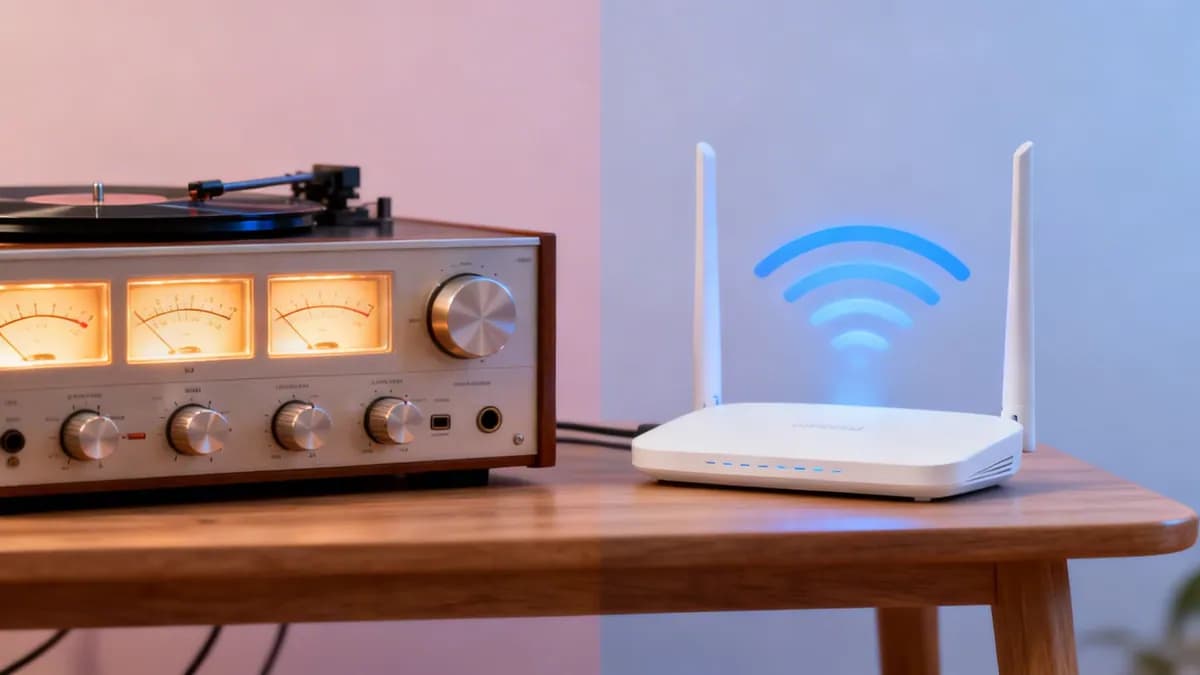
Interbrand 提出了十個候選名稱的清單。聯盟選擇了「WiFi」,這個設計巧妙地借用了人們熟悉的音響術語「Hi-Fi」(High Fidelity 的簡稱)。WiFi Alliance 的創始成員 Phil Belanger 證實,Interbrand 創造這個名字僅僅是因為它朗朗上口、容易記住,並且能喚起消費者的信心。
為什麼人們會認為 WiFi 代表 Wireless Fidelity?
關於 WiFi 代表 "Wireless Fidelity" 的持久謠言,源自於 1999 年早期的一場行銷活動。在推出這個名稱後不久,一些聯盟高階主管擔心消費者會無法理解 "WiFi" 的實際用途。
為了提供脈絡,WECA 曾暫時加入行銷標語:"The Standard for Wireless Fidelity."
Phil Belanger 後來解釋說,加上這個標語是一個錯誤。聯盟在幾個月內就停用了這個片語,但媒體和公眾已經將「Wireless Fidelity」當作一個字面上的逆向首字母縮略詞。數十年後,它仍然是科技史上最著名的都市傳說之一。如需了解更廣泛的無線發展歷史,請閱讀我們關於 WiFi 歷史 的文章。
WiFi 的實際含義:IEEE 802.11 標準解析
雖然 WiFi 這個名字純粹是品牌行銷,但其背後的技術是由電機電子工程師學會 (IEEE) 在 802.11 無線區域網路 (WLAN) 標準家族下嚴格定義的。
WiFi 在免授權的無線電頻譜頻段上運作 - 主要為 2.4 GHz、5 GHz 和 6 GHz - 在無線基地台與用戶端終端裝置 (智慧型手機、筆記型電腦和 IoT 感測器) 之間傳輸資料訊框。
比較 WiFi 世代:從 802.11b 到 WiFi 7
為了解決消費者因 802.11n 或 802.11ac 等技術數字而產生的混淆,WiFi Alliance 在 2018 年推出了簡化的世代命名法。下表概述了各個世代的演變:
從消費級縮寫到企業級 WiFi 基礎架構
雖然家庭使用者專注於基本的 SSID 連線和網路速度測試,但商業與企業場地需要更複雜的無線網路管理。飯店、體育場、購物中心和企業辦公室等高密度空間,皆依賴企業級無線架構。
現代企業 WiFi 的功能遠不止於簡單的連線。場域部署了來自 Cisco Meraki、HPE Aruba、Ruckus 和 Ubiquiti 等供應商的集中式無線基地台控制器,以提供:
- 802.1X Enterprise Security & Cloud RADIUS: 透過為每位使用者或租戶分配唯一的憑證或個人金鑰 (iPSK),消除共用密碼的安全隱憂。
- 無縫訪客登入體驗: 提供品牌專屬的 Captive Portal、社群媒體登入與合規性記錄。在我們的 Captive Portal 指南 中探索最佳實踐。
- Passpoint (Hotspot 2.0) Roaming: 實現行動網路式的自動連線,無需手動點選入口網頁。
- 位置分析與客流量情報: 掌握實體訪客的移動軌跡與停留時間,以最佳化場地營運。在我們的 WiFi 分析指南 中閱讀更多資訊。
關於 WiFi 起源與標準的常見問題
WiFi 中的「Fi」代表什麼?
WiFi 中的「Fi」不代表任何字詞。它不是 Wireless Fidelity 或任何其他技術詞彙的縮寫。WiFi 這個名稱是由品牌顧問公司 Interbrand 於 1999 年為無線乙太網路相容性聯盟(現為 WiFi Alliance)所創造的,目的是用一個好記的行銷名稱來取代技術標準名稱 IEEE 802.11b Direct Sequence。
WiFi 是 Wireless Fidelity 的縮寫嗎?
不是。Wireless Fidelity 只是 WiFi Alliance 在 1999 年底曾短暫使用過的行銷標語,目的是幫助消費者理解該技術提供了類似於高保真(Hi-Fi)音響的無線連線。該標語隨後不久便被停用,但這個都市傳說卻流傳了下來。
是誰在何時創造了 WiFi 這個名稱?
WiFi 這個名稱是由品牌顧問公司 Interbrand 於 1999 年 8 月創造的,當時該公司受雇於無線乙太網路相容性聯盟(WECA)。Interbrand 提出了十個名稱,WECA 最終選擇了靈感來自音響術語 Hi-Fi 的 WiFi。
WiFi 的官方技術標準名稱是什麼?
WiFi 在技術上是由電機電子工程師學會所制定的 IEEE 802.11 系列標準所定義。主要世代包括 802.11b(WiFi 1)、802.11g(WiFi 3)、802.11n(WiFi 4)、802.11ac(WiFi 5)、802.11ax(WiFi 6/6E)以及 802.11be(WiFi 7)。