Hospital RTLS and digital wayfinding ROI calculator
Estimate the nursing time, equipment budget and outpatient capacity a hospital can recover with BLE asset tracking and wayfinding on its existing WiFi network. Every assumption is listed below the results.
Multi-department acute site with fleets of infusion pumps, monitors and crash trolleys.
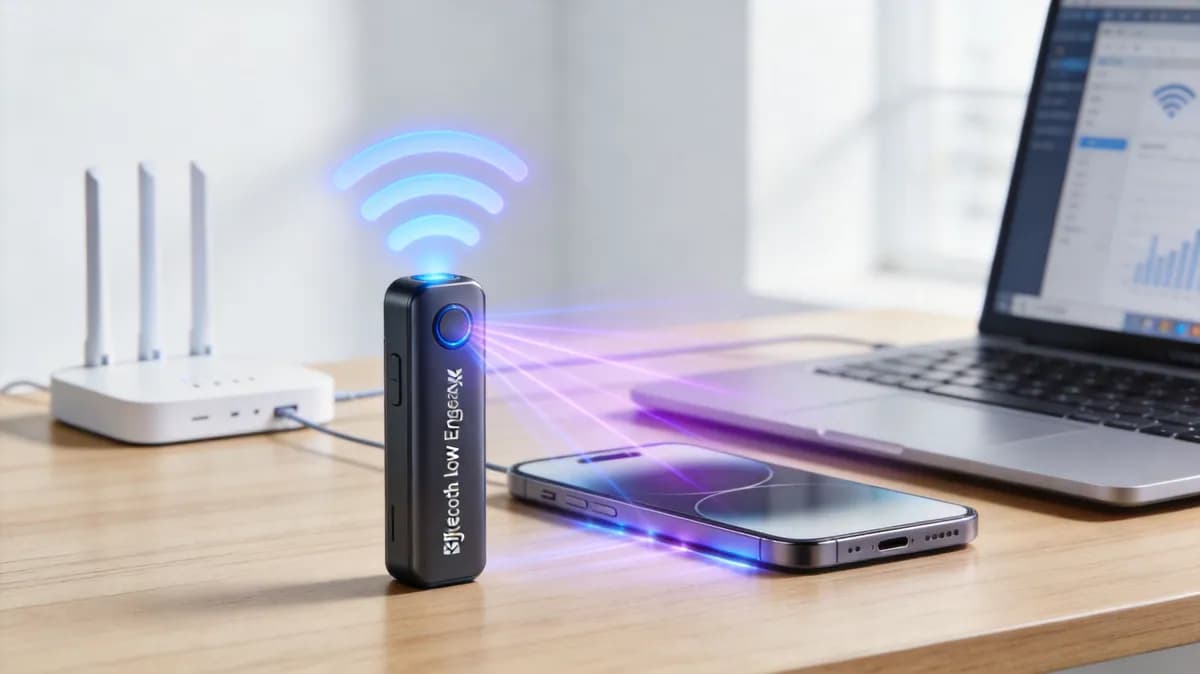
Uses the Bluetooth Low Energy radios built into current Cisco Meraki, HPE Aruba, Juniper Mist and similar APs. No new cabling; accuracy depends on AP density.
- Nursing time: staff x 13 twelve-hour shifts a month x search minutes x 50% reduction, valued at the hourly cost. This is capacity released, not a cash saving, unless it removes bank or agency hours.
- Equipment: beds x assets per bed, 3% lost or written off a year at an average £1,200 replacement cost, 60% of that prevented.
- Outpatients: 2% of visits late or missed because of navigation, 30% of those avoided, £120 per wasted slot. Replace with your own DNA and late-arrival data.
- Set-up cost: tags at £30 each plus £150 per bed for location infrastructure, mapping and integration (BLE on existing WiFi access points). Licences and ongoing support are excluded. Currency changes the symbol only; figures are not converted.
Less time searching
Nurses report losing a significant part of each shift looking for pumps, monitors and wheelchairs. A live map of the nearest available item on a ward PC or handset turns a search into a walk.
Fleet and rental right-sizing
When staff cannot trust availability they hoard equipment, and hospitals rent or buy more than census needs. Utilisation data shows the real par level for each device type.
Outpatient flow
Patients who get lost arrive late, and one late arrival can delay a whole clinic list. Step-free, turn-by-turn wayfinding cuts directional queries at reception and helps clinics start on time.
Healthcare RTLS (Real-Time Location Systems) is the clinical deployment of wireless indoor tracking technology - primarily Bluetooth Low Energy (BLE) smart badges, asset tags, and existing enterprise WiFi access points - to track the real-time location and movement of mobile medical equipment, clinical staff, and patients across hospital campuses.
Modern hospital operations face compounding operational pressures: clinical staffing shortages, nurse burnout, lost biomedical inventory, and complex multi-building layouts that disorient patients. According to clinical time-motion benchmarks, 95% of healthcare systems plan to expand their use of indoor location technology to streamline workflows, improve patient satisfaction, and control capital expenditures.
By uniting real-time asset tracking with smartphone-based indoor location services and digital wayfinding, healthcare facilities transform complex physical spaces into responsive, intelligent care environments.
The operational and financial cost of lost visibility in hospitals
In facilities without active location tracking, hospital staff rely on manual whiteboards, barcoded inventory scans at storage checkpoints, or physical searching. This creates substantial operational friction across clinical departments:
| Clinical Operational Metric | Without RTLS (Manual / Barcodes) | With Purple Healthcare RTLS & Maps |
|---|---|---|
| Nurse equipment search time | 40 hours wasted per month per nurse | < 45 seconds to locate on mobile map |
| Mobile asset utilization rate | 35% to 42% average utilization | 75% to 85% through dynamic par levels |
| Annual equipment loss & shrinkage | 10% to 20% inventory lost ($4,200/bed) | < 2% loss with automated geofenced exits |
| Outpatient navigation disorientation | 30% of first-time visitors lost | Step-by-step turn-by-turn blue-dot guidance |
| Infrastructure deployment requirement | Proprietary ceiling cabling & readers | Runs over existing Cisco, Aruba, Meraki APs |
Four core clinical benefits of healthcare RTLS
1. Eliminating nurse search time and clinical burnout
Clinical time-motion studies confirm that registered nurses spend up to one hour per twelve-hour shift searching for clean, available medical devices. In emergency departments and intensive care units, 16% of manual equipment searches fail entirely, forcing clinicians to borrow devices from adjacent units.
Purple RTLS attaches lightweight, motion-activated BLE tags to mobile medical assets (including infusion pumps, telemetry transmitters, bladder scanners, and crash carts). Nurses view real-time location maps directly on clinical workstations or handheld cell phones, locating the nearest sanitized device in seconds.
2. Preventing device hoarding and rental expenditures
Because clinical staff fear equipment shortages during peak census, unit staff frequently hoard infusion pumps and diagnostic tools in clean utility rooms or supply closets. This hoarding behavior causes biomedical engineering teams to over-procure or rent surplus equipment at high commercial rates.
Purple provides automated inventory par-level tracking. When equipment in a designated department drops below safety thresholds, automated dispatch alerts notify central sterile supply to replenish inventory before patient care is affected.
3. Protecting vulnerable patients and preventing elopement
Six in ten patients living with Alzheimer's or cognitive impairment wander during hospital admissions. Rapid intervention is essential to prevent falls and unassisted exits.
With wearable BLE wristbands and geofenced unit boundaries, nursing teams receive instant notifications on clinical handsets if a high-fall-risk or memory-care patient approaches a restricted exit, stairwell, or elevator bay.
4. Enhancing staff safety and duress response
Healthcare workers face high rates of workplace violence, particularly in emergency departments, behavioral health units, and triage areas. Wearable BLE duress badges allow nurses and clinical staff to trigger silent distress calls with room-level accuracy broadcast directly to hospital security teams.
How digital wayfinding transforms the patient experience
Hospital navigation is a primary source of patient anxiety. Medical centers often consist of multiple interconnected wings built over several decades, creating maze-like environments with inconsistent physical signage. In North America alone, missed and delayed appointments cost healthcare systems over $150 billion each year.
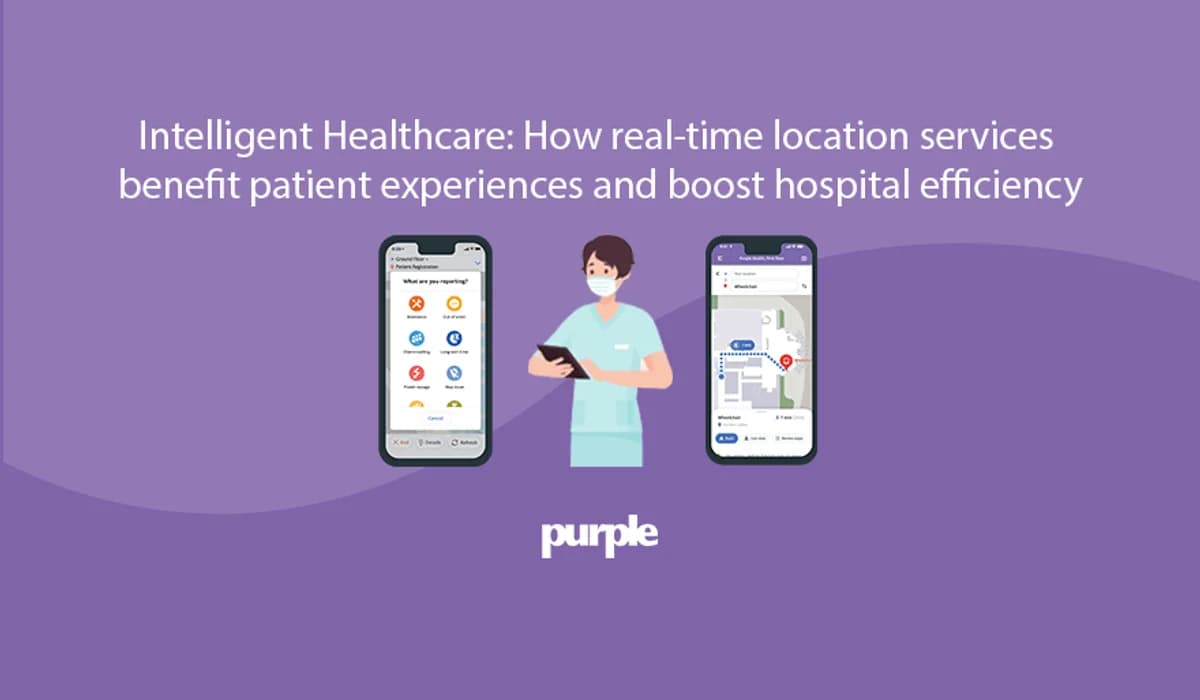
Purple digital wayfinding integrates with hospital mobile applications (such as Epic MyChart) and web portals to deliver comprehensive indoor navigation:
- Home-to-appointment routing: Directs patients from GPS driving directions into the correct multi-level parking lot, then transitions seamlessly into indoor blue-dot walking directions to their specific clinic or consultation room.
- Accessible and step-free navigation: Offers dedicated route options that avoid stairs and narrow corridors, guiding wheelchair users and patients with mobility aids via elevators and accessible doorways.
- Reduced receptionist interruptions: By providing clear self-service smartphone navigation, hospital receptionists and nursing staff experience up to 70% fewer directional interruptions during clinical shifts.
At one US healthcare system, implementing interactive hospital mapping transformed patient navigation across its main hospital site, reducing late clinic arrivals and improving patient feedback scores.
Deploying RTLS on existing enterprise WiFi infrastructure
Traditional RTLS solutions required proprietary radio receivers and miles of dedicated Ethernet cabling above hospital drop ceilings, resulting in prohibitive capital costs and clinical disruption during installation.
Purple eliminates infrastructure barriers by integrating directly via cloud API with enterprise wireless access points, including:
- Cisco Catalyst Spaces: Ingests BLE telemetry from Catalyst APs to track clinical assets and monitor floor occupancy.
- Cisco Meraki: Uses built-in Meraki Bluetooth radios for plug-and-play asset tracking and location analytics.
- Aruba Meridian & HPE Networking: Combines Aruba BLE beacons and AP telemetry for high-density indoor positioning.
- Juniper Mist: Employs virtual BLE antenna arrays for sub-two-meter positioning without physical beacon calibration.
Calculating healthcare RTLS and wayfinding ROI
Hospital CFOs and clinical leaders evaluate RTLS investments across three distinct financial pillars:
- Clinical labor recovery: Reclaiming 34 nursing hours per staff member monthly generates over $1.3 million in recovered clinical productivity annually for a typical 450-bed facility.
- Capital expenditure & rental reduction: Eliminating asset loss and canceling emergency equipment rentals saves an average of $2,500 per hospital bed each year.
- Outpatient scheduling efficiency: Reducing missed and delayed clinical appointments by 10% ensures expensive operating rooms and specialist consultation slots operate at peak capacity.