

TP-Link Omada e Purple WiFi para Implantações SMB
Este guia autorizado fornece a gerentes de TI e arquitetos de rede um plano definitivo para integrar pontos de acesso TP-Link Omada com a infraestrutura RADIUS em nuvem da Purple. Ele abrange o design arquitetônico, a configuração passo a passo do Captive Portal, os requisitos de Walled Garden e uma comparação comercial com UniFi para implantações SMB.
🎧 Ouça este Guia
Ver Transcrição
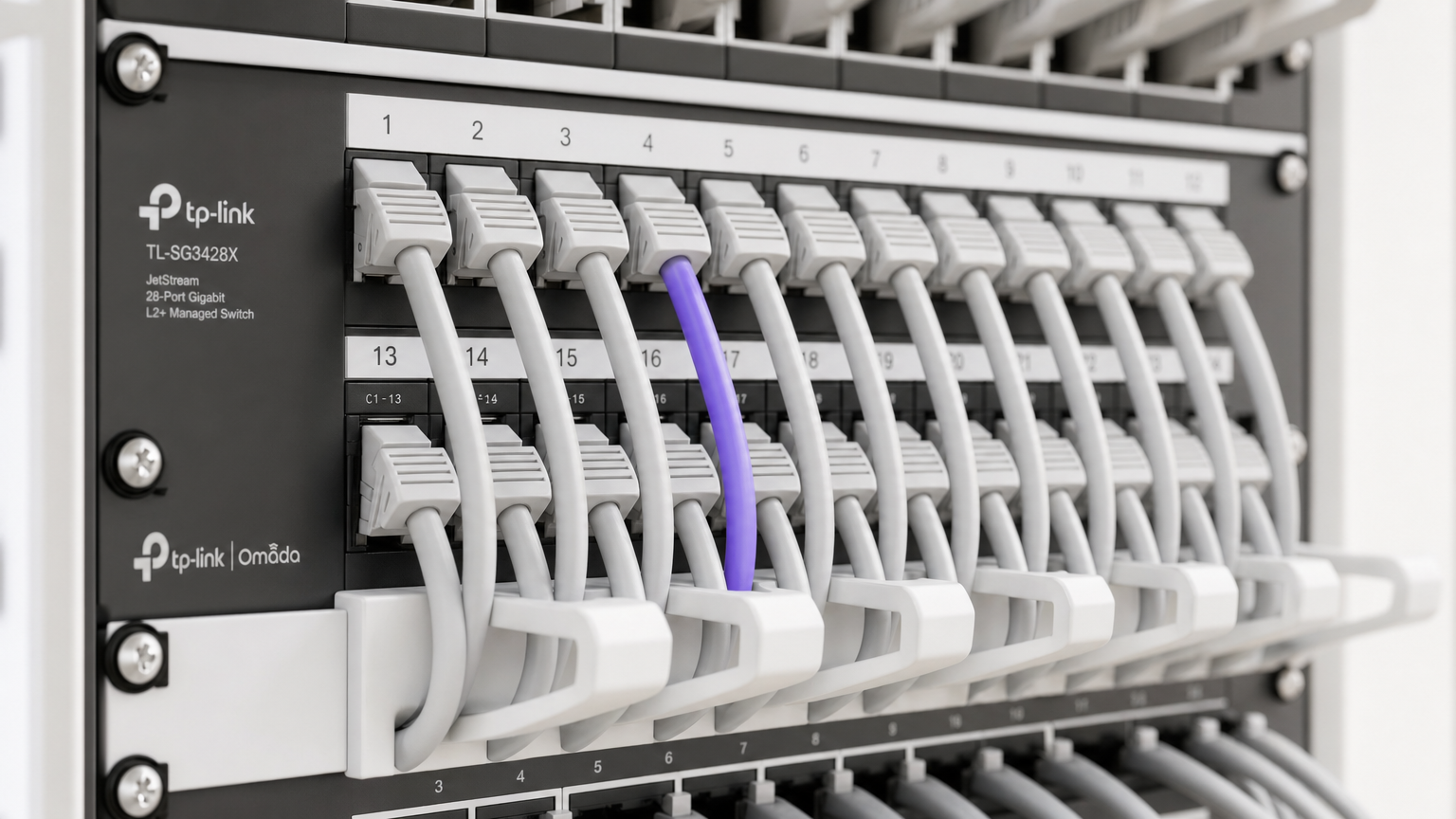
Resumo Executivo
Para SMBs em Hotelaria , Varejo e locais públicos, oferecer um WiFi para Convidados seguro e com a marca não é mais um luxo — é um requisito operacional. Historicamente, gerentes de TI enfrentaram uma escolha difícil: implantar hardware caro de nível empresarial como UniFi, ou comprometer a segurança e a análise com pontos de acesso de nível de consumidor. TP-Link Omada muda fundamentalmente essa equação. Ao combinar o hardware econômico e gerenciado em nuvem da Omada com a autenticação de nível empresarial da Purple e Análise de WiFi , os operadores de locais podem alcançar uma arquitetura de rede segura e escalável por uma fração do custo tradicional.
Este guia de referência técnica fornece um plano definitivo para implantar pontos de acesso TP-Link Omada com a infraestrutura RADIUS em nuvem da Purple. Examinaremos a integração arquitetônica, detalharemos os parâmetros de configuração específicos necessários para uma experiência de Captive Portal perfeita e forneceremos uma análise franca de custo-benefício comparando Omada com UniFi para implantações SMB. Este é um guia de implementação prático e neutro em relação ao fornecedor, projetado para profissionais de TI seniores e arquitetos de rede que precisam de orientação acionável para implantar redes de convidados robustas neste trimestre.
Análise Técnica Detalhada
A integração entre TP-Link Omada e Purple baseia-se em uma arquitetura padrão de Servidor RADIUS Externo combinada com um redirecionamento de Portal Web Externo. Esse desacoplamento da rede de acesso de rádio do plano de gerenciamento de identidade é um princípio fundamental da Arquitetura da Internet das Coisas: Um Guia Completo moderna.
Visão Geral da Arquitetura
Em uma implantação padrão, o Ponto de Acesso Omada (por exemplo, EAP670 ou EAP650) gerencia o ambiente de RF, a associação de clientes e o roaming. No entanto, ele não lida com a autenticação. Quando um dispositivo cliente se conecta ao SSID de convidado, o controlador Omada intercepta a conexão e redireciona o navegador do usuário para a página de splash hospedada da Purple.
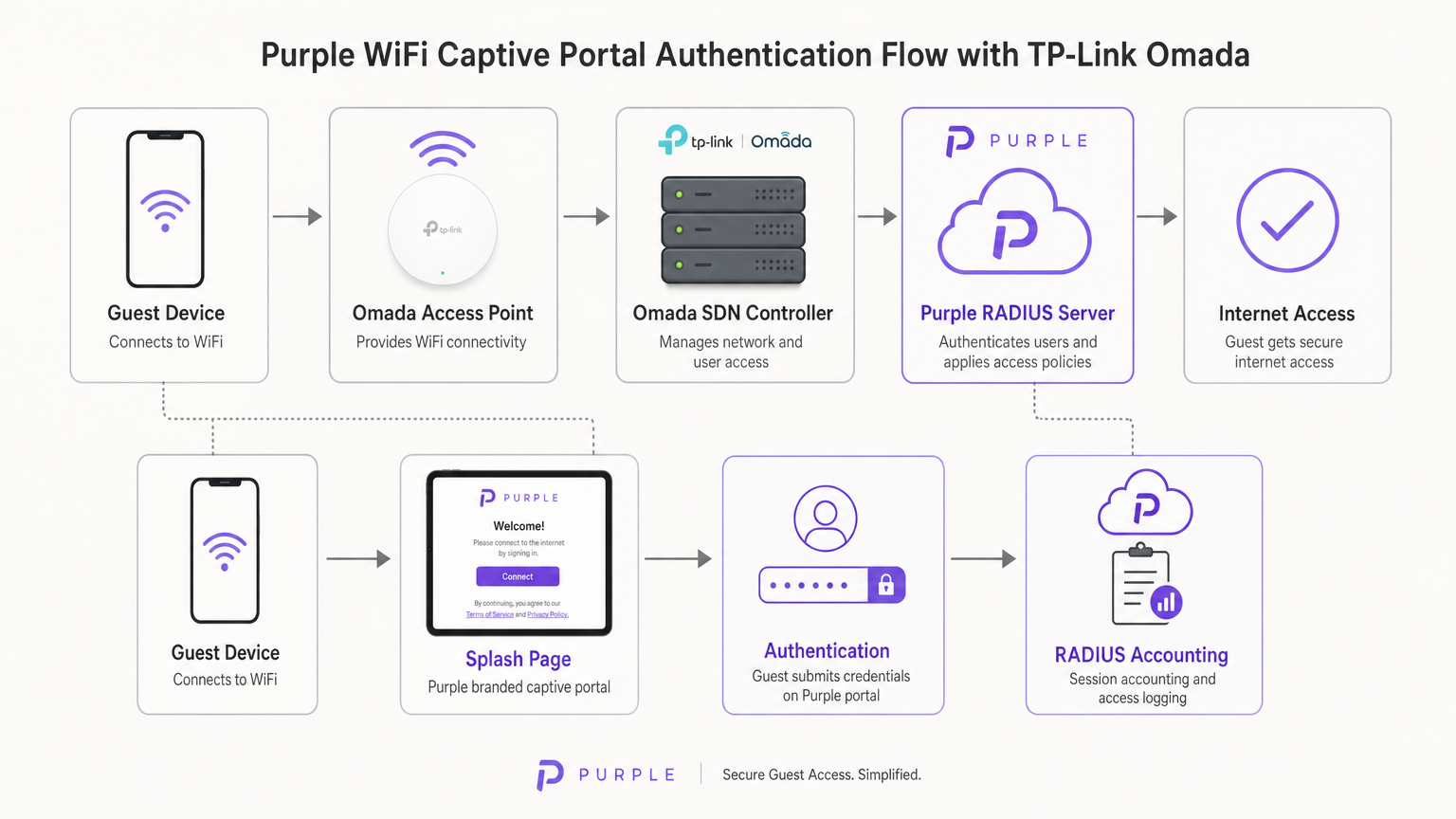
Assim que o usuário envia suas credenciais (ou aceita os termos de serviço) no portal Purple, a infraestrutura em nuvem da Purple atua como o servidor RADIUS. Ele envia uma mensagem de Access-Accept de volta ao controlador Omada, que então autoriza o endereço MAC do dispositivo cliente na rede local. A Purple também gerencia todo o RADIUS Accounting, rastreando a duração da sessão e o uso de dados para fins de análise e conformidade.
Opções do Controlador Omada
A plataforma Omada Software Defined Networking (SDN) requer um controlador para gerenciar os pontos de acesso e lidar com o redirecionamento do Captive Portal. Você tem três modelos de implantação principais:
- Controlador Omada Baseado em Nuvem: Totalmente hospedado pela TP-Link. Esta é a abordagem recomendada para a maioria das implantações SMB, pois elimina a necessidade de hardware de controlador no local e oferece alta disponibilidade.
- Controlador de Hardware (OC200/OC300): Um appliance físico instalado na rede local. Adequado para ambientes com links WAN não confiáveis onde o gerenciamento local é crítico.
- Controlador de Software: Instalado em um servidor local ou VM (Windows ou Linux).
Crucialmente, o controlador Omada deve permanecer online para processar novas autenticações de convidados. Se o controlador ficar offline, as sessões autenticadas existentes permanecerão ativas, mas novos clientes não conseguirão carregar o Captive Portal.
Guia de Implementação
A implantação da Purple em um controlador Omada v4+ requer a configuração de três componentes distintos: a Rede Sem Fio, o Portal de Convidados e o Walled Garden.
Passo 1: Configuração das Definições Sem Fio
A base é um SSID dedicado configurado para acesso de convidados sem criptografia local.
- Navegue até Definições Sem Fio no controlador Omada e clique em Adicionar.
- Defina o SSID (por exemplo, "Guest WiFi").
- Ative a opção Rede de Convidados. Isso é crítico, pois permite o isolamento de clientes da Camada 2, impedindo que os convidados se comuniquem entre si ou acessem recursos corporativos locais — um requisito obrigatório para a conformidade com PCI DSS.
- Defina o Modo de Segurança como Nenhum. A autenticação será tratada na Camada 7 via Captive Portal, não na Camada 2.
- Aplique as configurações nas bandas de 2.4GHz e 5GHz.
Passo 2: Configuração do Portal de Convidados e RADIUS
Este passo vincula o controlador Omada à infraestrutura em nuvem da Purple.
- Navegue até Controle Sem Fio > Portal e clique em Adicionar Novo Portal.
- Selecione o SSID criado no Passo 1.
- Defina o Tipo de Autenticação como Servidor RADIUS Externo.
- Configure o Servidor RADIUS Primário:
- IP do Servidor RADIUS: Fornecido no seu painel Purple.
- Porta RADIUS:
1812 - Senha RADIUS: Seu segredo RADIUS Purple exclusivo.
- Modo de Autenticação:
PAP
- Ative o RADIUS Accounting:
- IP do Servidor de Contabilidade: Fornecido no seu painel Purple.
- Porta do Servidor de Contabilidade:
1813 - Senha do Servidor de Contabilidade: Seu segredo RADIUS Purple exclusivo.
- Ative a Atualização Provisória e defina o intervalo para
120segundos. Isso garante o rastreamento preciso da sessão. - Em Personalização do Portal, selecione Portal Web Externo.
- Insira a URL do Portal Web Externo fornecida pela Purple.
Nota Crítica: Certifique-se de que o Redirecionamento HTTPS esteja definido como Desativar. A interceptação inicial do Captive Portal depende de HTTP. Habilitar o redirecionamento HTTPS no nível do controlador interromperá o processo de carregamento da página de splash.
Passo 3: Walled Garden (Acesso Pré-Autenticação)
O Walled Garden é o ponto de falha mais comum em implantações de WiFi para convidados. Antes que um usuário se autentique, seu o dispositivo deve ser capaz de resolver e alcançar os servidores da Purple para carregar a página inicial e processar os logins sociais.
- Navegue até o cabeçalho Controle de Acesso nas configurações do Portal.
- Habilite o Acesso de Pré-autenticação.
- Adicione todos os domínios listados na whitelist oficial do Walled Garden da Purple. Isso inclui os domínios principais da Purple, endpoints de CDN e domínios necessários para provedores de login social (Facebook, Google, X).
- A falha na configuração correta resultará na impossibilidade de o Captive Network Assistant (CNA) no iOS e Android renderizar a página.
Melhores Práticas
Para garantir uma implantação robusta e em conformidade, siga as seguintes recomendações padrão da indústria:
- Segmentação de VLAN: Sempre coloque o SSID de convidado em uma VLAN dedicada, completamente isolada do tráfego corporativo, sistemas de Ponto de Venda (POS) e interfaces de gerenciamento. Isso mitiga riscos e simplifica a auditoria de conformidade.
- Limitação de Taxa de Banda: Implemente a limitação de taxa no SSID de convidado (por exemplo, 5 Mbps de download / 1 Mbps de upload por cliente) para evitar que um único usuário sature o link WAN e impacte as operações de negócios.
- Integração SecurePass: Para locais com altas taxas de visitantes recorrentes, configure o SecurePass da Purple (WPA-Enterprise com Hotspot 2.0). Isso permite que os convidados que retornam se autentiquem automaticamente via perfil, ignorando o Captive Portal completamente para uma experiência sem atritos.
- Alta Disponibilidade do Controlador: Se estiver usando um controlador de hardware local (OC200), certifique-se de que ele esteja conectado a uma Fonte de Alimentação Ininterrupta (UPS). Uma reinicialização do controlador interromperá novas autenticações.
Solução de Problemas e Mitigação de Riscos
Ao implantar Captive Portals de terceiros, modos de falha específicos surgem frequentemente. Veja como abordá-los:
O Captive Network Assistant (CNA) do iOS falha ao carregar
Se os dispositivos Apple se conectarem ao WiFi, mas a página inicial não aparecer automaticamente, o problema é quase sempre um Walled Garden incompleto. O CNA do iOS tenta alcançar endpoints específicos da Apple (por exemplo, captive.apple.com) para detectar o acesso à internet. Se estes estiverem bloqueados, ou se os domínios CDN da Purple estiverem faltando na lista de Acesso de Pré-autenticação, a página não será renderizada. Verifique a whitelist em relação à documentação atual da Purple.
Sessões Não Aparecendo na Análise
Se os usuários puderem autenticar e acessar a internet, mas seus dados de sessão (duração, largura de banda) estiverem faltando no painel da Purple, verifique a configuração de Contabilidade RADIUS. Certifique-se de que a Porta de Contabilidade esteja definida como 1813, que o segredo corresponda exatamente e que o intervalo de Atualização Interina esteja habilitado e definido para 120 segundos.
Tempos Limite de Autenticação
Se o portal carregar, mas os usuários receberem um erro de tempo limite ao clicar em 'Conectar', o controlador Omada não está conseguindo alcançar o servidor RADIUS da Purple na porta 1812. Verifique as regras de firewall de saída em seu roteador de borda para garantir que as portas UDP 1812 e 1813 estejam abertas para os endereços IP da Purple.
ROI e Impacto nos Negócios
Para diretores de TI e CTOs, a decisão de implantar hardware Omada com software Purple é fundamentalmente comercial. Como essa arquitetura se compara às alternativas e qual é o retorno esperado do investimento?
A Decisão Omada vs. UniFi
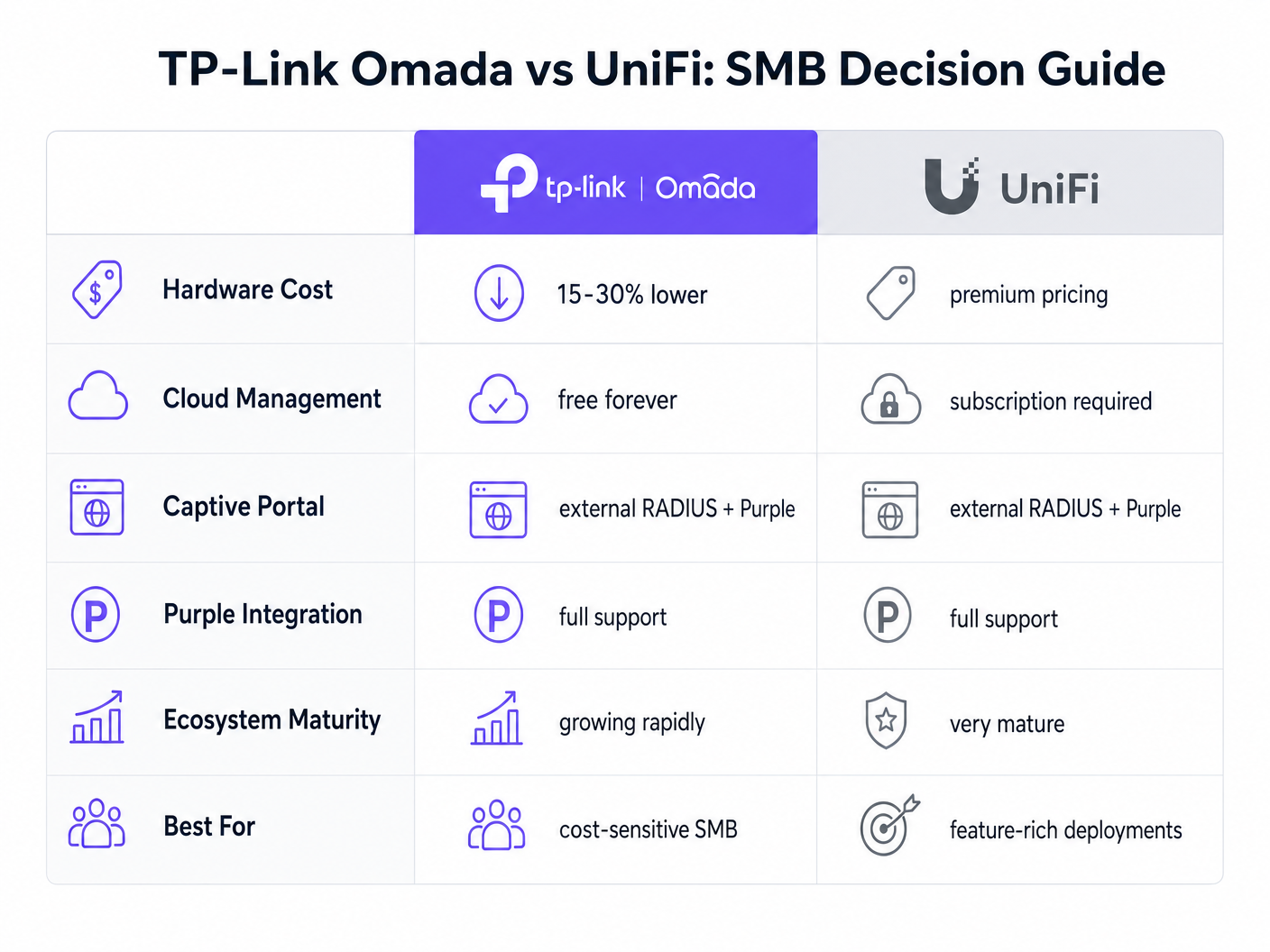
A plataforma UniFi da Ubiquiti é a líder estabelecida no espaço SMB. No entanto, o TP-Link Omada oferece uma vantagem financeira atraente sem sacrificar a funcionalidade principal.
- Despesa de Capital (CapEx): Os pontos de acesso Omada (por exemplo, EAP670) são tipicamente 15-30% mais baratos do que seus equivalentes UniFi (por exemplo, U6 Pro). Em uma implantação de 50 APs, isso representa milhares de dólares em economia de hardware.
- Despesa Operacional (OpEx): A TP-Link oferece o controlador Omada Cloud gratuitamente. A hospedagem oficial na nuvem da UniFi requer uma assinatura mensal por site.
- Integração: Ambas as plataformas suportam RADIUS Externo e se integram perfeitamente com a Purple.
Para um ecossistema unificado e rico em recursos que inclui câmeras e controle de acesso, o UniFi permanece superior. No entanto, para uma implantação wireless pura focada na eficiência de custos e acesso confiável para convidados, o Omada oferece um valor excepcional.
Medindo o Sucesso
A implantação do Purple Connect (a camada gratuita) em hardware Omada proporciona ROI imediato ao reduzir a carga de suporte de TI associada ao gerenciamento de senhas de convidados. Para entender o impacto comercial mais amplo da atualização para camadas pagas para captura de dados e automação de marketing, revise nossa análise abrangente: Por que usar Marketing WiFi? O Caso de Negócio com Dados Reais .
Ao alavancar o hardware econômico da Omada, os locais podem realocar o orçamento do CapEx de infraestrutura para soluções de software que impulsionam ativamente a receita, transformando a rede de um centro de custo em um ativo de marketing.
Termos-Chave e Definições
External RADIUS Server
A networking protocol that provides centralized Authentication, Authorization, and Accounting (AAA) management. In this context, Purple acts as the RADIUS server, verifying users and instructing the Omada controller to grant network access.
IT teams use this architecture to decouple identity management from local network hardware, enabling cloud-based analytics and compliance.
Captive Portal
A web page that a user of a public-access network is obliged to view and interact with before access is granted.
This is the primary touchpoint for data capture and brand engagement in guest WiFi deployments.
Walled Garden (Pre-Authentication Access)
A limited environment that controls the user's access to web content and services before they have fully authenticated on the network.
Crucial for allowing devices to reach the splash page hosted on Purple's servers and to communicate with social login providers like Google or Facebook before internet access is granted.
Captive Network Assistant (CNA)
The pseudo-browser built into mobile operating systems (like iOS and Android) that automatically detects captive portals and pops up the login screen.
IT teams must ensure the Walled Garden is perfectly configured, as the CNA is highly sensitive to blocked resources and will fail silently if it cannot reach necessary endpoints.
RADIUS Accounting
The process of tracking network resource consumption by users, including session duration and bytes transferred.
Essential for generating accurate analytics in the Purple dashboard and for enforcing bandwidth or time limits on guest sessions.
Layer 2 Isolation (Guest Network Mode)
A security feature that prevents devices connected to the same wireless network from communicating directly with each other.
A mandatory requirement for public networks to prevent lateral movement of malware and to comply with security standards like PCI DSS.
Interim Update Interval
The frequency at which the network controller sends accounting data updates to the RADIUS server during an active session.
Setting this to 120 seconds ensures Purple has near real-time data on user sessions without overwhelming the network with RADIUS traffic.
Passpoint (Hotspot 2.0)
A standard that enables mobile devices to automatically discover and connect to Wi-Fi networks securely without requiring a captive portal login.
Used by Purple's SecurePass feature to provide a frictionless, secure (WPA-Enterprise) connection for returning guests, improving the user experience and increasing connection rates.
Estudos de Caso
A 150-room boutique hotel needs to deploy guest WiFi across all bedrooms and public areas. They have a strict budget but require GDPR-compliant data capture and seamless roaming. They are evaluating UniFi U6 Pro vs TP-Link Omada EAP670.
The hotel should deploy 40 TP-Link Omada EAP670 access points managed via the free Omada Cloud Controller. They will configure a 'Guest WiFi' SSID with no Layer 2 security, relying on Purple's External RADIUS integration for authentication. They must implement a strict Walled Garden to allow pre-authentication access to Purple's splash pages. The guest network will be placed on an isolated VLAN.
A retail chain with 20 small footprint stores wants to offer free WiFi to customers to capture email addresses for their loyalty program. They currently have unmanaged consumer routers in each store and no centralized IT support.
Deploy a single TP-Link Omada EAP650 access point in each store, connected to an Omada Cloud Controller for centralized management. Configure Purple's 'Connect' or 'Capture' tier via External RADIUS. Implement bandwidth rate limiting (e.g., 5Mbps down/1Mbps up) on the guest SSID to protect the stores' limited WAN connections, which are also used for Point of Sale (POS) systems.
Análise de Cenário
Q1. A venue reports that users can connect to the guest WiFi and browse the internet, but no session data or analytics are appearing in the Purple dashboard. What is the most likely configuration error on the Omada controller?
💡 Dica:Think about the specific RADIUS protocol responsible for tracking usage, not just granting access.
Mostrar Abordagem Recomendada
The RADIUS Accounting configuration is likely incorrect or disabled. The IT team should verify that Accounting is enabled, the Accounting Server IP is correct, the Accounting Port is set to 1813, and the Interim Update interval is set to 120 seconds.
Q2. During a pilot deployment, Android devices successfully load the Purple splash page, but iOS devices show a blank screen and drop the WiFi connection. How should the network architect resolve this?
💡 Dica:iOS and Android handle captive portal detection differently. iOS relies heavily on specific domains being reachable before authentication.
Mostrar Abordagem Recomendada
The network architect must update the Pre-Authentication Access List (Walled Garden) on the Omada controller. The iOS Captive Network Assistant (CNA) is failing because it cannot reach required Apple domains or Purple CDN endpoints. They must cross-reference their configuration with Purple's official Walled Garden whitelist.
Q3. A client wants to migrate from an expensive, subscription-based cloud managed WiFi solution to TP-Link Omada to save on OpEx, but they are concerned about losing the enterprise-grade analytics they currently rely on. What is the recommended architecture?
💡 Dica:How can you separate the hardware management plane from the analytics and identity plane?
Mostrar Abordagem Recomendada
The client should deploy TP-Link Omada access points managed by the free Omada Cloud Controller to eliminate hardware subscription fees. They should then integrate this with Purple WiFi via an External RADIUS configuration. This architecture provides cost-effective hardware management while retaining enterprise-grade analytics, data capture, and CRM integration through the Purple platform.




