
多租户环境中的 VLAN 分段最佳实践
本指南为 IT 经理、网络架构师、CTO 和场所运营总监提供了在多租户 WiFi 环境中实施 VLAN 分段的权威、中立于厂商的蓝图。内容涵盖 IEEE 802.1Q 标准、通过 802.1X 和 RADIUS 进行的动态 VLAN 分配,以及适用于酒店、零售、体育场馆和公共部门场所的逐步部署指南。合理的 VLAN 分段是实现 PCI DSS 和 GDPR 合规性、防止横向移动以及在共享物理基础设施上提供高性能无线连接的基础控制措施。
Video overview
收听本指南
查看播客转录
核心系列的一部分:多租户 WiFi 指南 →
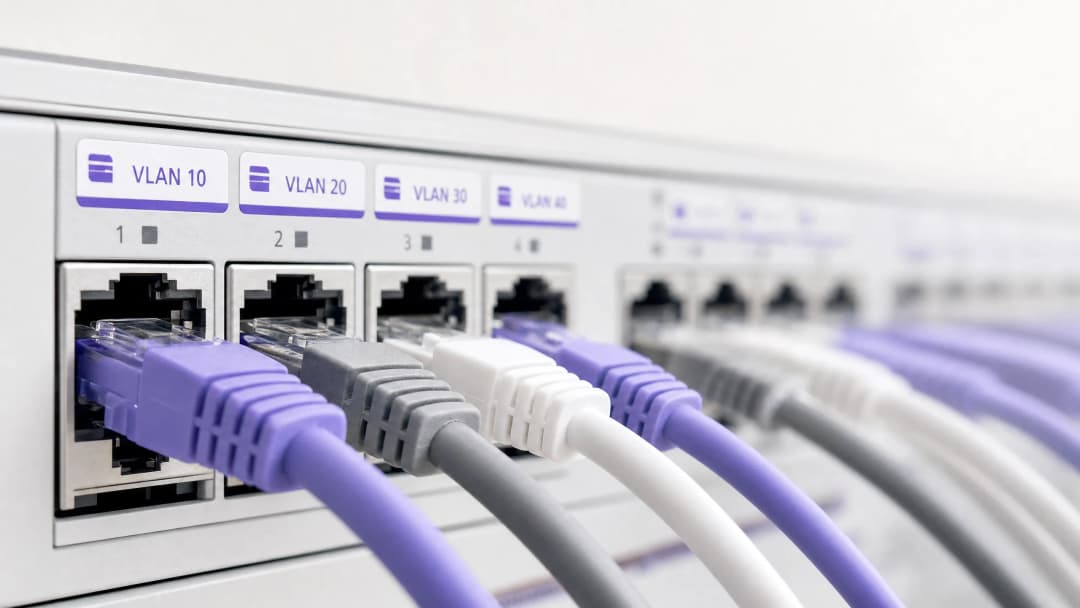
执行摘要
对于现代企业实体场所 - 从多站点 零售 组合和庞大的 酒店 资产到高密度体育场馆和 医疗保健 设施 - 网络分段已不再是可选的最佳实践;它是一项根本性的架构要求。在单一、平面的物理网络上管理多租户环境是一项关键的运营责任。它使敏感的企业数据面临横向安全威胁,因广播拥塞而降低无线性能,并使合规性审计变得复杂。
虚拟局域网(VLAN)定义在 IEEE 802.1Q 标准下,提供了在共享物理基础设施上隔离不同用户群、租户组织和设备类型所需的逻辑分区。通过将特定的无线服务集标识符(SSID)映射到专用 VLAN,网络架构师可以在有线交换机矩阵上实施细粒度的安全策略和流量控制。此外,实施通过 802.1X 和 RADIUS 进行动态 VLAN 分配等先进技术,使场所能够将其射频(RF)环境整合到单个安全的 SSID 中,从而消除因广播多个 SSID 而导致的严重性能下降。
本指南旨在为 IT 经理、网络架构师、CTO 和场所运营总监提供权威的技术参考。它提供了与厂商无关的、可操作的蓝图,用于设计和实施安全、可扩展的 VLAN 分段架构。通过将这些实践与 Purple 的企业 Guest WiFi 和 WiFi Analytics 平台相结合,组织可以实现强大的第 2 层隔离,简化 PCI-DSS 和 GDPR 合规性,并提供高能效、安全的无线体验,从而提高场所投资回报率。
技术深度剖析
从单租户网络过渡到安全的多租户架构,需要从扁平的、隐式信任模型转变到分段的、零信任框架。其目标是确保多个独立的租户、访客网络和运营设备在共享的物理基础设施上共存,而不会损害安全性、性能或隐私。
802.1Q VLAN 标记协议
逻辑网络分段的基础是虚拟局域网(VLAN),其在 IEEE 802.1Q 状态下进行了标准化。在标准以太网帧中,一个 802.1Q 报头在源 MAC 地址和以太网类型(EtherType)字段之间插入一个 4 字节的标记。该标记包含一个 12 位的 VLAN 标识符(VID),最多支持 4,094 个唯一的逻辑分段(VLAN ID 1 和 4095 为保留 ID)。
当无线客户端连接到接入点(AP)时,AP 会将该客户端的流量与特定的 SSID 相关联。然后,AP 将客户端的无线帧封装到以太网帧中,在将其转发到交换机端口之前,使用映射的 VLAN ID 对其进行标记。连接到 AP 的物理交换机端口必须配置为 802.1Q 干道端口(Trunk Ports),以便同时承载多个 VLAN 的流量;而连接到单租户有线设备的端口则配置为分配给单个 VLAN 的 接入端口(Access Ports)。
多个 SSID 的开销和性能成本
一种常见但存在缺陷的多租户分段方法是为每个租户广播一个唯一的 SSID(例如 TenantA_WiFi、TenantB_WiFi、TenantC_WiFi)。AP 广播的每个 SSID 都必须以最低的基本强制数据速率(通常为 1 Mbps 或 6 Mbps)发送信标帧(通常每 102.4 毫秒一次),以确保传统客户端的兼容性。
随着 SSID 数量的增加,管理开销所消耗的空口时间会大幅增长。在单个 AP 上广播 8 个 SSID 仅信标开销就可能消耗高达 30% 的可用无线空口时间,仅留下 70% 用于实际的用户数据。在购物中心或会议中心等高密度环境中,这会导致高延迟、丢包和严重的吞吐量下降。最佳实践要求将广播的 SSID 数量限制在每个射频频段最多 3 到 4 个。
通过 802.1X 和 RADIUS 进行动态 VLAN 分配
为了绕过多个 SSID 的限制,同时保持严格的租户隔离,网络架构师部署了动态 VLAN 分配(DVA)。该架构使用 IEEE 802.1X 认证,将无线环境整合到一个安全的 SSID(例如 Enterprise_Secure)中。
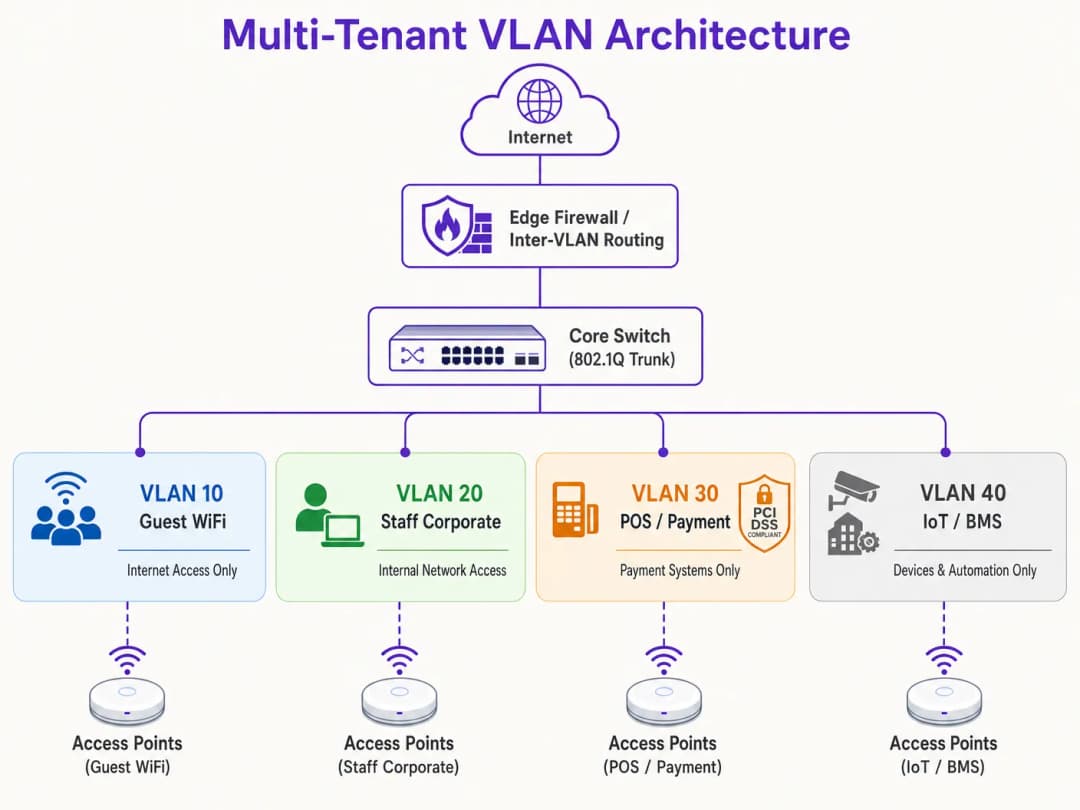
802.1X 框架包含三个关键组件:
- 客户端(Supplicant):运行支持 802.1X 软件的客户端设备(例如 Windows、macOS、iOS、Android)。
- 认证器(Authenticator):无线 AP 或无线局域网控制器(WLC),在获得授权之前阻止来自客户端的所有非认证流量。
- 认证服务器(Authentication Server):与身份存储(例如 Active Directory、LDAP 或云身份提供商)集成的远程用户拨号认证服务(RADIUS)服务器。
在认证握手过程中,客户端连接到单一安全 SSID 并提供凭据或客户端证书(通过 EAP-TLS 或 PEAP)。AP 将此信息转发给 RADIUS 服务器。验证成功后,RADIUS 服务器返回一个 Access-Accept 消息,其中包含特定的 IETF 标准属性,指示 AP 动态将客户端的会话分配到其指定的 VLAN:
- Tunnel-Type (64):设置为
VLAN(值 13) - Tunnel-Medium-Type (65):设置为
802(值 6) - Tunnel-Private-Group-ID (81):设置为特定的 VLAN ID 字符串(例如,租户 A 为
"101",租户 B 为"102")
AP 接收这些属性,解除端口阻塞,并将该客户端 MAC 地址的所有后续流量映射到指定的 VLAN。这允许来自不同组织的数百名用户连接到同一物理 AP 上的完全相同的 SSID,同时在第 2 层(Layer 2)保持完全隔离。有关部署此架构的详细步骤,请参阅 如何使用云 RADIUS 实施 802.1X 认证 指南。
广播域限制与第 2 层安全
通过将物理网络细分为较小的逻辑 VLAN,可以限制广播域。标准的网络协议(如 ARP、DHCP 和 mDNS)依赖于发送到广播域内每个设备的广播帧。在拥有数千台设备的大型扁平网络中,这种“杂音”会消耗大量的无线空口时间以及客户端设备上的处理周期。将广播限制在独立的 VLAN 子网内可以显著减少开销,防止广播风暴,并提高整体网络吞吐量。
此外,通过在访客 SSID 上启用 客户端隔离(也称为对等体屏蔽)来增强第 2 层隔离。这可以防止同一 VLAN 上的无线客户端之间直接通信,从而降低横向扫描、数据包嗅探和中间人攻击的风险。
对您的具体配置有疑问吗?
我们的团队与 80,000 多个场所的运营方、IT 经理和网络工程师保持合作。预约 20 分钟的通话,我们将为您展示同行是如何解决类似问题的。
实施指南
部署安全的多租户 VLAN 架构需要跨无线边缘、有线交换机架构和核心防火墙进行协同配置。以下分步部署蓝图适用于各主流厂商并符合企业标准。
第 1 步:逻辑设计与 IP 子网分配
在配置任何硬件之前,建立一个全面的逻辑网络图。为每个流量类别分配不同的 VLAN ID、IP 子网和安全区域。
| 分段名称 | VLAN ID | IP 子网 / CIDR | 安全区域 | 主要认证方式 |
|---|---|---|---|---|
| 网络管理 | VLAN 10 | 10.10.10.0/24 | 管理 | 静态 / 带外 |
| 访客 WiFi (Purple) | VLAN 20 | 172.16.0.0/20 | 访客(仅限互联网) | 开放 + Captive Portal |
| 企业员工 | VLAN 30 | 10.10.30.0/23 | 内部企业 | WPA3-Enterprise (802.1X) |
| IoT / 楼宇系统 | VLAN 50 | 10.10.50.0/24 | IoT (受限) | WPA3-SAE / 动态 PSK |
关键规则:绝不要将 VLAN 1 用于任何活动流量或管理。在所有中继端口上禁用 VLAN 1,并将 Native VLAN 更改为未使用、不可路由的 VLAN ID (例如 VLAN 999),以防止 VLAN 双重标记攻击。
步骤 2:有线交换矩阵配置
配置核心、汇聚和接入交换机以支持逻辑 VLAN 结构。直接连接到 AP 的交换机端口必须承载多个 VLAN,且必须配置为 802.1Q 中继端口。明确定义每个中继上允许哪些 VLAN,以最大程度地减少安全暴露面。连接到单个有线设备 (例如静态 POS 终端或前台电脑) 的端口必须设置为接入模式并分配给单个 VLAN。
步骤 3:无线 LAN 控制器和 AP 配置
将无线 SSID 映射到其各自的 VLAN 并配置边缘安全控制。对于访客 SSID,将安全配置为 Open 或 WPA3-Enhanced Open (OWE) 以提供机会性无线加密,启用 Client Isolation,并重定向到 Purple 的云管理 Captive Portal,以便进行符合 GDPR 的用户接入和分析。对于企业 SSID,配置带有 802.1X 的 WPA3-Enterprise,定义主、备 RADIUS 服务器地址,并启用 802.11r 快速 BSS 过渡和机会性密钥缓存以实现无缝漫游。对于 IoT 设备,部署带有强且定期轮换的密码的 WPA3-SAE,或者实施 Multi-PSK (MPSK) 以将唯一密钥分配给单个设备,并将其动态映射到子 VLAN。
步骤 4:核心防火墙和跨 VLAN 路由策略
VLAN 架构的安全完全取决于管理跨 VLAN 路由的防火墙规则。防火墙上必须强制执行严格的默认拒绝策略,仅允许明确许可的流量。

对于访客区域 (VLAN 20),允许通过端口 80 和 443 向 WAN 发送出站流量,并允许向 DNS 和 DHCP 服务发送 UDP 流量。拒绝所有流向内部子网的流量。对于 POS 区域 (VLAN 40),仅允许通过端口 443 向指定的支付网关 IP 地址发送出站 TCP 流量,并拒绝往返于所有其他 VLAN 的所有流量。对于 IoT 区域 (VLAN 50),仅允许向特定的制造商更新服务器和本地管理控制器发送出站流量,并拒绝所有其他内部和外部流量。
最佳实践
为确保长期稳定性、高性能和严密的安全,请遵循这些行业标准的 VLAN 设计原则。
管理平面隔离是不可协商的原则。绝不允许终端用户流量进入网络管理 VLAN。AP、交换机、路由器和 WLC 应在专用的、严格限制的管理 VLAN 上获取其 IP 地址。对此 VLAN 的访问必须仅限于获得授权的管理员设备,最好通过安全 VPN 或物理控制台端口进行。如果攻击者获取了管理平面的访问权限,他们就实际上控制了整个网络基础设施。
标准化 VLAN 架构对于多站点运营商至关重要。对于管理多站点业务的企业(例如拥有 500 家门店的零售连锁店或拥有 50 家物业的酒店品牌),应实施并在每个站点一致应用模板化的 VLAN 架构。在 IP 地址中使用一致的第三个八位字节来匹配 VLAN ID,可以简化整个分支机构的远程故障排除、WLC 模板部署和防火墙规则管理。这种方法还能大幅缩短新站点上线所需的时间。
DHCP 租期优化可防止 IP 地址耗尽。在高密度环境中,必须仔细管理 DHCP 租期。对于用户频繁进出的 Guest WiFi 细分网络,将 DHCP 租期设置为 1 到 2 小时。对于内部企业网络,8 到 24 小时的标准租期是合适的。确保本地 DNS 服务器不向访客网络开放;将访客 VLAN 配置为使用公共的、经过过滤的 DNS 解析器,以减轻内部服务器的负载。
合规性对齐必须从第一天起就融入到架构中。PCI-DSS 要求 1.2 强制规定安装防火墙,以限制持卡人数据环境 (CDE) 与其他网络之间的流量。通过将 POS 终端隔离在专用 VLAN 上,场馆的其余网络即可免于接受严格且成本高昂的 PCI 合规性评估。通过隔离访客用户流量并通过 Purple 的 Captive Portal 管理同意,即可满足 GDPR 的“设计保护隐私”原则。应在所有 SSID 中加速采用 WPA3,因为 WPA3-Personal 的同等同时认证 (SAE) 协议消除了 WPA2-PSK 中存在的离线字典攻击漏洞。有关访问控制架构的更多指导,请参阅 2026 年 10 大最佳网络访问控制 (NAC) 解决方案。
故障排除与风险缓解
即使是精心设计的 VLAN 架构也可能会遇到运行问题。以下是最常见的故障模式及其技术缓解措施。
VLAN泄漏和配置错误的Trunk端口是部署后技术支持工单最常见的主因。其症状是无线客户端成功通过特定SSID身份验证,但未能获取IP地址。根本原因是连接到AP的交换机端口配置错误:要么目标VLAN不在802.1Q trunk允许列表中,要么该VLAN尚未在交换机的本地数据库中创建。请验证交换机的trunk配置,并确保交换机端口上的允许VLAN列表与AP上配置的SSID相匹配。在进行任何更改后,务必对交换机配置进行审计,并在调试期间对其进行验证。
DHCP中继失败发生在新建的VLAN未在三层接口上配置相应的IP Helper地址时。由于DHCP请求是广播数据包,在没有中继代理的情况下,它们无法跨越VLAN边界。如果DHCP服务器与客户端位于不同的VLAN中,则必须将路由器或三层交换机配置为指向集中式DHCP服务器的IP Helper地址。
RADIUS证书过期是一个隐性风险,可能导致整个企业网络同时瘫痪。其症状是所有通过802.1X验证的客户端突然无法连接,且客户端设备上出现证书警告错误。请部署自动监控告警,在证书过期前30天触发,并实施自动化证书更新流程以防止人工遗漏。
SSID激增和射频拥塞表现为尽管信号强度极佳且回传速度快,但延迟高、速度慢。根本原因是管理开销和同信道干扰导致信道利用率过高。请整合SSID,转向动态VLAN分配,在密集的区域禁用部分AP上的2.4 GHz射频,并强制实施频谱导航,将双频客户端推向更干净的5 GHz和6 GHz频段。
-
投资回报率与业务影响
实施强大的VLAN分段策略可以为场所运营商和企业组织带来显著且可衡量的业务价值。
PCI审计范围最小化可实现直接的成本节约。对于处理信用卡支付的场所,扁平化的网络会将整个基础设施纳入PCI DSS合规性范围。这意味着每个交换机、AP、服务器和办公PC都必须接受审计,每年在合规性评估、渗透测试和行政开销上花费数万英镑。通过对网络进行分段,并利用严格的防火墙控制将持卡人数据环境隔离到专用的POS VLAN中,审计范围将仅限于该VLAN。这种范围的缩小最多可降低70%的合规成本,并大幅降低违规受罚的风险。
减轻泄露成本是最高价值的安全成果。严重数据泄露的主要诱因是横向移动,即攻击者获得对低安全级别设备的访问权限,并在扁平网络中穿行,从而入侵高价值的数据库或 POS 系统。VLAN 划分结合严格的跨 VLAN 防火墙规则,可以完全消除这一攻击途径。如果 VLAN 50 上的某个 IoT 设备被入侵,攻击者将被困在该逻辑网段内。泄露的爆炸半径被降至最低,从而保护了敏感的企业资产。
访客分析与收入变现将网络从成本中心转变为战略资产。合理划分的网络允许场所运营商安全地提供高质量的 访客 WiFi,而不会危及内部安全。通过将访客流量通过专用 VLAN 路由到 Purple 的平台,场所可以通过与 CRM 和营销自动化平台直接集成的品牌专属 Captive Portal 捕获宝贵的第一手客户数据。这实现了精准的营销活动,提高了客户忠诚度,并允许运营商通过分级带宽升级和在 Captive Portal 登录页面上投放广告来对其无线基础设施进行变现。如需深入了解分析如何推动业务成果,请参阅 Purple 的 WiFi 📊 分析 平台文档。
参考文献
关键定义
VLAN (Virtual Local Area Network)
网络设备的逻辑分组,它们像在同一个物理 LAN 上一样进行通信,无论其物理位置如何。根据 IEEE 802.1Q 的定义,VLAN 使用嵌入在以太网帧头中的 12 位 VLAN 标识符 (VID) 将单个物理交换矩阵划分为多个隔离的广播域。
IT 团队将 VLAN 视为在共享物理基础设施上隔离访客、员工、POS 和物联网流量的主要机制。如果没有 VLAN,所有设备都共享一个广播域,从而带来安全和性能风险。
802.1Q Trunk Port
一种交换机端口配置,通过为每个以太网帧标记其对应的 VLAN ID,来配置为同时承载多个 VLAN 的流量。中继端口在交换机之间以及向接入点传输已标记的帧,而接入端口仅承载单个 VLAN 的未标记帧。
网络工程师在连接到接入点的交换机接口以及交换机之间的上行链路端口上配置中继端口。配置错误的中继端口 - 即允许的 VLAN 列表不包含所需的 VLAN - 是部署后连接失败的最常见原因。
动态 VLAN 分配 (DVA)
一种利用 IEEE 802.1X 认证和 RADIUS 服务器,根据无线客户端的认证身份将其动态分配到特定 VLAN 的架构,而不是根据其连接的 SSID。RADIUS 服务器在 Access-Accept 消息中返回 IETF 标准属性(Tunnel-Type、Tunnel-Medium-Type、Tunnel-Private-Group-ID),以指示 AP 分配哪个 VLAN。
DVA 是多租户建筑的推荐方法,在这些建筑中,广播多个 SSID 会降低射频性能。它允许单个 SSID 为多个租户组织提供服务,并在它们之间实现完全的第 2 层隔离。
RADIUS (远程用户拨号认证服务)
一种客户端 - 服务器网络协议,为网络访问提供集中式认证、授权和计费 (AAA) 管理。在 WiFi 环境中,无线控制器充当 RADIUS 客户端,将来自无线客户端的认证请求转发给 RADIUS 服务器,RADIUS 服务器会根据身份源(Active Directory、LDAP 等)验证凭据,并返回包括 VLAN 分配在内的授权属性。
RADIUS 是企业 WiFi 安全的骨干。IT 团队部署 RADIUS 服务器(例如 Microsoft NPS、FreeRADIUS 或云 RADIUS 服务)来执行每个用户和每个设备的网络策略,包括动态 VLAN 分配和基于证书的认证。
PCI DSS (支付卡行业数据安全标准)
一套安全标准,旨在确保所有接受、处理、存储或传输信用卡信息的公司维持安全的环境。PCI DSS 要求 1 强制要求安装和维护网络安全控制措施,包括限制持卡人数据环境 (CDE) 与其他网络之间流量的防火墙。
拥有 POS 终端或支付处理系统的场所运营商必须遵守 PCI DSS。正确的 VLAN 隔离将 CDE 隔离到专用 VLAN,从而将 PCI 审计的范围缩小到仅该网段以及管理该网段的防火墙策略,而不是整个网络。
广播域
将接收该组中任何一个设备发送的广播帧的所有网络设备的集合。在扁平、未分割的网络上,所有设备共享一个广播域。VLAN 将网络划分为更小的广播域,将广播流量(ARP、DHCP、mDNS)限制在仅该 VLAN 内的设备中。
在拥有数百或数千个连接设备的高密度场所中,单个大型广播域会产生大量的广播流量,从而消耗无线空口时间并降低性能。通过 VLAN 减小广播域大小是一项主要的性能优化技术。
WPA3-Enterprise
当前的企业级 WiFi 安全标准,使用 IEEE 802.1X 认证和 EAP(可扩展身份验证协议)进行每用户或每设备认证。WPA3-Enterprise 提供 128 位(标准)或 192 位(高安全模式)加密保护,并消除了与 WPA2 4 次握手相关的漏洞。
IT 团队应在所有公司和受监管的 SSID(员工、POS)上部署 WPA3-Enterprise。它需要一台 RADIUS 服务器以及客户端证书 (EAP-TLS) 或用户名/密码凭据 (PEAP-MSCHAPv2)。WPA3-Enterprise 是符合 PCI DSS 标准的无线部署所需的认证标准。
客户端隔离(点对点阻断)
一种无线接入点功能,可防止连接到同一 SSID 的设备在二层(Layer 2)直接进行通信。启用后,所有客户端之间的流量都会在 AP 处被阻断,从而强制流量在到达另一个设备之前必须经过防火墙。
客户端隔离是所有访客 WiFi SSID 的强制配置。如果没有它,访客网络上的恶意用户就可以扫描、探测和攻击同一 SSID 上的其他访客设备。这也是遵守 GDPR 的一项要求,因为它可以防止一个访客拦截另一个访客的未加密流量。
MAC Authentication Bypass (MAB)
一种后备身份验证机制,允许无法进行 802.1X 身份验证的设备(如打印机、智能电视和物联网传感器)使用其 MAC 地址对网络进行身份验证。RADIUS 服务器中预先存有授权设备的 MAC 地址,并在 MAB 请求成功时返回相应的 VLAN 分配。
IT 团队在多租户环境中为物联网(IoT)和传统设备使用 MAB。由于 MAC 地址可以被伪造,MAB 应该始终与所分配 VLAN 上的严格防火墙 ACL 相结合,从而将设备的网络访问限制在它所需要的特定外部服务中。
Native VLAN
分配给 802.1Q 干道端口(Trunk Port)上未标记(Untagged)流量的 VLAN。在大多数交换机上,默认情况下 VLAN 1 是 native VLAN。到达干道端口的未标记帧会被分配到 native VLAN。这是一个众所周知的 VLAN 双重标记跳转(VLAN hopping)攻击向量,攻击者可以通过发送双重标记的帧来脱离其所在的 VLAN。
最佳实践是将所有干道端口(Trunk Ports)上的 native VLAN 更改为未使用的、不可路由的 VLAN ID(例如 VLAN 999),并确保没有活动设备被分配到 VLAN 1。这是任何符合 PCI-DSS 规范的网络设计中强制执行的安全加固步骤。
应用实例
一家拥有 12 家分店、共 350 间客房的酒店集团需要整合其网络基础设施。目前,每家分店都运行着一个扁平网络,为客房、员工笔记本电脑、餐厅 POS 终端、CCTV 摄像机、HVAC 控制器以及一个拥有多个并发活动举办方的会议中心提供服务。IT 总监指出,整个网络都在 PCI DSS 合规范围内,导致该集团每年在审计费用和整改工作上花费约 45,000 英镑。应该如何重新设计该网络?
该解决方案是采用标准化模板在所有 12 家分店一致部署的五 VLAN 架构。VLAN 10(管理,10.XX.10.0/24)仅承载交换机、AP 和 WLC 管理流量,且仅能通过专用管理 VPN 访问。VLAN 20(访客 WiFi,172.16.0.0/20)通过 Purple 的 Captive Portal 路由所有访客流量,以进行符合 GDPR 的准入和分析,并启用客户端隔离以及 2 小时的 DHCP 租期以防止 IP 地址耗尽。VLAN 30(员工办公,10.XX.30.0/23)使用 WPA3 配合 802.1X 认证,通过云 RADIUS 服务对接该集团的 Azure AD。VLAN 40(POS/支付,192.168.40.0/24)是严格隔离的 PCI-CDE 分段,采用默认拒绝的防火墙策略,仅允许向支付网关提供商的 IP 地址发送出站 HTTPS 流量。VLAN 50(IoT/BMS,10.XX.50.0/24)隔离了所有 CCTV、HVAC、智能锁和建筑管理设备,且出口过滤限制为仅允许访问各自的管理平台。会议中心则通过 WLC 控制面板配置临时活动 VLAN(VLAN 60 - 99)来处理,每个 VLAN 都配有自定义的 Purple Captive Portal 和带宽限制。标准化的第三段 IP 方案(XX = 站点编号)使 NOC 团队仅凭 IP 地址就能识别任何设备的站点和分段,从而大幅缩短故障排查时间。
一个拥有 220 家门店的全国性零售连锁店正面临大范围的 WiFi 性能投诉。尽管每家门店都拥有 200 Mbps 的光纤连接,但客户和员工反馈的网速均低于 5 Mbps。一项审计发现,每家门店的接入点都在广播 9 个 SSID:一个用于客户,一个用于员工,一个用于 POS,一个用于 CCTV,一个用于数字标牌,一个用于库存管理手持设备,一个用于第三方物流合作伙伴,一个用于咖啡馆特许经营店,以及一个来自以前提供商且从未停用的旧 SSID。应该如何重新设计网络,以在保持安全性的同时解决性能问题?
该解决方案分为三个阶段的整合。阶段 1(立即执行):立即停用旧的 SSID 以及任何活跃客户端为零的 SSID。单是这一项就能将信标开销从 9 个 SSID 降至 7 个。阶段 2(30 天内推广):使用通过 802.1X 和 RADIUS 实现的动态 VLAN 分配,将员工、库存管理手持设备、物流合作伙伴和数字标牌 SSID 整合到一个单一的企业级 SSID 中。每个用户组使用其企业凭据或设备证书进行身份验证,然后 RADIUS 服务器返回相应的 Tunnel-Private-Group-ID 属性,将其分配给其专用 VLAN(员工分配至 VLAN 30,物联网/手持设备分配至 VLAN 50,物流分配至 VLAN 60,标牌分配至 VLAN 70)。这使 SSID 数量从 7 个降至 4 个。阶段 3(60 天内推广):将咖啡馆特许经营店迁移到具有独立 Purple captive portal 实例的专用 VLAN,并将 POS 和 CCTV SSID 整合到各自隔离的 VLAN 中。最终的架构广播 3 个 SSID:一个具有动态 VLAN 分配的企业级 SSID、一个通过 Purple 的 captive portal 实现的访客/客户 WiFi,以及一个 POS SSID。在所有 AP 上启用频段引导以将双频客户端推向 5 GHz,并在访客 VLAN 上配置单客户端速率限制(下行 10 Mbps),以防止任何单一用户饱和上行链路。
练习题
Q1. 一家会议中心运营商管理着一个面积为 50,000 平方英尺、拥有 200 个接入点(AP)的场馆。他们目前广播 6 个 SSID:一个用于活动参会者、一个用于参展商、一个用于场馆工作人员、一个用于音视频(AV)设备、一个用于餐饮 POS 终端,以及一个用于楼宇管理系统。IT 经理报告称,在大型活动期间 WiFi 性能很差,尽管有 1 Gbps 的光纤上行链路,但客户端的平均速度却降到了 3 Mbps 以下。该场馆同时还在准备 PCI-DSS 审计。您将如何重新设计无线架构,以解决性能和合规性问题?
提示:思考哪些 SSID 可以使用动态 VLAN 分配进行整合、哪些流量类型具有 PCI-DSS 影响,以及 SSID 信标开销(Beacon Overhead)如何在密集的部署环境中导致性能问题。
查看标准答案
该重新设计通过为企业网段采用动态 VLAN 分配,将 6 个 SSID 整合为 3 个。SSID 1(活动参会者):使用 WPA3-Enhanced Open 的开放式 SSID,映射到 VLAN 20,通过 Purple 的 Captive Portal 进行符合 GDPR 要求的准入,并进行每客户端限速(下行 10 Mbps)。启用客户端隔离。SSID 2(企业安全):使用 802.1X 配合动态 VLAN 分配的单个 WPA3-Enterprise SSID。参展商使用在注册时发放的临时凭证进行身份验证,并被分配到 VLAN 60(仅限互联网、隔离)。场馆工作人员使用企业 AD 凭证进行身份验证,并被分配到 VLAN 30(内部访问)。AV 设备使用 MAC Authentication Bypass (MAB),并被分配到 VLAN 50(限制仅能访问 AV 管理服务器)。SSID 3(POS 安全):用于餐饮 POS 终端的专用 WPA3-Enterprise SSID,映射到 VLAN 40(PCI-CDE)。严格的防火墙规则仅允许出方向的 HTTPS 流量到支付网关。在可能的情况下,将楼宇管理系统迁移到 VLAN 50 上的有线连接;如果必须使用无线,则迁移到专用的物联网 SSID。将 SSID 从 6 个减少到 3 个可以消除大约 15% - 20% 的信标开销(Beacon Overhead),从而直接提高可用的空口时间(Airtime)和客户端吞吐量。PCI 审计范围被缩减至 VLAN 40 及其防火墙策略,满足 PCI-DSS 要求 1.2 和 1.3。
Q2. 一位网络架构师正在为一座包含 80 个单元的新型商住两用楼宇设计 WiFi 基础设施。该大楼将容纳 15 个独立的商业租户、一家一楼咖啡馆以及共享联合办公空间。每个租户都要求与其他租户实现完全的网络隔离、拥有自己的带宽分配,并能够连接自己的设备。大楼业主希望集中管理整个基础设施,并在 30 分钟内完成新租户的入驻。您会推荐什么架构?关键的设计决策是什么?
提示:考虑为每个租户设置专用 SSID 和 VLAN,与使用单个 SSID 进行动态 VLAN 分配之间的折衷方案。思考快速入驻租户和集中管理的操作要求。
查看标准答案
推荐的架构是采用动态 VLAN 分配模型,为所有商业租户提供单个企业级 SSID,并为咖啡馆和联合办公空间辅以独立的访客 SSID。每个租户分配一个唯一的 VLAN ID(例如,租户为 VLAN 101-115,联合办公为 VLAN 200,咖啡馆为 VLAN 201)。RADIUS 服务器与支持每租户用户目录的云身份提供商集成。当新租户入驻时,管理员在核心交换机上创建一个新的 VLAN,为新子网配置 DHCP 范围,将该 VLAN 添加到所有汇聚端口(trunk ports)的允许列表中,在身份提供商中创建一个新的租户组,并配置 RADIUS 服务器以为该租户的用户返回新的 VLAN ID。这整个过程可以模板化,并在 30 分钟内完成。通过默认拒绝(default-deny)的跨 VLAN 防火墙策略,每个租户的 VLAN 都与所有其他租户的 VLAN 隔离。每个租户的带宽策略通过 WLC 上的 QoS 配置文件执行,从而保证每个租户获得其合同约定的带宽层级。咖啡馆和联合办公访客 SSID 通过 VLAN 200 路由到 Purple 的 Captive Portal,为大楼业主提供访客分析和品牌化的入驻体验。关键的设计决策是使用单个企业级 SSID,而不是为每个租户设置单独的 SSID,因为后者需要广播多达 15 个 SSID,这会在高密度的大楼环境中严重降低射频(RF)性能。
Q3. 一家大型连锁零售商的 IT 经理在日常网络审计中发现,在 300 家门店的所有汇聚端口上,VLAN 1 都被用作本征 VLAN,并且用于访问无线控制器的管理 SSID 与访客 WiFi 网络处于同一子网中。安全团队已将其标记为高危漏洞。应该采取哪些紧急修复步骤?如果这些问题不予解决,会有什么风险?
提示:考虑以 VLAN 1 作为本征 VLAN 所促成的特定攻击向量(VLAN 跳跃攻击),以及从访客网络可以访问管理流量的影响。按风险严重程度对修复步骤进行优先级排序。
查看标准答案
按优先级排序的即时修复步骤:步骤 1(危急 - 当天):隔离管理 SSID。如果可从访客网络访问,请完全禁用管理 SSID。将所有无线控制器管理访问权限迁移到专用管理 VLAN(例如 VLAN 10),并通过站点到站点 VPN 或专用管理工作站限制仅允许管理员设备访问。这消除了最危急的风险:访客用户或访客网络上的攻击者获取无线控制器的访问权限,并重新配置或禁用整个无线基础设施。步骤 2(高 - 1 周内):将所有 trunk 端口上的本征 VLAN 从 VLAN 1 更改为未使用的、不可路由的 VLAN(例如 VLAN 999)。确保没有活动设备分配给 VLAN 1。这可以缓解 VLAN 双标记跳跃攻击,即攻击者发送双重标记的 802.1Q 帧以逃逸其 VLAN 并获取对另一个 VLAN 流量的访问权限。步骤 3(中 - 30 天内):对所有 300 家门店进行全面的 trunk 端口审核,以验证每个 trunk 端口上允许的 VLAN 列表已明确定义并与设计文档相匹配。从 trunk 端口中删除该位置不需要的任何 VLAN。不解决这些问题的风险非常严重:访客 WiFi 网络上的攻击者可能会接触到无线控制器管理界面,修改 SSID 配置,提取预共享密钥,重定向流量或禁用整个无线基础设施。VLAN 1 本征 VLAN 漏洞可能允许攻击者逃逸访客 VLAN 并访问 POS 终端或内部服务器,从而导致违反 PCI-DSS,并可能面临每月高达 100,000 英镑的非合规性罚款。
继续阅读本系列
为多租户办公楼设计 WiFi 网络
本指南为 IT 经理、网络架构师和 CTO 提供了一个与厂商无关的蓝图,用于在多租户办公楼中设计可扩展、安全且隔离的 WiFi 网络。它涵盖了 IEEE 802.1Q 下的 VLAN 分段、通过 802.1X 和 RADIUS 进行的动态 VLAN 分配、针对高密度环境的 RF 规划,以及 GDPR 和 PCI-DSS 下的合规性考量。场所运营方和楼宇管理员将获得可操作的架构指导、真实案例研究,以及在部署前需要避免的配置陷阱。
平均无罪时间:如何证明问题不在 WiFi
平均无罪时间 (MTTI) 是衡量 IT 团队需要花费多少时间来证明网络故障并非其责任的关键指标。本指南详细介绍了一种包含五个步骤的可观测性方法,旨在消除多租户环境中的相互推诿,用共享证据代替指责,从而缩短平均解决时间 (MTTR)。
共享 WiFi 基础设施的法律与合规性要求
本权威技术参考指南概述了部署和管理共享 WiFi 基础设施的关键法律、法规和架构要求。它为 IT 经理、网络架构师和场所运营商提供了切实可行的框架,以使用企业标准确保强大的数据保护、严格的支付安全合规性以及高性能的租户隔离。
对您的具体配置有疑问吗?
我们的团队与 80,000 多个场所的运营方、IT 经理和网络工程师保持合作。预约 20 分钟的通话,我们将为您展示同行是如何解决类似问题的。