
Zero Trust Network Access: Implementierungsstrategien und Best Practices
Dieses technische Referenzhandbuch bietet IT-Leitern und Netzwerkarchitekten einen pragmatischen Entwurf für die Implementierung von Zero Trust Network Access (ZTNA) in Unternehmensumgebungen. Es umfasst Kernarchitekturen, Mikrosegmentierungsstrategien und schrittweise Bereitstellungsmethoden, um komplexe Umgebungen ohne Beeinträchtigung des Betriebs abzusichern.
Video overview
Diesen Leitfaden anhören
Podcast-Transkript ansehen
Teil unserer Kernserie: Enterprise WiFi Sicherheitsleitfaden →

Executive Summary
Das traditionelle perimeterbasierte Sicherheitsmodell ist veraltet. Für geschäftliche Veranstaltungsorte - von Hotels mit 500 Zimmern über große Einzelhandelskomplexe bis hin zu hochfrequentierten Stadien - ist die Annahme, dass der interne Netzwerkverkehr von Natur aus sicher ist, eine kritische Schwachstelle. Zero Trust Network Access (ZTNA) ersetzt diese fehlerhafte Annahme durch ein strenges, identitätsgesteuertes Framework: Alles wird verifiziert, standardmäßig wird niemandem vertraut, und auf jeder Ebene wird das Prinzip der minimalen Rechtevergabe durchgesetzt.
Dieser Leitfaden bietet IT-Managern, Netzwerkarchitekten und Leitern des operativen Betriebs eine praktische Anleitung für die Implementierung von Zero Trust Network Access. Er verzichtet auf akademische Theorie und konzentriert sich auf die praktische Bereitstellung: die Integration von Identitätsanbietern, die Implementierung von Mikrosegmentierung in komplexen Legacy-Umgebungen und die Überprüfung des Gerätestatus sowohl für verwaltete Unternehmens-Endpunkte als auch für nicht verwaltete Gastgeräte. Durch die Implementierung dieser Strategien können Veranstaltungsorte ihre Guest WiFi-Infrastruktur sichern, Zahlungssysteme zur Einhaltung von PCI-DSS isolieren und kritische Betriebstechnologie schützen, ohne das Nutzererlebnis zu beeinträchtigen.
Technischer Deep Dive
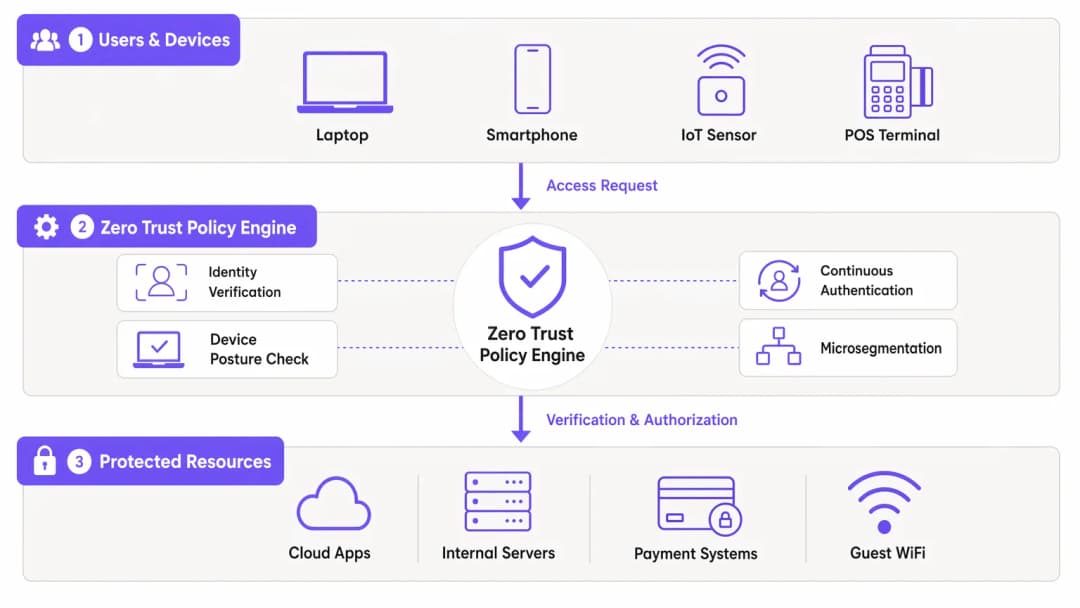
Eine robuste Zero Trust Network Access Architektur basiert auf der Koordination mehrerer Kernkomponenten, wodurch der Sicherheitsperimeter von der Netzwerkgrenze auf die individuelle Identität und das Gerät verlagert wird.
Identitätsbasierte Zugriffskontrolle
Im ZTNA-Modell basieren Zugriffsentscheidungen vollständig auf einer verifizierten Identität und nicht auf dem Netzwerkstandort. Ein Benutzer, der sich mit einem Switch-Port im Backoffice verbindet, erhält nicht mehr inhärentes Vertrauen als ein Gast, der sich über einen öffentlichen Access Point einwählt. In Veranstaltungs- und Standortumgebungen müssen sich die Identitätsrichtlinien an sehr unterschiedliche Benutzerkategorien anpassen.
Für Mitarbeiter und Auftragnehmer basiert die Authentifizierung in der Regel auf 802.1X, das an ein zentrales Verzeichnis (wie Active Directory oder Azure AD) angebunden ist. Für Gastbenutzer erfolgt die Identitätsprüfung über Captive Portals oder Social-Login-Mechanismen. Die Plattform von Purple fungiert in diesem Kontext als zentraler Identitätsanbieter, der die verifizierte Identität zum Zeitpunkt der Verbindung erfasst und diesen Kontext an nachgelagerte Policy Enforcement Points weitergibt.
Überprüfung des Gerätestatus (Device Posture)
Identität allein reicht nicht aus - auch das verbindende Endgerät muss überprüft werden. Die Überprüfung des Gerätestatus bewertet den Sicherheitsstatus des Geräts, bevor Zugriff gewährt wird. Bei verwalteten Unternehmensgeräten umfasst dies die Überprüfung auf aktive Endpoint-Sicherheit, OS-Patch-Levels und MDM-Registrierung.
Für unverwaltete Geräte - wie diejenigen im Guest WiFi Netzwerk - ist die Statusprüfung eingeschränkt, was eine Default-Deny-Richtlinie für das interne Routing erfordert. Diese Geräte werden in ein isoliertes Segment mit reinem Internetzugang verschoben. Die Richtlinien-Engine bewertet diese Parameter dynamisch zum Zeitpunkt der Verbindung und kontinuierlich während der gesamten Sitzung.
Kontinuierliche Authentifizierung und Bedrohungserkennung
Herkömmliche Netzwerke authentifizieren sich einmal und halten die Sitzung unbegrenzt aufrecht. ZTNA schreibt eine kontinuierliche Authentifizierung vor. Die Richtlinien-Engine überwacht das Sitzungsverhalten, das Datenvolumen und die Protokollnutzung. Anomale Muster lösen eine erneute Authentifizierung oder eine sofortige Beendigung der Sitzung aus. Diese Telemetriedaten werden an SIEM-Plattformen gesendet, was eine Bedrohungserkennung in Echtzeit und eine schnelle Reaktion auf Versuche von Lateral Movement ermöglicht.
Haben Sie Fragen zu Ihrem spezifischen Setup?
Unser Team arbeitet mit Standortbetreibern, IT-Managern und Netzwerktechnikern an über 80.000 Standorten zusammen. Buchen Sie ein 20-minütiges Gespräch und wir zeigen Ihnen, wie andere diese Herausforderungen gelöst haben.
Implementierungsleitfaden
Die Bereitstellung von ZTNA in einer Live-Standortumgebung erfordert einen schrittweisen, systematischen Ansatz, um Betriebsstörungen zu vermeiden.
Schritt 1: Erkennung und Kategorisierung
Bevor Sie Richtlinien ändern, müssen Sie ein umfassendes Inventar aller Geräte, Benutzer und Workloads erstellen. In Branchen wie dem Hospitality Bereich oder dem Retail Sektor sind undokumentierte IoT-Geräte und Altsysteme an der Tagesordnung. Nutzen Sie Tools zur Netzwerk-Erkennung, um bestehende Datenflüsse abzubilden und alle verbundenen Endpunkte zu identifizieren.
Schritt 2: Segmentierungs-Design
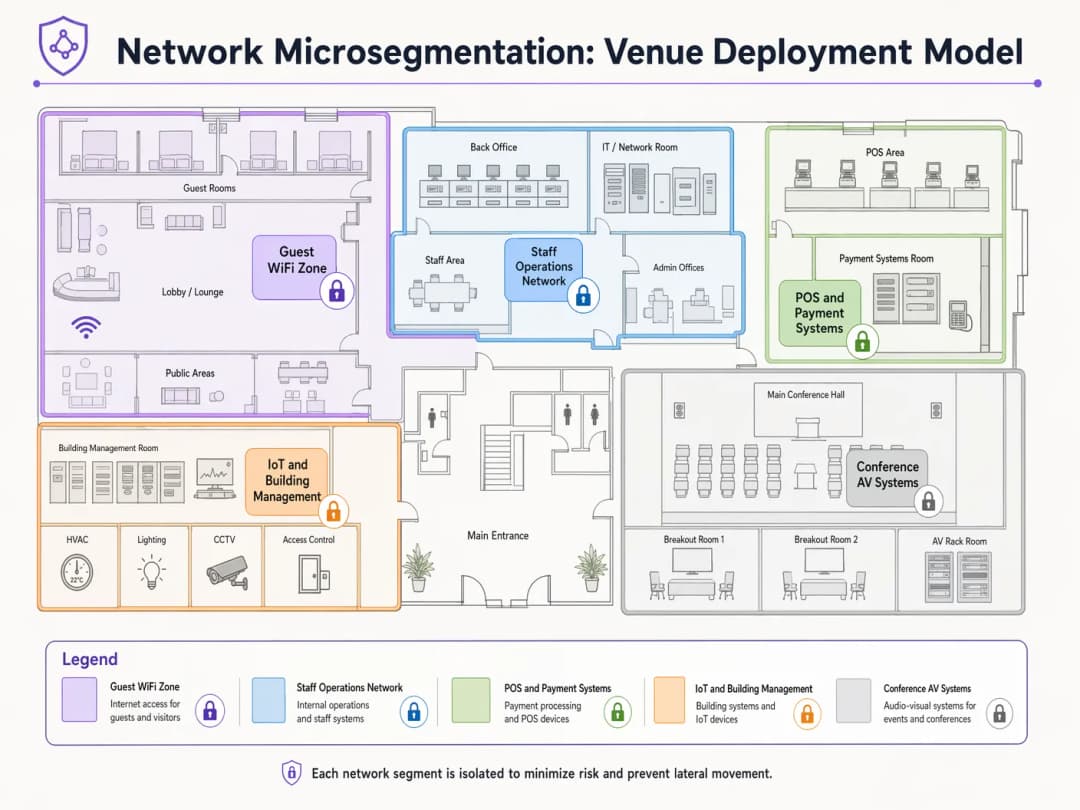
Ordnen Sie Netzwerksegmente basierend auf Geschäftsfunktionen und Compliance-Anforderungen zu. Ein typischer Standort erfordert separate Segmente für:
- Guest WiFi: Nur Internetzugang.
- Mitarbeiter-Betrieb: Zugriff auf interne Anwendungen.
- Zahlungssysteme (POS): Vollständig isoliert für PCI-DSS-Compliance.
- Gebäudemanagement/IoT: Beschränkt auf essenzielle Steuerungsserver.
Definieren Sie die zulässigen Datenströme zwischen diesen Segmenten mithilfe eines Default-Deny-Ansatzes.
Schritt 3: Identitätsintegration
Integrieren Sie Ihre ZTNA-Policy-Engine mit Ihren Identitätsanbietern. Verbinden Sie Unternehmensverzeichnisse für Mitarbeiter und konfigurieren Sie Plattformen für den Gastzugang, um Gastidentitäten zu überprüfen. Stellen Sie sicher, dass profilbasierte Authentifizierungsmechanismen robust und skalierbar sind, um Spitzenkapazitäten am Standort zu bewältigen.
Schritt 4: Richtlinien-Rollout (Überwachungsmodus)
Implementieren Sie Richtlinien zunächst im reinen Beobachtungsmodus. Dies bietet Transparenz über den Datenverkehr, der blockiert würde, und ermöglicht es Ihnen, Regeln zu verfeinern, ohne legitime Geschäftsprozesse zu stören. Gehen Sie nach einem Überwachungszeitraum von 2 bis 4 Wochen in den Durchsetzungsmodus über.
Best Practices
- Gehen Sie vom Ernstfall aus (Assume Breach): Entwerfen Sie Ihr Netzwerk unter der Annahme, dass ein Angreifer bereits einen Endpunkt kompromittiert hat. Mikrosegmentierung gegen laterale Bewegungen ist Ihre primäre Verteidigung.
- Nutzen Sie 802.1X und WPA3: Erzwingen Sie eine starke Authentifizierung und Verschlüsselung auf der Zugriffsebene. Weitere Unterstützung bei der Bereitstellung finden Sie im Leitfaden Troubleshooting Windows 11 802.1X Authentication Issues.
- Automatisieren Sie Gastidentitäten: Nutzen Sie Plattformen, die Gastidentitäten nahtlos erfassen und verifizieren, ohne übermäßige Hürden zu schaffen. Siehe Securing Guest WiFi Networks: Best Practices and Implementation.
- Isolieren Sie IoT-Geräte: IoT-Sensoren und Gebäudemanagementsysteme benötigen selten Internetzugang oder segmentübergreifendes Routing. Isolieren Sie diese vollständig.
Fehlerbehebung und Risikominderung
Das häufigste Fehlerszenario bei ZTNA-Implementierungen ist eine aggressive Durchsetzung von Richtlinien ohne vorherige ausreichende Analyse. Dies blockiert geschäftskritischen Datenverkehr und erzwingt Projekt-Rollbacks.
Risiko: Legacy-Geräte (z. B. ältere POS-Terminals oder HLK-Steuerungen) unterstützen möglicherweise keine modernen Authentifizierungsprotokolle. Minderung: Nutzen Sie MAC Authentication Bypass (MAB) in Kombination mit strenger Mikrosegmentierung und Profilerstellung, um diese Geräte sicher einzubinden, ohne die gesamte ZTNA-Architektur zu gefährden.
Risiko: Ein hoher Overhead bei der Richtliniendurchsetzung beeinträchtigt die Leistung des Gastnetzwerks. Abmilderung: Leiten Sie den Gastdatenverkehr direkt am Edge ins Internet um, sodass interne Deep-Inspection-Engines umgangen werden, es sei denn, spezifische Bedrohungserkenntnisse erfordern etwas anderes.
ROI und geschäftliche Auswirkungen
Die Implementierung von ZTNA bietet einen messbaren Geschäftswert, der über die Risikominderung hinausgeht:
- Reduzierte Compliance-Kosten: Durch die vollständige Isolierung der Karteninhaber-Datenumgebung (CDE) mittels Mikrosegmentierung reduzieren Veranstaltungsorte den Umfang und die Kosten von PCI-DSS-Audits erheblich.
- Operative Resilienz: Die Begrenzung von Sicherheitsvorfällen auf ein einzelnes Segment verhindert veranstaltungsweite Ausfälle und sichert die Einnahmequellen in Hauptbetriebszeiten.
- Optimierte Analysen: Detaillierte Identitäts- und Verkehrsdaten, die durch ZTNA-Richtlinien generiert werden, bereichern die WiFi Analytics und bieten tiefere Einblicke in das Nutzerverhalten und die Netzwerknutzung.
Schlüsseldefinitionen
Mikrosegmentierung
Die Praxis der Aufteilung eines Netzwerks in isolierte Segmente, um die Angriffsfläche zu verringern und laterale Bewegungen zu verhindern.
Kritisch für IT-Teams in Veranstaltungsorten, um POS-Systeme vom Guest WiFi und den Mitarbeiternetzwerken zu isolieren, die Compliance zu gewährleisten und potenzielle Sicherheitsverletzungen einzudämmen.
Device Posture Verification
Der Prozess der Bewertung des Sicherheitsstatus eines Endpunkts (z. B. OS-Version, Antivirus-Status), bevor der Netzwerkzugriff gewährt wird.
Wird verwendet, um sicherzustellen, dass nicht aktualisierte oder kompromittierte Mitarbeitergeräte nicht auf sensible interne Anwendungen zugreifen können.
Kontinuierliche Authentifizierung
Die fortlaufende Überwachung der Sitzung eines Benutzers, um sicherzustellen, dass seine Identität und sein Verhalten gültig und unauffällig bleiben.
Unerlässlich in Umgebungen mit hoher Fluktuation wie Stadien, um Session-Hijacking oder ungewöhnliche Datenabflussversuche zu erkennen.
IEEE 802.1X
Ein Standard für die portbasierte Netzwerkzugriffskontrolle, der einen Authentifizierungsmechanismus für Geräte bereitstellt, die sich mit einem LAN oder WLAN verbinden möchten.
Das grundlegende Protokoll, das von Netzwerkarchitekten verwendet wird, um Unternehmensgeräte sicher zu authentifizieren.
Laterale Bewegung
Techniken, mit denen sich Cyberangreifer schrittweise durch ein Netzwerk bewegen, während sie nach wichtigen Daten und Systemen suchen.
Die primäre Bedrohung, die ZTNA und Mikrosegmentierung in flachen Altsystem-Netzwerken neutralisieren sollen.
Software-Defined Perimeter (SDP)
Ein Sicherheitsansatz, der mit dem Internet verbundene Infrastrukturen verbirgt, sodass externe Parteien und Angreifer sie nicht sehen können, unabhängig davon, ob sie lokal oder in der Cloud gehostet werden.
Wird oft als technischer Implementierungsmechanismus für die Bereitstellung von ZTNA-Zugriffsrichtlinien verwendet.
Zugriff mit minimalen Rechten
Das Sicherheitsprinzip, Benutzern und Systemen nur die minimalen Zugriffsberechtigungen zu gewähren, die zur Ausführung ihrer erforderlichen Funktionen notwendig sind.
Das leitende Richtlinien-Framework, das IT-Manager bei der Definition von Regeln innerhalb der ZTNA-Policy-Engine verwenden müssen.
MAC Authentication Bypass (MAB)
Eine Fallback-Authentifizierungsmethode, die die MAC-Adresse eines Geräts verwendet, um Netzwerkzugriff zu gewähren, wenn 802.1X nicht unterstützt wird.
Wird von Netzwerkteams pragmatisch eingesetzt, um ältere IoT-Geräte (wie alte Drucker oder HLK-Systeme) in isolierten Netzwerksegmenten anzumelden.
Ausgearbeitete Beispiele
Ein Hotel mit 400 Zimmern muss in allen Gästezimmern neue Smart-TVs bereitstellen. Diese Geräte benötigen einen Internetzugang für Streaming-Dienste und einen lokalen Netzwerkzugriff auf das Property Management System (PMS) für personalisierte Begrüßungen und die Rechnungsprüfung. Wie sollte dies unter einem ZTNA-Modell umgesetzt werden?
- Platzieren Sie alle Smart-TVs in einem dedizierten Mikrosegment "Guest Room Entertainment". 2. Konfigurieren Sie Richtlinien, um ausgehenden Internetzugang für Streaming zuzulassen. 3. Implementieren Sie eine strenge, unidirektionale API-Gateway-Richtlinie, die es den TVs erlaubt, das PMS auf bestimmten Ports (z. B. HTTPS/443) nur für die erforderlichen Endpunkte abzufragen. 4. Blockieren Sie jeglichen lateralen Datenverkehr zwischen den einzelnen TVs sowie jeglichen eingehenden Datenverkehr aus dem Internet.
Eine große Einzelhandelskette führt mobile Point-of-Sale-Tablets (mPOS) für Mitarbeiter auf der Verkaufsfläche ein. Diese Tablets verbinden sich über WiFi. Wie sichern Sie diese Bereitstellung ab?
- Authentifizieren Sie die Tablets mithilfe von zertifikatsbasiertem IEEE 802.1X (EAP-TLS). 2. Implementieren Sie Überprüfungen des Gerätezustands (Device Posture) über eine MDM-Integration, um sicherzustellen, dass das Tablet konform ist (aktualisiert, nicht gerootet), bevor der Zugriff gewährt wird. 3. Weisen Sie die Tablets dynamisch einem stark eingeschränkten "mPOS" VLAN/Segment zu. 4. Erlauben Sie Datenverkehr nur zu den spezifischen IP-Adressen des Payment-Gateways und internen Bestands-APIs.
Übungsfragen
Q1. Ein IT-Leiter eines Stadions möchte Drittanbietern (z. B. Catering-Personal) den Zugriff auf deren eigene cloudbasierte Inventarsysteme über das WiFi des Stadions ermöglichen. Wie sollte dies konfiguriert werden?
Hinweis: Berücksichtigen Sie den Unterschied zwischen dem Zugriff auf Unternehmensdaten und dem reinen Internetzugang für Drittanbieter.
Musterlösung anzeigen
Erstellen Sie ein dediziertes "Anbieter-WiFi" - SSID und ein Mikrosegment. Authentifizieren Sie Anbieter über ein Captive Portal oder eindeutige Pre-Shared Keys (WPA3-SAE). Konfigurieren Sie die Segmentrichtlinie so, dass nur ausgehender Internetzugriff zugelassen wird und jegliches Routing zu den internen Betriebsnetzwerken oder POS-Systemen des Stadions strikt unterbunden wird.
Q2. Während eines ZTNA-Rollouts meldet das Betriebsteam, dass mehrere ältere Barcodescanner im Lager nicht mehr funktionieren. Was ist die wahrscheinliche Ursache und die sofortige Lösung?
Hinweis: Überlegen Sie, was passiert, wenn Geräte moderne Authentifizierungsprotokolle nicht unterstützen können.
Musterlösung anzeigen
Die Scanner unterstützen wahrscheinlich keine 802.1X-Authentifizierung und wurden durch die neue Standard-Sperrrichtlinie blockiert. Die sofortige Lösung besteht darin, einen MAC Authentication Bypass (MAB) für die spezifischen MAC-Adressen der Scanner einzurichten und sie in ein stark eingeschränktes Mikrosegment zu platzieren, das nur Datenverkehr zum Inventar-Datenbankserver zulässt.
Q3. Ein CTO bittet Sie, die Kosten für die Implementierung von Mikrosegmentierung in einem Einzelhandelsunternehmen mit 50 Standorten zu rechtfertigen. Was ist die primäre geschäftliche Rechtfertigung?
Hinweis: Konzentrieren Sie sich auf die Risikoeindämmung und die Auswirkungen auf die Compliance.
Musterlösung anzeigen
Die primäre Rechtfertigung ist die Risikoeindämmung und die Reduzierung des Compliance-Umfangs. Durch die Mikrosegmentierung des Netzwerks kann sich eine Sicherheitsverletzung in einem weniger sicheren Segment (wie einem IoT-Gerät oder dem Guest WiFi) nicht auf die Karteninhaber-Datenumgebung (CDE) ausweiten. Dies reduziert den Umfang, die Komplexität und die Kosten jährlicher PCI-DSS-Audits drastisch und verhindert gleichzeitig, dass ein lokaler Vorfall zu einer unternehmensweiten Datenpanne wird.
Weiterlesen in dieser Reihe
Cyber Essentials und Mitarbeiter-WiFi: Die fünf Kontrollen in Ihrem Wireless-Netzwerk bestehen
Sie werden in der Lage sein, jede der fünf Cyber Essentials-Kontrollen auf Ihr Mitarbeiter-WiFi zu übertragen und die Lücken zu schließen, die Auditoren finden. Sie können dann für jede Geräteklasse zwischen 802.1X, iPSK und einem segmentierten WPA2-PSK-Netzwerk wählen. Schließlich erfahren Sie, wie Sie Access Points, Controller und BYOD auf ein Cyber Essentials Plus-Audit vorbereiten.
HPE Aruba Central Präsenzanalyse: Einrichtung, Exporte und Grenzwerte
Sie können die Aruba Central Präsenzanalyse pro Standort aktivieren, den RSSI-Schwellenwert und die Verweildauer-Grenzwerte anhand einer realen Zählung kalibrieren und Standort-Aggregate über die Central REST API exportieren. Sie erfahren außerdem, wo die native Präsenzanalyse an ihre Grenzen stößt und wann eine hardwareunabhängige Plattform-Ebene wie Purple auf Ihren vorhandenen Aruba Access Points sinnvoll ist.
CIPA-Compliance: Checkliste für Betreiber von Veranstaltungsorten
Sie können entscheiden, ob CIPA für Ihr WiFi bindend ist, dann Netzwerke segmentieren, den DNS-Verkehr über Purple Shield leiten und Umgehungswege schließen. Sie wissen zudem, welche Nachweise Sie für die Zertifizierung nach Form 486 oder Form 479 aufbewahren müssen. Die Checkliste weist jeder Anforderung einen Verantwortlichen zu, damit bei Ihrer nächsten Zertifizierung für das Förderjahr nichts fehlt.
Haben Sie Fragen zu Ihrem spezifischen Setup?
Unser Team arbeitet mit Standortbetreibern, IT-Managern und Netzwerktechnikern an über 80.000 Standorten zusammen. Buchen Sie ein 20-minütiges Gespräch und wir zeigen Ihnen, wie andere diese Herausforderungen gelöst haben.