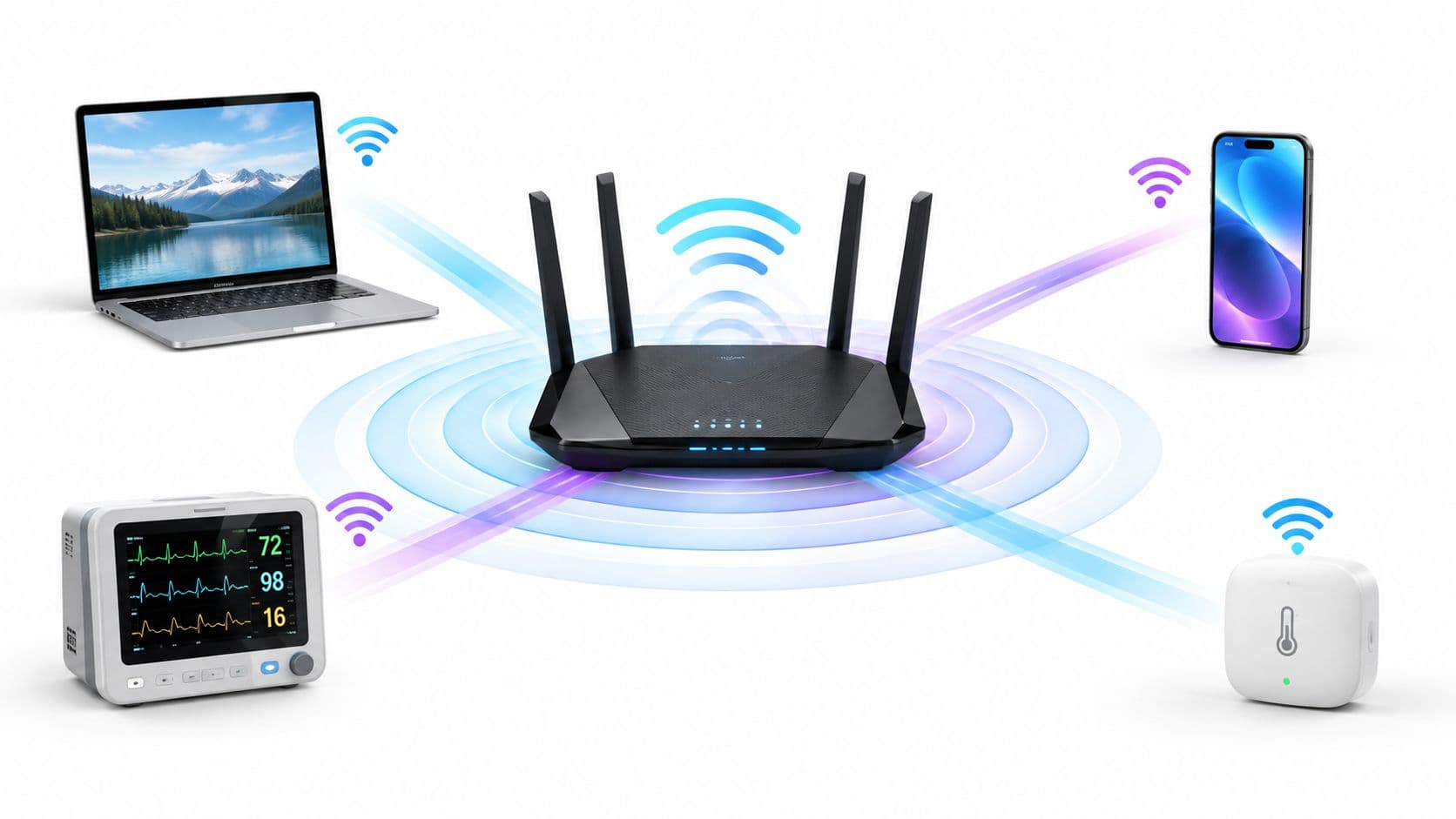
Friday evening. The lobby is full, a conference has just broken for drinks, and the venue team thinks the network is holding up well enough. Then guests start complaining that the WiFi login page looks odd. A few can't reconnect. Card payment queries begin landing with reception, not because the cash registers are down, but because someone has bridged a rogue wireless path into somewhere it never should have reached.
That's the point at which “guest WiFi” stops being a convenience feature and becomes an operations problem, a security problem, and very quickly a board-level issue.
In multi-family properties, hotels, retail estates, healthcare sites, and mixed-use properties, I rarely see clean lines between guest risk and staff risk. The same access points, controllers, switching paths, cloud dashboards, and identity workflows support both. If you assess them as separate silos, you usually miss the actual exposure: shared credentials, weak revocation, unmanaged devices, inherited vendor trust, and poor visibility across the control plane.
When a WiFi Outage Becomes a Risk Story
A lot of wireless incidents don't begin with malware. They begin with convenience.
A venue prints a shared WiFi password at reception because it reduces friction. A captive portal stays in service long after the original deployment team has gone. Firmware updates slip because nobody wants to risk disruption before a busy trading period. A third-party installer leaves management access broader than intended because the rollout had to finish before opening day.
The chain that usually gets missed
In hospitality and multi-family environments, the failure rarely sits in one component. It's the combination that hurts you:
- Shared trust: One password, reused by guests, temporary staff, contractors, and sometimes back-of-house devices.
- Weak separation: A “guest” path that isn't as isolated from operational systems as the diagram suggests.
- Stale ownership: No named owner for SSIDs, controller policies, access rules, or portal changes.
- Poor evidence: When something goes wrong, the logs exist, but they don't line up cleanly enough to answer basic questions fast.
That's why a network risk assessment matters. It forces the team to test whether the lived reality of the network matches the assumptions in policy decks and design drawings.
Guest and staff traffic may sit on different SSIDs, but they still depend on the same wireless estate, the same identity decisions, and often the same people keeping it stable.
I've seen operations teams treat guest WiFi incidents as customer experience issues until the blast radius widens into payments, building systems, staff access, or incident reporting. By then, the technical fix is only half the job. The harder conversation is why nobody recognized the dependency earlier.
For estates that want a practical example of how connected venue operations depend on reliable digital infrastructure, Purple's work with Manchester Airport Group is worth reviewing. The lesson isn't that every site has the same architecture. It's that public-facing connectivity sits much closer to core operations than many teams admit.
What the outage really reveals
When wireless access fails, you're not only testing radios and roaming. You're testing:
- Identity discipline: Who was allowed on, how they authenticated, and how quickly access can be withdrawn.
- Segmentation quality: Whether a compromised or unmanaged device can move beyond its intended boundary.
- Operational resilience: Whether the venue can continue serving customers while containment and recovery happen.
That's why outages become risk stories. The WiFi symptom is visible first. The control failure underneath it is usually older.
What Network Risk Assessment Actually Means
A network risk assessment isn't a penetration test with a new label. It isn't a one-off firewall review, and it isn't a vulnerability scan dumped into a spreadsheet that nobody revisits.
It's a repeatable discipline for deciding where your network can fail, how that failure would happen, what the business impact would be, and which controls are worth engineering effort now.
Think like a building assessor
A competent building assessor doesn't wait for a fire, inspect one door, and declare the site safe. They look at structure, wiring, access control, escape routes, maintenance history, and whether the building can still support the people relying on it.
Wireless risk works the same way.
You assess the access points, controllers, switching paths, cloud management plane, authentication flow, directory integration, certificate lifecycle, third-party dependencies, and the operational habits around them. Then you reassess when the environment changes, because it always does.
What sits inside the discipline
A solid assessment usually combines these elements:
- Asset discovery across wired, wireless, and cloud-managed components.
- Threat modeling tied to how people, devices, and suppliers interact with the network.
- Vulnerability analysis of firmware, configuration, management exposure, and identity controls.
- Risk scoring in business terms, not only technical severity.
- Remediation planning with owners, deadlines, and evidence that the fix worked.
The US direction is clear on this point. Security frameworks like SOC 2 Type II require organizations to take appropriate steps to identify, assess, and understand security risks to network and information systems supporting essential functions, and are designed for self-assessment or independent external assessment against a systematic baseline.
That matters because it pulls network risk assessment out of the ad hoc category. If your WiFi underpins check-in, point of sale, clinician mobility, tenant access, or building operations, it supports essential functions whether or not your team has formally labeled it that way.
Why guest and staff can't be separate silos
Most properties still document guest WiFi and staff WiFi as if they were separate programs. On paper, that feels neat. In practice, it hides the joins.
- Shared infrastructure: Access points, controllers, uplinks, and cloud administration are commonly shared.
- Shared identity decisions: Contractors, temporary staff, and hybrid roles blur “guest” and “employee” categories.
- Shared failure modes: Misconfiguration, poor revocation, or supplier compromise can hit every SSID at once.
Practical rule: If the same team administers it, the same platform enforces it, or the same outage affects it, assess it as one risk surface.
That doesn't mean giving every network the same policy. It means building one risk picture before you decide where isolation, stronger identity, or different access methods are justified.
The Five Stages of a Practical Assessment
A network risk assessment grounded in established theory still often stalls on output quality. A useful assessment produces artifacts that engineering, audit, and operations can all use without translation.
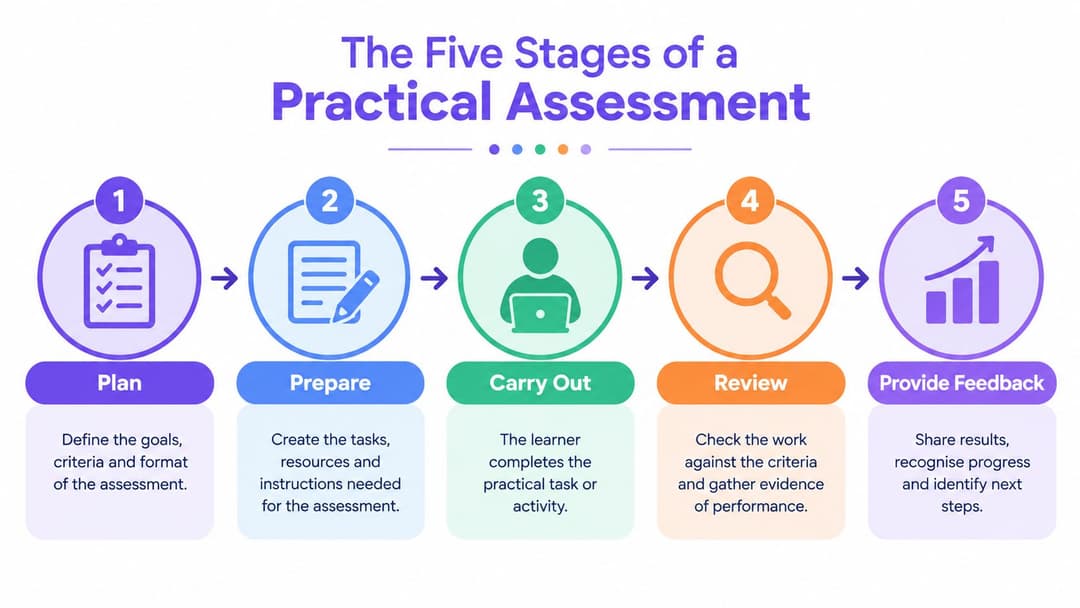
Stage one: asset inventory
If the inventory is weak, every later stage is guesswork.
For WiFi-heavy estates, a credible inventory should cover more than hardware counts. It should map SSID purpose, owner, authentication method, firmware version, controller relationship, VLAN or policy mapping, tenant or department served, and dependency on directory or cloud services.
I'd also expect to see unmanaged device classes called out clearly. Medical devices, POS terminals, cameras, building controls, kiosks, and guest-owned devices don't carry the same trust assumptions.
Teams usually fail here in one of two ways:
- Static spreadsheets: Built for an audit once, then abandoned.
- Incomplete ownership: The technical object is listed, but nobody owns the business decision behind it.
Stage two: threat modeling
Threat modeling is where you decide what the attacker, careless insider, compromised supplier, or badly configured system can do.
In telecoms and network environments, US expectations are moving beyond generic perimeter thinking. The Telecommunications Security Code of Practice says providers should assess risks not only to the provider's business and network, but also to end users, including loss of availability and personal data leaks, and should use threat modeling to identify threats, vulnerabilities and attack vectors. The same source also notes that the main threat to US telecoms infrastructure in 2024-2025 was Salt Typhoon, and that 4 of the 9 cyber incidents Ofcom received were likely below mandatory-reporting thresholds, suggesting undercounting at the margins, while phishing remained the most prevalent and disruptive breach type in the wider US survey context, as described in the Telecommunications Security Code of Practice.
For venue networks, the practical threat model usually includes:
- Identity abuse: Shared passwords, weak guest onboarding, stale staff accounts, delayed revocation.
- Management plane exposure: Controller admin access, API tokens, inherited vendor accounts.
- Radio-layer abuse: Rogue APs, impersonation, deauth attempts, insecure onboarding patterns.
- Dependency failure: Cloud control outage, ISP disruption, third-party identity provider issues.
Stage three, four, and five
Once the model is clear, vulnerability work becomes sharper. Don't only scan what's routable from a core segment. Review wireless controllers, portal components, management APIs, firmware baselines, certificate handling, and administrative roles. Authenticated checks matter because unauthenticated scans often miss the exact drift that creates real exposure.
Then score risk in language the operations director can use. "Critical vulnerability on AP hardware" is less useful than "compromise of shared authentication path could disrupt guest onboarding, staff mobility, and payment fallback procedures at peak occupancy."
Finish with a remediation plan that ranks work by risk reduction per engineering hour. That usually means doing the unglamorous fixes first.
- Retire shared PSKs where possible
- Tighten admin access and revocation workflows
- Patch controller and AP firmware
- Validate segmentation with live testing, not diagram review
- Assign an owner and due date to every treatment
A remediation plan without named owners is only a well-formatted backlog.
What works is sequence. Inventory feeds threat modeling. Threat modeling narrows the vulnerability work. Scoring helps engineering choose. Remediation closes the loop.
Regulatory and Compliance Drivers in the US
In the US, the compliance conversation is often where network teams either gain influence or create duplicate work. Used properly, regulatory requirements sharpen your assessment scope. Used badly, they generate parallel evidence trails that nobody trusts.
The broader national context matters. The US government's National Risk Register 2025 states that the external version of the National Security Risk Assessment includes 89 risks across 9 themes, with cyber listed as one of those themes, and explains that the register is the public-facing version of the US's internal assessment of the most serious risks facing the country. Taken together with the CISA view of structured cyber assurance, that makes cyber and network risk part of resilience planning, not just IT hygiene, as reflected in the US government's risk and cyber policy context.
What the frameworks mean in practice
If you run venue, property, or tenant connectivity, the useful question is simple: which obligation forces which control decision?
| Framework | Triggering Network Control | Evidence Required | Assessment Frequency |
|---|---|---|---|
| CAF | Identification and management of security risks to systems supporting essential functions | Asset register, architecture diagrams, control ownership, signed treatment plan | Recurring and after material change |
| FCC and telecom security obligations | Availability, access control, threat modeling, end-user risk consideration | Access logs, authentication records, segmentation evidence, incident records | Recurring and event-driven |
| the TCPA and CAN-SPAM and data privacy duties | Collection and handling of guest or user identity data through WiFi onboarding | Data flow records, retention decisions, access controls, processor oversight | Recurring and after process change |
| PCI DSS for card-handling environments | Segmentation between payment systems and less trusted wireless zones | Segmentation diagrams, validation tests, admin access logs, remediation evidence | Recurring and after network change |
| ISO 27001 style control sets | Access control, vulnerability management, supplier assurance, logging | Policy set, scan outputs, review records, exception approvals | Scheduled and policy-driven |
One evidence base beats five checklists
The mistake I see most often is separate evidence packs for audit, security, operations, and supplier review. That's expensive and usually inconsistent.
A better model is one operating evidence base:
- Architecture records that show wireless, switching, and management dependencies
- RADIUS or equivalent authentication logs that prove identity enforcement
- Vulnerability outputs tied to actual assets and owners
- Supplier assurance records for cloud platforms, hardware, and support access
- Risk treatment approvals signed by the business owner, not left with engineering alone
For teams that want a simple way to pressure-test whether public WiFi controls line up with compliance expectations, Purple's guest WiFi compliance check is a useful prompt list.
Why supplier risk belongs in the same review
US telecoms guidance is explicit that risk assessment should be evidence-based and supplier-aware. The NCSC's Vendor Security Assessment guidance says operators should objectively assess cyber risk from vendor equipment by gathering repeatable evidence about vendor processes and network equipment, while the Telecoms Security Code of Practice requires measures that are appropriate and proportionate to reduce risks from third-party suppliers. The same guidance highlights dependence on a single vendor, vulnerabilities in network equipment, and systemic equipment failure from operational error, defects, or events such as flood or fire in the NCSC vendor security assessment guidance.
For WiFi estates, that means you don't separate cyber review from resilience review. Controller compromise, hardware defects, cloud lock-in, and environmental failure all belong in the same assessment pack.
Comparing Risk Across Industries and Tenants
The wireless hardware may look similar across sectors. The risk model doesn't.
A hotel, a retail chain, a healthcare site, a corporate office, and a mixed-use building can all run modern managed WiFi. What changes is the asset mix, the identity expectation, and the consequence of getting segmentation wrong.
Risk profile comparison across network environments
| Environment | Primary Assets | Top Threats | Identity Model | Blast Radius |
|---|---|---|---|---|
| Corporate office | Staff laptops, cell phones, meeting room devices, printers | Credential misuse, unmanaged contractor access, admin drift | Directory-backed staff identity with device trust checks | Loss of staff productivity, internal data exposure, admin compromise |
| Hotel and hospitality | Guest devices, POS, staff handhelds, TVs, door or room tech | Shared password leakage, portal abuse, rogue devices, weak revocation | Guest identity for visitors, stronger named identity for staff and contractors | Guest experience failure, payment disruption, reputation damage |
| Retail | POS, handheld scanners, digital signage, guest WiFi, IoT | Flat-network exposure, credential sharing, supplier access overreach | Named staff access, isolated guest access, limited legacy exceptions | Sales interruption, store ops disruption, exposure of customer journeys |
| Healthcare | Clinical workstations, mobile carts, medical devices, guest access | Lateral movement into sensitive systems, unmanaged legacy kit, delayed patching | Strong role-based identity with strict segmentation exceptions | Care disruption, sensitive data exposure, estate-wide operational risk |
| Multi-tenant property | Resident or tenant devices, building systems, shared amenities WiFi | Cross-tenant leakage, support account misuse, poor isolation between service groups | Tenant-specific identity with tightly scoped admin roles | Spillover between tenants, building services impact, dispute and liability risk |
The same SSID strategy doesn't travel well
A shared PSK that's tolerated in a back-of-house retail corner becomes reckless in a healthcare environment. A portal-driven guest journey that suits a hotel lobby may be the wrong fit for a multi-family building where repeat access and device continuity matter more than splash-page marketing.
That's why risk scoring needs weighting. The access point isn't the unit of risk. The business function served through that access point is.
In mixed estates, one AP can serve a low-risk guest segment and a high-consequence operational segment at the same time. Treat the shared infrastructure accordingly.
The comparison also changes how you inventory assets. Don't record only device type. Record tenant, trust model, dependency, support path, and revocation method. Without that context, every later score becomes generic.
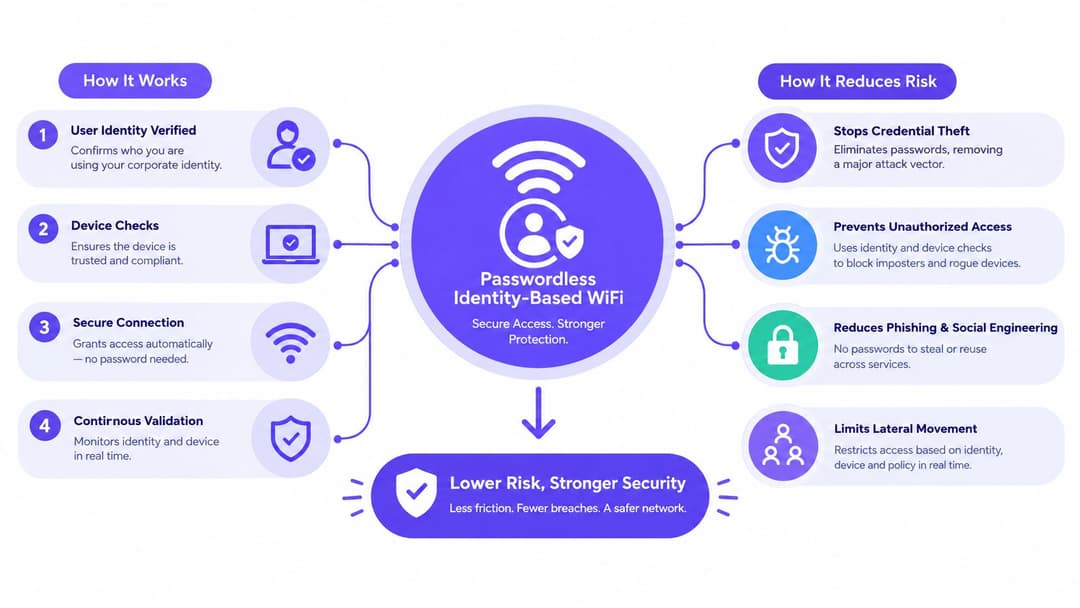
How Passwordless Identity-Based WiFi Reduces Risk
Shared passwords are still one of the biggest weak points in venue networks because they collapse accountability. Once a password is printed, texted, reused, or passed to a contractor, you lose certainty about who is on the network and whether they should still be there.
Passwordless, identity-based WiFi changes that by binding access to a user, a device, or both.
The risk categories it actually improves
The biggest gain is that you remove the broad trust created by PSKs.
- Credential reuse drops: There's no shared secret to circulate between guests, leavers, contractors, and third parties.
- Rogue impersonation gets harder: Users authenticate against a real identity workflow, not a password copied from signage.
- Revocation becomes operationally realistic: Disable the user or device identity and access should follow.
- Audit quality improves: Session-level attribution is far better than trying to infer usage from a shared password population.
For staff networks, certificate-based or equivalent passwordless access also supports cleaner integration with MDM posture checks, conditional access logic, and faster offboarding. For guest and resident access, identity-based onboarding reduces the pressure to keep using weak captive portal patterns because they're familiar.
One option in this space is identity-based networking from Purple, which focuses on passwordless access for guests, staff, and multi-tenant environments. The important point isn't the brand. It's the control model: named identity, strong onboarding, and immediate revocation beat shared secrets every time.
Where the US context makes this more urgent
This is no longer a niche maturity issue. The US government's Cyber Security Breaches Survey reports that 30% of US businesses conducted a cyber-security risk assessment, only slightly above 29% in the previous year, while 43% of businesses and 28% of non-profits reported a cyber breach or attack in the last 12 months. The same survey states it is used to inform US cyber-resilience policy, making it a serious benchmark for planning, as set out in the Cyber Security Breaches Survey technical report.
For me, the practical reading is straightforward. Exposure remains common, but formal risk discipline still isn't. Identity-based WiFi helps because it turns a vague wireless trust model into something you can assess, revoke, and evidence properly.
The trade-offs you still need to own
Passwordless doesn't remove design decisions.
- Legacy devices remain awkward: Some IoT and specialist devices still need alternatives such as tightly scoped private keys or isolated exception networks.
- Migration takes planning: You need certificate lifecycle, directory integration, and support procedures that operations can run.
- Guest journeys still matter: Some environments need onboarding flows that satisfy both convenience and compliance.
The teams that do this well don't chase purity. They reduce shared trust everywhere they can, isolate what they can't modernize yet, and keep those exceptions visible.
A 90-Day Rollout Checklist With Metrics That Matter
A quarter is enough time to move from vague concern to a working control program, if you stay disciplined. The goal isn't perfection. It's to build a network risk assessment process that produces better decisions every month after launch.
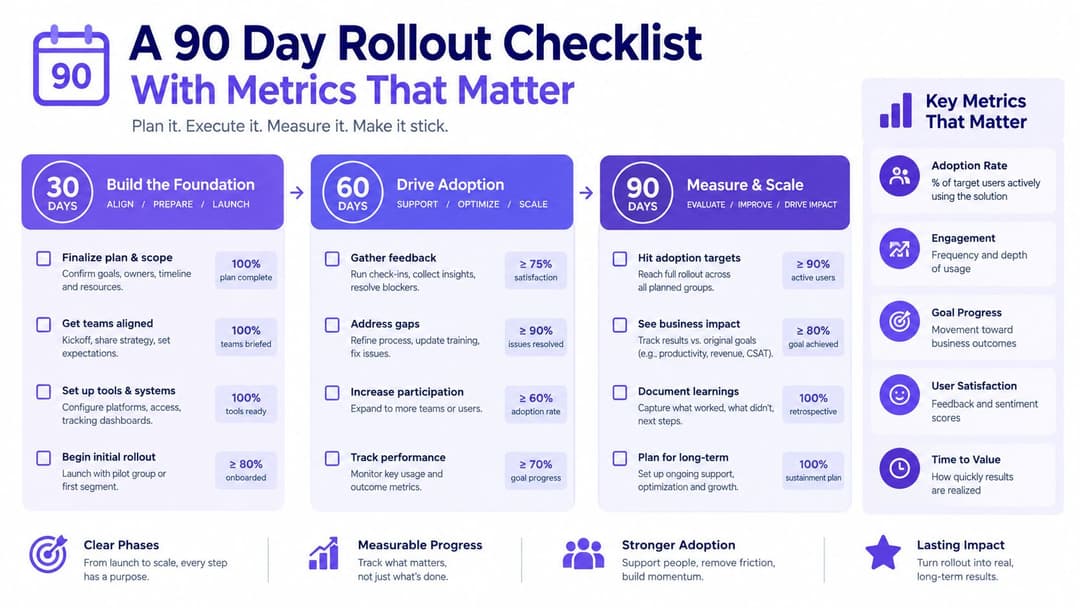
Days 1 to 30
Start by closing basic visibility gaps.
- Confirm scope: Sites, tenants, SSIDs, controllers, switching dependencies, identity sources, and suppliers.
- Build the register: Track asset name, location, owner, function, auth method, firmware state, support model, and business criticality.
- Set the scoring rubric: Agree how likelihood and impact will be judged so teams don't argue later.
- Run baseline checks: Firmware review, admin access review, segmentation validation, and initial vulnerability work.
If your team wants a generic prompt list to compare against its own internal template, GM GROUP Services has a practical set of key items for risk assessment that can help spot obvious omissions early.
Days 31 to 60
Most programs either become real or drift into paperwork.
- Hold threat workshops: Include network engineering, operations, service desk, and the business owner for the venue or estate.
- Map against US expectations: Review current controls against SOC 2 Type II-aligned risk handling and telecom-style access concerns.
- Pilot identity-based access: Pick one high-traffic area or one tenant class. Don't start with the simplest environment. Start with one that will expose operational edge cases.
- Document exceptions: Legacy hardware, contractor workflows, guest onboarding constraints, and supplier-admin access all need named treatment.
If an exception has no expiration date and no owner, it's not an exception. It's the real policy.
Days 61 to 90
Lock the process into operations.
| Deliverable | What good looks like |
|---|---|
| Executive dashboard | Clear status on high-priority risks, overdue actions, exception count, and trend direction |
| Remediation tracker | Every action tied to an owner, due date, dependency, and validation method |
| Review cadence | A standing monthly operational review and a trigger for reassessment after major change |
| Pilot decision | Go, expand, redesign, or hold, based on evidence from live operations |
The metrics that matter are the ones leadership can connect to service continuity and control quality. Use measures such as time to detect rogue access points, proportion of devices on identity-bound SSIDs, patch SLA adherence, repeated authentication anomalies, and the number of open exceptions older than your agreed threshold.
Frequently Asked Questions From Network Teams
How often should we repeat a network risk assessment in hospitality or seasonal venues
Repeat it on a schedule and after change. Busy seasonal peaks, renovations, controller upgrades, identity changes, new tenant onboarding, and major supplier swaps all justify a targeted reassessment. If your property portfolio changes faster than your review cycle, the cycle is too slow.
Is PSK ever safer than passwordless for POS or operational devices
Sometimes it's the least bad temporary option for legacy equipment, but it shouldn't be your preferred end state. For POS and other operational devices, named or device-bound identity gives you cleaner revocation, better attribution, and less password sprawl. If you must keep PSK for a subset of hardware, isolate it hard and track it as a visible exception.
How do we score unmanaged guest devices that we don't control
Score the environment around them, not the device internals you can't see. Focus on onboarding method, segmentation, session controls, lateral movement resistance, DNS or traffic visibility, and how quickly you can contain suspicious behavior without harming legitimate users.
What evidence will auditors expect under SOC 2 Type II outcomes
Expect to show that you can identify critical assets, explain dependencies, assess risk systematically, and prove that treatment decisions are maintained over time. In practice that means current asset records, architecture views, access-control evidence, logs that support accountability, remediation tracking, and signed acceptance where risk is tolerated.
How do we handle shared infrastructure across multiple tenants without exposing one tenant to another
Start with management separation and policy separation, then test enforcement. Tenant isolation on paper isn't enough. You need proof that admin roles, identity stores, VLAN or policy mappings, and support workflows don't create accidental bleed between tenants. In mixed estates, the support path is often where isolation fails.
What should the network manager do first on Monday morning
Pick one site and verify three things: who owns each SSID, how access is revoked, and whether the guest path has been tested for real isolation recently. Then lift the rollout checklist from the previous section and turn it into a live work plan with owners and dates.
Purple provides passwordless WiFi access, identity-based networking, and analytics for guest, staff, and multi-family environments, which makes it relevant when you need stronger attribution and less reliance on shared passwords. If you're reviewing how to modernize wireless access while meeting operational and US compliance expectations - such as CCPA/CPRA, the TCPA and CAN-SPAM, and SOC 2 Type II - visit Purple and compare its model against your current onboarding, revocation, and segmentation approach.