•Core Definition:Network Access Control (NAC) enforces security policies by authenticating users, evaluating device security posture, and dynamically segmenting network access.
•Three Security Pillars: NAC relies on 802.1X /EAP authentication, pre-connection device health checks, and role-based VLAN authorization.
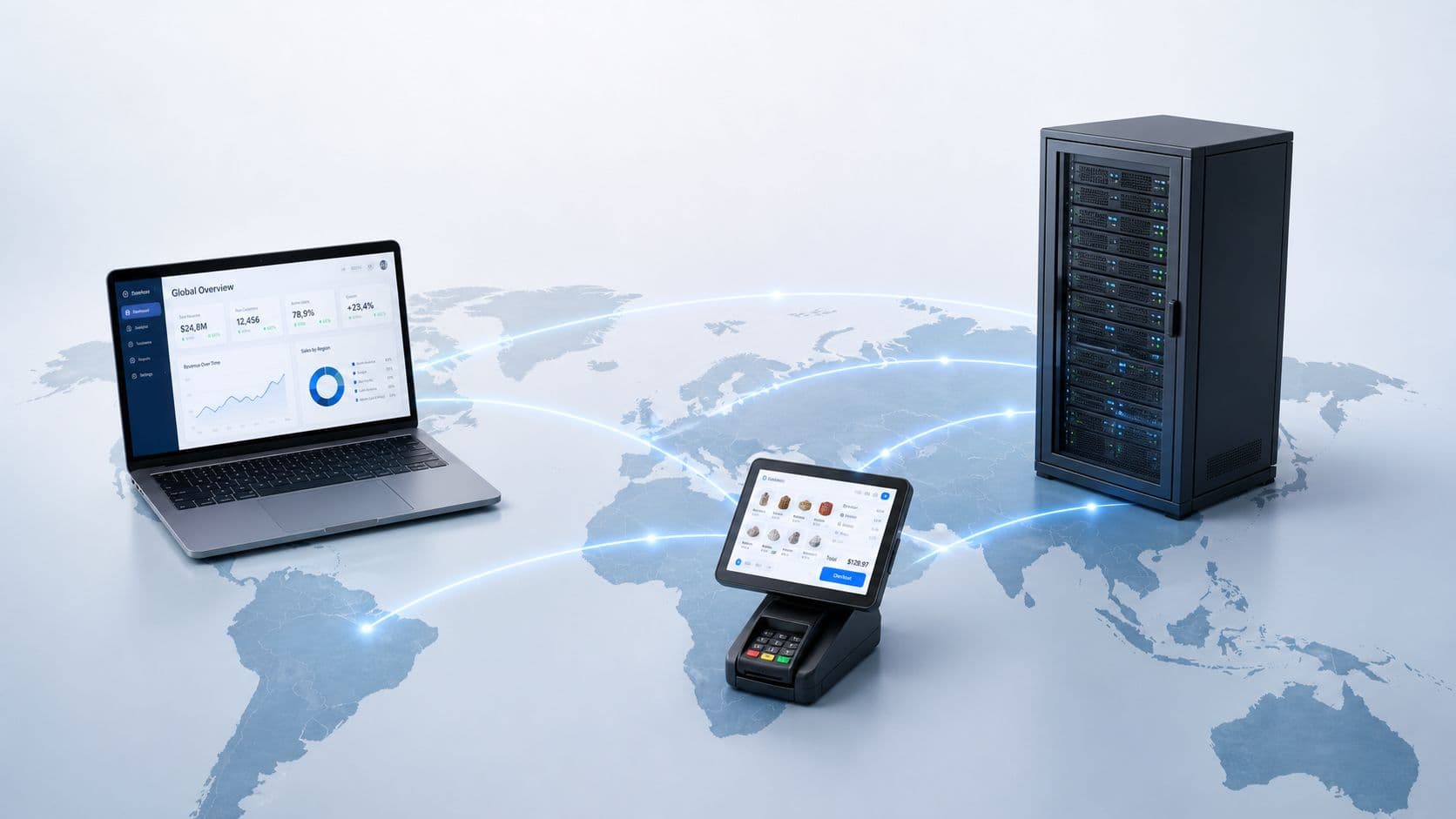
•Shift to Cloud RADIUS : Enterprise networks are replacing complex on-premises hardware with cloud-native NAC and RADIUS to secure staff, BYOD, and guest WiFi across distributed locations.
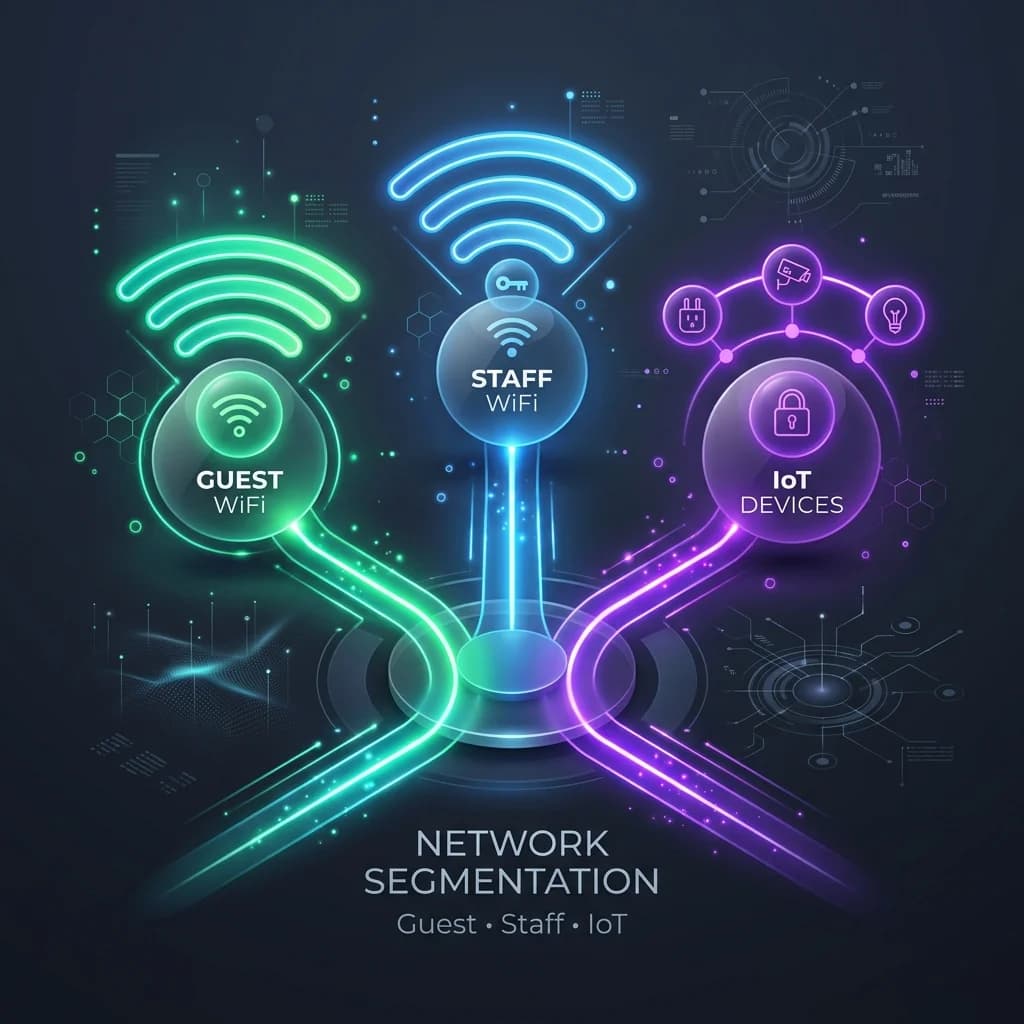
•Zero-Trust Architecture: Micro-segmentation prevents lateral movement across networks, isolating guest devices from sensitive POS systems, IoT hardware, and corporate servers.
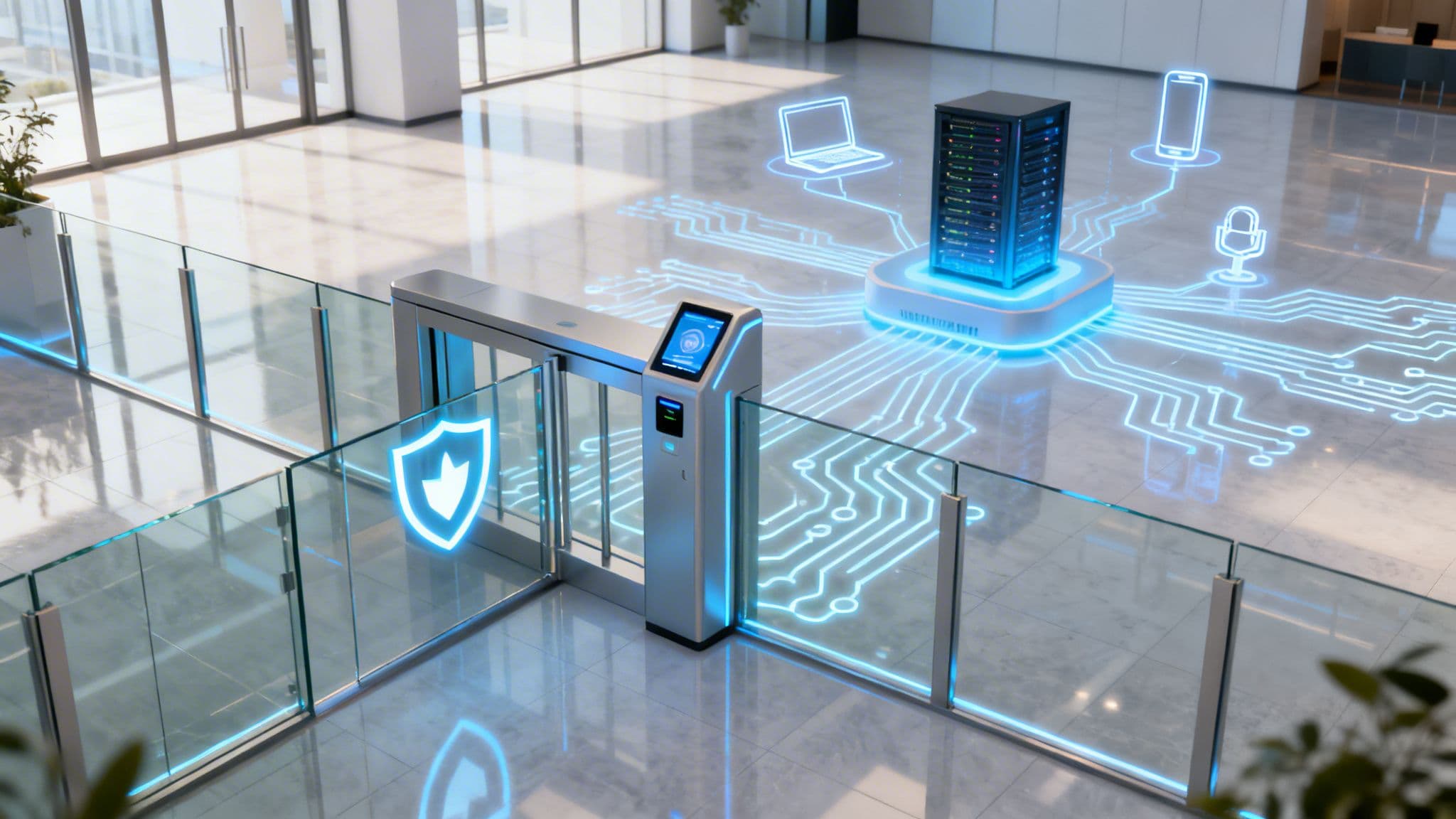
Network Access Control (NAC) acts as the security policy for your digital doorways. It decides who and what gets inside. NAC checks every user and device before granting network entry. This protects sensitive data.
## What is network access control?
Imagine your business network as an exclusive club. Different security levels exist for different areas. Without a guard, anyone could wander in. They could access restricted rooms and cause trouble. An unprotected network is a free-for-all for company laptops, guest smartphones, IoT sensors, and malicious actors.
NAC is the modern security guard for your digital club. Its main job is to enforce rules about who and what connects to your network. It performs rigorous verification for every access request.
### The rise of uncontrolled access
The need for strong network access control has grown. The traditional network perimeter has disappeared. Today’s business environments are different:
* **Bring Your Own Device (BYOD):** Employees use personal phones, tablets, and laptops for work. This introduces many devices with varying security standards onto the corporate network.
* **IoT proliferation:** Smart devices are everywhere. These include office thermostats, security cameras, and specialised machinery. A [Sygnia report](https://www.sygnia.co/blog/iot-security-challenges-and-best-practices/) highlighted how attackers target these systems. They often lack standard security monitoring.
* **Guest and contractor access:** Venues, offices, and hospitals must provide temporary network access. They must do this without risking the core network.
* **Sophisticated cyber threats:** Attackers exploit a single, poorly secured device to gain a foothold. Once inside, they move laterally to find high-value targets.
Without NAC, every connection point is a potential security blind spot. It is an open gateway for a breach.
> NAC transforms your network from a vulnerable free-for-all into a governed, secure environment. It provides the visibility and control needed to manage modern device connectivity.
Firewalls alone are not enough. Firewalls inspect traffic from the internet. They are blind to threats originating from within the network. If a compromised device is connected, a firewall might not stop it from attacking internal systems. NAC provides a critical layer of internal defence.
### The core pillars of network access control
A modern NAC solution performs three fundamental functions for every connection attempt:
| Pillar | Function | Real-World Analogy |
| :----- | :------- | :----------------- |
| **Authentication** | Verifying the identity of the user or device. | Showing your ID and membership card to the club's doorman. |
| **Device Posture** | Checking the device's health and security compliance. | The doorman checking your attire against the dress code. |
| **Authorisation** | Granting specific access rights based on identity and posture. | Your membership card only granting you access to specific floors. |
NAC answers three questions for every connection:
1. Who are you? (Authentication)
2. What device are you using? (Device Posture)
3. What are you allowed to do? (Authorisation)
Enforcing policies based on these answers ensures only trusted users with compliant devices access specific network resources. This reduces the attack surface. It forms the foundation of modern cybersecurity. For a broader overview of wireless protection standards, see our comprehensive enterprise WiFi security guide . This is especially true for industries like hospitality, retail, and healthcare. They manage diverse user types and sensitive data.
## Understanding modern NAC architecture
A NAC system is a coordinated team. Each member has a specific job. This team has three core components. They work together in real-time. They scrutinise every connection attempt against your security policies.
### The policy server: the strategic brain
The Policy Server is the brain of the operation. It holds the master rulebook. This includes all policies and settings that define "secure" for your network.
When a device tries to connect, information goes to the Policy Server. The server checks its rules: Is this a known user? Is their device up to scratch? What access level should they get? Integrations with identity providers like Microsoft Entra ID or Okta link a user’s identity to their access rights.
### Network sensors: the eyes and ears
Network Sensors, or agents, are the eyes and ears. They are deployed across your network. They listen for new connection attempts. Their job is to spot new devices. This includes laptops, smartphones, or IoT sensors.
Once a new device is detected, the sensor gathers initial information. It reports back to the Policy Server. This first alert starts the NAC workflow.
### Enforcement points: the gatekeepers
Enforcement Points carry out commands from the Policy Server. These are usually existing network devices, such as:
* **Wireless Access Points (APs):** Control who joins the WiFi.
* **Network Switches:** Manage access for devices physically plugged into your network.
* **Firewalls and Gateways:** Apply broader rules to all network traffic.
After the Policy Server decides, it tells the Enforcement Point what to do. That action could be granting full access, shunting the device to a limited guest network, or blocking it completely.
> A modern NAC solution orchestrates these pieces effectively. A user connects to the WiFi (Enforcement Point). This alerts the Policy Server. The server checks the user's identity and device health. It then tells the AP to move the user to the correct, secure network segment.
This architectural model allows Purple to work with your existing infrastructure. This includes vendors like Cisco Meraki, HPE Aruba, Ruckus, Juniper Mist, Ubiquiti UniFi, Cambium, Extreme, and Fortinet. A smart NAC solution uses your existing hardware. It turns it into an active part of your security defence.
For more information on the protocols that make this communication happen, read about [how a RADIUS server works](https://www.purple.ai/blogs/what-is-radius-server) in network authentication. This adaptability makes deploying NAC solutions practical and cost-effective.
## Key capabilities of leading NAC solutions
What separates a basic network gatekeeper from a modern security platform? Older systems had simple allow-or-deny rules. Today’s leading NAC solutions have dynamic, intelligent features. They have moved beyond shared passwords to deliver granular, identity-driven security.
These capabilities create a stronger, more flexible security posture. It builds a system that adapts in real-time to every device needing access. This includes a corporate laptop, a guest's smartphone, or a hospital's MRI machine.
### Identity-based authentication and cloud RADIUS passwordless access
The first job of any NAC is strong authentication. This is not about a single, easily shared WiFi password. Modern NAC is built on identity. It figures out *who* is connecting, not just *what* is connecting.
This means shifting to more secure and user-friendly methods. Advanced solutions offer many authentication options. These match different user types and security needs:
* **Passwordless Access:** Biometrics, push notifications, or cryptographic keys allow secure network access without typing a password. This improves security and convenience.
* **Certificate-Based Authentication:** For company-owned devices, NAC uses digital certificates. It silently and securely verifies the device's identity every time it connects. This creates a seamless and secure experience for staff.
* **SSO Integration:** Tying into identity providers like Microsoft Entra ID or Okta allows the NAC solution to use the organisation's central user directory. This is the single source of truth for who gets access to what.
### Device posture assessment
A critical feature of modern NAC is device posture assessment, or a health check. The NAC solution inspects any device trying to connect. It ensures the device meets your minimum security standards.
This assessment checks for compliance markers:
* Is the operating system updated with the latest security patches?
* Is antivirus software installed, running, and updated?
* Is the device’s firewall switched on?
* Does the device have unapproved or high-risk apps installed?
If a device fails this check, it is not blocked forever. A smart NAC automatically shunts the device to a quarantine network. Here, it provides resources to help the user fix issues. This includes links to download required software updates. This automates enforcement and reduces IT staff workload.
### Dynamic policy enforcement and micro-segmentation
Once a user and device are authenticated, NAC enforces access policies. This is where micro-segmentation helps. Instead of one flat, open network, NAC creates smaller, isolated zones.
> Micro-segmentation is like having secure, keycard-only floors in a skyscraper. A guest accesses the lobby. Their keycard does not work for executive or server room floors. This containment stops attackers from moving laterally across your network.
A NAC solution automatically places users and devices into the correct virtual network (VLAN). This is based on their role, device type, and location. A guest on the WiFi is sealed off from the network segment containing sensitive Point-of-Sale systems in a retail store. You can learn more in our guide to [creating a secure wireless network](https://www.purple.ai/blogs/secure-wireless-networking).
The demand for this integrated security is growing. The UK access control market reached USD 524.6 million in 2024. It is projected to climb to USD 830.7 million by 2030. This is driven by sectors like retail and hospitality upgrading their systems.
## Choosing the right NAC deployment
Frequently asked questions about network access control
What is Network Access Control (NAC)?
Network Access Control (NAC) is a security solution that inspects, authenticates, and authorizes every device attempting to connect to an enterprise network. By verifying user identity via 802.1X/EAP and assessing device security posture, NAC enforces access policies and prevents unauthorized devices from accessing internal resources.
How does NAC differ from a network firewall?
While a network firewall inspects incoming and outgoing perimeter traffic from the internet, NAC governs internal network access. NAC controls which users and devices can join the physical or wireless network, ensuring compromised devices cannot move laterally to attack internal servers.
Why are enterprises switching from on-premises NAC to Cloud RADIUS?
Legacy on-premises NAC appliances require costly hardware maintenance, manual certificate updates, and complex local controller configuration. Cloud RADIUS solutions deliver centralized identity integration (Microsoft Entra ID, Okta, Google Workspace), automated profile provisioning, and multi-vendor access point support without infrastructure overhead.
What hardware is required to implement Network Access Control?
Modern cloud NAC solutions integrate directly with certified 802.1X enterprise wireless access points and managed switches. Major hardware providers including Cisco Meraki, HPE Aruba, Ruckus, Juniper Mist, Ubiquiti UniFi, and Fortinet support cloud RADIUS and NAC enforcement natively.
Secure your enterprise network with Purple Cloud RADIUS & NAC
Eliminate legacy on-premise hardware. Purple provides cloud-native RADIUS authentication, 802.1X network access control, and visitor onboarding across 80,000+ venues with Cisco Meraki, HPE Aruba, Ruckus, and UniFi compatibility.