
合規指南:GDPR 與顧客 WiFi 數據隱私
本完整指南為 IT 經理和場域營運商提供了一個技術框架,用於建構符合 GDPR 規範的顧客 WiFi 網路。本指南詳細介紹了同意機制、網路分段、自動化數據保留,以及如何將合規性從監管負擔轉化為可防禦的第一方數據資產。
收聽此指南
查看播客逐字稿
執行摘要
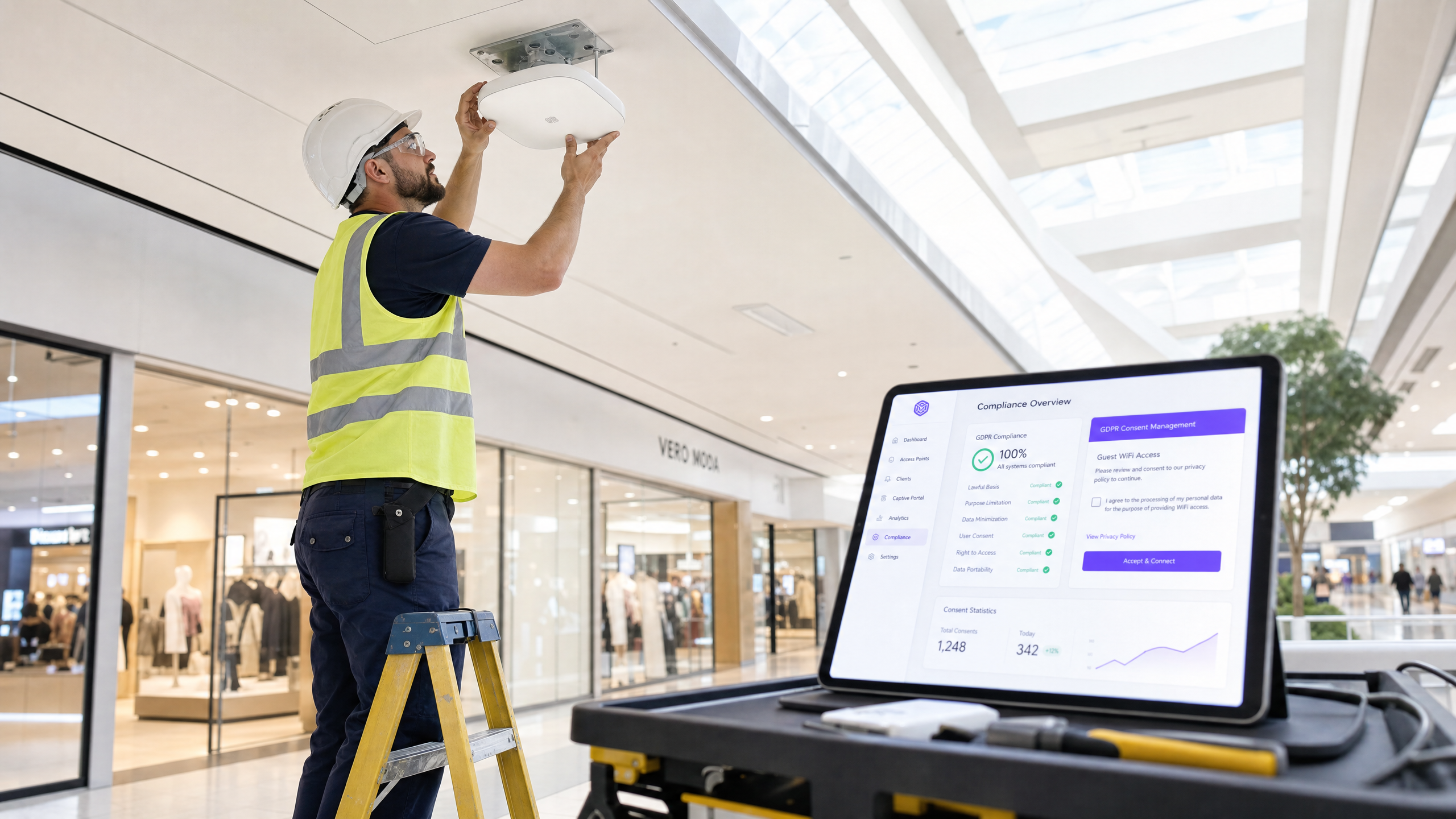
顧客 WiFi 是一個受監管的數據收集端點。每個提供公共網路存取的飯店、零售連鎖店、體育場和會議中心,在顧客連線的那一刻起,就會根據歐盟一般資料保護規則 (GDPR) 成為數據控制者 (Data Controller)。針對不合規行為,資訊專員辦公室 (ICO) 最高可處以 2,000 萬歐元或全球年營業額 4% 的罰鍰。
本指南為 IT 經理、網路架構師和營運總監提供了一個實用且具可操作性的框架,以確保其顧客 WiFi 服務完全合規。我們將探討透過顧客 WiFi 收集的特定數據類型、同意和數據處理的法律要求,以及實施合規解決方案且不綁定特定廠商的最佳實踐。
您將學習如何透過建構安全系統(從 Captive Portal 的設計到數據保留政策的自動化)來降低與不合規相關的法律和財務風險。透過遵循這些原則,企業可以將其顧客 WiFi 從潛在的合規負擔轉化為推動業務增長同時尊重用戶隱私的戰略資產。
技術深度解析
了解顧客 WiFi 的 GDPR 合規性,始於對所處理數據的清晰評估。根據該法規,個人數據被廣泛定義為與已識別或可識別的自然人相關的任何資訊。在顧客 WiFi 網路的背景下,這涵蓋了比許多企業預期更廣泛的數據點。未能正確分類這些數據是合規策略中的根本性錯誤。
顧客 WiFi 中的數據類別
透過顧客 WiFi 網路收集的數據可分為四個主要類別。每個類別對 GDPR 合規性都有不同的影響,特別是關於處理的法律依據和所需的保留期限。
- 註冊數據:姓名、電子郵件地址、電話號碼和社群媒體個人檔案數據。這是顧客在您的 Captive Portal 上主動提供的明確資訊。主要的法律依據是同意,且必須是自由給予、具體、知情且明確的。
- 設備與工作階段數據:MAC 位址、IP 位址、連線時間戳記和工作階段持續時間。這是自動收集的。法律依據通常是基於網路管理和安全的正當利益,前提是您已進行了正當利益評估 (Legitimate Interest Assessment)。
- 位置數據:透過 WiFi 存取點三角定位取得的物理位置座標、停留時間和移動路徑。這由 WiFi 分析 系統處理。由於位置追蹤可能具有侵入性,因此需要明確揭露,且通常需要明確同意,特別是在用於畫像分析 (profiling) 時。
- 使用數據:應用程式使用情況、瀏覽行為和頻寬消耗。如果您正在檢查流量內容,您需要一個非常明確的合法依據。有關如何安全管理此流量的指南,請參閱我們的 頻寬管理:2026 年實用指南 。
Captive Portal 合規架構
Captive Portal 是您的主要合規介面。這是您建立數據處理法律依據的地方。
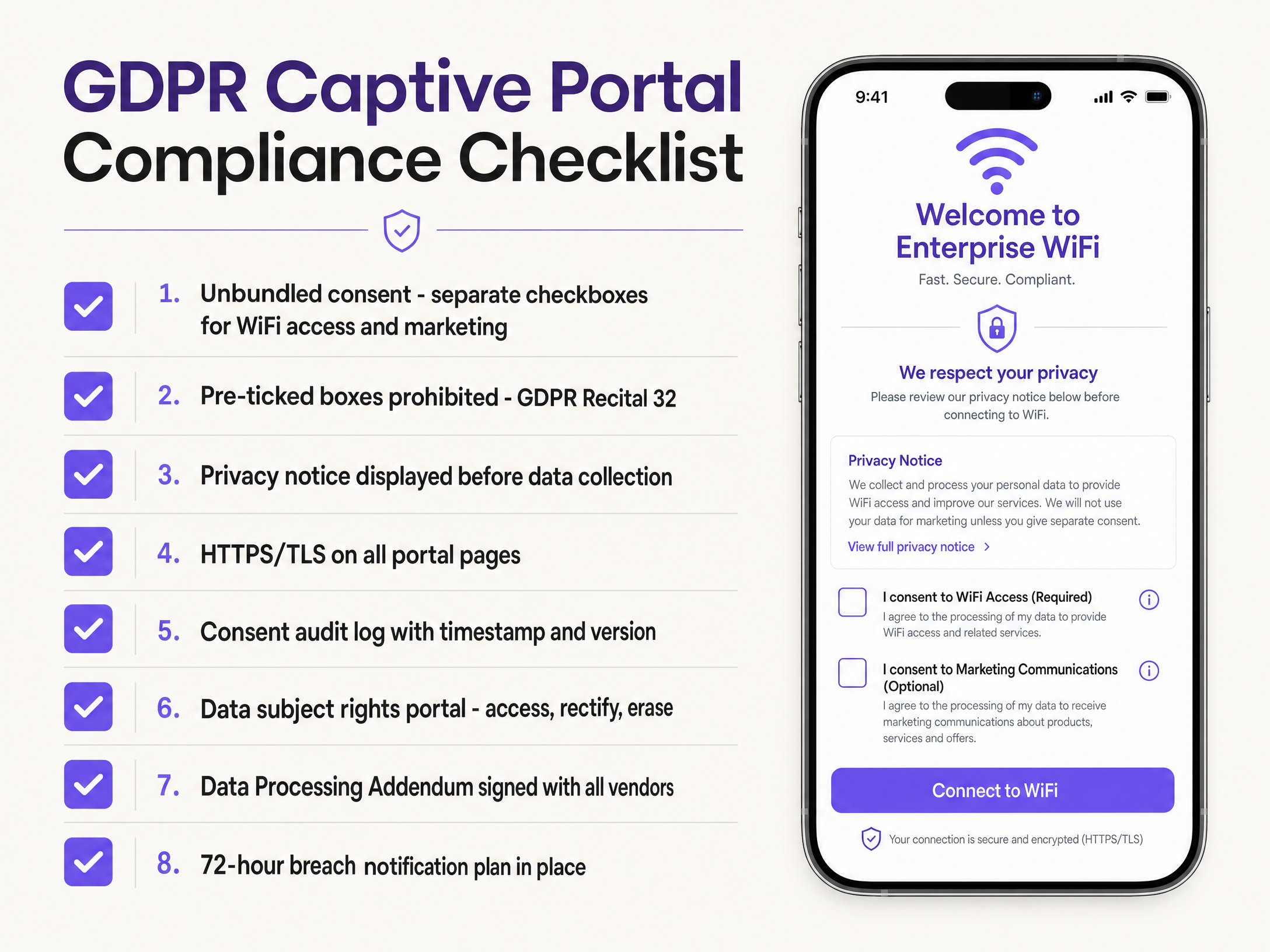
最常見的架構失敗是「綑綁同意」。如果您要求顧客必須接受行銷郵件才能存取網路,則該同意並非自由給予,且根據 GDPR 第 7 條是無效的。您必須實施非綑綁式同意。
您的 Captive Portal 必須至少呈現兩個獨立的同意元素:
- 一個用於接受網路存取服務條款的強制性核取方塊。
- 一個用於行銷傳播同意的可選且預設未勾選的核取方塊。
GDPR 前言第 32 條明確禁止預先勾選的方塊。此外,根據第 13 條,您的入口網站必須在用戶提交任何數據之前提供清晰的隱私聲明。此聲明必須說明您收集哪些數據、原因、保留時間以及與誰分享。
至關重要的是,您的系統必須維護同意稽核記錄。此記錄必須記載誰同意、何時同意、同意了什麼,以及他們查看的隱私聲明的確切版本。這是您的合規證明。
網路分段與安全
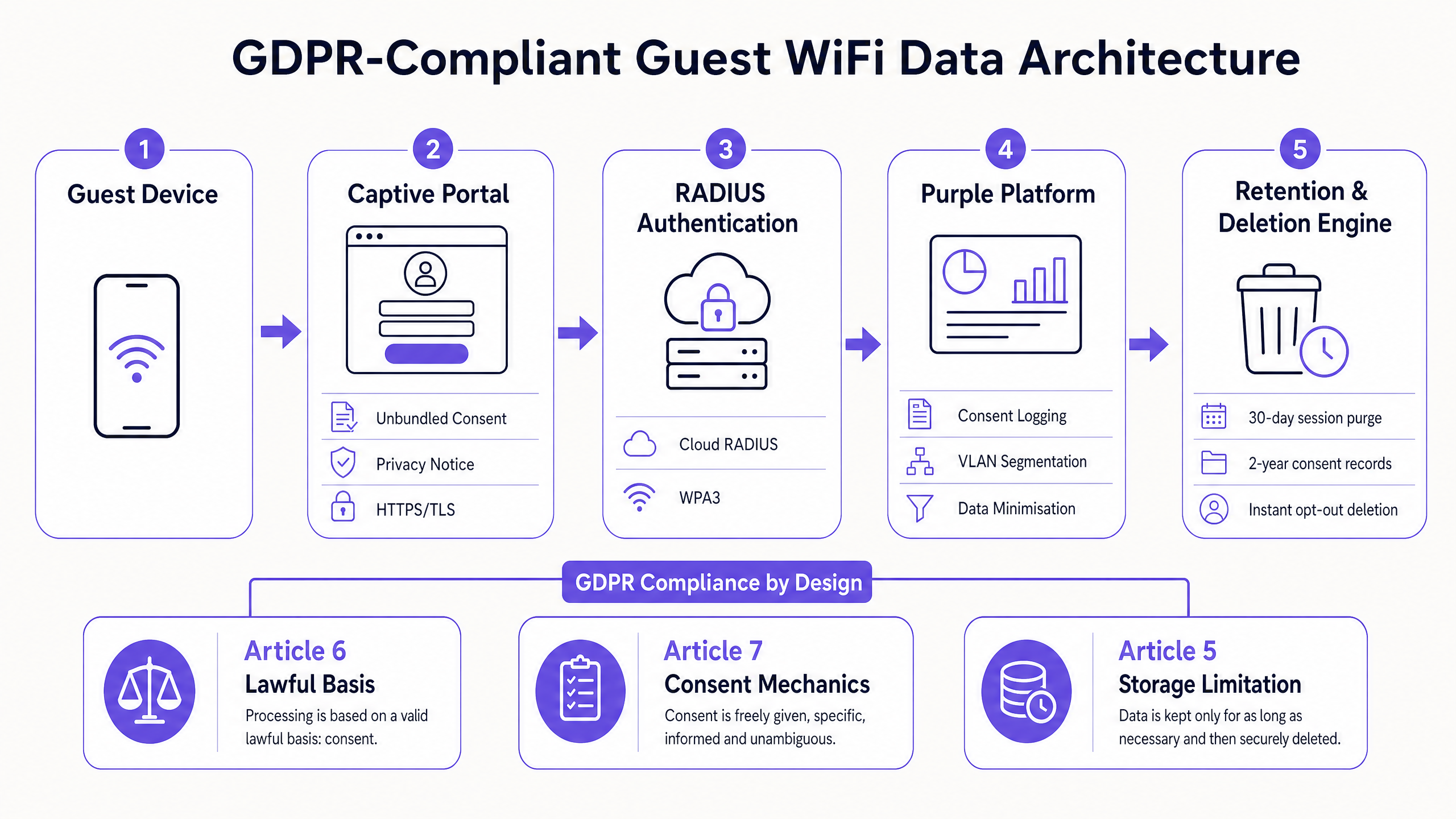
從網路架構的角度來看,網路分段是不可妥協的。您的顧客 WiFi 流量必須隔離在專用的 VLAN(虛擬區域網路)上,與您的企業網路完全分開。使用存取控制清單 (ACL) 阻止顧客設備存取內部子網路,並啟用用戶端隔離 (client isolation),使顧客設備之間無法互相通訊。這既能保護顧客,也能保護您的企業資產。如需深入了解這些原則,請參閱 什麼是安全 WiFi:2026 年企業必備指南 。
對於驗證,請將您的無線區域網路控制器 (WLC) 與雲端 RADIUS 伺服器整合。當用戶完成 Captive Portal 流程時,平台會向控制器發送 RADIUS Access-Accept 訊息以授予存取權限。這在驗證層和數據收集層之間建立了清晰的隔離。
在加密方面,如果您的硬體支援,您的顧客 SSID 應使用 WPA3。至少應強制執行採用 AES 加密的 WPA2。而且您的 Captive Portal 必須透過具有有效 TLS 憑證的 HTTPS 提供。透過 HTTP 提供收集個人資料的表單是嚴重的安全性漏洞。
實作指南
部署符合規範的訪客 WiFi 網路需要跨硬體、軟體和政策層面的結構化方法。
- 硬體選擇:確保您的無線基地台支援 VLAN 標記、用戶端隔離和 WPA3。Purple 的平台與硬體無關,可與 Cisco Meraki、HPE Aruba、Ruckus、Juniper Mist、Ubiquiti UniFi、Cambium、Extreme 和 Fortinet 無縫整合。請勿使用消費級硬體;請參閱 為什麼消費級 WiFi 設備不適用於您的訪客網路 。
- Captive Portal 設計:建立一個包含獨立同意選項的歡迎頁面。確保在提交任何資料之前即可查閱隱私權聲明。如果您在需要特定社群登入的地區營運,請確保資料交換透明化。例如,請參閱我們的指南: 整合微信 WiFi 驗證:亞太地區客戶的 Captive Portal 導入流程 。
- 資料保留自動化:設定您的平台,根據您的保留政策自動清除資料。大規模營運時,手動刪除是不可行的。
- 供應商協議:確保您與訪客 WiFi 提供商、CRM 供應商以及處理此資料的任何其他第三方簽署了資料處理增補協議(DPA)。
最佳實踐
為了保持合規並建立信任,請遵循以下產業標準的最佳實踐:
- 資料最小化:僅收集您絕對需要的資料。如果您沒有明確的電話號碼商業用途,請勿在 Captive Portal 上要求提供。
- 自動化儲存限制:實施嚴格的資料保留期限。連線階段記錄應在 30 天後清除。同意記錄應在服務關係存續期間外加兩年內保留。撤回同意後,必須立即刪除行銷設定檔。
- 啟用資料主體權利:提供自助式偏好設定中心,讓訪客可以管理其同意、要求存取其資料或要求刪除(被遺忘權)。這能大幅減輕處理資料主體存取請求(DSAR)的營運負擔。
- 進行 DPIA:如果您的部署涉及大規模位置追蹤或行為剖析,根據 GDPR 第 35 條,法律強制要求進行資料保護影響評估(DPIA)。
疑難排解與風險緩釋
即使擁有強大的架構,風險依然存在。請主動應對以下常見的失敗模式:
- 同意疲勞:如果您的入口網站過於複雜,使用者將放棄連線或盲目點擊同意。保持明確的價值交換:提供快速、免費的 WiFi,以換取電子郵件地址和選填的行銷同意。
- 未簽署的 DPA:您的訪客 WiFi 平台提供商是資料處理者。如果您在未簽署 DPA 的情況下與其共享個人資料,即屬違規。確保在任何資料流動之前,合約已簽署完畢。
- 延遲通報資料外洩:根據 GDPR 第 33 條,自您得知個人資料外洩之日起,您有 72 小時的時間向 ICO 進行通報。將此時間表納入您的事件應變計劃中;切勿等到調查結束才進行通報。
投資報酬率(ROI)與商業影響
合規不僅僅是法規上的障礙,更是一項策略推動力。符合 GDPR 規範的 訪客 WiFi 平台不僅能保護您免受高達全球營業額 4% 的罰款,還能帶來可衡量的 ROI。
藉由實施獨立且有意識選擇的訂閱,您可以建立高品質的第一方資料庫。雖然行銷訂閱的原始數量可能低於非合規的綑綁方式,但互動率(開啟率、點擊率和轉換率)會顯著提高,因為受眾是主動選擇接收您的訊息。
此外,合規的平台還能提供來源合乎道德的商業智慧。在 零售 和 餐旅 等產業中,這些資料可推動營運改善,從根據人流量最佳化員工配置,到個人化訪客體驗。Purple 的平台已通過 ISO 27001 標準認證,已處理了 4.4 億次登入並收集了 290 億個資料點,這證明了規模化與嚴格合規可以並存並實現獲利。
關鍵定義
Data Controller
The entity that determines the purposes and means of processing personal data. When a venue offers guest WiFi, it acts as the Data Controller and holds the primary legal responsibility.
IT managers must understand that outsourcing the WiFi platform does not outsource the legal liability.
Data Processor
An entity that processes personal data on behalf of the Data Controller. Purple, as the WiFi platform provider, acts as a Data Processor.
Requires a formal Data Processing Addendum (DPA) to legally handle the venue's guest data.
Captive Portal
The splash page or web page that a user must view and interact with before being granted access to a public network.
This is the primary interface where venues present privacy notices and capture lawful consent.
Unbundled Consent
The practice of separating requests for consent from other terms and conditions. Marketing consent cannot be a condition of service.
Essential for captive portal design to ensure consent is deemed 'freely given' under GDPR.
MAC Address
Media Access Control address; a unique identifier assigned to a network interface controller. Under GDPR, this is considered personal data when linked to a user.
Even if a user does not provide an email, logging their MAC address constitutes processing personal data.
VLAN Segmentation
Dividing a physical network into multiple logical networks. Guest WiFi traffic must be isolated from corporate traffic.
A foundational security control to prevent guest devices from accessing internal company assets.
RADIUS
Remote Authentication Dial-In User Service; a networking protocol that provides centralized Authentication, Authorization, and Accounting management.
Used to securely authenticate users who have completed the captive portal flow before granting network access.
DSAR
Data Subject Access Request; a mechanism for individuals to request a copy of their personal data, or ask for it to be rectified or erased.
Venues must have a process to handle these within 30 days. Self-service preference centres automate this burden.
範例
A 200-room hotel wants to collect guest emails to drive loyalty programme sign-ups. Their current system requires guests to accept marketing emails as a condition of getting online.
The hotel must deploy a compliant captive portal with unbundled consent. They must implement two separate checkboxes: a mandatory one for accepting the terms of service for network access, and an optional, unticked checkbox for marketing consent. The privacy notice must be clearly linked before the data submission button.
A stadium IT team wants to use WiFi analytics to monitor crowd density and manage safety at events. The legal team is concerned that tracking device locations without explicit consent violates GDPR.
The solution is two-fold. First, the captive portal privacy notice must be updated to explicitly disclose that location data is processed for crowd management and safety purposes under legitimate interest. Second, the IT team must implement MAC address pseudonymisation at the edge (on the access points) before the data reaches the cloud analytics platform.
練習題
Q1. Your marketing team wants to increase the size of their email database. They propose making the marketing opt-in checkbox on the guest WiFi captive portal pre-ticked by default to increase conversion. How do you advise them?
提示:Consider the GDPR definition of unambiguous consent and Recital 32.
查看標準答案
You must reject this proposal. GDPR Recital 32 explicitly states that silence, pre-ticked boxes, or inactivity does not constitute consent. Consent must require a clear affirmative action. Implementing pre-ticked boxes invalidates the consent and exposes the organisation to regulatory fines.
Q2. A guest connects to your WiFi but does not provide an email address, logging in via a 'skip' option. Your system logs their device MAC address, connection time, and the access point they connected to. Are you processing personal data?
提示:Consider the ICO's guidance on identifiers and the potential to single out an individual.
查看標準答案
Yes. Even without a name or email, a MAC address combined with location and time data can be used to single out an individual device and track its movements over time. The ICO considers this personal data. You must ensure you have a lawful basis (typically legitimate interest for basic network logging) and transparently disclose this processing in your privacy notice.
Q3. During a routine audit, you discover that your guest WiFi platform has been retaining detailed session logs (IP addresses, MAC addresses, connection times) for the past four years. What action should you take?
提示:Refer to the GDPR principle of storage limitation (Article 5).
查看標準答案
You must immediately implement an automated data deletion policy. Under the storage limitation principle, data must be kept no longer than necessary. Four years of session logs is excessive for network troubleshooting. You should purge historical session data older than 30 days and configure the platform to automatically delete future session logs at the 30-day mark.
繼續閱讀本系列
深入瞭解 Cisco SUDI:網路存取控制中的硬體型裝置身分識別
本指南詳細介紹 Cisco SUDI 的技術架構,說明硬體錨定身分識別如何確保網路存取控制的安全。它為 IT 主管提供了具體可行的實作步驟,以便在企業場域中部署 802.1X EAP-TLS 驗證並實現零接觸部署 (Zero Touch Provisioning) 自動化。
在企業級網路控制器上設定 Captive Portal 重新導向
本權威指南詳細介紹了在企業級網路控制器上實作 Captive Portal 重新導向所需的技術架構與特定廠商設定步驟。它為 IT 團隊提供了關於設定圍牆花園(walled gardens)、整合 RADIUS 驗證以及確保符合 GDPR 和 PCI DSS 規範的實用指導。
如何設定 SCEP 以實現安全的 BYOD 與 802.1X 網路驗證
本指南提供設定 SCEP 以部署憑證型 802.1X 網路驗證的完整技術參考。內容涵蓋從共享密碼到 EAP-TLS 的架構轉變、行動裝置管理(MDM)整合,以及在企業環境中實現安全 BYOD 存取的嚴格網路分段。