
整合 WeChat WiFi 登入:透過社群 Captive Portals 捕捉互動
本指南詳細介紹如何將 WeChat WiFi 驗證整合至企業級 captive portals 中,涵蓋 OAuth 2.0 架構、RADIUS 整合,以及在 Cisco Meraki、HPE Aruba 和 Juniper Mist 硬體上的逐步部署。它為 IT 經理和網路架構師提供了一個實用的框架,在從 WeChat 的 13 億用戶中獲取第一方數據的同時,透過關注官方帳號和登入後重定向來提升互動率。
收聽此指南
查看播客逐字稿
核心系列的一部分:Captive Portal Guide →
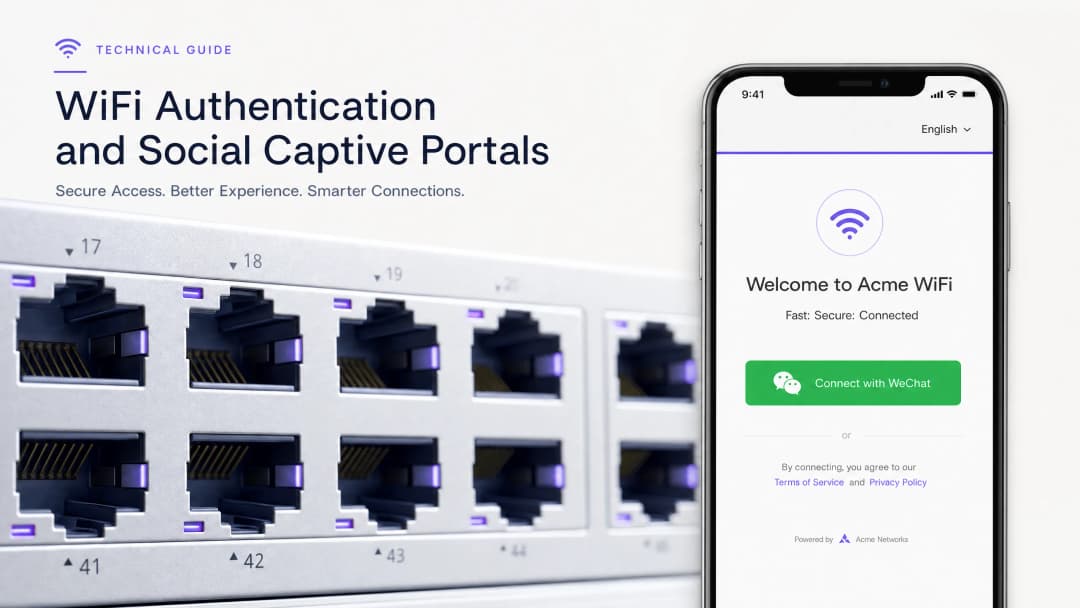
执行摘要
集成微信 WiFi 登录可将标准的 Captive Portal 转化为针对中国游客及更广泛微信生态系统的战略性第一方数据引擎。对于 IT 经理和网络架构师而言,通过 OAuth 2.0 和 RADIUS 部署微信登录需要在无摩擦的访客接入与安全、合规的数据收集之间取得平衡。本指南详细介绍了在包括 Cisco Meraki、HPE Aruba、Ruckus 和 Juniper Mist 在内的企业网络硬件上部署微信 WiFi 认证的技术架构、实施步骤和安全注意事项。它展示了 Purple 的 Guest WiFi 平台如何调解 OAuth 流程、将画像数据映射到您的 CRM,并通过登录后重定向到您的微信公众号来提高参与度。
微信拥有超过 13 亿月活跃用户,世界旅游组织的数据显示,2023 年中国游客在国际上的消费额预计达到 2550 亿美元。对于酒店、奢侈品零售、机场和会议中心而言,提供微信 WiFi 登录是触达该人群的直接渠道。Purple 在 80,000 多个活动场所中运营,并在 2024 年记录了 4.4 亿次登录,这使我们能够直接洞察生产部署中的成功经验与失败教训。
技术深度剖析
微信 WiFi 认证工作原理
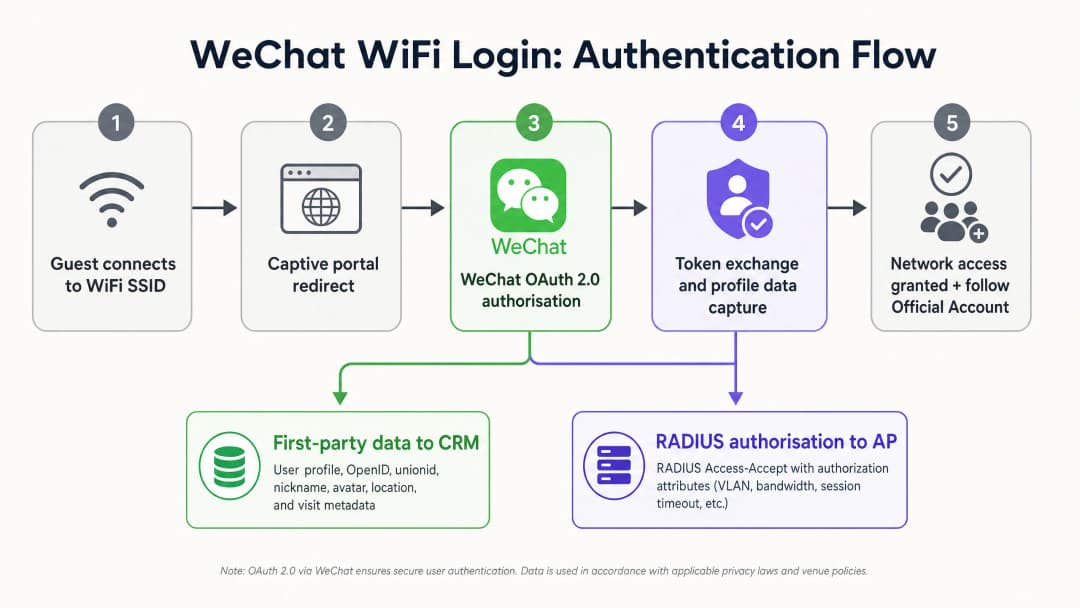
微信 WiFi 认证将手动表单输入替换为直接集成到 Captive Portal 体验中的 OAuth 2.0 流程。该序列包含五个组件,并按定义的顺序进行通信:
- 访客设备连接到场所 SSID。
- 接入点(AP)拦截未认证的 HTTP 流量,并将设备重定向到由 Purple 托管的 Captive Portal。
- 用户在 Portal 页面上选择微信登录选项。
- 门户向微信开放平台 API 发起 OAuth 2.0 授权请求,并传递场所的 AppID 和重定向 URI。
- 设备上打开微信客户端,并提示用户授权连接。
- 微信将授权码(code)返回给重定向 URI。
- Purple 平台使用该授权码交换访问令牌(access token),并检索用户的画像数据:OpenID、unionid、昵称、头像和注册位置。
- Purple 向 RADIUS 服务器发出信号,向接入点发送 Access-Accept 消息。
- 接入点授予互联网访问权限并应用配置的策略(VLAN 分配、带宽限制、会话超时)。
- 门户将用户重定向到场所的微信公众号或定制的落地页。
账户类型要求
这是微信 WiFi 部署中最常见的单点故障。您必须使用已认证的微信服务号。订阅号不开放 Captive Portal 集成所需的 OAuth 2.0 网页授权 API。下表总结了主要区别:
| 功能 | 服务号 | 订阅号 |
|---|---|---|
| OAuth 2.0 WiFi 登录 | 是 | 否 |
| API 访问级别 | 完整 | 受限 |
| 每月推送消息数 | 4 条 | 30 条 |
| 聊天列表显示 | 是(作为联系人) | 否(收纳在订阅号文件夹中) |
| 微信支付集成 | 是 | 否 |
| 是否需要认证 | 是 | 是 |
获取已认证的服务号需要中国营业执照或通过腾讯进行特殊的海外申请流程,该流程需要支付 99 美元的年审费用,且审核期为二至四周。
围墙花园(Walled garden):最关键的网络配置
围墙花园(也称为认证前白名单)定义了设备在完成 Captive Portal 认证之前可以访问的 IP 地址和域名。如果微信 API 域名不在围墙花园中,设备将无法发起 OAuth 握手,导致登录在后台静默失败。
至少必须将以下域名列入白名单:
*.weixin.qq.com*.wechat.com*.wx.qq.comres.wx.qq.commp.weixin.qq.com- 微信 CDN IP 地址段(请参考腾讯公布的 IP 地址段文档,这些地址会定期更改)
在 Cisco Meraki 上,请在 Wireless > Access Control > Walled Garden 下进行配置。在 HPE Aruba 上,请使用 Captive Portal Profile 白名单。在 Juniper Mist 上,请配置 Guest Portal 允许域名列表。
RADIUS 集成和策略执行
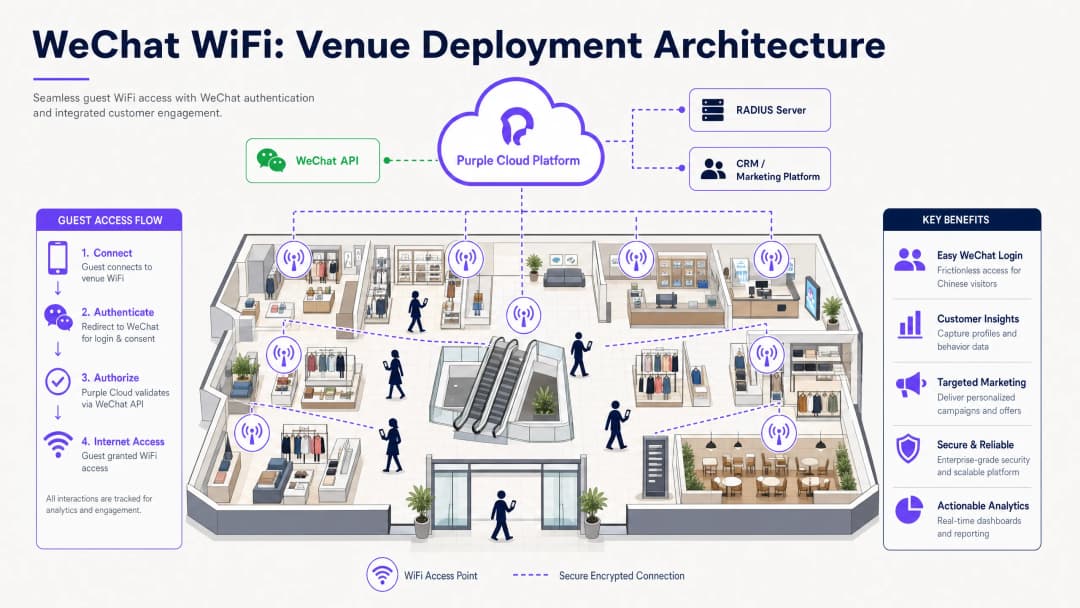
在此架构中,Purple 作为 RADIUS 代理运行。微信 OAuth 交换成功后,Purple 会向场所的无线控制器发送 RADIUS Access-Accept 消息。Access-Accept 消息可以携带标准 RADIUS 属性以执行每用户策略:
- 用于 VLAN 分配的
Tunnel-Type和Tunnel-Private-Group-ID(将访客流量与企业网络隔离,符合 IEEE 802.1X 细分最佳实践) - 用于在指定时间后自动断开连接的
Session-Timeout - 用于带宽限制的
WISPr-Bandwidth-Max-Up和WISPr-Bandwidth-Max-Down
此架构与硬件无关。Purple 可与 Cisco Meraki、HPE Aruba、Ruckus、Juniper Mist、Ubiquiti UniFi、Cambium、Extreme 和 Fortinet 集成,无需更改固件或添加本地服务器。
對於您的特定設置有任何疑問嗎?
我們的團隊與超過 80,000 個場域的場域營運商、IT 經理和網路工程師合作。立即預約 20 分鐘的通話,我們將向您展示其他與您相似的用戶是如何解決此問題的。
实施指南
步骤 1:配置微信开发者账户
登录微信公众平台(mp.weixin.qq.com)。导航至 设置与开发 > 安全中心 > 网页授权域名。启用 OAuth 2.0 网页授权,并将您的 Captive Portal 域名添加为授权回调域名(例如 wifi.yourvenue.com)。微信只会向在此注册的域名返回授权码——如果不匹配,会导致静默失败。
从 设置与开发 > 基本配置 面板获取您的 AppID 和 AppSecret。安全地存储 AppSecret;请将其视为私钥。
步骤 2:配置 Purple
在 Purple 门户中,导航至 Authentication > Social Login 并启用微信。输入 AppID 和 AppSecret。使用 Purple 的拖放式编辑器设计 Captive Portal 登录页面。将微信登录按钮设置为首屏的主要呼吁按钮(CTA)。
配置身份验证后的重定向。选项包括:
- 场所的微信公众号关注页面(推荐用于提升互动)
- 托管在微信小程序内的促销落地页
- 使用 Purple WiFi Analytics 工具的调查问卷页面
- 会员计划注册页面
在 Authentication > Return Visitor Settings 下启用 MAC 地址缓存。设置缓存有效期以匹配您的典型到店频率(零售业建议设置 7 天,酒店业建议设置 30 天)。再次光临的访客将自动连接,无需再次看到门户页面,同时他们的到访记录仍会登记在分析仪表板中。
步骤 3:配置网络硬件
在您的无线控制器上,将访客 SSID 配置为使用外部 Captive Portal。输入 Purple 门户 URL 作为登录页面 URL。将微信域名添加到围墙花园(Walled Garden)中。设置 Purple 提供的 RADIUS 服务器 IP 地址和共享密钥。
在正式上线前,使用移动设备测试完整流程。具体步骤:
- 连接到访客 SSID。
- 确认 Captive Portal 在 Captive Portal 助手(CPA)微型浏览器中加载。
- 点击微信登录按钮,并确认微信客户端打开。
- 授权连接,并确认已授予互联网访问权限。
- 确认登录后的重定向能正确触发。
最佳实践
优化围墙花园。 配置不当的围墙花园是实际生产环境中微信登录失败的首要原因。在发布前进行测试,并在任何网络固件更新后重新测试,因为某些控制器在升级期间会重置白名单列表。
推动登录后互动。 身份验证后的那一刻是访客 WiFi 体验中注意力最集中的时刻。将用户重定向到您的公众号关注页面。关注您账号的访客,在离开场所后很长一段时间内,您仍然可以通过推送通知触达他们。
为再次光临的访客实施 MAC 缓存。 每次访问都要求重复身份验证会降低体验。MAC 缓存消除了返回访客的摩擦,同时仍能记录访问以用于分析。请参阅 Purple 的 WiFi 分析 了解停留时间和返回访问报告。
应用数据最小化原则。 仅请求您的 CRM 实际使用的微信个人资料字段。请求不必要的权限会增加授权流失率,并增加 GDPR 合规复杂性。对于大多数场所,OpenID、昵称和头像已足够满足个性化需求。
通过 VLAN 隔离访客流量。 将微信认证的访客分配到专用 VLAN,使其与您的企业网络或 POS 网络隔离。这符合 PCI DSS 网络隔离要求,并限制了任何访客端安全事件的影响范围。有关 WiFi 安全架构的完整处理,请参阅我们的 企业 WiFi 安全指南。
符合 GDPR 和 PIPL 规定。 在用户启动微信 OAuth 流程之前,在展示页面上显示清晰的隐私声明。该声明必须识别数据控制者,列出从微信收集的数据类别,说明处理的法律依据,并提供指向完整隐私政策的链接。有关详细指导,请参阅我们的 WiFi GDPR 合规指南。
故障排除与风险缓解
OAuth 重定向不匹配
如果微信开发者控制台中注册的回调 URL 与 Purple 用于重定向的 URL 不完全匹配,微信将返回错误代码并阻止授权。请检查协议不匹配(HTTP 与 HTTPS)、末尾斜杠和子域差异。注册的域名必须是完全一致的字符串匹配。
Captive Portal Assistant (CPA) 干扰
移动操作系统使用 CPA 微型浏览器来检测和处理 Captive Portal 网络。这些微型浏览器通常缺乏打开原生应用的能力,这会破坏 OAuth 流程中的微信 App 唤起。缓解方案包括:
- 实施 JavaScript 重定向,检测 CPA 环境并在启动 OAuth 流程之前打开完整的系统浏览器。
- 在展示页面上显示清晰的说明,告知用户如果微信按钮没有响应,请在完整浏览器中打开该页面。
令牌过期和失效会话
微信 access token 会在两小时后过期。如果您的平台不刷新该令牌,用户的 CRM 记录在初始会话后将停止更新。请配置 Purple 的令牌刷新设置,以便在访客停留期间保持激活的令牌。
地缘政治和监管风险
微信受中国政府监管和腾讯平台政策的约束。API 访问权限可能会在不经通知的情况下被暂停或修改。为了降低这种风险,请确保您的 Captive Portal 支持多种认证方式(电子邮件、短信、其他社交媒体登录),这样即使微信 API 出现故障,也不会导致您的整个访客 WiFi 离线。Purple 的多渠道门户原生支持这种容灾备用架构。
投资回报率(ROI)与业务影响
部署微信 WiFi 认证可在三个维度上带来可衡量的回报。
提高数据捕获率。 社交媒体登录减少了填写表单的阻碍。使用 Purple 社交媒体登录选项的场所报告的认证完成率比仅支持电子邮件的同类门户高出 20-30%(Purple 内部数据,2024年)。在一家每天处理 500 个访客 WiFi 连接的场所,25% 的提升意味着每天可以多捕获 125 个已验证的个人资料。
公众号粉丝增长。 将已认证的用户重定向到公众号关注页面,可将瞬时的人流量转化为可触达的数字化受众。一家每天有 200 名微信认证访客的酒店,如果实现 40% 的关注率,每天就能新增 80 名公众号粉丝——这些粉丝可以接收有关再次光临优惠、会员计划更新和季节性促销的精准推送通知。
运营可视化。 Purple 的 WiFi Analytics 平台可将微信认证的会话与停留时间、访问频率以及区域级移动数据进行关联。这为场所运营总监提供了优化人员配置、布局和促销时机的数据。对于 酒店和餐饮 场所,这些数据可直接与 PMS 系统集成,以丰富访客画像。
对于 零售 环境,微信认证与 Purple 分析平台的结合,在实体店环境中复制了电子商务的数据丰富度——随着第三方 Cookie 的停用降低了数字重定向的有效度,这一能力变得越来越有价值。
欲了解相关指南,请参阅我们的 WiFi GDPR 合规指南 和我们的 企业级 WiFi 安全指南。要了解 Purple 如何在特定垂直行业中进行部署,请参阅我们的 酒店和餐饮、零售、医疗保健 以及 交通运输 页面。
關鍵定義
OAuth 2.0
一種業界標準的授權協定,允許使用者授予第三方應用程式存取其在另一服務上的帳戶資料的權限,而無需分享其密碼。在 WeChat WiFi 驗證中,Captive Portal 是第三方應用程式,而 WeChat 是身分識別提供者。
所有社群 WiFi 登入的底層機制。IT 團隊在 WeChat 開發者主控台和 Purple 平台中設定 AppID、AppSecret 和重新導向 URI 時會遇到此機制。
Captive portal
一個攔截裝置網路流量的網頁,要求使用者在獲得網際網路存取權限之前進行驗證或接受條款。它的運作方式是將所有 HTTP 請求重新導向至 Portal URL,直到驗證完成為止。
WeChat WiFi 登入系統中面向使用者的元件。Purple 託管並管理 Captive Portal,將其作為雲端覆蓋層部署在場域現有的硬體之上。
Walled garden
一個驗證前的 IP 地址和網域白名單,裝置在完成 Captive Portal 登入之前可以存取這些地址和網域。這是允許裝置在 OAuth 流程中與 WeChat 驗證伺服器進行通訊所必需的。
WeChat WiFi 部署中最常被錯誤設定的元素。必須在無線控制器的 SSID 層級進行設定。
RADIUS
遠端使用者撥入驗證服務(Remote Authentication Dial-In User Service)。一種網路協定,為網路存取提供集中式的驗證、授權和計費。在 WeChat OAuth 交換成功後,Purple 會向存取點(Access Point)發送 RADIUS Access-Accept 訊息以授予網際網路存取權限。
將 Purple 身分識別平台連接到場域網路硬體的協定。IT 團隊在無線控制器中設定 RADIUS 伺服器 IP 地址和共用金鑰。
WeChat Service Account (服务号)
專為企業設計的 WeChat 公眾帳號類別,提供完整的 API 存取權限,包括 OAuth 2.0 網頁授權。在用戶的聊天列表中顯示為聯絡人。需要中國大陸企業註冊或海外認證。
WeChat WiFi 登入強制要求的帳戶類型。訂閱號(Subscription accounts)無法用於此目的。
OpenID
WeChat 為特定公眾帳號的特定使用者分配的唯一識別碼。兩個不同的公眾帳號對於同一個使用者會收到不同的 OpenID。
CRM 用於在不同的 WiFi 工作階段中識別和追蹤個別使用者的主要金鑰。
Unionid
WeChat 為在同一個 WeChat 開放平台帳戶下註冊的所有公眾帳號和小程式中的特定使用者分配的唯一識別碼。允許跨產品的使用者識別。
適用於擁有多個 WeChat 接觸點(例如,同時擁有 WiFi Portal 和購物小程式的零售連鎖店)並希望在所有互動中整合使用者設定檔的品牌。
MAC address caching
一種網路功能,在首次驗證後儲存裝置的唯一硬體識別碼(MAC 地址),允許網路在隨後的連線中自動授予存取權限,而無需再次顯示 Captive Portal。
用於改善回訪客的使用體驗。即使未顯示 Portal,Purple 也會記錄回訪以進行數據分析。
Captive Portal Assistant (CPA)
iOS 和 Android 在偵測到需要 Captive Portal 驗證的網路時自動啟動的微型瀏覽器。CPA 的功能有限,可能不支援 WeChat OAuth 流程所需的原生應用程式呼叫。
IT 團隊必須專門在 CPA 環境中測試 WeChat 登入流程,並實作 JavaScript 偵測,以便在必要時重新導向至完整的系統瀏覽器。
VLAN
虛擬區域網路(Virtual Local Area Network)。一種邏輯網路分割,可將流量與同一實體基礎架構上的其他分割隔離開來。用於將訪客 WiFi 流量與企業或 POS 網路分開。
Purple 傳回的 RADIUS 屬性可以將通過 WeChat 驗證的訪客分配到特定的 VLAN,從而滿足 PCI DSS 網路分割的要求。
範例
一家位於倫敦的奢華零售品牌希望向中國遊客提供無縫的 WiFi,同時增加其 WeChat 官方帳號的粉絲數。他們目前使用 Cisco Meraki 無線基地台和標準的電子郵件收集頁面。他們的 IT 團隊需要在重大農曆新年活動開始前的兩週內完成部署。
第一週:註冊並驗證 WeChat 服務號(若尚未建立;騰訊審核需二至四週,因此此步驟應提早開始 - 若未提早,可暫時使用經驗證的第三方中國實體作為過渡措施)。在 WeChat 開發者主控台中配置回呼網域,使其與 Purple 頁面 URL 相符。在 Purple 平台中啟用 WeChat 社群登入,輸入 AppID 和 AppSecret,並將 splash page 設計為以 WeChat 作為主要登入選項。配置驗證後重定向至該品牌的 WeChat 官方帳號關注頁面。第二週:在 Meraki 儀表板中,更新訪客 SSID 以指向 Purple 頁面 URL。將所有 WeChat API 網域新增至 Meraki 的 walled garden(路徑:Wireless > Access Control)。設定 RADIUS 伺服器詳細資訊。使用 iOS 和 Android 裝置進行端到端的完整流程測試。啟用 MAC 快取以進行 30 天回訪者識別。正式上線。
一個可容納 15,000 人的體育場正在舉辦一系列有大量中文觀眾參與的國際賽事。IT 總監報告指出,有 35% 的訪客在完成 WiFi 登入表單前就放棄了。該網路運行的是透過 Aruba Central 管理的 HPE Aruba 無線基地台。
部署 Purple 的 captive portal,並將 WeChat 作為主要的社群登入選項,同時提供電子郵件和簡訊備用方案。配置 Aruba Central 的 captive portal 設定檔以重定向至 Purple,並將 WeChat 網域新增至允許清單。在 splash page 上實作 JavaScript CPA 偵測指令碼,以強制將 OAuth 流程導入原生系統瀏覽器,繞過 Aruba CPA 微型瀏覽器。配置 RADIUS 屬性以將已驗證的球迷分配到專用的訪客 VLAN,與體育場的營運網路隔離。將工作階段逾時設定為四小時,以涵蓋典型的活動持續時間,而無需重新驗證。驗證後,將球迷重定向至託管活動節目表、即時比分和餐飲點餐服務的 WeChat 小程序。
練習題
Q1. 您場地的新 WeChat WiFi 登入失敗。訪客在 Splash Page 上點擊 WeChat 按鈕,但頁面在 WeChat 應用程式開啟之前逾時。Cisco Meraki 儀表板顯示 SSID 已上線,且 Purple Portal URL 設定正確。最可能的起因是什麼?您該如何解決?
提示:請考慮裝置在完成驗證之前具有哪些網路存取權限。
查看標準答案
Meraki SSID 上的 Walled Garden 設定錯誤。裝置在驗證前無法連線至 WeChat 的 API 網域,因此無法啟動 OAuth 握手。解決方法:導覽至 Meraki 儀表板中的 Wireless > Access Control,找到 Walled Garden 區段,並新增所需的 WeChat 網域,包括 .weixin.qq.com、.wechat.com 和 *.wx.qq.com。使用先前未連線至該 SSID 的裝置再次嘗試登入流程以進行測試。
Q2. 行銷總監希望使用他們現有的 WeChat 訂閱號(Subscription Account)來啟用 WiFi 登入,因為這允許他們每天向粉絲發佈文章。他們要求您設定此整合。您該如何回應?
提示:請檢視不同 WeChat 帳號類型的 API 存取權限級別。
查看標準答案
請告知他們訂閱號無法用於 WiFi 驗證。Captive Portal 整合所需的 OAuth 2.0 網頁授權 API 僅提供給已認證的服務號(Service Account)。他們需要註冊一個服務號。這需要中國營業執照或透過騰訊特殊流程進行的海外申請,通常需要二至四週,年費為 99 美元。訂閱號可保持啟用狀態以發佈內容;這兩種帳號類型用途不同,可以共存。
Q3. 在成功部署 WeChat WiFi 後,IT 團隊發現三週前已驗證的使用者雖然有連線到網路,但其更新的造訪數據已不再出現在 CRM 中。可能的原因是什麼?
提示:請考慮在 Purple 中設定的工作階段管理設定以及 MAC 快取保留期。
查看標準答案
MAC 快取保留期可能設定為短於三週的值(例如 14 天),因此返回的使用者透過 MAC 快取獲得存取權限,而未觸發新的驗證事件或 CRM 更新。或者,這些使用者的 WeChat 存取權杖(Access Token)已過期,且平台未進行重新整理。解決方法:在 Purple 的返回訪客設定中將 MAC 快取保留期延長至 30 天,並確保權杖重新整理設定已啟用。同時確認 Purple 已將 MAC 快取的造訪記錄為分析儀表板中的返回造訪事件,即使未顯示 Portal 頁面也是如此。
Q4. 您的場地同時在英國和中國大陸營運。您希望部署統一的 WeChat WiFi 驗證系統。在正式上線前,您必須處理哪些合規義務?
提示:這兩個地區適用兩種不同的隱私法規體系。
查看標準答案
您必須同時遵守 GDPR(適用於英國和歐盟使用者)以及中國的《個人信息保護法》(PIPL,適用於中國大陸使用者)。關鍵要求包括:在啟動 OAuth 流程前,在 Splash Page 上顯示清晰的隱私權聲明、識別資料控制者並列出從 WeChat 收集的資料類別、說明各法規體系下的處理法律依據(GDPR 下的合法利益或同意;PIPL 下的同意)、提供使用者撤回同意和要求刪除的機制,並確保在 WeChat 個人檔案資料跨境外傳輸時設有資料傳輸機制。請參閱 Purple 的 GDPR 合規指南並諮詢您的法律顧問,以瞭解特定司法管轄區的要求。
繼續閱讀本系列
Ubiquiti UniFi 訪客入口網站未重定向:原因與解決方法
本指南循序追蹤訪客狀態、重新導向、預先授權路由及控制器授權,藉此釐清 UniFi guest portal 重新導向失敗的原因。它為場域 IT 團隊提供了一套經過實證的方法,用以解決訪客網路與 Hotspot 之間的混淆、外部 portal 轉接、目前的 UniFi OS 帳戶要求,以及 DNS 隔離測試。
Cisco Meraki splash page 無法正常工作:疑難排解流程圖
這份實用的後期維運指南,旨在隔離 Cisco Meraki splash 流程失敗的環節:用戶端授權、HTTP 重新導向啟動、walled-garden 可達性或 RADIUS 登入。它為場域 IT 團隊提供了一條受控的實證路徑,以便在不對營運中系統進行大範圍變更的情況下恢復 Guest WiFi。
企業級 Guest WiFi 設定指南:VLAN 分段、安全性與 Captive Portal
本技術指南向 IT 團隊展示如何將 Guest WiFi 設定為受控的網際網路存取服務,利用 VLAN 分段、防火牆策略及 Captive Portal 進行管理。同時也說明了 Purple 的註冊表單與上網流程控制如何支援適度的訪客體驗,且不削弱員工、支付和營運系統周邊的安全邊界。
對於您的特定設置有任何疑問嗎?
我們的團隊與超過 80,000 個場域的場域營運商、IT 經理和網路工程師合作。立即預約 20 分鐘的通話,我們將向您展示其他與您相似的用戶是如何解決此問題的。