Technical WiFi guides
Deep, expert-led technical guides on guest WiFi, analytics, captive portals, and venue technology.
Ready to move from research to rollout? See how Purple's captive portal software handles branded guest sign-in, analytics, and compliance in one platform.
480 guides

Automating Enterprise WiFi Security: The SCEP Certificate Deployment Guide
This technical guide explains how to automate enterprise WiFi security using SCEP certificate deployment. It provides a detailed architectural blueprint and implementation steps for deploying 802.1X EAP-TLS authentication across corporate and guest networks.

The Compliance Playbook: GDPR and Guest WiFi Data Privacy
This comprehensive guide provides IT managers and venue operators with a technical framework for architecting GDPR-compliant guest WiFi networks. It details consent mechanics, network segmentation, automated data retention, and how to transform compliance from a regulatory liability into a defensible first-party data asset.

How to Set Up Guest WiFi: A Secure Enterprise Configuration Guide
This authoritative guide provides IT leaders and network architects with a definitive blueprint for deploying secure enterprise guest WiFi. It covers essential architecture, WPA3 migration, VLAN segmentation, and captive portal integration to protect internal systems while capturing compliant first-party data.
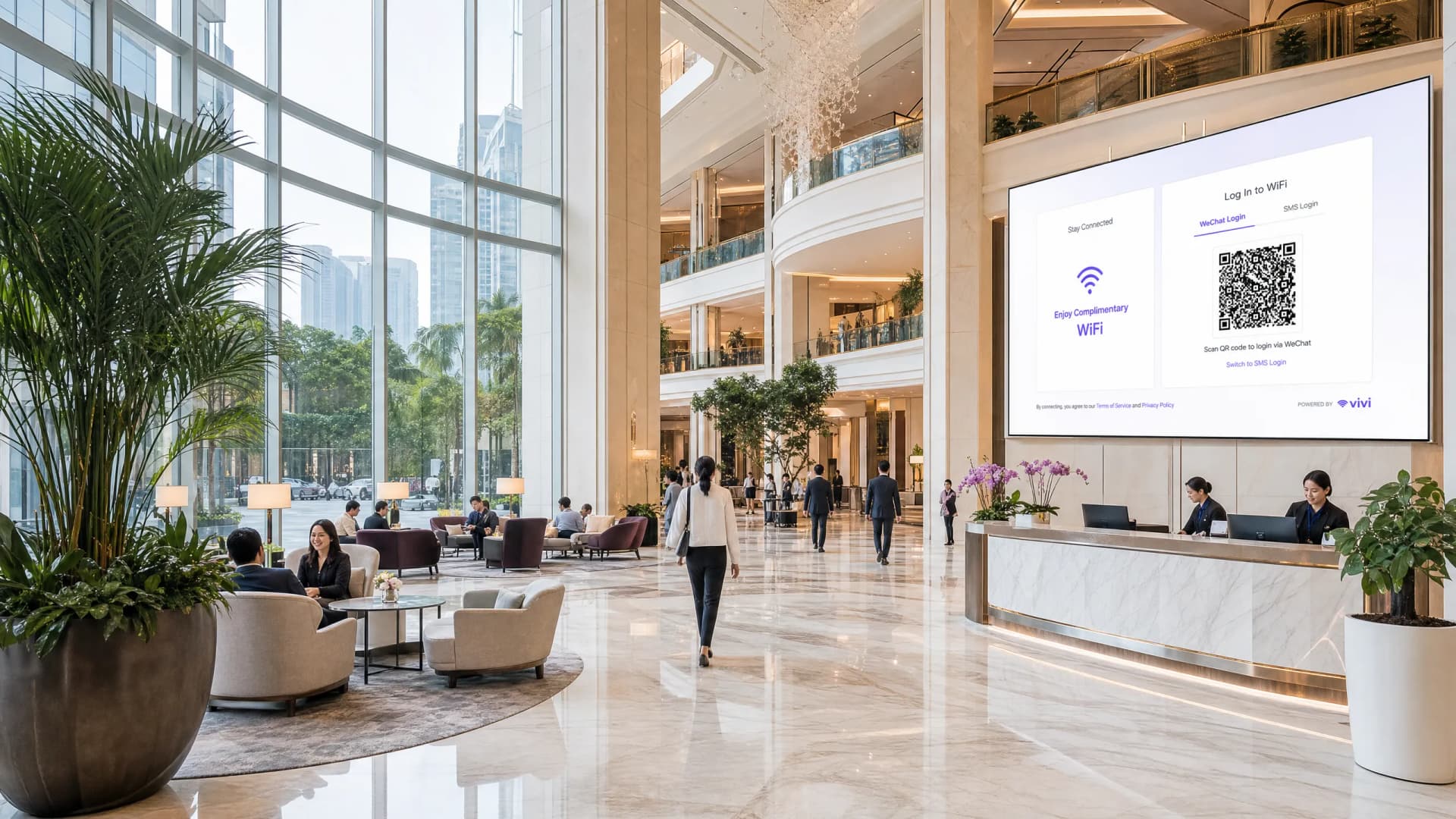
Integrating WeChat WiFi Authentication: Captive Portal Onboarding for APAC Customers
WeChat has 1.41 billion monthly active users, making it the primary digital identity for Chinese consumers globally. This guide explains how to integrate WeChat OAuth 2.0 authentication into enterprise captive portals for APAC venues, covering platform registration, scope selection, RADIUS Change of Authorisation enforcement, and dual-framework compliance with GDPR and China's PIPL. It is aimed at IT managers, network architects, and venue operations directors who need to act this quarter.

Configuring Captive Portal Redirection on Enterprise Network Controllers
This authoritative guide details the technical architecture and vendor-specific configuration steps required to implement captive portal redirection on enterprise network controllers. It provides actionable guidance for IT teams on configuring walled gardens, integrating RADIUS authentication, and ensuring compliance with GDPR and PCI DSS.
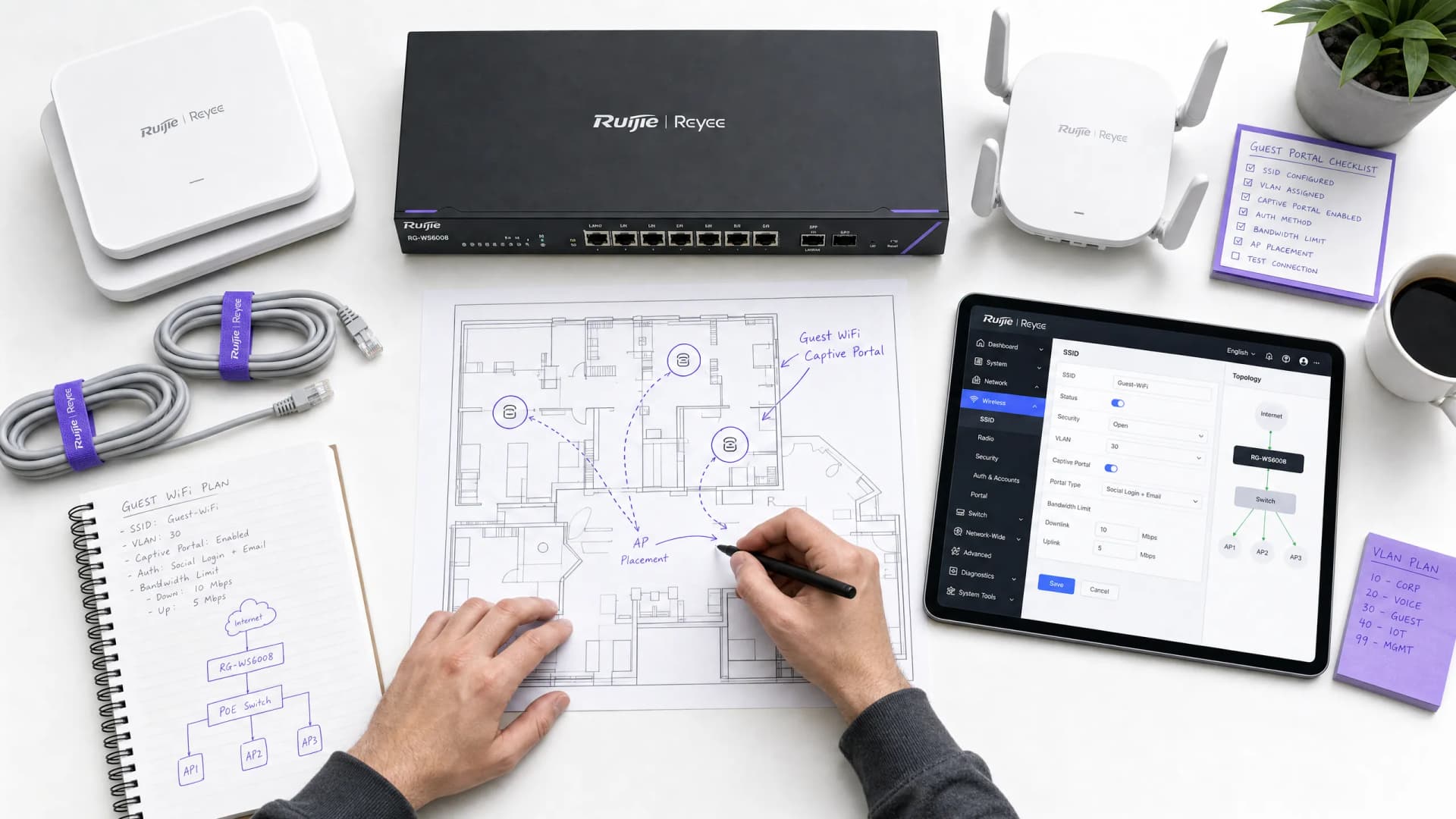
Step-by-Step Guide: Configuring Ruijie Wireless Controllers for Guest WiFi Captive Portals
This guide provides a complete technical walkthrough for configuring Ruijie wireless controllers and gateways to deploy enterprise-grade guest WiFi captive portals. It covers VLAN segmentation, external RADIUS authentication via WISPr protocol, walled garden configuration, and seamless integration with Purple's Identity-Based Networks platform to capture first-party data and drive measurable business value across hospitality, retail, and public-sector environments.

How to Configure SCEP for Secure BYOD and 802.1X Network Authentication
This guide provides a comprehensive technical reference for configuring SCEP to deploy certificate-based 802.1X network authentication. It covers the architectural shift from shared passwords to EAP-TLS, Mobile Device Management integration, and strict network segmentation for secure BYOD access in enterprise environments.
Staff WiFi Terms and Conditions: Legal and Compliance Essentials
This guide covers the legal and technical essentials of drafting and enforcing staff WiFi terms and conditions for enterprise venues. It details what to include in an Acceptable Use Policy (AUP), how to meet GDPR and PCI DSS requirements, and how to deploy identity-based authentication and network segmentation to protect corporate assets. IT managers, HR teams, and operations directors at hotels, retail chains, stadiums, and public-sector organisations will find actionable guidance they can implement this quarter.
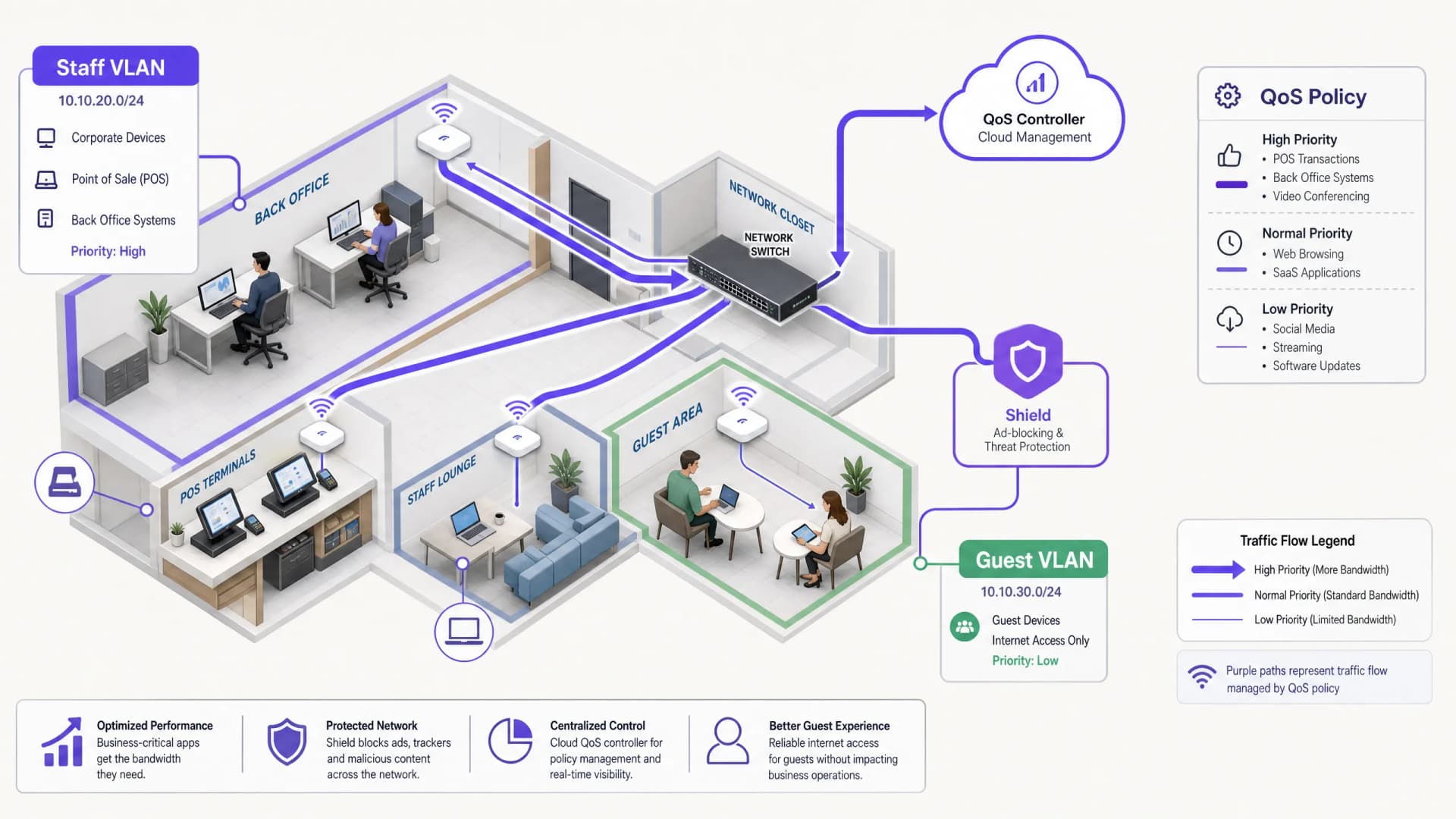
Managing Bandwidth for Staff WiFi: Shaping, QoS and Reducing Traffic
This guide details practical methods for managing bandwidth for staff WiFi in enterprise venues. It covers traffic shaping, QoS implementation, and how deploying Purple Shield reduces network load without requiring infrastructure upgrades.
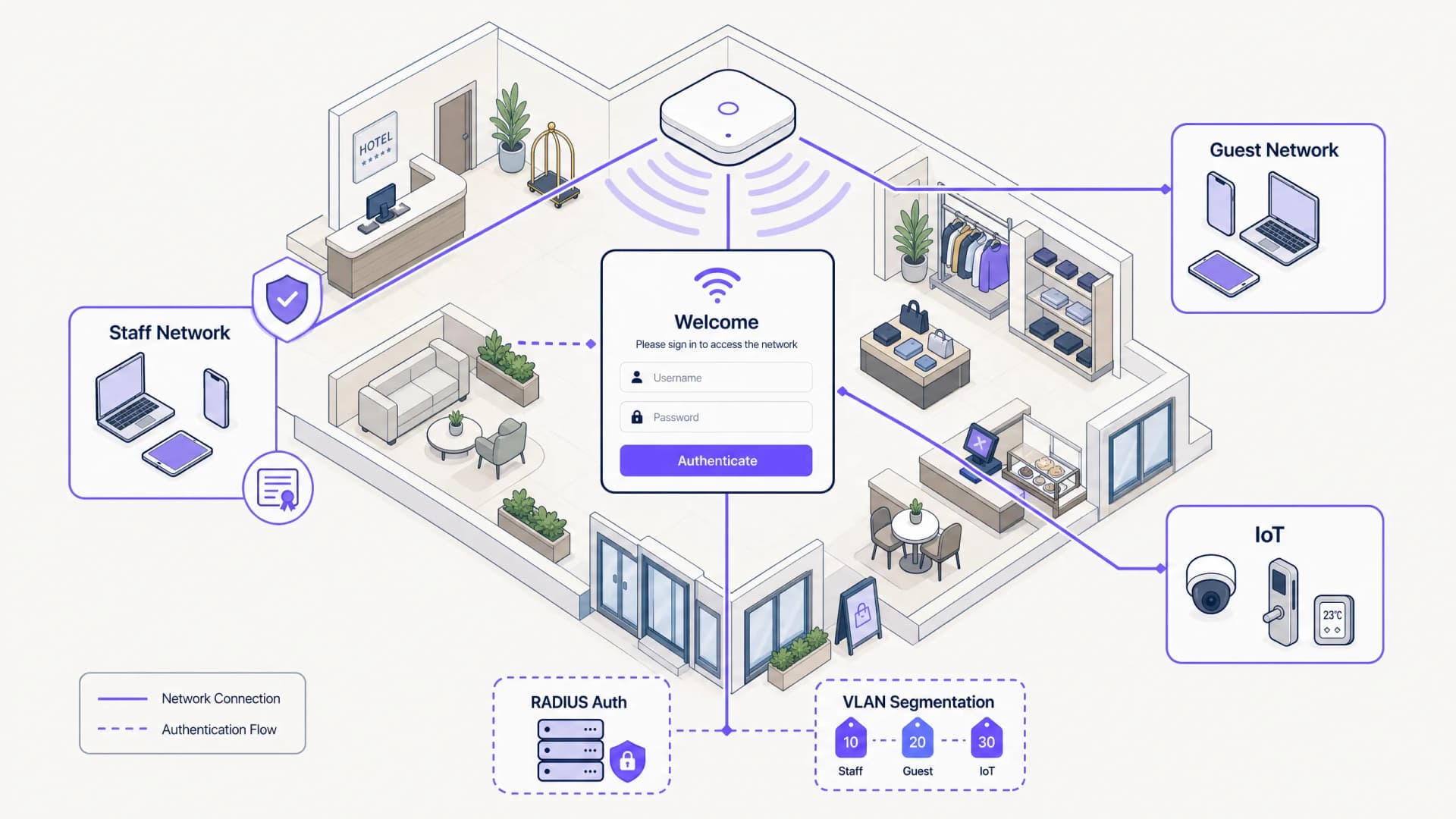
Staff WiFi Captive Portal: Onboarding and Authenticating Employees
A comprehensive technical reference for IT leaders on designing and deploying staff WiFi captive portals. This guide covers EAP-TLS authentication, BYOD onboarding, VLAN segmentation, and bandwidth management to enhance operational efficiency and mitigate security risks.

Staff WiFi Policies for Retail: Securing Back-of-House Networks
This guide covers the critical technical and policy requirements for securing retail back-of-house WiFi networks - from VLAN segmentation and PCI DSS 4.0 compliance to managing employee BYOD on the shop floor. It gives IT managers, network architects, and operations directors a practical, vendor-neutral blueprint they can act on this quarter.
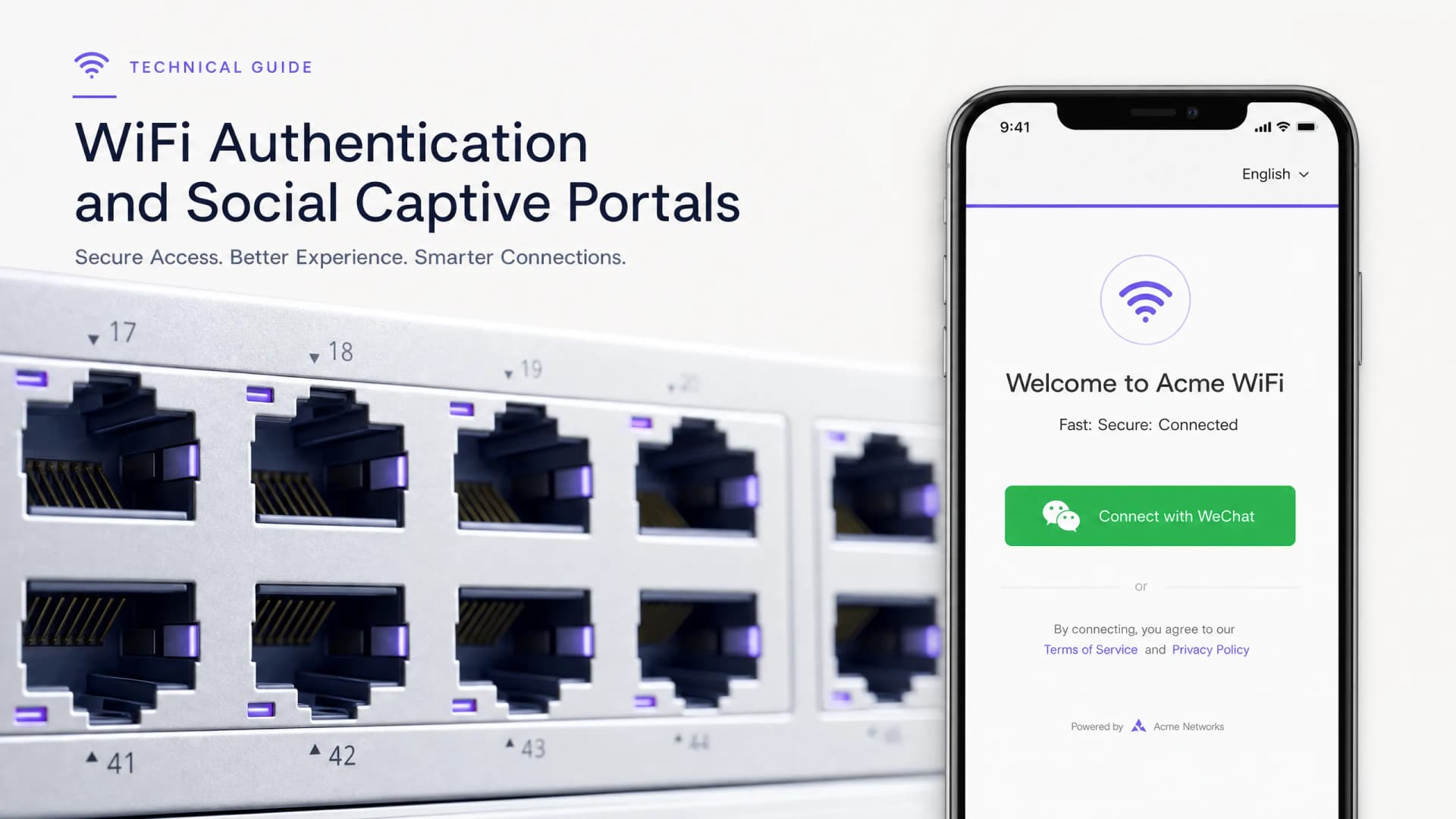
Integrating WeChat WiFi Login: Capturing Engagement via Social Captive Portals
This guide details how to integrate WeChat WiFi authentication into enterprise captive portals, covering the OAuth 2.0 architecture, RADIUS integration, and step-by-step deployment across Cisco Meraki, HPE Aruba, and Juniper Mist hardware. It gives IT managers and network architects a practical framework for capturing first-party data from WeChat's 1.3 billion users while driving engagement via Official Account follows and post-login redirects.

WiFi GDPR Compliance: How to Securely Collect Guest Data via Captive Portals
This technical guide gives IT managers, network architects, and venue operations directors a practical framework for achieving GDPR compliance across guest WiFi deployments. It covers how captive portals collect personal data, how to secure explicit consent, and how to implement automated data retention policies that protect your organisation from regulatory fines of up to 4% of global turnover. Purple's guest WiFi platform maps directly to each compliance requirement, from consent logging to one-click data erasure.
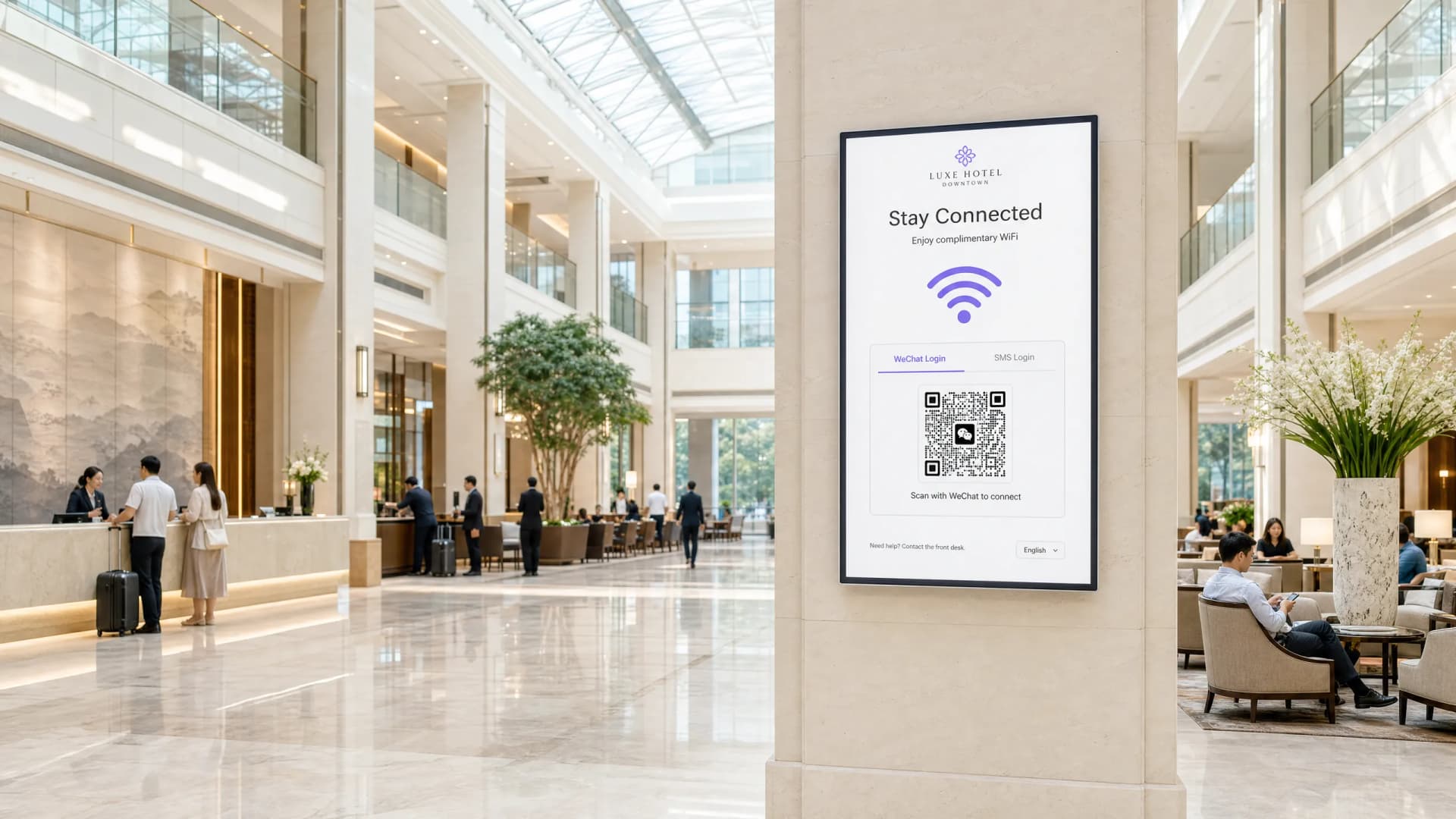
How to Configure WeChat OAuth Authentication for Captive Portals
This technical guide explains how to configure WeChat OAuth authentication for captive portals. It details the required platform registrations, OAuth 2.0 flow, scope selection, and network enforcement mechanisms necessary to capture first-party data from Chinese visitors securely.

Enterprise SCEP Setup Guide: Certificate-Based WiFi Authentication for Higher Education and Large Networks
This guide provides a comprehensive technical blueprint for deploying certificate-based WiFi authentication using SCEP. It covers the architectural transition from pre-shared keys to EAP-TLS, deployment sequences across MDM platforms, and critical risk mitigation strategies for large-scale networks.

Enterprise WiFi authentication without Active Directory or an on-prem server
This guide explains how to deploy secure WPA2/3-Enterprise WiFi authentication without an on-premises Active Directory, Windows NPS, or RADIUS server. It covers the protocol mismatch between cloud identity providers and 802.1X, the case for EAP-TLS over PEAP-MSCHAPv2, and how to deploy cloud RADIUS with MDM-issued certificates against Microsoft Entra ID, Okta, or Google Workspace. Written for IT leads at cloud-first and Mac/Chromebook-heavy organisations that are ready to retire on-premises infrastructure.
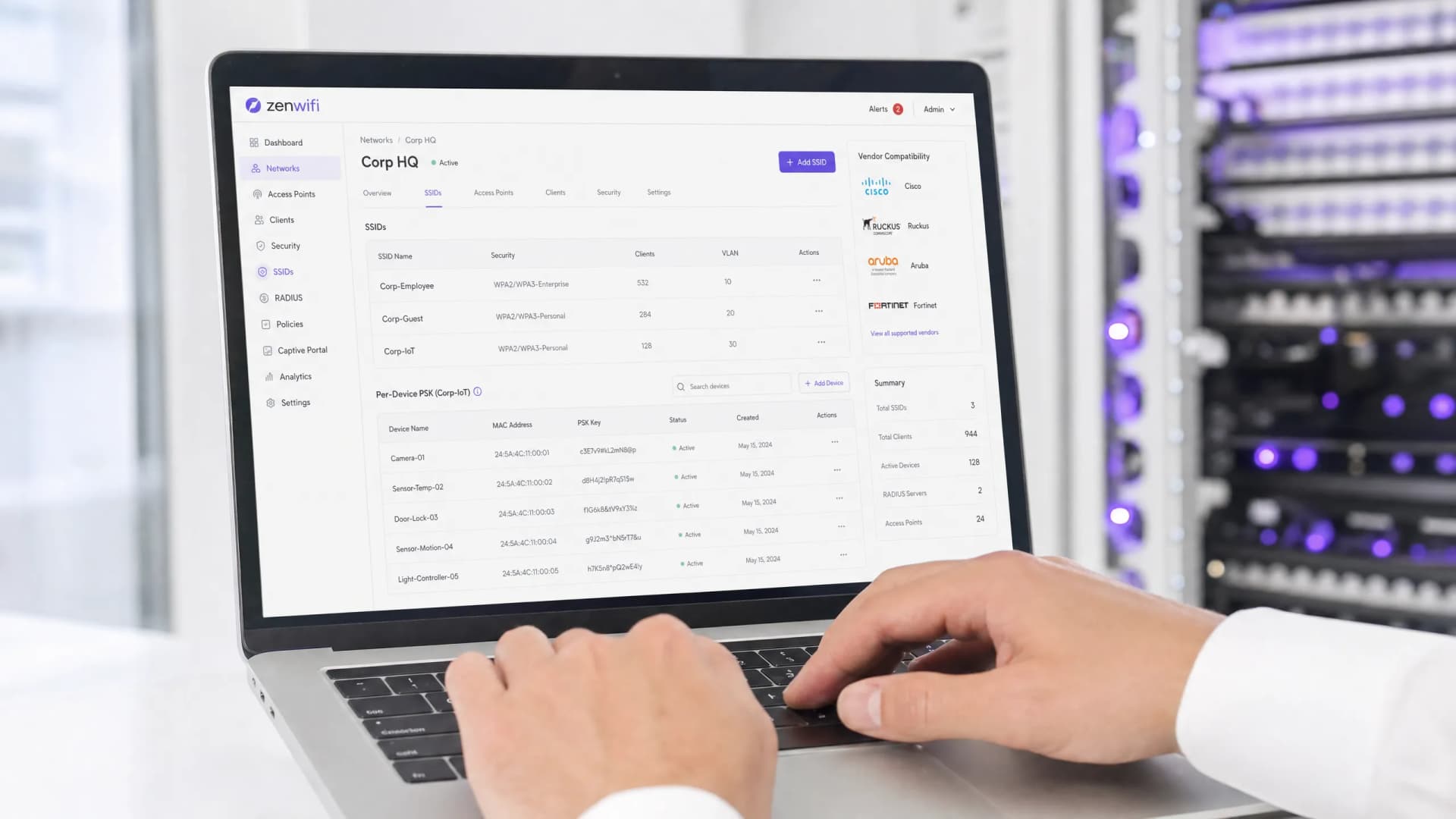
Per-Device PSK by Vendor: iPSK, DPSK, MPSK and PPSK Compared (and WPA3 Support)
A comprehensive comparison of per-device PSK implementations across Cisco Meraki, HPE Aruba, Ruckus, Juniper Mist, Extreme, Fortinet, and Ubiquiti UniFi. Learn how WPA3-SAE impacts per-device key strategies and when to deploy transition modes versus moving to 802.1X.

How to Reduce the Number of WiFi SSIDs Using Per-Device PSK (iPSK, DPSK, MPSK)
This authoritative technical reference guide explains how IT teams can eliminate WiFi performance degradation caused by SSID beacon overhead by collapsing multiple purpose-built networks into a single SSID using per-device PSK (xPSK). It covers the vendor landscape across Cisco iPSK, HPE Aruba MPSK, Ruckus DPSK, Juniper Mist PPSK, and Ubiquiti UniFi PPSK, with practical implementation guidance on dynamic VLAN assignment, IoT onboarding, and PCI DSS compliance. Venue operators in hospitality, retail, stadiums, and public-sector organisations will find actionable architecture guidance and real-world worked examples.
Legal and Compliance Requirements for Shared WiFi Infrastructure
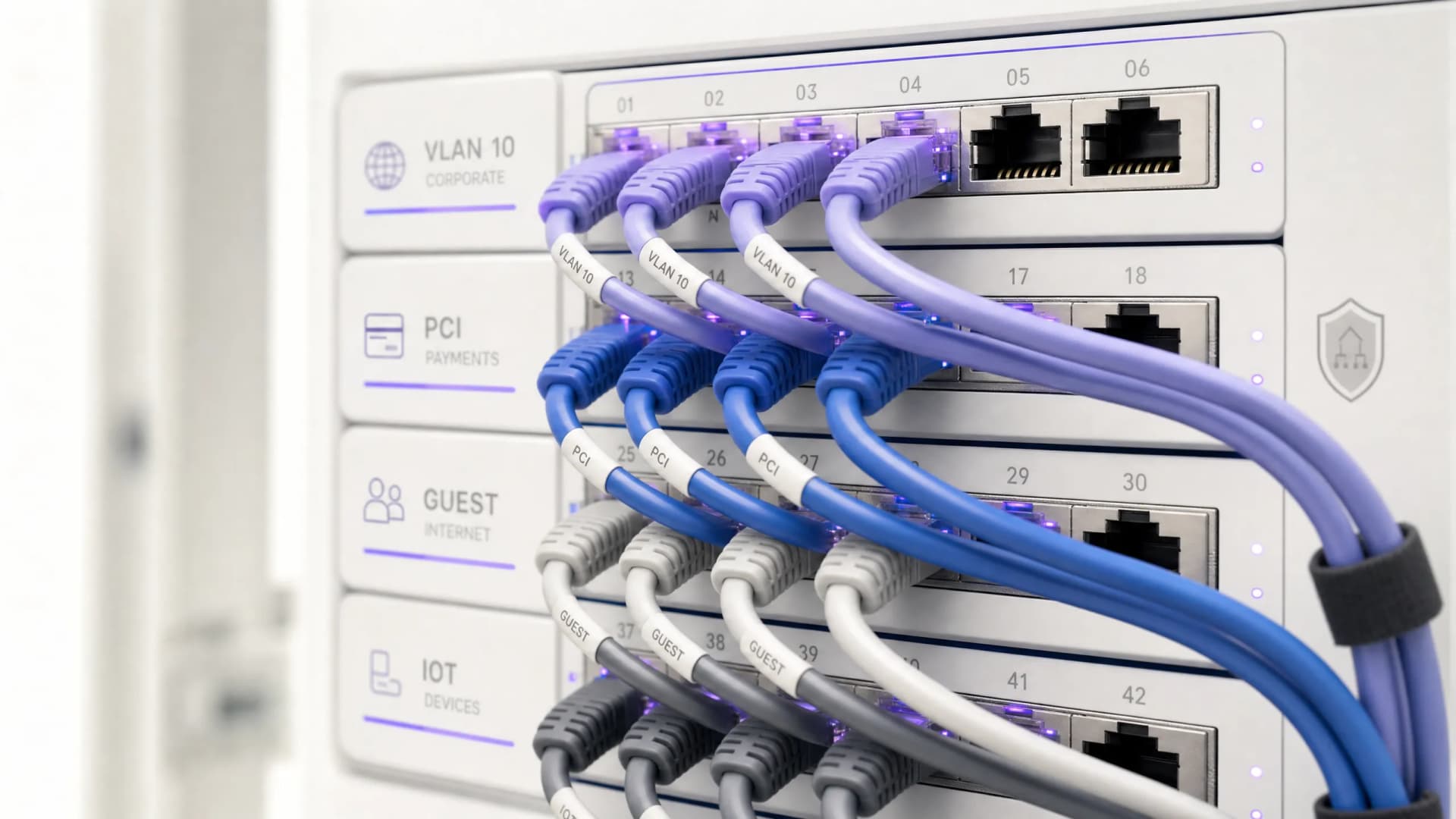
This authoritative technical reference guide outlines the critical legal, regulatory, and architectural requirements for deploying and managing shared WiFi infrastructure. It provides IT managers, network architects, and venue operators with actionable frameworks for ensuring robust data protection, strict payment security compliance, and high-performance tenant isolation using enterprise standards.
Roaming Optimisation for VoIP and Video Calls on Corporate WiFi
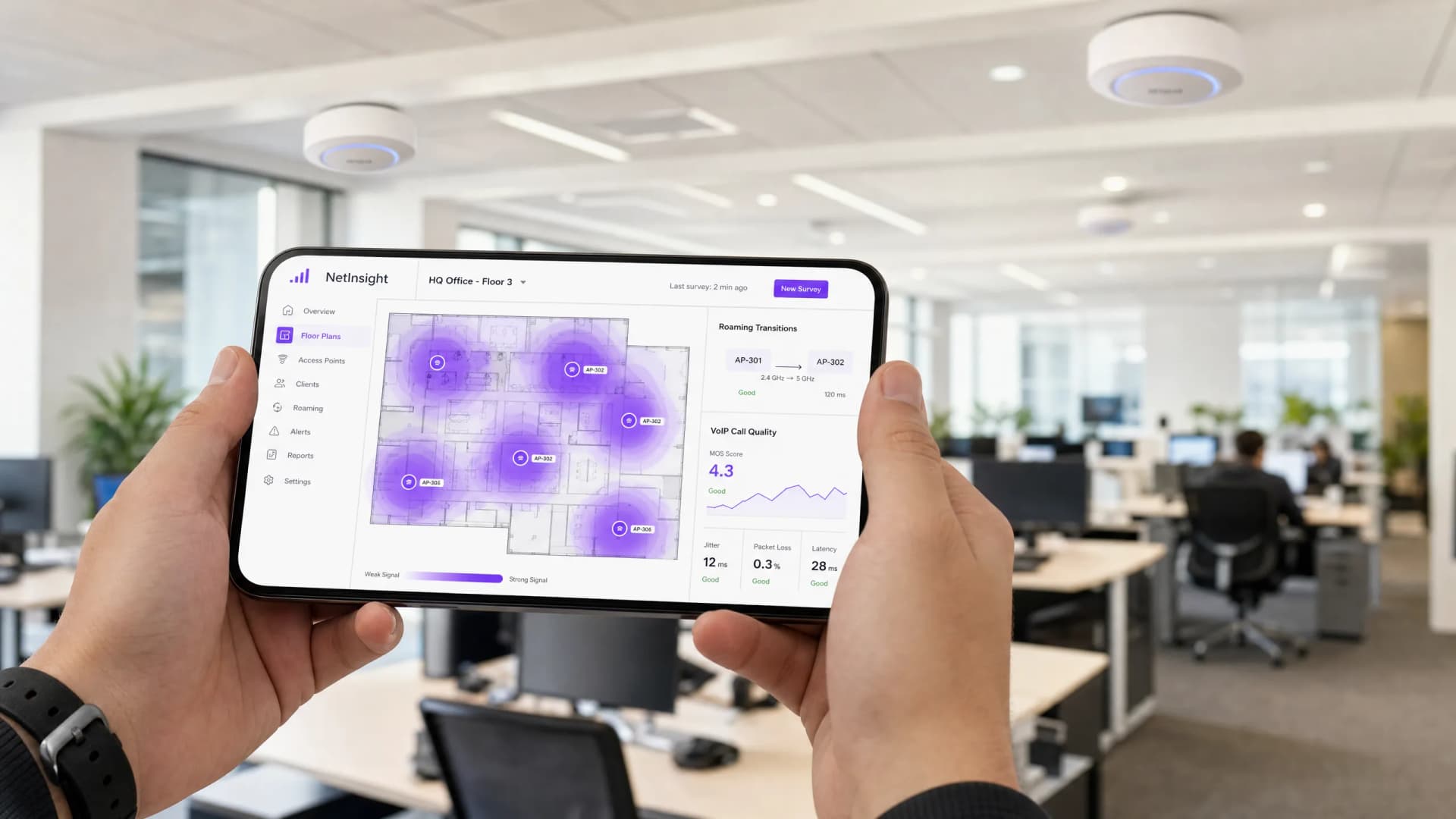
This guide provides IT managers, network architects, and CTOs with a comprehensive, vendor-neutral blueprint for optimising WiFi roaming to support seamless VoIP and video calls on corporate staff networks. It covers the IEEE 802.11k/r/v protocol stack, WMM QoS configuration, RF cell design, and end-to-end wired QoS mapping required to achieve sub-50ms handoff latency. Applicable across hospitality, retail, healthcare, and large-venue environments, this reference includes real-world implementation scenarios, troubleshooting frameworks, and a measurable ROI analysis.
Certificate-Based Authentication for Corporate Devices (EAP-TLS)
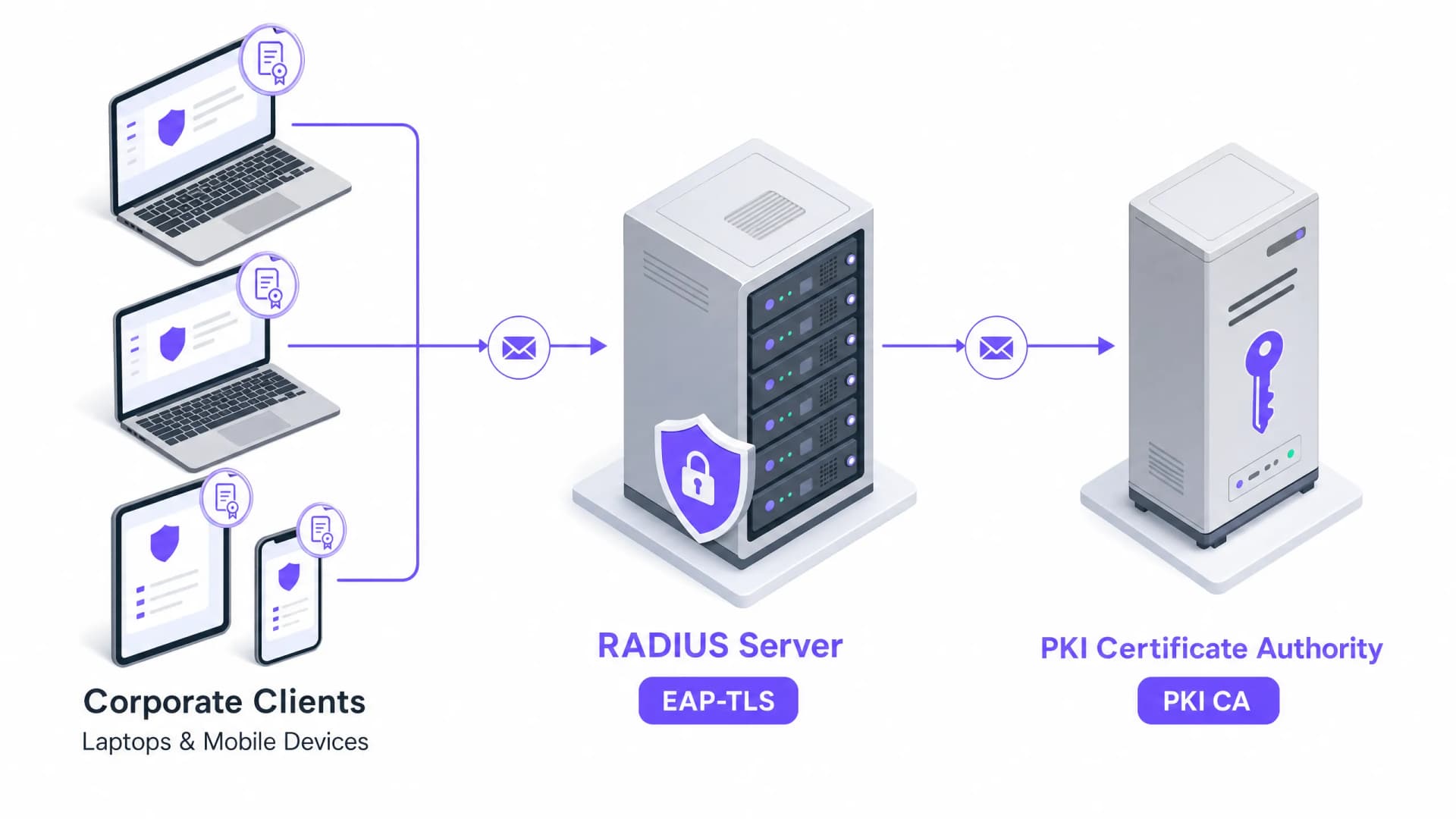
This authoritative technical reference guide covers the architecture, deployment, and operational best practices of EAP-TLS certificate-based authentication for corporate devices. Designed for IT architects and venue operations leaders, it provides a practical roadmap to eliminate password-based credential risks and achieve robust 802.1X network access control across multi-site enterprise environments.
Designing Secure Staff WiFi Networks Separated from Guest Traffic
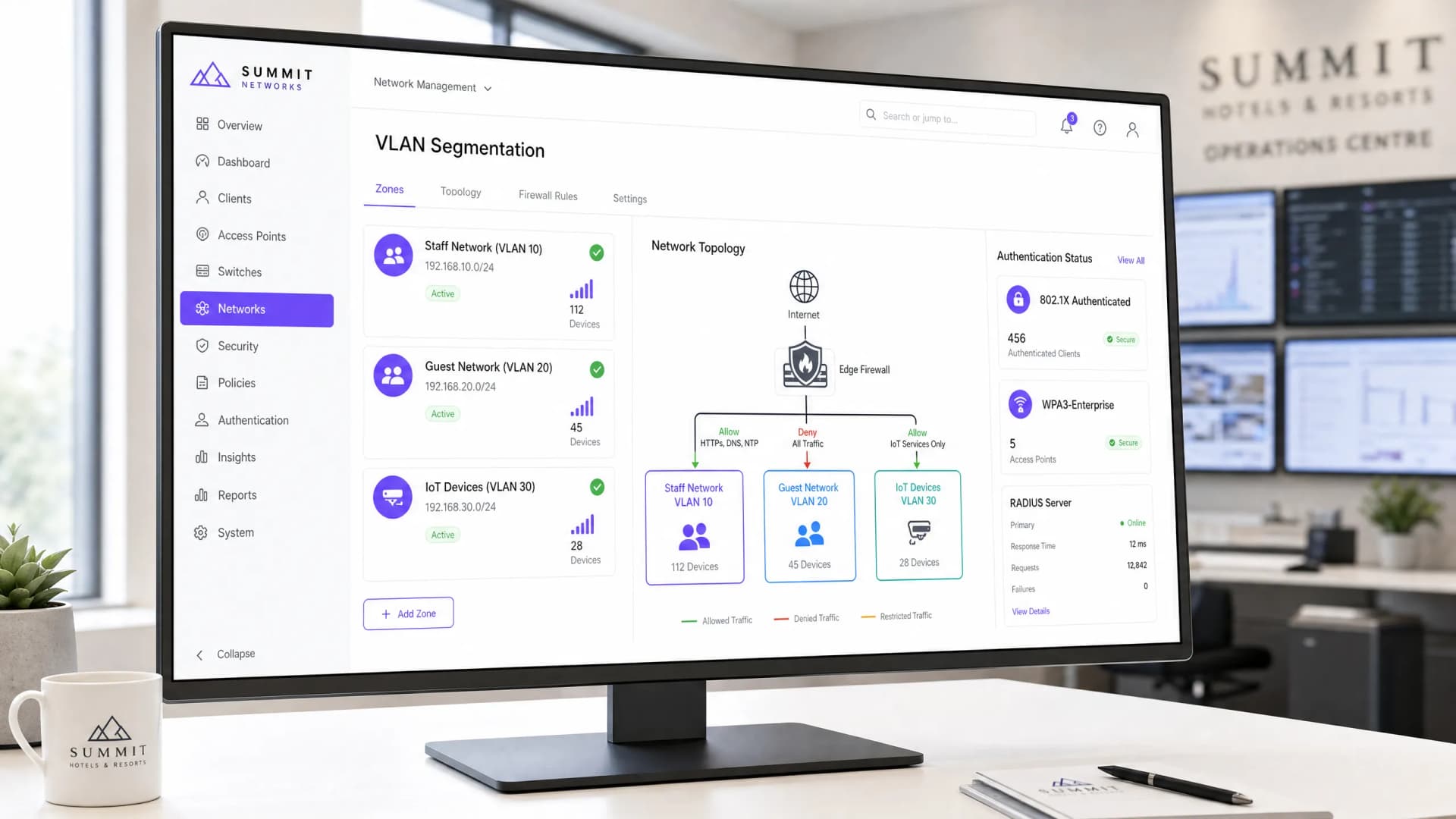
An authoritative technical reference guide for network architects and IT leaders on designing secure, high-performance staff WiFi networks. It details the logical and physical segmentation of operational traffic from public guest networks using VLANs, 802.1X authentication, and WPA3-Enterprise to satisfy compliance mandates (PCI DSS, GDPR) and eliminate lateral movement security risks.
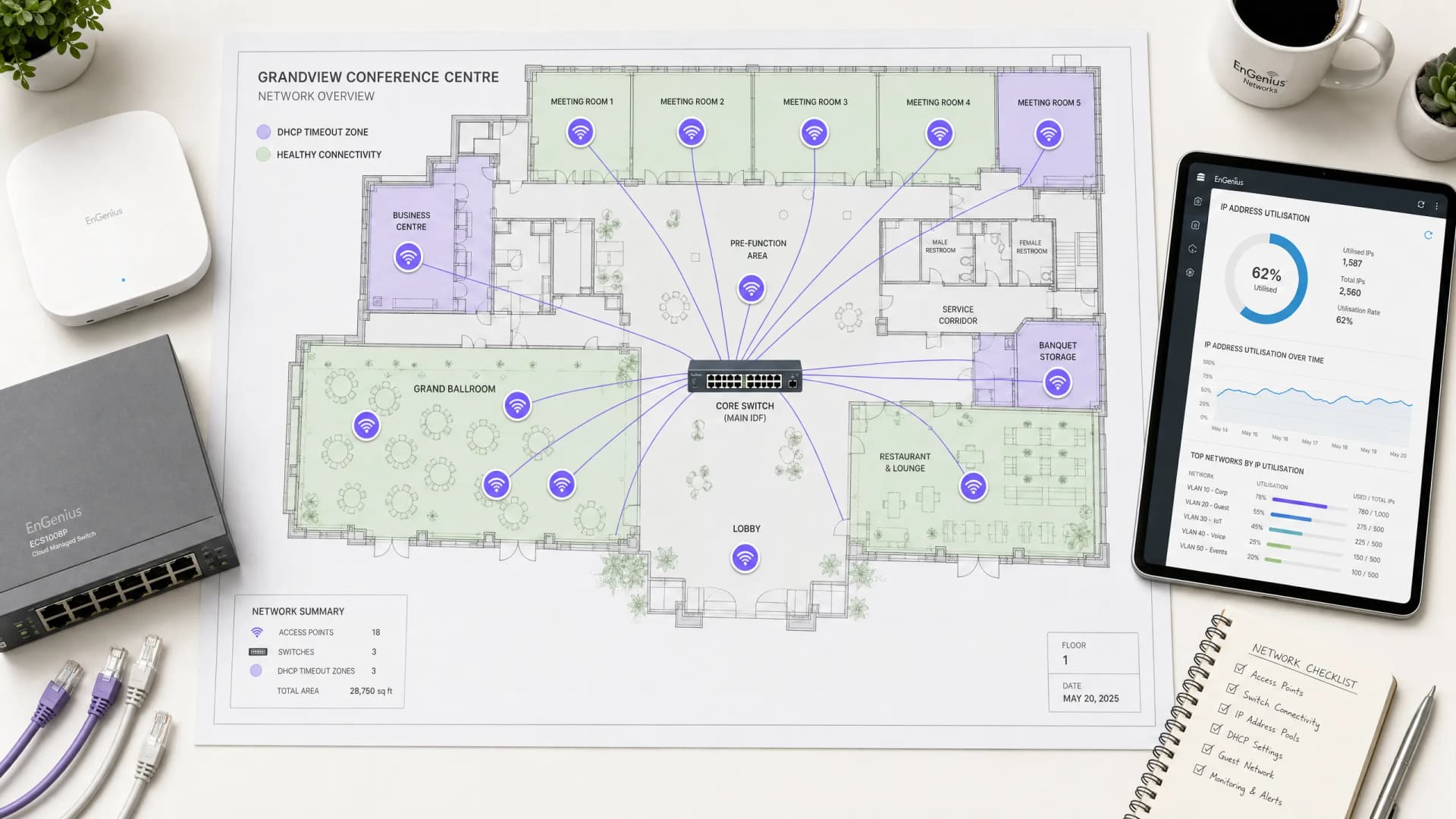
Top 10 causes of DHCP timeouts on high-density wireless networks
A technical reference for network engineers, enterprise architects, and venue IT directors troubleshooting DHCP onboarding bottlenecks in high-density WiFi environments. Covers IP helper relay misconfigurations, lease pool starvation, broadcast airtime degradation, rogue DHCP servers, and multi-vendor remediation.
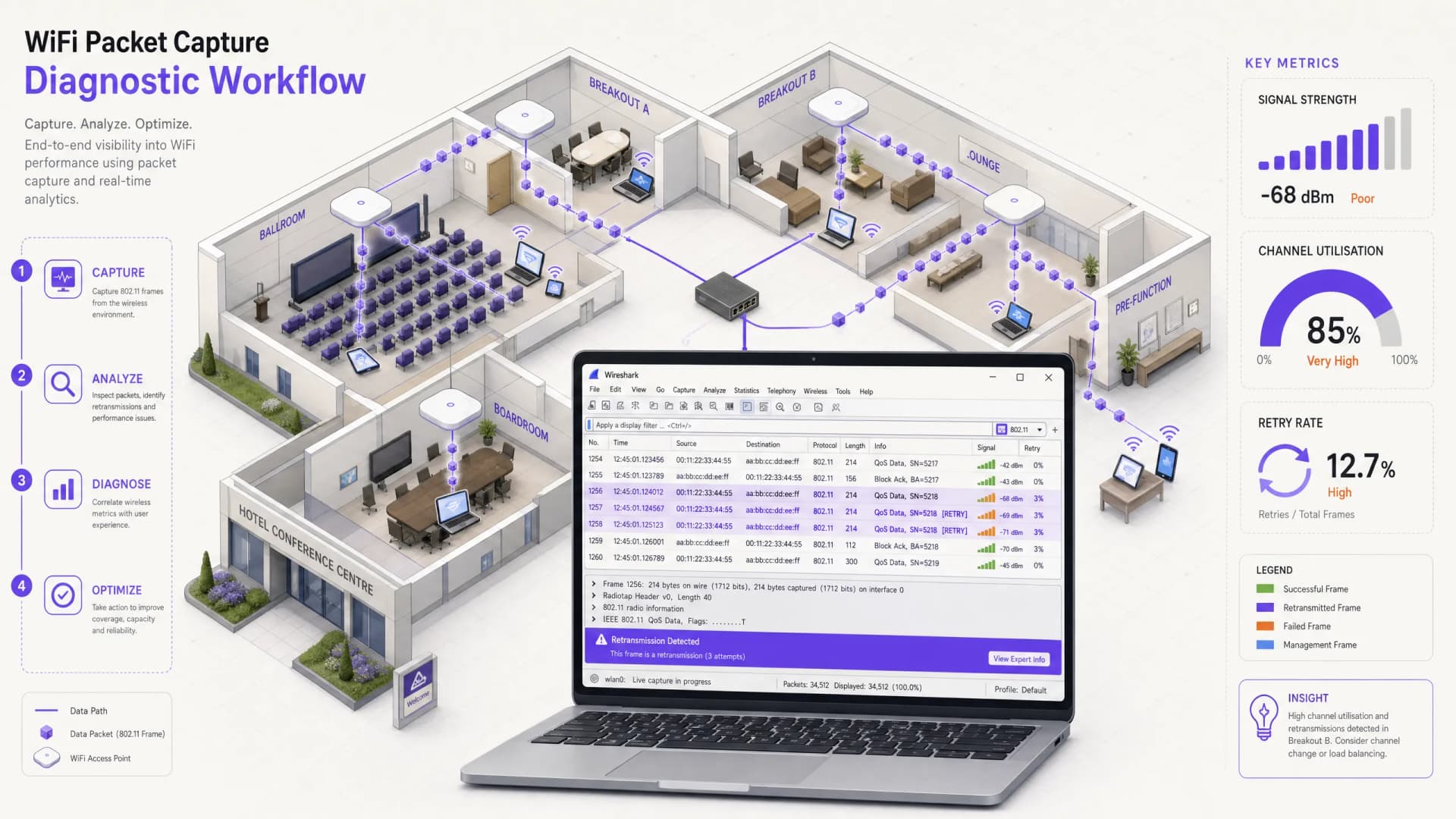
Using Packet Capture (PCAP) to Diagnose Slow WiFi Performance
This technical reference guide provides IT managers, network architects, and venue operations directors with a structured, packet-level methodology to diagnose and resolve slow enterprise WiFi performance using Packet Capture (PCAP) analysis. By dissecting raw 802.11 frames — including retransmission rates, airtime utilisation, and physical layer metadata — teams can isolate RF-layer bottlenecks from wired or application issues with precision. Applicable across high-density venues including hotels, retail chains, stadiums, and conference centres, this guide delivers actionable diagnostic workflows, real-world case studies, and configuration remediation steps to reclaim network capacity and protect guest experience.
Got questions about your specific setup?
Our team works with venue operators, IT managers, and network engineers across 80,000 venues. Book a 20-minute call and we will show you how others like you solved it.