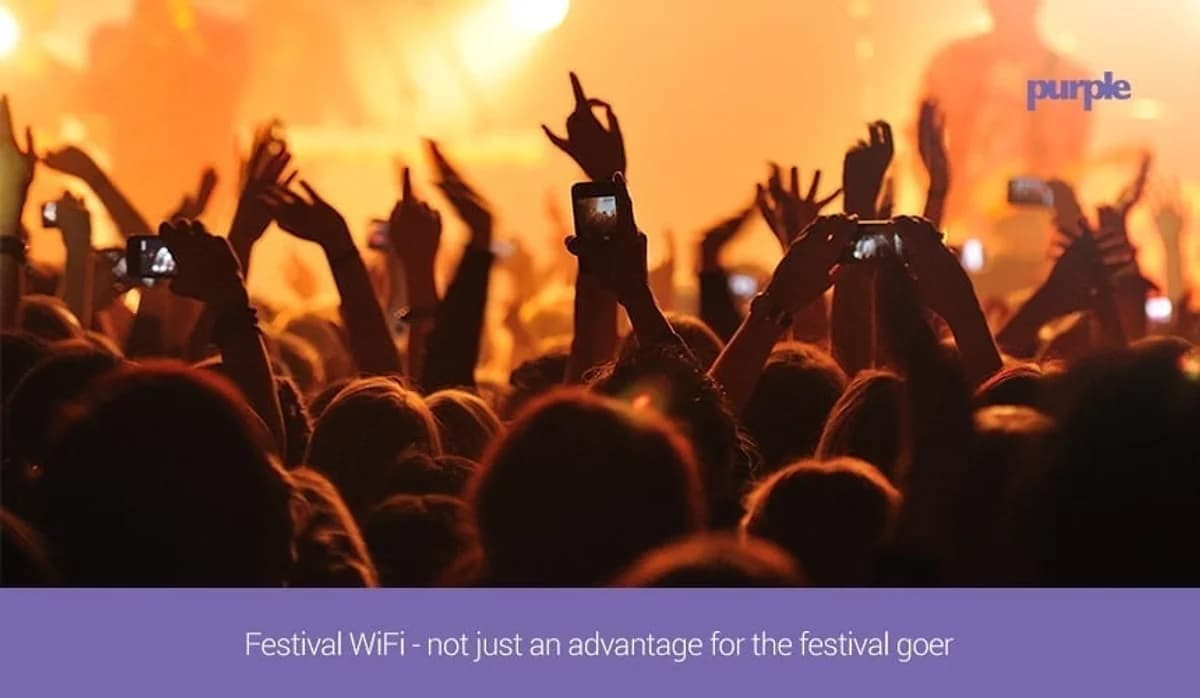
Festival WiFi - not just an advantage for the festival-goer

By Richard Ellor
23 June 2017
5 min read
Festival WiFi - not just an advantage for the festival-goer
Event Network Engineering Engine

Festival WiFi Capacity & Sponsor Revenue Calculator

Model outdoor high-density WiFi coverage, aggregate internet backhaul, vendor POS network segmentation, and captive portal sponsorship revenue for live festivals and outdoor events.

Capacity & Environmental Variables

50,000 Attendees
2,00050,000100,000
180,000 m² (44.5 Acres)
10,000 m² (2.5 ac)150,000 m²300,000 m² (74 ac)
140 Stalls
10 Stalls120 Stalls250 Stalls
1.8 devices / attendee

Accounts for smartphones, smartwatches, action cams, and vendor payment readers simultaneously on site.

HD social video streaming, FaceTime/video calls, and rapid cashless POS sync.

Concurrent Devices
90,000
40,500 active RF streams
Required Backhaul
171.0 Gbps
Includes 20% burst safety
Outdoor AP Density
450 APs
IP67 Tri-Band WiFi 6E/7
Sponsor Value
$5,600
~36,000 opt-in leads
High-Density Outdoor RF Cell Topology450 Access Points Required
Antenna Beamwidth & Channel Isolation

Deploy 60° to 90° directional sector antennas mounted on stage trusses and light towers at 4.5m to 6.0m heights to tightly define coverage zones and prevent co-channel interference across the main arena.

20 MHz Channels & Rate Trimming

Lock 5 GHz and 6 GHz spectrum to 20 MHz channel widths to yield maximum non-overlapping channels. Disable legacy data rates below 18 Mbps to clear airtime and prevent distant sticky clients from degrading cell capacity.

Backhaul Ingest & DHCP Architecture
Sized Uplink
171.04 Gbps Aggregated Backhaul

Configured with dynamic traffic prioritization and DSCP queuing for production systems.

DHCP Pool Allocation
/16 (65,534 Hosts - e.g. 10.100.0.0/16)

20-minute lease duration forces aggressive IP recycling as crowds circulate across stages.

Power & Distribution
30 Rugged Switches

~14,100W 802.3at PoE+ power budget with dual UPS battery protection.

Event Connectivity & Sponsor Analytics

Request a Custom Festival WiFi Architecture Plan

Speak with a Purple outdoor venue specialist to finalize your high-density RF design, captive portal splash page sponsorship, and real-time crowd analytics.

Interactive Tool

Event WiFi Bandwidth & High-Density AP Capacity Planner

Calculate expected device load, internet backhaul bandwidth, access point density, and attendee lead capture yield for your upcoming venue event or conference.

Event WiFi Infrastructure Profile

Est. ~1,800 Leads Captured
Total Concurrent Devices:
5,250 devices (2.1x ratio)
Recommended Circuit Bandwidth:
4.2 Gbps Dedicated Fiber
Estimated High-Density APs:
44 Enterprise APs (WiFi 6 / 6E)
Marketing Data Opt-In:
~72% Captive Portal Conversion
Deployment Advice: For corporate conferences, segment staff and speaker networks onto a dedicated WPA3-Enterprise VLAN with 802.1p priority tagging to prevent attendee traffic from causing presentation lag.

Need High-Density WiFi & Attendee Analytics for Your Venue?

Purple turns event guest WiFi into a powerful marketing engine. Capture verified attendee emails, customize venue splash pages, and automate post-event engagement while maintaining 99.99% uptime.

Download Guest WiFi RFP Checklist

Well, that's Glastonbury festival over and done with for another year, and I'm sure many of your social media news feeds have been swamped with selfies, videos and 'wish you were here' snaps. But this isn't anything out of the ordinary. The way festival-goers enjoy and engage with global music festivals has certainly evolved, with most people morphing into full-time photographers as soon as they adorn their wristbands and step foot on-site. People love sharing their every move and flaunting their festival experience to friends, family and followers.

Luckily, festival WiFi has become a logical connectivity solution for many organizers, meaning revelers no longer have to rely on lagging, overloaded 3G and 4G networks to share their favorite memories. Remember Dolly, Daisy and Molly? Maybe you don't, but this high-speed herd of artificial cows made the headlines back in 2014 by delivering WiFi connectivity to the Glastonbury site. Nowadays, a growing number of popular global events such as Coachella and Benicàssim have followed suit and started to offer WiFi at festivals, with some even charging fees for unlimited access.

Connectivity is invaluable for our tech-savvy generation of festival-goers. People like to have peace of mind that they can keep in touch with friends, upload their filtered photos, boast about the best acts on Facebook, stream on Snapchat, and tweet about the delightful on-site restrooms, but it's also a huge blessing for those behind the scenes. Arguably, the organizers benefit the most from on-site festival WiFi as it provides them with on-the-ground coverage and an army of instant promoters. But how else can organizers benefit from offering WiFi at festivals?

Capture more than memories

Festival coordinators are starting to acknowledge the fact that connectivity is an expectation rather than a perk for the modern-day festival-goer. Offering WiFi at festivals keeps the masses satisfied, but why shouldn't organizers also reap the rewards? Festivals can implement a WiFi and analytics platform that delivers seamless connectivity but also captures data about every individual that logs on. Gaining access to email addresses, name, age, interests, gender and where people have traveled from is highly valuable for organizers, particularly during the festival planning stage. This data can be used to consider what acts, stalls, marketing and merchandise to have in the future according to age and interests, as well as providing the team with a wealth of CRM data for communication purposes.

A very appy experience

Giving visitors access to WiFi at festivals ensures they can download and use any mobile apps that have been developed for the festival period to improve the visitor experience. Digital applications often replace the paper versions of site maps and artist listings, ensuring important information is all accessible in one place. Planners could consider advertising the app download link on the initial WiFi login page and could feature it on any on-site advertisements promoting the WiFi network. Apps can also be used to push out additional purchases, including VIP upgrades and alcohol packages.

Secrets exposed

Gossip and secrets - we all love to indulge from time to time, don't we? Well, let those individuals who are using your WiFi find out about secret gigs and last-minute artist announcements via social media or email. It helps to build suspense, create a buzz, and makes people feel like they are a real part of the festival experience. Also, the fact that it is "secret" can often lead to even more posting, sharing, snapping, and "likes" on social media. A real win-win for both the organizers and the WiFi users.

Oh, so organized

Festival WiFi can actually help management teams allocate staff, reposition signage and keep festival-goers safe. Through using analytics software, location and presence data can be exploited to monitor real-time activity across the entire festival site. Coordinators can easily identify where large lines may be forming for bars, food outlets and stages, then put staff in place to deal with demand. If one bar is extremely overcrowded and another bar has received limited visitors then signage could be implemented to redirect people to less busy areas. Likewise, if one of the stages at the festival isn't receiving as much traction as expected then a text or alert could be sent out to people informing them about artists performing at that stage.

Real-time rewards

Use WiFi to obtain visitor data and distribute relevant, triggered promotions. Whether that is sending a reminder about the VIP beauty facilities on-site to all women, or sending an exclusive offer to all demographics about rain boots and ponchos when it's raining, organizers have the invaluable opportunity to make a significant return from their WiFi investment. And let's be honest - who doesn't like receiving a discount or being informed about something they may actively need?

Here's to next year

If the photos are anything to go by, then most attendees enjoy every second of their festival experience. Harness this excitement and positivity by asking them to review your event shortly after they leave. It's a simple task when using a WiFi and analytics platform, as coordinators can capture CRM data and send automated review requests to every individual. It's particularly useful for younger festivals that don't have a mass following and need to build up a good reputation. Organizers can also promote next year's dates, artists, and early bird tickets to existing customers.

So, as we've identified, it's not just fun and games for the people attending music festivals. Those in charge of pulling together a festival, however big or small, have an excellent opportunity to take their marketing and visitor engagement to a whole new level and grow profits through implementing WiFi at their events.
Frequently asked questions

How do you calculate WiFi bandwidth for a music festival or outdoor event?

Festival bandwidth sizing starts by multiplying peak attendance by the device concurrency ratio (typically 1.5 to 1.9 devices per attendee). In open outdoor grounds, apply a 45% active transmission concurrency factor with 2.5 Mbps to 5 Mbps allocated per active device. In addition, reserve dedicated bandwidth (minimum 5 Mbps per stall) for cashless food and merchandise payment terminals.

How many access points are needed for outdoor festival WiFi coverage?

High-density festival environments require IP67 weather-rated tri-band enterprise access points equipped with 60° to 90° directional sector antennas. A standard rule of thumb is deploying one access point per 180 to 220 concurrent devices in open fields or every 1,200 square metres, mounted on stage trusses, audio delay towers, or temporary light masts at heights between 4.5m and 6.0m.

How do engineers manage RF interference and channel overlap across large festival grounds?

Engineers lock 5 GHz and 6 GHz channels to 20 MHz widths to maximize non-overlapping spectrum channels, disable legacy 2.4 GHz radios on 70% of access points, disable low basic data rates below 18 Mbps to trim cell boundaries, and coordinate RF channels with stage wireless microphones, in-ear monitors, and broadcast satellite uplinks.

How can festival organizers monetize temporary guest WiFi networks?

Organizers monetize festival WiFi by selling full-screen splash page takeovers to headline sponsors, collecting opt-in marketing permissions from connecting attendees for post-event ticket presales, distributing location-triggered sponsor discount coupons, and presenting brief sponsor feedback surveys prior to network authorization.

How should cashless point-of-sale terminals and production staff be secured at festivals?

Cashless bar payment terminals, ticket scanners, and production staff must never share an open public SSID. They should connect to a dedicated WPA3-Enterprise or Identity PSK VLAN with strict Layer 2 peer isolation, PCI-DSS security compliance controls, and DSCP EF priority QoS queuing to prevent transaction delays during peak headline sets.

Why do festival networks require short DHCP lease durations?

Because tens of thousands of mobile attendees move continuously across festival stages and camping areas, default 24-hour DHCP lease times exhaust available IP pools within hours. Configuring a 20 to 30 minute lease time ensures inactive IP addresses recycle back into the pool rapidly.

Ready to get started?

Book a demo with one of our experts to see how Purple can help you achieve your business goals.

Speak to an expert