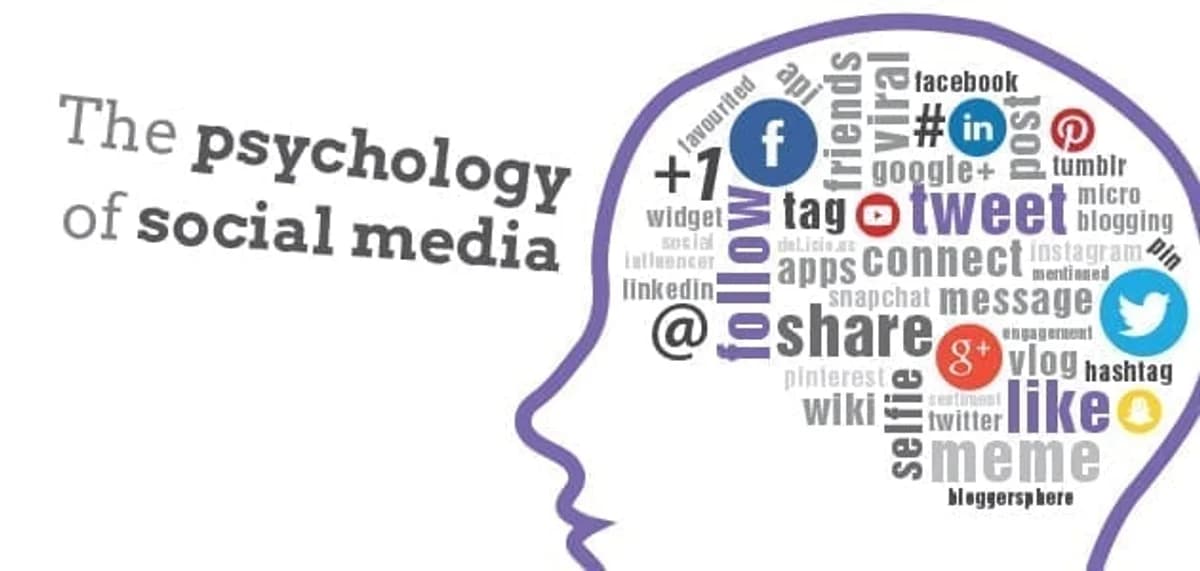
Social media has had a profound effect on the way people engage with each other. Its power lies in the way it can provide users with a sense of personal connection and community. Psychologists are interested in what effect this has on people's behavior in real life.
Which is the real you?
Social media can have a positive effect on people's confidence. A positive online interaction can make people feel good! Even though users present their actual identity on social networking sites, they may not be showing their true personas, beliefs, interests, or identity. Research has suggested that there is little comparison between a person's updates and posts to how they are in real life. Online, people have a tendency to present an exaggeration of their personality and there is more time to make adjustments in online interactions. If this is going to increase well-being and a feeling of belonging, then social media is certainly doing its job!
Wilcox and Stephens are right to point out that it is easy to dislike a person's online persona, yet like the person during real-life social interactions. Amanda Lenhart reports that digital use can be beneficial and that one form of socializing doesn't affect another. Just like in the real world, we can adjust online behavior as we gain experience - of course mistakes are made along the way.
Personality and social media
Does online social behavior reflect real life? Are posts, pictures and tweets a true reflection of oneself? We can certainly present ourselves in a more fabulous way but words can be misinterpreted and once it's out there we can't take it back!
Wilcox and Stephens also state that sites such as Facebook can increase self-esteem. People naturally present a socially desirable, positive self-view to others when online. In turn, this gives individuals an increase in self-esteem but a decrease in self-control.
Clearly individuals can choose the information contained in their posts and keeping up with an online identity makes a person feel good and increases self-esteem. However, the more comfortable we get, the more likely we are to lose self-control and act impulsively online. Other examples of the negative effects of Cyberpsychology look at body image in teenage girls, checking romantic partners, sexting online and anger through the internet.
Reading other people's posts can make us less self-aware and we increase our reliance on other people's thoughts and feelings. At the same time, 'experiencing' other people's thoughts and feelings can also increase understanding and empathy for others. Individuals who interact with people from a wide range of backgrounds and cultures are reported to have higher empathy for others. Without this interaction, it is sometimes difficult to understand other people's behaviors and beliefs. Social media is the most fantastic platform for connecting people who might not meet in real life.
Gaining success in an online interaction would be particularly useful for anxious people, as online interactions could translate into real-life social interactions. Guillermo Farfan, writing in the Association for Psychological Science, warns us that individuals who are socially anxious do not want more 'evidence' that people don't like them. Initially it was thought that the internet would be a safe haven for these types, helping them to overcome the inhibitions of face-to-face contact and feelings of isolation. Unfortunately these are the people who are less likely to use such sites.
For those of you who are wary of posting on social media sites, as we have seen, it can make you feel good. Come on and give it a try!
Selfies, Likes and retweets!
There are so many ways to get positive feedback on social media, but are we becoming self-obsessed? A study at Western Illinois University found that people who were more self-absorbed reported more activity on Facebook. Dr. Newman says an increase in positive interactions, for some, can increase feelings of importance. By receiving 'likes', new followers, and retweets, individuals can gain a confidence boost that could translate into increased confidence in the real world.
These likes, follows, and retweets have been described as 'little pockets of love' and can give users a buzz. It is little wonder that they could be addictive. Researchers in Germany analyzed Facebook users and found that receiving positive Facebook feedback produced high activity in the 'reward center' of the brain. The pleasure they gained from this was greater than when given a monetary reward! Dar Meshi explains why: "As human beings, we evolved to care about our reputation. In today's world, one way we are able to manage our reputation is by using social media websites like Facebook."
So should we be 'cautious' when using social media?
The Psychology of Social Media is still emerging and in the future we will know more about the effects of life online. Like with any social situation, we should remain aware of how our behavior may be perceived by others.
Naturally, we conclude that we know the person we are reading about and think we know all about their lives from the (filtered) image they project of themselves. Those with a high self-esteem and a positive filter are busy posting onto social media sites and this leads to an increase in confidence.
Research by Stoughton, Thompson and Meade investigated whether job applicants' personality characteristics are reflected in social media posts. They found that extroverts are more likely to create posts relating to alcohol and individuals who are low in agreeableness are more likely to badmouth others online. This is useful for employers and employees alike and a reminder to check our privacy settings!
An Interview with a Psychologist
Chris Lee summarizes Psychology of Social Media:
“Social media is a curated expression of ourselves which we have learned to use in a way that conveys our desired identities” This feeds our egos and creates our 'Personal Brand' he says. As Social Media is an extension of personality, then the more reserved are naturally less prone to share content than are the more self-confident users.
He ends with a great piece of advice for anyone using social media: 'behave as if you were with your friends but with your mother in the other room!'