
共用 WiFi 基礎設施的法律與合規性要求
本具權威性的技術參考指南概述了部署和管理共用 WiFi 基礎設施的重要法律、法規和架構要求。它為 IT 經理、網路架構師和場所營運商提供了實用的框架,以確保利用企業標準來實現強大的數據保護、嚴格的付款安全合規性以及高效能的租戶隔離。
收聽此指南
查看播客逐字稿
核心系列的一部分:Multi-Tenant WiFi Guide →
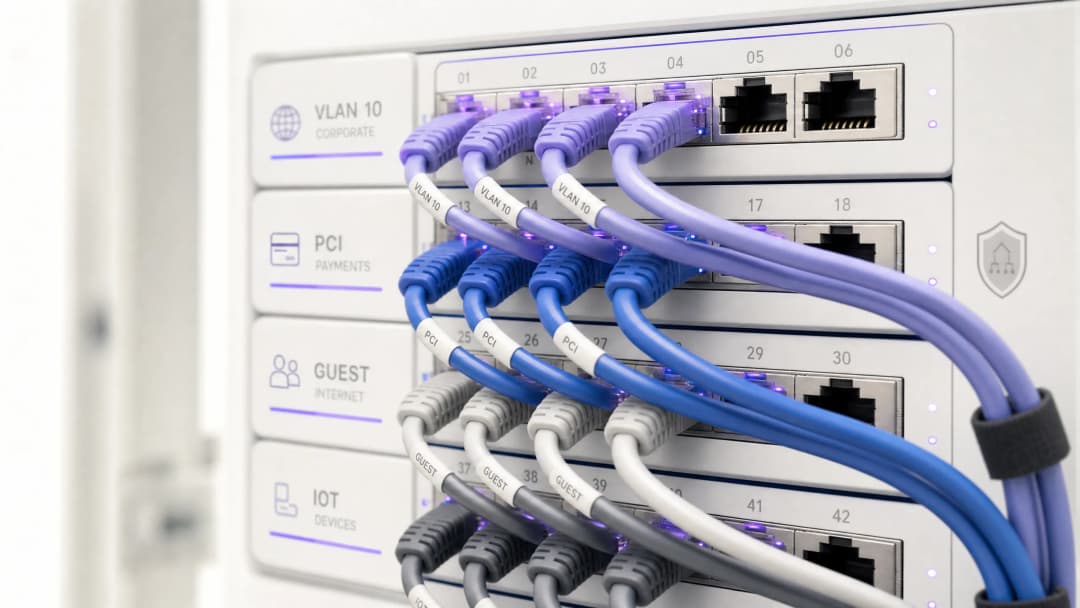
執行摘要
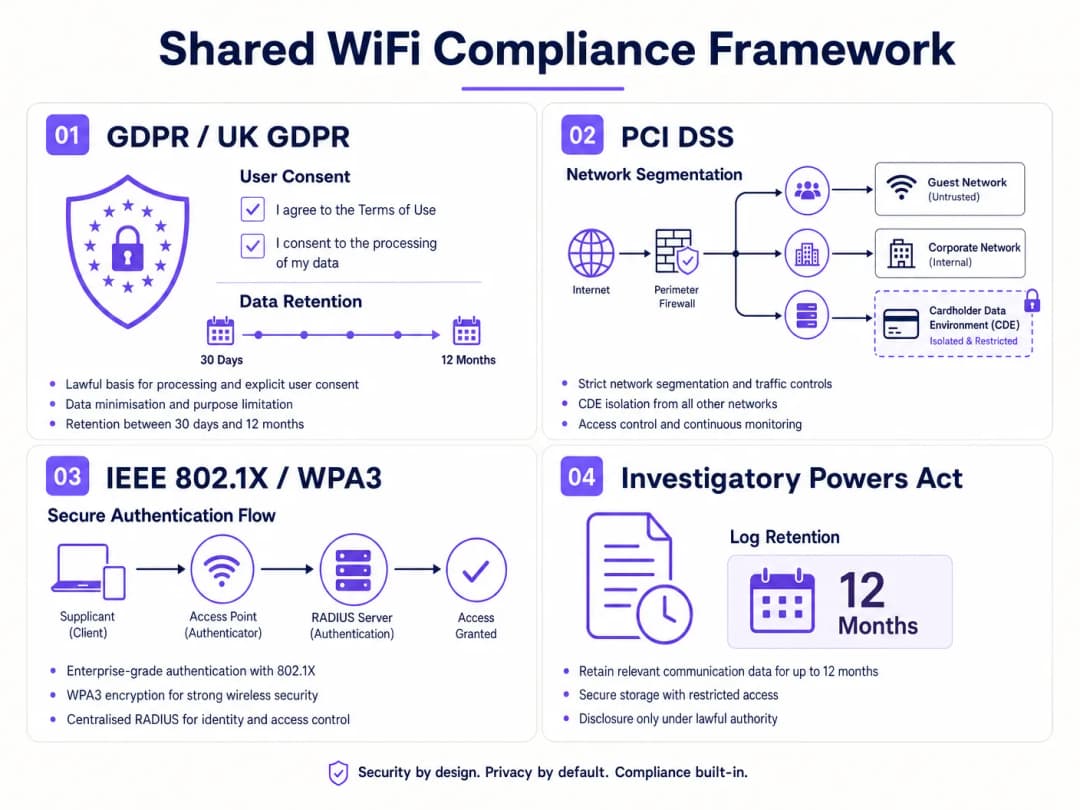
現代企業場域營運於一個高度互聯且受到嚴格法規監管的環境中。提供共享無線基礎設施 - 無論是在飯店、零售開發項目、交通樞紐還是公共部門園區 - 不再只是單純的公用事業,而是一項受到監管的活動。當組織開始在單一物理網路上路由流量或收集來自多個獨立租戶、員工及公眾訪客的數據時,就必須承擔實質的法律責任。這些義務涵蓋了數據隱私法規(例如 GDPR [1])、付款卡安全標準(PCI-DSS 4.0 [2]),以及國家安全立法(例如英國《調查權力法案》[3])。
對於技術長 (CTO) 與資訊安全長 (CISO) 而言,若未能正確規劃這些網路架構,將使企業面臨嚴重的監管罰款(在 GDPR 規範下高達全球年度營業額的 4%)以及災難性的安全漏洞。對於場域營運總監而言,不合規代表著對業務連續性、租戶保留和客戶信任的直接威脅。
本指南提供了一個全面且不綁定特定廠商的架構藍圖,以應對這些挑戰。透過實施虛擬網路分段 (VLAN)、強大的基於身份的存取控制 (IEEE 802.1X) 以及自動化同意管理,組織可以將其共享無線網路從高風險的責任轉變為安全、合規且極具價值的商業資產。整合 Purple 的 Guest WiFi 與 WiFi Analytics 等企業智慧平台,可確保在不犧牲使用者體驗的情況下實現合規性,同時還能作為安全的第一方數據獲取與提升營運效率的推動力。
技術深度剖析
從單一場域的無線部署轉變為共享、多租戶的基礎設施,需要網路設計理念的根本轉變:從扁平、信任的環境轉變為分段、零信任的架構。主要目標是確保多個獨立租戶在單一物理基礎設施上共存,同時不妥協安全性、效能或隱私。
VLAN 分段的奠基必要性
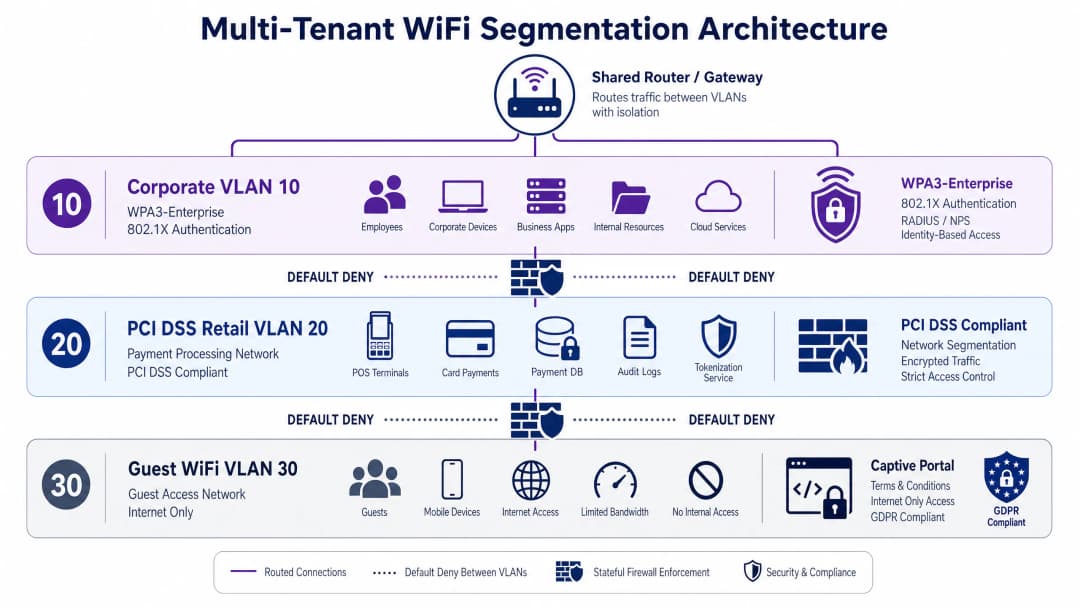
多租戶網路的基石是 虛擬區域網路 (VLAN)。根據 IEEE 802.1Q 標準的定義,VLAN 允許將單個實體網路交換器劃分為多個邏輯上獨立的廣播域 [4]。在共享場地中,這意味著來自一個租戶的流量(例如 VLAN 10 上的零售店)對於來自另一個租戶(例如 VLAN 20 上的公司辦公室)的流量是完全不可見且無法存取的,即使他們的裝置連接到相同的實體存取點也是如此。
架構規則:如果沒有適當的 VLAN 實作,租戶隔離就只是表面功夫。在單個扁平 LAN 上的多個 SSID 無法提供安全隔離;網路上的任何裝置都可以監聽廣播流量並進行橫向偵察。
為了實施嚴格的租戶隔離,網路核心必須實作狀態檢測(stateful)的跨 VLAN 防火牆規則。預設情況下,必須阻止所有跨 VLAN 路由(預設拒絕)。流量只有在符合明確且高度受限的防火牆規則(例如,將特定連接埠路由到共享的本機印表機或付款閘道器)時,才被允許跨越 VLAN 邊界。
驗證標準:WPA3 與 IEEE 802.1X
保護共享基礎設施的存取安全,需要將驗證協定與特定的租戶風險設定檔相匹配。在企業環境中,採用一刀切的預共用金鑰 (PSK) 方法是一個嚴重的安全漏洞,也是直接的合規失敗。
- 公司與受監管的租戶:這些環境需要 WPA3-Enterprise 搭配基於連接埠的 IEEE 802.1X 網路存取控制 [5]。此架構使用透過可延伸驗證協定 (EAP) 方法(例如基於憑證的 EAP-TLS 或基於認證憑據的 PEAP-MSCHAPv2)進行驗證的個人動態認證憑據,來取代靜態密碼,並與中央 RADIUS(遠端使用者撥入驗證服務)伺服器進行通訊。這確保了當員工離職或裝置受損時,可以立即撤銷其存取權限,而不會影響任何其他使用者或租戶。如需詳細的部署步驟,請參閱我們的指南:如何使用 Cloud RADIUS 實作 802.1X 驗證。
- IoT 與無螢幕/無周邊裝置:智慧建築感測器、數位看板和環境控制系統通常缺乏執行 802.1X 驗證的能力。對於這些裝置,必須部署 Multi-Pre-Shared Key (MPSK) 或 Dynamic PSK (DPSK) 技術。這使網路能夠為每個裝置分配唯一的個人 PSK,並將其自動對應到受限的 IoT VLAN,而無需企業級的用戶端軟體。
- 公開訪客存取:為了保護公開訪客流量免受被動無線竊聽,同時又不增加輸入密碼的摩擦,場域應部署基於 Opportunistic Wireless Encryption (OWE) [6] 的 WPA3-Enhanced Open。OWE 會自動為每個訪客裝置建立獨立的加密無線工作階段,在維持透過 Captive Portal 進行無縫上網流程的同時,確保公開網路上的隱私。
資料保護層:符合 GDPR 與 UK GDPR
當場域營運訪客 WiFi 網路時,根據 GDPR 與 UK GDPR,其在法律上被歸類為資料控制者 (Data Controller)。而 Captive Portal 供應商則擔任資料處理者 (Data Processor)。此區分至關重要:場域對於訪客資料如何被收集、處理與儲存,承擔最終的法律責任。
根據 GDPR 第 4 條,個人資料包括與已識別或可識別的自然人相關的任何資訊 [1]。在訪客 WiFi 環境中,這包含顯性資料(透過 Captive Portal 收集的姓名、電子郵件地址、電話號碼或社群媒體檔案)以及隱性資料(由無線控制器自動收集的 MAC 位址、IP 位址、工作階段時間戳記和裝置位置資料)。
為了合法處理這些個人資料,場域必須根據 GDPR 第 6 條建立有效的合法基礎。對於基本的網路連線與安全性記錄,場域可以主張正當利益 (Article 6(1)(f))。然而,如果場域希望將這些資料用於行銷、行為輪廓分析或分析,則必須獲得明確同意 (Article 6(1)(a))。
同意標準:同意必須是自由給予、具體、知情且明確的。它必須透過清晰的肯定行動來表示。將行銷同意與網路存取的服務條款綑綁在一起,是直接違反法規的行為。
為了達到此標準,Captive Portal 的歡迎頁面 (Splash Page) 必須設計為針對每個不同的處理目的提供獨立且未勾選的核取方塊。例如,使用者必須能夠在不被強迫訂閱行銷資訊的情況下,接受網路使用條款以上網。此外,系統必須維持詳細且防篡改的同意稽核軌跡 (Consent Audit Trail),記錄確切的同意對象、時間、向其展示的揭露內容,以及當時有效的確切隱私權政策版本。
資料保留與法規衝突
在管理網路記錄保留時,IT 團隊面臨著複雜且雙重的挑戰。他們必須在 GDPR 的資料最小化原則(保留個人資料的時間不長於嚴格必要的時間)與強制要求保留記錄的國家安全法之間取得平衡。
例如,英國 2016 年調查權力法案 (IPA) 要求通訊服務供應商保留網際網路連線記錄 (ICR) 長達 12 個月,以協助執法部門進行重大犯罪調查 [3]。同樣地,歐洲各國的多項電信法規也強制規定連線記錄的保留期限為 30 天至 12 個月不等。
為了解決此衝突,場所必須實施分層保留架構,根據資料分類對保留時程進行隔離與自動化管理:
- 網路工作階段記錄 (IP 分配、MAC 位址、時間戳記):保留 12 個月於安全、加密且限制存取的 syslog 儲存庫中,以履行法定的執法義務,隨後自動清除。
- Captive Portal 註冊資料 (未同意):在工作階段結束後 30 天內清除或完全匿名化。
- 行銷設定檔 (已同意):保留至使用者撤回同意 (選擇退出) 為止。非活動設定檔 (例如 180 天未連線的使用者) 必須自動標記以進行刪除或重新徵求同意的行銷活動。
實施指南
部署安全、合規的多租戶無線網路需要結構化的階段式方法。本節概述了關鍵的設定步驟,重點介紹適用於網路架構師和 IT 經理且不特定於特定廠商的最佳實踐。
步驟 1:實體與邏輯 VLAN 設定
首先在核心交換器上定義 VLAN 架構,並使用 802.1Q trunking 將其傳播到所有分佈交換器和無線基地台 (AP)。分配不同的子網路和 VLAN ID 以完全隔離流量網域:
Configure Core Switch:
  vlan 10 -> Name: Corporate_Tenant (Subnet: 10.10.10.0/24)
  vlan 20 -> Name: Retail_POS_PCI (Subnet: 10.20.20.0/24)
  vlan 30 -> Name: Guest_WiFi (Subnet: 172.16.0.0/16)
在邊緣交換器上,將連接到無線 AP 的連接埠設定為 Trunk Ports,允許 VLAN 10、20 和 30 通過。確保將原生 (未標籤) VLAN 設定為非路由的管理 VLAN (例如 VLAN 99),以防止管理流量被租戶攔截。
步驟 2:存取控制清單 (ACL) 與防火牆強制執行
在第 3 層邊界 (通常是核心交換器或安全閘道器),強制執行嚴格的跨 VLAN 阻擋。所有跨 VLAN 流量的預設狀態必須為阻擋。實施狀態檢測存取控制清單 (ACL) 或防火牆規則以防止橫向移動:
Create Access-List (Cisco IOS Example):
  ip access-list extended BLOCK_LATERAL
    deny ip 172.16.0.0 0.0.255.255 10.10.10.0 0.0.0.255 (Block Guest to Corp)
    deny ip 172.16.0.0 0.0.255.255 10.20.20.0 0.0.0.255 (Block Guest to PCI)
    permit ip 172.16.0.0 0.0.255.255 any (Permit Guest to WAN)
將此 ACL 應用於 VLAN 30 的 SVI(交換器虛擬介面)入站方向。對於 PCI 範圍內的 VLAN 20,請設定狀態檢測規則,阻擋來自所有其他 VLAN 的所有入站流量,僅允許向特定付款處理機構 IP 位址發送的出站加密 TLS 工作階段。
步驟 3:企業級 RADIUS 與 802.1X 整合
對於企業租戶,請將無線控制器與安全的 RADIUS 伺服器(例如 FreeRADIUS、Microsoft NPS 或雲端 RADIUS 解決方案)進行整合。將企業 SSID 設定為使用 WPA3-Enterprise(AES-CCMP 或 GCMP-256 加密)以及 802.1X 驗證。
設定 RADIUS 伺服器以進行基於憑證的驗證 (EAP-TLS)。透過 MDM(行動裝置管理)平台產生並發派唯一的用戶端憑證至所有企業裝置。如此一來,即使使用者憑證外洩,也能防止未授權的個人裝置連線至企業網路。
步驟 4:Captive Portal 與同意書擷取設定
對於公共 Guest WiFi (VLAN 30),請設定無線控制器,將所有未經驗證的 HTTP/HTTPS 流量導向至外部 Captive Portal。確保該入口網站代管於已啟用 HTTPS 且具有有效 SSL/TLS 憑證的安全伺服器上。
使用符合合規性要求的平台(例如 Purple),設計 Captive Portal 登入頁面以強制執行以下 UI 元素:
- 清晰的隱私權聲明:顯示醒目且易於閱讀的摘要,說明收集了哪些資料(例如姓名、電子郵件、MAC 位址)以及處理的目的。
- 獨立的同意勾選方塊:針對行銷訂閱實作獨立、未勾選且非強制性的勾選方塊。「接受使用條款」的勾選方塊必須與行銷訂閱勾選方塊分開。
- 當事人權利連結:提供直接且具備功能性的連結,引導至場所的完整隱私權政策,以及供顧客要求存取或刪除資料 (DSAR) 的自助服務入口網站。
對於您的特定設置有任何疑問嗎?
我們的團隊與超過 80,000 個場域的場域營運商、IT 經理和網路工程師合作。立即預約 20 分鐘的通話,我們將向您展示其他與您相似的用戶是如何解決此問題的。
最佳實踐與法規對照
為了確保長期合規,IT 團隊必須將其技術控制措施與既有的國際法規和標準保持一致。下表將特定法規要求對照至相應的技術控制措施和架構最佳實踐。
| 法規 / 標準 | 特定要求 | 技術控制措施 / 最佳實踐 | Purple 平台功能 |
|---|---|---|---|
| GDPR / UK GDPR [1] | 第 6 條:處理的合法基礎;第 7 條:同意的條件。 | Captive Portal 上未勾選的細粒度同意勾選方塊;安全且不可變更的同意紀錄。 | 具備合規同意紀錄和即時稽核匯出功能的自動化、多語系 Captive Portal。 |
| PCI DSS 4.0 [2] | 要求 1.2:限制持卡人資料環境 (CDE) 與其他網路之間的流量。 | Layer 3 VLAN 分割;狀態化預設拒絕防火牆規則;POS 網路的實體/邏輯隔離。 | 完全網路隔離相容性;跨分割 VLAN 的廠商中立部署。 |
| PCI DSS 4.0 [2] | 要求 11.4:偵測並防止未授權的無線存取點 (Rogue AP)。 | 實施無線入侵防禦系統 (WIPS);每季進行無線掃描。 | 與企業控制器 API 整合,以標記未授權或惡意的存取點。 |
| UK Investigatory Powers Act [3] | 第 87 條:為執法機關保留網際網路連線紀錄 (ICR)。 | 分割的 syslog 儲存;保留 12 個月的 IP 對 MAC 對應與工作階段時間戳記。 | 自動將 syslog 轉發至安全、異地的保留儲存庫,並進行合規封存。 |
| IEEE 802.1X / WPA3 [5] | 安全的空中傳輸加密與強大的基於連接埠的存取控制。 | 企業網路採用 WPA3-Enterprise;公共訪客網路採用 WPA3-Enhanced Open (OWE)。 | 與企業 RADIUS 無縫整合,並支援先進的 WPA3 安全標準。 |
產業專屬實施最佳實踐
- 旅宿業(飯店與度假村):訪客網路必須在 AP 層級使用 Private VLAN (PVLAN) 或 用戶端隔離 (Client Isolation) 針對每間客房或每位訪客進行分割。這可以防止 101 號房的訪客掃描或存取 102 號房的裝置(如智慧電視或筆記型電腦)。對於在現場營運的零售和餐飲租戶,請強制執行嚴格的 VLAN 分割,以將其銷售點 (POS) 系統完全排除在旅宿訪客範圍之外 [7]。請參閱我們的 旅宿產業指南 以獲取深入的垂直產業見解。
- 零售連鎖與購物中心:零售商必須將其主要 POS 網路與公共訪客 WiFi 及後勤辦公室企業網路隔離開來。如果部署基於位置的分析(例如透過 WiFi 探針請求追蹤顧客停留時間),系統必須立即在邊緣對 MAC 位址進行雜湊或去識別化處理,以防止在未經同意的情況下追蹤可識別的個人。探索我們的 零售產業指南,了解如何在合規的資料收集與行銷情報之間取得平衡。
- 公共部門與教育機構:市政府和學區必須執行嚴格的內容過濾(美國的 CIPA 合規性,或英國當地的公共部門過濾指南),以阻止在公共網路上存取有害或非法內容 [8]。此外,網路必須進行區隔,以確保行政系統、學生記錄和公共訪客網路完全隔離。有關教育專屬的合規性,請參閱我們的完整指南:學校 WiFi:2026 年管理員與 IT 指南。
疑難排解與風險緩解
即使是設計最細緻的網路,也可能因設定偏離或營運失效而損及合規性。本節概述了常見的失效模式,並提供技術緩解策略。
常見失效模式與技術緩解措施
1. 「吵鬧的鄰居」與頻寬耗盡
- 風險:單一租戶或公共訪客消耗過多頻寬(例如,串流高畫質影片),導致關鍵企業應用程式或其他租戶的網路效能下降。
- 緩解措施:執行服務品質 (QoS) 政策和嚴格的速率限制。在訪客 VLAN 上套用每個使用者工作階段的上行和下行頻寬上限(例如,下行 5 Mbps,上行 1 Mbps)。在 WAN 邊緣,設定基於類別的佇列,以確保為關鍵企業和付款處理 VLAN 提供最低專用頻寬池,無論訪客網路的使用率如何。
2. VLAN 洩漏與交換器連接埠設定錯誤
- 風險:交換器連接埠設定錯誤(例如,未標記的存取連接埠分配給錯誤的 VLAN,或中繼連接埠洩漏管理流量),導致封包在未通過防火牆的情況下跨越租戶邊界。
- 緩解措施:在所有交換器上實作 Dynamic ARP Inspection (DAI)、DHCP Snooping 和 IP Source Guard,以防止 MAC 欺騙和未經授權的 IP 地址分配。使用自動化設定合規工具進行每半年一次的網路稽核,以偵測未經授權的 VLAN 變更或連接埠設定錯誤。
3. 惡意存取點與「邪惡孿生」攻擊
- 風險:攻擊者部署未經授權的存取點,廣播與場域訪客 WiFi 相同的 SSID,透過惡意 Captive Portal 擷取訪客登入憑證和個人資料。
- 緩解措施:在所有企業級 AP 上啟用無線入侵防禦系統 (WIPS)。設定 WIPS 以主動監控無線電波、偵測廣播企業或訪客 SSID 的未授權 AP,並使用取消驗證框架自動遏制這些惡意裝置。強制執行 WPA3-Enterprise 和 WPA3-Enhanced Open,以減輕被動竊聽和離線字典攻擊的風險。
4. 同意書稽核軌跡失效
- 風險:Captive Portal 平台未能記錄顧客的行銷同意時間戳記,或記錄不正確,導致場所在法規審計期間無法證明其合規性。
- 緩解措施:部署如 Purple 這類強大的雲端平台,在多個地理隔離的資料中心之間複製同意記錄。確保同意記錄儲存在唯讀、僅限附加的資料庫中,並採用密碼學雜湊以保證記錄完整性。實施自動化每日健康檢查,以驗證資料庫寫入是否成功。
ROI 與商業影響
IT 領導者通常僅從成本和風險緩解的角度來看待法律與合規要求。然而,一個架構完善、合規的共享 WiFi 基礎設施,是提升營運效率、建立客戶信任及創造可衡量商業價值的強大驅動力。
合規的成本效益
不合規的財務影響極為嚴重。在 GDPR 規範下,嚴重違規的最高罰鍰為 2,000 萬歐元或全球年營業額的 4%,以較高者為準 [1]。對於大型飯店集團或跨國零售企業而言,單次合規失敗可能導致數百萬英鎊的罰鍰,這還不包括相關的法律費用、鑑識調查成本,以及對品牌聲譽造成的災難性損害。
相反地,部署如 Purple 這種合規、企業級解決方案的成本,僅佔此風險敞口的一小部分。藉由將多個零散的網路公用程式整合到單一、集中管理、多租戶的實體基礎設施中,企業可以實現顯著的資本支出 (CapEx) 與營運支出 (OpEx) 節省:
- 基礎設施整合:無需為每個租戶或服務部署獨立的實體佈線、交換器和存取點,而是將單一高效能實體網路進行邏輯分割。這能減少高達 40% 的硬體採購成本,並顯著降低能耗和持續維護開銷。
- 集中化管理:透過單一雲端控制面板管理多個租戶,可減輕內部 IT 團隊的行政負擔。不論是啟用新租戶、調整頻寬限制,還是更新 Captive Portal 隱私權政策,都可以在幾分鐘內完成,而非耗時數天,這代表了巨大的營運效率提升。
將合規轉化為策略資產
藉由部署合規的 Captive Portal,場所可以合法地收集訪客的高品質第一方數據。只要這些數據是透過合乎道德且透明的方式收集,對於行銷和商業智慧而言就具有極高的價值:
- 合乎道德的行銷資料庫:由於訪客是透過合規且預設未勾選的核取方塊,主動且透明地選擇加入行銷傳播,因此與未細分或不合規的名單相比,產生的行銷資料庫展現出顯著更高的參與度、更低的退訂率以及優異的轉換指標。
- 細緻的訪客分析:透過利用合規且匿名化的位置追蹤,場地營運商可以深入瞭解訪客行為 - 例如人流量模式、平均停留時間和重複造訪頻率。這些數據可以與零售租戶共享,協助他們優化人力配置、評估櫥窗陳列並衡量行銷投資報酬率,在競爭激烈的房地產市場中創造強大的差異化優勢。
欲深入收聽關於這些概念的音訊簡報,請播放下方的專業 Podcast 節目:
參考文獻
- European Parliament and Council. (2016). Regulation (EU) 2016/679 (General Data Protection Regulation). Official Journal of the European Union. https://gdpr-info.eu/
- PCI Security Standards Council. (2022). Payment Card Industry (PCI) Data Security Standard, Version 4.0. https://www.pcisecuritystandards.org/
- UK Parliament. (2016). Investigatory Powers Act 2016. UK Statute Law Database. https://www.legislation.gov.uk/ukpga/2016/25/contents
- IEEE Computer Society. (2018). IEEE Standard for Local and Metropolitan Area Networks—Bridges and Bridged Networks (IEEE Std 802.1Q-2018). IEEE Xplore. https://ieeexplore.ieee.org/document/8403927
- Wi-Fi Alliance. (2018). WPA3™ Security White Paper. https://www.wi-fi.org/
- IETF RFC 8110. (2017). Opportunistic Wireless Encryption (OWE). Internet Engineering Task Force. https://tools.ietf.org/html/rfc8110
- PCI Security Standards Council. (2009). PCI DSS Wireless Guidelines. https://www.pcisecuritystandards.org/pdfs/PCI_DSS_v2_Wireless_Guidelines.pdf
- Federal Communications Commission. (2001). Children's Internet Protection Act (CIPA). FCC Consumer Guide. https://www.fcc.gov/consumers/guides/childrens-internet-protection-act
關鍵定義
虛擬區域網路 (VLAN)
一種邏輯子網路,將來自不同實體區域網路的裝置集合分組在一起,並使用 IEEE 802.1Q 標記來隔離其廣播網域。
對於多租戶環境至關重要,可在共享的實體硬體上隔離企業、訪客和付款網路。
IEEE 802.1X
一項用於基於連接埠之網路存取控制 (PNAC) 的 IEEE 標準,為希望連線到區域網路或無線區域網路的裝置提供驗證機制。
保護企業和租戶網路的安全標準,可針對 RADIUS 伺服器單獨驗證裝置。
WPA3-Enterprise
適用於企業網路的新一代 WiFi Protected Access 安全性,需要 192 位元密碼強度以及強制性的保護管理訊框 (PMF)。
在共享無線環境中,高安全性、受監管以及企業租戶的強制性要求。
WPA3-Enhanced Open (OWE)
一項基於機會性無線加密的 WiFi 聯盟標準,可為開放的公共無線網路提供個別資料加密,而無需使用者密碼。
公共訪客 WiFi 的最佳實踐標準,可保護使用者免受本地被動監聽,同時保持存取的便利性。
資料控制者
單獨或與他人共同決定個人資料處理目的和方式的自然人、法人、公共機構、部門或其他團體。
在訪客 WiFi 中,場所營運商即為資料控制者,並承擔 GDPR 下的最終法律責任。
資料處理者
代表控制者處理個人資料的自然人、法人、公共機構、部門或其他團體。
訪客 WiFi 平台提供商(例如 Purple)充當資料處理者,根據控制者的指示處理資料。
持卡人資料環境 (CDE)
儲存、處理或傳輸持卡人資料或敏感驗證資料的人員、流程和技術。
PCI DSS 合規性的主要目標;必須與訪客及企業無線網路完全隔離。
網際網路連線紀錄 (ICR)
特定裝置存取網路服務的記錄,包括 IP 位址、通訊埠號碼與連線時間戳記,但不包含通訊的具體內容。
根據 UK Investigatory Powers Act 的規定,通訊業者可能必須將 ICRs 保留 12 個月,以供執法機關調閱。
範例
一家位於倫敦、擁有 250 間客房的歷史悠久酒店,其地面層設有包含五家獨立商店的零售拱廊街,以及一個每週舉辦企業活動的大型會議中心。該酒店營運單一物理光纖網路連接。酒店需要向酒店房客提供安全的 WiFi 存取,為零售租戶提供隔離的付款處理網路,並為企業會議客戶提供高效能、專用的無線容量,同時必須符合 UK GDPR、PCI DSS 和英國調查權力法(UK Investigatory Powers Act)的規定。
網路架構師在企業級硬體上實作了透過 VLAN 進行細分的網域多租戶無線網路。配置了三個不同的 VLAN:VLAN 100 用於酒店房客,VLAN 200 用於零售 POS(屬於 PCI DSS 範圍),以及 VLAN 300 用於會議客戶。
酒店房客網路 (VLAN 100):配置為 WPA3-Enhanced Open (OWE),以在無需密碼的情況下提供空中加密。使用者會被重定向到由 Purple 託管、已啟用 HTTPS 的安全 Captive Portal。該 Portal 設有獨立且未勾選的行銷訂閱選取方塊。工作階段日誌會轉發至本地 syslog 伺服器並保留 12 個月,以履行英國調查權力法的義務,而 Captive Portal 行銷設定檔僅針對明確表示同意的房客同步到 CRM。
零售 POS 網路 (VLAN 200):使用核心閘道器上的狀態架構「預設拒絕」防火牆策略,與所有其他 VLAN 完全隔離。僅允許傳出至付款閘道器特定 IP 位址的 TLS 1.3 流量。任何房客或企業裝置都無法將流量路由到此 VLAN。排定每季進行外部漏洞掃描,以維持 PCI DSS 合規性。
會議網路 (VLAN 300):配置為 WPA3-Enterprise 和 IEEE 802.1X 驗證。在 RADIUS 伺服器上配置動態 VLAN 分配,以便當企業客戶使用其專屬憑證進行驗證時,系統會將他們動態對應到專用的子 VLAN,並提供 100 Mbps 對稱的保證服務品質 (QoS) 頻寬池,防止房客串流媒體造成「嘈雜鄰居」問題。
一家在英國和歐洲擁有 150 家門市的國家級零售連鎖店希望部署公共房客 WiFi,以收集客戶的電子郵件地址用於在地化行銷活動。他們還利用 WiFi 位置分析(探測請求追蹤)來衡量人流量、店內停留時間和老顧客回訪率。他們必須確保其數據收集和位置追蹤完全符合 GDPR 和 UK GDPR。
該零售連鎖店在所有 150 個站點部署了 Purple 的企業級訪客 WiFi 與分析平台。
Captive Portal 設定:Captive Portal 配置了具備地理位置感知的語言選擇器。在顯示任何註冊欄位之前,它會以當地語言呈現清晰、簡潔的隱私權聲明。表單僅要求填寫客戶的姓名和電子郵件地址(數據最小化)。針對行銷訂閱,則設計了一個獨立、未預先勾選的核取方塊,並明確說明訂閱與否為自願性質,不影響其存取免費 WiFi 的權限。
位置分析合規性:為了在沒有明確同意的情況下合規地追蹤客流量(因為當裝置啟用 WiFi 時,在連線之前會自動擷取探測請求),無線控制器配置為在邊緣端立即使用加鹽 SHA-256 演算法對所有擷取的 MAC 位址進行雜湊處理。鹽值每 24 小時自動輪替一次。此程序可永久匿名化裝置識別碼,將其從個人資料轉換為彙整的、無法識別的統計數據,從而超出了 GDPR 的管轄範圍。
資料主體權利:Captive Portal 連結了一個專用的自助式隱私權入口網站。客戶可以輸入其電子郵件地址,以查看該零售商持有的所有個人資料、更新其偏好設定,或要求立即刪除(行使其在 GDPR 第 17 條下的被遺忘權)。
練習題
Q1. 一位 IT 經理正在為一家零售購物中心設定共享無線網路。該中心的管理團隊希望收集訪客的電子郵件地址以用於行銷,並追蹤裝置在整個商場內的移動路徑,以最佳化租戶的租金定價。行銷總監建議僅向同意訂閱行銷電子報的訪客提供「免費高速 WiFi」。這種做法是否符合 GDPR 規範?網路應該如何設定?
提示:請考量 GDPR 的「自由給予」同意原則與資料最小化原則,以及必須如何處理位置追蹤。
查看標準答案
這種做法不符合 GDPR 規範。將行銷同意與網路存取進行捆綁,違反了第 7(4) 條「自由給予」的要求。網路必須設定為允許使用者透過接受網路使用條款來存取免費 WiFi,而無需強制同意接受行銷資訊。至於位置追蹤,由於訪客的裝置會自動廣播探測請求(probe requests),因此必須立即在網路邊緣使用加鹽的 SHA-256 演算法以及每日輪替的鹽值(salt)對 MAC 位址進行雜湊處理與匿名化。這可以將個人追蹤資料轉換為匿名的客流量統計數據,在確保符合規範的同時,仍能為商場管理層提供定價租賃所需的營運洞察。
Q2. 某家飯店餐廳和酒吧的銷售點(POS)系統與顧客 WiFi 網路運行在同一個實體交換器基礎架構上。在合規性審計期間,QSA(合格安全性評估規章師)指出該網路不符合 PCI DSS 4.0 規範。飯店 IT 總監認為,由於顧客 WiFi 與 POS 使用不同的 SSIDs,因此它們已安全隔離。網路架構師該如何解決這項爭議?
提示:單靠 SSIDs 無法提供網路分割。請思考 Layer 2 與 Layer 3 的隔離。
查看標準答案
QSA 的說法是正確的,IT 總監的論點無效。SSIDs 僅是無線接入點;如果它們對應回同一個扁平的區域網路(LAN),顧客網路上的裝置就可以輕易竊聽 POS 流量、進行 ARP 欺騙(ARP poisoning)或執行橫向移動攻擊。為了規避此問題並使網路符合 PCI DSS 4.0 規範,網路架構師必須在交換器和存取點上設定獨立的 VLAN(例如:POS 使用 VLAN 20,顧客使用 VLAN 30)。核心閘道器必須在這些 VLAN 之間強制執行狀態檢查「預設拒絕」(Default Deny)防火牆策略,阻擋所有 VLAN 間的路由。顧客 VLAN 只能存取 WAN(網際網路),而 POS VLAN 必須限制為僅能向付款處理商建立輸出加密 TLS 工作階段,從而將顧客網路完全移出 PCI DSS 的合規範圍。
Q3. 一家在英國營運市民中心的公共部門機構,收到執法機關的正式要求,要求提交三個月前與某起網路犯罪事件相關的特定 IP 位址的連線記錄。該機構的 DPO(資料保護官)辯稱,根據 GDPR 資料最小化原則,他們會在 30 天後刪除所有連線記錄,因此已不再擁有該資料。這是否會使該機構面臨法律責任?日誌保留應該如何進行架構設計?
提示:在 GDPR 的資料最小化原則與 UK Investigatory Powers Act 的法定規定義務之間取得平衡。
查看標準答案
是的,這會使組織面臨重大的法律責任。雖然 GDPR 倡導數據最小化,但其第 6(1)(c) 條規定,當為了履行法律義務而有必要進行處理時,即具備合法處理基礎。在英國,《2016 年調查權力法案》(IPA)規定,通信服務提供商(可包括營運大規模公共 WiFi 的公共部門營運商)必須將網際網路連線記錄(ICR)保留長達 12 個月。該組織在 30 天後刪除所有日誌,顯然未能履行 IPA 規定的法定職責。網路架構師必須實施分層保留架構:連線工作階段日誌(IP 到 MAC 對應關係和時間戳記)必須轉發至安全、加密的 syslog 伺服器,並在限制存取權限的情況下精確保留 12 個月;而在 Captive Portal 上收集的個人行銷數據則須分開管理,若未獲得行銷同意,則必須在 30 天內清除或進行匿名化處理。
參考來源
- https://gdpr-info.eu/
- https://www.pcisecuritystandards.org/
- https://www.legislation.gov.uk/ukpga/2016/25/contents
- https://ieeexplore.ieee.org/document/8403927
- https://www.wi-fi.org/
- https://tools.ietf.org/html/rfc8110
- https://www.pcisecuritystandards.org/pdfs/PCIDSSv2WirelessGuidelines.pdf
- https://www.fcc.gov/consumers/guides/childrens-internet-protection-act
繼續閱讀本系列
為什麼飯店式訪客 WiFi 在住宅大樓中會失敗
您將能夠診斷為什麼 BTR 住宅大樓、學生宿舍和 MDU 的居民不斷回報 WiFi 故障,並選擇能夠解決這些問題的驗證模型。解決方案是在您現有的存取點上為每個家庭提供一個 iPSK 金鑰,並為訪客保留一個獨立的 Captive Portal 網路。
為多租戶辦公大樓設計 WiFi 網路
本指南為 IT 經理、網路架構師和 CTO 提供了一個中立於廠商的藍圖,用於在多租戶辦公大樓中設計可擴展、安全且隔離的 WiFi 網路。內容涵蓋 IEEE 802.1Q 下的 VLAN 劃分、透過 802.1X 和 RADIUS 進行的動態 VLAN 分配、高密度環境的 RF 規劃,以及 GDPR 和 PCI-DSS 下的合規性考量。場地營運商和建築經理將獲得實用的架構指導、真實案例研究,以及在部署前需要避免的配置陷阱。
平均自證清白時間:如何證明問題不在 WiFi
平均自證清白時間(MTTI)是衡量 IT 團隊花費多少時間來證明網路問題非其責任的關鍵指標。本指南詳述了一套五步驟的觀測方法論,旨在消除多租戶環境中的推諉責任現象,以共享證據取代互相指責,進而降低平均修復時間(MTTR)。
對於您的特定設置有任何疑問嗎?
我們的團隊與超過 80,000 個場域的場域營運商、IT 經理和網路工程師合作。立即預約 20 分鐘的通話,我們將向您展示其他與您相似的用戶是如何解決此問題的。