
為混合工作模式員工提供 RADIUS-as-a-Service 的安全優勢
本技術參考指南說明 RADIUS-as-a-Service 如何為分散在各地的混合工作模式員工確保網路存取安全。內容涵蓋架構、安全優勢以及將地端 RADIUS 基礎架構替換為雲端託管驗證服務的部署步驟。針對飯店、連鎖零售、體育場館和公共部門組織的 IT 經理和網路架構師,本指南提供了評估和執行本季雲端 RADIUS 遷移所需的關鍵依據。
收聽此指南
查看播客逐字稿
核心系列的一部分:Enterprise WiFi Security Guide →

執行摘要
混合工作模式的轉變暴露了傳統網路安全的一個根本性弱點:地端的 RADIUS 伺服器是為員工坐在同一棟大樓、連接同一個網路的世界而設計的。那個世界已經不復存在。如今,您的員工從飯店房間、零售賣場、遠端辦公室和活動現場進行身分驗證。您的身分識別提供商(IDP)位於雲端。您的存取點分佈在數百個地點。然而,許多企業仍依賴需要手動修補、無法與 Microsoft Entra ID 或 Google Workspace 原生整合,且在硬體故障時毫無預警中斷的實體 RADIUS 伺服器。
RADIUS-as-a-Service 用雲端原生身分驗證引擎取代了這些基礎架構。您只需將存取點指向雲端端點。服務供應商負責管理伺服器、修補程式和高可用性。您只需管理原則。對於 飯店住宿 集團、零售 連鎖店和公共場所的 IT 團隊而言,這一轉變消除了硬體開銷,實施了基於身分識別的網路分段,並提供了 PCI-DSS 和 GDPR 所需的稽核軌跡。
技術深度分析
為什麼地端 RADIUS 面臨挑戰
RFC 2865 中定義的 RADIUS,為網路存取提供集中式驗證、授權和計帳(AAA)。每個運行 WPA2-Enterprise 或 WPA3-Enterprise WiFi 的企業都依賴它。此協定本身是健全的。問題在於圍繞其發展的基礎架構模型。
在 Linux 上部署、保護和維護 FreeRADIUS 需要極高的專業知識。Microsoft Network Policy Server (NPS) 與 Active Directory 緊密綁定,不提供對 Microsoft Entra ID、Okta 或 Google Workspace 的原生支援。Cisco Identity Services Engine (ISE) 提供企業級原則功能,但需要專用硬體、複雜的授權以及操作專家的團隊。對於這三者,您必須手動建立和維護高可用性,通常需要執行兩台具備資料庫同步功能的伺服器,並在其前端放置負載平衡器。
對於擁有穩定 Active Directory 的單一站點企業,此模型是可管理的。但對於擁有 50 家物業的飯店集團、擁有 400 家門市的零售連鎖店或分散各處的校園大學,這就變得不切實際。您要麼集中 RADIUS 伺服器並承受來自遠端站點的身分驗證延遲,要麼在每個地點部署伺服器並單獨管理它們。這兩種選擇都無法擴充。
RADIUS-as-a-Service 的架構
RADIUS-as-a-Service 是 RADIUS 協定的雲端型交付模式。協定本身保持不變,符合 RFC 2865 及其擴充規範。改變的是維護基礎架構的對象。 當裝置連線到您的 WiFi 網路時,存取點(RADIUS 用戶端)會透過安全、加密的通道,將驗證請求轉發到雲端 RADIUS 端點。雲端服務會透過您的識別提供者(Identity Provider)驗證認證資訊,並傳回帶有原則屬性(例如動態 VLAN 指派)的 Access-Accept 或 Access-Reject 訊息。從存取點的角度來看,驗證流程與內部部署的 RADIUS 完全相同。

雲端提供者在地理位置分散的多個資料中心營運 RADIUS 伺服器。容錯轉移是自動執行的。如果某個端點無法使用,流量會被路由到下一個作用中的端點,不需要您的團隊進行任何介入。對於在多個區域設有辦公室的組織,驗證會在最近的雲端端點進行,無論地理位置在哪裡,都能保持低延遲。
IEEE 802.1X 與 EAP 方法
IEEE 802.1X 是基於連接埠的網路存取控制(NAC)標準。它會強制裝置在取得 IP 位址並獲准傳輸流量之前進行驗證。在 802.1X 部署中,RADIUS 扮演驗證伺服器的角色。
Extensible Authentication Protocol (EAP) 定義了認證資訊的交換方式。雲端 RADIUS 支援所有 EAP 方法:
| EAP 方法 | 驗證類型 | 安全層級 | 建議用途 |
|---|---|---|---|
| EAP-TLS | 雙向憑證型 | 最高 | 擁有 MDM 託管憑證的企業裝置 |
| PEAP-MSCHAPv2 | 使用者名稱與密碼 | 中等 | 舊型裝置或無 MDM 的 BYOD |
| EAP-TTLS | 通道化認證資訊 | 中等 | 混合環境 |
| MAC Authentication Bypass | 裝置 MAC 位址 | 低 | 無法支援 802.1X 的 IoT 裝置 |
RFC 5216 中定義的 EAP-TLS 被視為黃金標準。用戶端裝置與 RADIUS 伺服器雙方會互相出示數位憑證。這種雙向驗證完全免除了網路存取程序中對密碼的需求。憑證以密碼學方式與裝置綁定,與密碼不同,它無法被網路釣魚、被猜測或被竊取。對於曾面臨憑證遭竊導致資料外洩的組織來說,這是最直接的技術防禦措施。
動態 VLAN 指派
除了驗證之外,RADIUS 伺服器還會執行授權。當它接受連線時,會將原則屬性傳回給存取點,其中包括要指派給裝置的 VLAN ID。此動態 VLAN 指派是實現基於識別網路的核心機制。 飯店櫃檯接待人員進行驗證,並將其置於可存取物業管理系統的開端 VLAN。房務人員則被置於僅能存取網際網路的受限 VLAN。顧客的裝置會被置於與企業資源完全隔離的 Guest WiFi VLAN。安全監控攝影機等 IoT 裝置則被置於專用的 IoT VLAN。這一切都是根據透過 RADIUS 伺服器驗證的識別資訊自動進行的,無需為每個裝置進行任何手動 VLAN 設定。
這是在網路存取中落實最小權限(least privilege)原則。您不再因為某個裝置連線到特定的 SSID 就信任它。您是根據已驗證的識別資訊來授予存取權限,並將該存取權限限制在該識別資訊所需的範圍內。如需深入瞭解這如何融入更廣泛的網路存取控制策略,請參閱我們的 network access control systems 指南。
原生雲端識別整合(identity integration)
雲端 RADIUS 最重要的營運優勢在於它與現代識別提供者(identity providers)的原生整合。雲端 RADIUS 透過 OIDC、SAML 和 LDAP 等標準協定,直接與 Microsoft Entra ID、Okta 和 Google Workspace 連結。當您在識別提供者中新增員工時,他們便能立即在 WiFi 網路進行驗證。當您將員工離職時,您只需在目錄中停用其帳戶,其 WiFi 存取權限就會在每個地點的每個存取點立即被撤銷。
這種即時同步消除了企業 WiFi 中最棘手的安全漏洞之一:離職員工仍持有共享的 PSK,或者在他們離職時未手動刪除其 RADIUS 帳戶。透過雲端 RADIUS 和雲端識別提供者,員工離職處理成為一項單一操作,且立即在整個網路生效。
對於您的特定設置有任何疑問嗎?
我們的團隊與超過 80,000 個場域的場域營運商、IT 經理和網路工程師合作。立即預約 20 分鐘的通話,我們將向您展示其他與您相似的用戶是如何解決此問題的。
實作指南
步驟 1:連結您的識別提供者
將雲端 RADIUS 服務連結到您的識別提供者。對於 Microsoft Entra ID 或 Google Workspace,這通常涉及透過 OAuth 授權企業應用程式,或設定 LDAP 連接器。將您的目錄群組對應到特定的網路原則。在開始之前,請先定義您的角色分類(role taxonomy):哪些群組對應到哪些 VLAN,以及每個 VLAN 擁有哪些存取權限。在初期正確完成此設定可省去後續的大量工作。
步驟 2:為企業裝置部署憑證
對於企業擁有的裝置,請設定您的行動裝置管理 (MDM) 平台,例如 Microsoft Intune 或 Jamf,以將用戶端憑證推送到裝置上。這可以啟用 EAP-TLS 驗證。確保發行 RADIUS 伺服器憑證的根憑證授權單位 (CA) 受到所有用戶端裝置的信任。不被信任的憑證鏈是隱性驗證失敗最常見的原因。
步驟 3:設定您的網路硬體
在您的無線控制器或存取點中新增雲端 RADIUS IP 位址和共用金鑰。請務必同時設定主要和次要端點,以利用供應商的內建備援機制。確保從您的存取點傳出到雲端 RADIUS 端點的 UDP 連接埠 1812 (驗證) 和 1813 (計費) 已對外開放。在正式上線前驗證此設定。設定錯誤的防火牆規則是部署失敗的第二大常見原因。
雲端 RADIUS 可與 Cisco Meraki、HPE Aruba、Ruckus、Juniper Mist、Ubiquiti UniFi、Cambium、Extreme Networks 和 Fortinet 搭配運作。設定步驟因廠商而異,但 RADIUS 協定是標準化的,因此主要參數 (伺服器 IP、共用金鑰、驗證連接埠) 都是一致的。
步驟 4:定義 VLAN 策略
在您的 RADIUS 策略引擎中設定動態 VLAN 指派。將每個使用者角色或裝置類型對應到特定的 VLAN ID。在推入生產環境前測試每項策略。一個簡單的測試矩陣 - 每個角色一個裝置、每個角色一個 VLAN,用以驗證配置 - 就能在影響使用者之前捕獲大多數設定錯誤。
最佳實踐
針對所有企業裝置強制執行 EAP-TLS。 在您的 MDM 部署允許的情況下,儘快停止使用 PEAP - MSCHAPv2。PEAP 依賴可能會被入侵的密碼,而 EAP-TLS 則依賴無法被入侵的憑證。
對所有內容進行隔離。 切勿將員工、訪客和 IoT 裝置置於同一個子網路。使用 RADIUS 強制執行嚴格的 VLAN 邊界。這對於根據 PCI-DSS 處理付款卡資料的 零售業 (Retail) 環境,以及保護病患資料的 醫療保健 (Healthcare) 環境而言至關重要。
與 WPA3-Enterprise 保持一致。 WPA3-Enterprise 是目前的 WiFi 安全標準,需要 802.1X 驗證。確保您的存取點支援 WPA3-Enterprise,並將其設定為員工網路的最低安全標準。
定期審計您的 RADIUS 記錄。 雲端 RADIUS 提供集中式的審計記錄。每週檢視一次驗證失敗。特定裝置或位置的失敗次數突然激增,通常是設定錯誤或潛在攻擊的早期跡象。
執行容錯移轉測試。 至少每季模擬一次主要 RADIUS 端點故障,並驗證驗證程序是否能透過次要端點順暢接管。記錄測試結果。這是一項簡單的測試,但大多數團隊在真正面臨危機之前,往往從未執行過。
對於在複雜環境(包括航海或偏遠地區)部署 WiFi 的場所,請參閱我們的 在 Starlink 上設定 Captive Portal:偏遠與航海場所指南,以瞭解 WAN 依賴性的相關考量。
疑難排解與風險緩釋
驗證逾時
如果裝置驗證失敗,請先檢查您的存取點與雲端 RADIUS 端點之間的連線。驗證 UDP 連接埠 1812 和 1813 對外(Outbound)是否已開啟。新型防火牆上的深層封包檢測可能會延遲或丟棄 RADIUS 封包。如果您遇到逾時問題,請檢查您的防火牆原則,確認是否有任何可能對 RADIUS 端點的 UDP 流量進行檢測或速限的規則。
憑證信任鏈失敗
如果您使用的是 EAP-TLS,請確保用戶端裝置信任核發 RADIUS 伺服器憑證的根 CA。如果信任鏈中斷,裝置將會靜默拒絕連線以防止中間人攻擊。這通常會表現為連線失敗,且不顯示任何明確的錯誤訊息。請檢查 RADIUS 伺服器記錄,以尋找 EAP-TLS 握手失敗的記錄。請透過 MDM 將根 CA 憑證部署到所有受管理的裝置。
WAN 依賴性
雲端 RADIUS 需要有網際網路連線。如果 WAN 連結中斷,驗證請求將無法到達伺服器。對於任務關鍵型的本機資源,請評估支援本機存活能力或驗證快取的存取點。對於大多數部署而言,WAN 依賴性是可以接受的,因為沒有網際網路的站點無論如何也無法存取 SaaS 應用程式。
共用金鑰不相符 (Shared secret mismatches)
每個存取點或無線控制器都必須設定正確的共用金鑰,以作為 RADIUS 用戶端。金鑰不相符會導致該裝置的所有驗證請求被靜默丟棄。如果某個特定的存取點失敗,而其他存取點運作正常,請驗證該裝置上的共用金鑰設定。
ROI 與商業效益
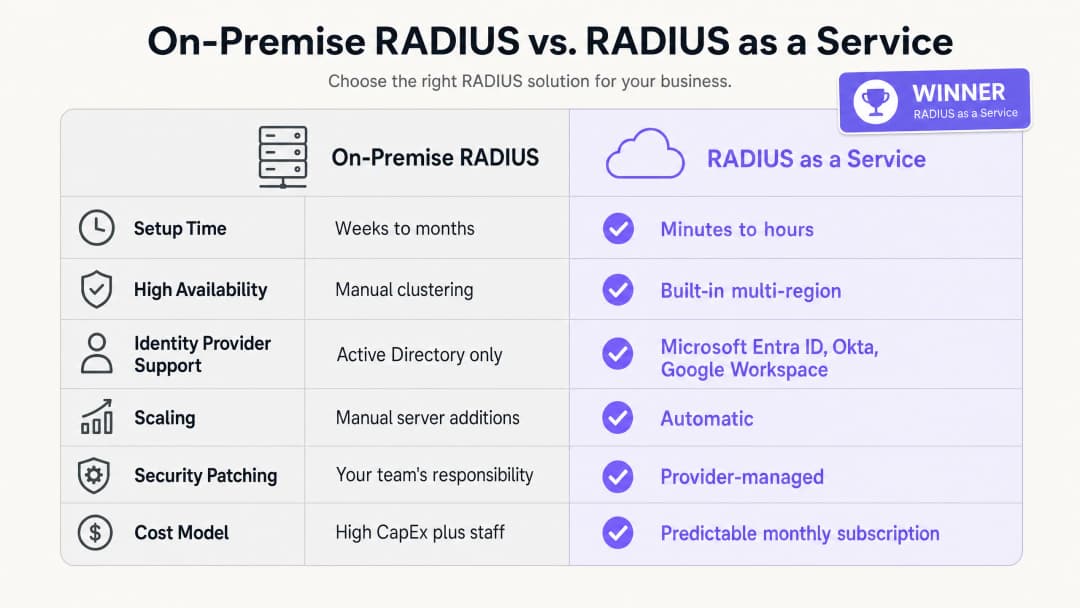
RADIUS-as-a-Service 的商業優勢建立在三大支柱之上:降低資本支出、減少營運開銷以及提升安全性。
在資本支出(CAPEX)方面,您完全省去了購買、授權和更新實體伺服器的成本。一個最基本的實用本地端 RADIUS 部署,為了達到高可用性,需要兩台伺服器、作業系統授權以及每三到五年一次的硬體更新。對於一個擁有 50 家飯店的集團來說,這將是一筆橫跨所有分店的龐大硬體投資。
在維運管理(OPEX)方面,您的工程團隊不再需要花費時間修補 Windows 伺服器、排查 FreeRADIUS 設定錯誤或管理實體基礎設施上的憑證更新。這些時間可以重新投入到安全性原則的工作中,從而直接提升您的安全性。
在安全性方面,轉向 EAP-TLS 和動態 VLAN 分配能顯著減少網路受攻擊面。憑證竊取是網路入侵的首要原因。從網路驗證流程中移除密碼,可以直接解決這一威脅。集中式稽核記錄有助於符合 PCI DSS v4.0 和 GDPR 規範,進而降低合規稽核的成本和複雜性。
對於管理 交通 樞紐或高流量場所的組織而言,從單一控制面板在所有地點實施一致的安全性原則,是一項顯而易見的營運提升。Purple 已在超過 80,000 個活躍場所中部署,並在 2024 年處理了 4.4 億次登入(Purple 內部數據,2024 年)。支援此規模的基礎設施在設計上即為雲端原生。
若要進一步了解 WiFi 分析和網路智慧如何與業務成果相結合,請參閱我們的 WiFi Analytics platform。
參考資料
[1] IEEE Standard for Local and metropolitan area networks - Port-Based Network Access Control. IEEE Std 802.1X-2020. [2] IETF. Remote Authentication Dial In User Service (RADIUS). RFC 2865. 1997. [3] IETF. The EAP-TLS Authentication Protocol. RFC 5216. 2008. [4] IronWiFi. Benefits of a Cloud RADIUS Server: Why Enterprises Are Moving Authentication Online. 二月 2026. [5] SecureW2. Cloud vs. On-Site RADIUS: Which is Better? 五月 2026. [6] Portnox. RADIUS as a Service. 2026. [7] PCI Security Standards Council. PCI DSS v4.0. 三月 2022. [8] Purple. 內部平台數據:4.4 億次登入,80,000+ 個場所。2024.
關鍵定義
RADIUS
遠端使用者撥入驗證服務 (Remote Authentication Dial-In User Service)。RFC 2865 中定義的一種網路通訊協定,為連接到網路服務的使用者提供集中式的驗證、授權和計費 (AAA) 管理。
IT 團隊使用 RADIUS 作為中央決策引擎,以驗證設備或使用者是否被允許進入企業 WiFi 網路。它介於存取點和身分識別提供者 (IdP) 之間。
802.1X
用於連接埠網路存取控制的 IEEE 標準。它為希望連線到 LAN 或 WLAN 的設備提供驗證機制,強制它們在取得 IP 位址之前進行驗證。
這是支援企業級 WiFi 安全的標準。如果沒有 802.1X,任何連接到 SSID 的設備都能獲取網路存取權。有了 802.1X,每個設備都必須先證明其身分。
EAP-TLS
可延伸驗證通訊協定 - 傳輸層安全。一種在 RFC 5216 中定義的驗證方法,要求用戶端裝置和 RADIUS 伺服器雙方皆出示數位憑證,提供無密碼的雙向驗證。
被視為企業級 WiFi 安全的黃金標準。憑證透過 MDM 部署至企業裝置。EAP-TLS 消除了解決網絡密碼遭竊和網路釣魚攻擊的風險。
PEAP
受保護的可延伸驗證通訊協定。一種 EAP 方法,在 TLS 工作階段中建立通道來進行使用者名稱和密碼的交換。由於依賴密碼,其安全性低於 EAP-TLS。
PEAP-MSCHAPv2 被廣泛部署於舊版環境中。IT 團隊應規劃將企業裝置移轉至 EAP-TLS,僅將 PEAP 用於非託管或 BYOD 裝置的備用方案。
動態 VLAN 指派
一種程序,由 RADIUS 伺服器根據使用者經驗證的身分和角色(而非其連接的 SSID),指示存取點將裝置放入哪一個虛擬局域網(Virtual LAN)。
對於多重角色環境中的網路分段至關重要。單一的「Staff」SSID 即可安全地將房務、接待和管理流量劃分到具有不同存取權限的不同 VLAN 中。
AAA
驗證(Authentication)、授權(Authorisation)與計費(Accounting)。RADIUS 伺服器執行的三項功能:驗證身分(驗證)、確定允許何種存取權限(授權),以及記錄工作階段資料以供稽核之用(計費)。
IT 團隊和稽核人員將 AAA 作為評估網路存取控制的框架。Cloud RADIUS 透過託管服務提供所有這三項功能。
WPA3-Enterprise
目前企業網路的 WiFi 安全標準,需要透過 RADIUS 伺服器進行 802.1X 驗證。它提供了比 WPA2-Enterprise 更強的加密強度,包括適用於高安全需求環境的 192 位元安全模式。
IT 經理應將 WPA3-Enterprise 配置為員工網路的最低安全標準。訪客網路可以使用 WPA2 或搭配 Captive Portal 的開放式驗證。
網絡存取控制 (NAC)
一種安全方法,對尋求存取網路資源的裝置執行策略,結合了端點安全評估、身分驗證和網路執行。
RADIUS 是 NAC 的基礎組成部分。Cloud RADIUS 將 NAC 擴展到分散式的多站點環境,而無需在每個位置部署地端基礎架構。
Captive Portal
公共存取網路的使用者在獲得網際網路存取權限之前,必須與之互動的網頁。通常用於訪客 WiFi 以收集同意聲明或顯示使用條款。
Captive Portal 處理未經驗證的訪客存取,而 802.1X 則處理經驗證的員工存取。這兩種機制在不同的 SSID 和 VLAN 上運作。
範例
一間擁有 200 間客房的飯店需要確保其房務、櫃台和管理部門的員工網路安全,同時將 Guest WiFi 完全隔離。他們目前在員工網路中使用共享的 PSK,且已兩年未曾變更。
部署與 Microsoft Entra ID 整合的 RADIUS-as-a-Service。設定 Cisco Meraki 存取點使用 WPA3 企業版搭配 802.1X。房務人員使用其 Entra ID 認證進行驗證;RADIUS 伺服器會讀取其目錄群組,並動態將其分配至 VLAN 10 (僅能存取房務系統)。櫃台人員分配至 VLAN 20 (物業管理系統存取)。管理人員分配至 VLAN 30 (更廣泛的存取)。Guest WiFi 則保留在具有 Captive Portal 的獨立 SSID 上,並隔離在 VLAN 40。當季節性員工離職時,其 Entra ID 帳戶會被停用,立即撤銷其在該物業所有存取點上的 WiFi 存取權限。
一家擁有 400 家分店的全國連鎖零售商需要確保其銷售點 (POS) 終端機符合 PCI-DSS 規範。他們目前在各分店的地端伺服器上管理 400 個獨立的 FreeRADIUS 執行個體,每個都需要單獨進行修補程式更新。
遷移至單一 RADIUS-as-a-Service 執行個體。設定所有 400 家分店的 HPE Aruba 存取點,使用 EAP-TLS 搭配透過 Microsoft Intune 推送的裝置憑證來驗證 POS 設備。雲端 RADIUS 伺服器會驗證憑證並將 POS 設備放入符合 PCI 規範的 VLAN (VLAN 30) 中,與所有其他網路流量隔離。店面員工使用透過 Okta 驗證的獨立 SSID,將其放入一般員工 VLAN (VLAN 20)。訪客網路上的顧客則隔離在 VLAN 40。安全小組可從單一儀表板管理所有原則。
練習題
Q1. 您的大學校園目前在 Windows Server 上使用 Microsoft NPS,透過 PEAP-MSCHAPv2 對學生進行驗證。該機構正在移轉至 Google Workspace,並希望在 12 個月內除役所有地端伺服器。對於 WiFi 驗證基礎架構,最安全且最具營運效率的架構變更是什麼?
提示:Microsoft NPS 原生不支援 Google Workspace。請思考有什麼可以同時取代伺服器和驗證方法。
查看標準答案
移轉至具有原生 Google Workspace 整合功能的 RADIUS-as-a-Service。雲端 RADIUS 服務透過 LDAP 或 OIDC 直接連接到 Google Workspace,從而消除對 Active Directory 或 NPS 的需求。同時,透過機構的 MDM 平台部署用戶端憑證,將託管的學生和員工裝置從 PEAP-MSCHAPv2 轉換為 EAP-TLS。這可以從驗證過程中移除密碼,並確保只有受託管、受信任的裝置才能存取員工和學生網路。移轉可以分階段進行:將雲端 RADIUS 與 NPS 並行部署,一次移轉一個 SSID,然後在所有裝置都使用新服務後將 NPS 除役。
Q2. 一個可容納 80,000 人的體育場需要為公司員工、票務終端、媒體記者和活動當天承包商提供安全的 WiFi。應如何使用雲端 RADIUS 配置網路,以便為每個群組實施適當的存取?
提示:考慮 RADIUS 如何處理授權,而不僅僅是驗證。每個群組都需要不同的存取權限。
查看標準答案
為所有驗證群組部署單一的 802.1X SSID。配置雲端 RADIUS 服務,根據身分識別提供者中的使用者角色使用動態 VLAN 分配。公司員工被分配到 VLAN 10,並可存取內部系統。透過裝置憑證 (EAP-TLS) 驗證的票務終端被放置在受限的 VLAN 20 中,僅能存取票務平台。媒體記者被分配到 VLAN 30,具有高頻寬的網際網路存取,但無法存取內部系統。活動當天的承包商被分配到 VLAN 40,僅具有受限的網際網路存取。另一個帶有 Captive Portal 的獨立開放 SSID 負責在 VLAN 50 上處理球迷和與會貴賓的存取,並與所有其他流量隔離。
Q3. 在一次安全性稽核中,發現貴組織的 FreeRADIUS 伺服器已有八個月未收到安全性修補程式。由於上一次更新導致了兩小時的驗證中斷,團隊一直不願意進行修補。移轉到 RADIUS-as-a-Service 如何同時解決安全性風險與營運風險?
提示:考慮託管服務模型中的責任分工,以及供應商如何在不中斷服務的情況下進行修補。
查看標準答案
RADIUS-as-a-Service 將 OS 修補和漏洞管理的責任轉移給供應商。供應商營運高可用性、多區域的叢集,使他們能夠逐步修補個別端點並進行更新,而不會造成驗證中斷。您的團隊不再需要安排維護時間視窗或承擔修補程式導致停機的風險。安全性風險得以消除,因為供應商會在漏洞披露時(通常在 CVE 廣泛公佈之前)對基礎架構進行修補。營運風險也得以消除,因為供應商的 SLA 保證了無論修補活動如何進行都能維持正常運作時間。您團隊的角色從基礎架構維護轉變為原則管理。
繼續閱讀本系列
將 RADIUS-as-a-Service 與雲端目錄(Azure AD 和 Google Workspace)整合
本技術參考指南詳細說明如何將 RADIUS-as-a-Service 與雲端目錄(Microsoft Entra ID 與 Google Workspace)整合,以進行企業級 WiFi 驗證。內容涵蓋從地端 NPS 到雲端原生 RADIUS 的架構轉變、憑證型 EAP-TLS 驗證的部署,以及在餐飲旅宿、零售和公共部門環境中維護無線存取安全的操作最佳實踐。對於已投資雲端身分識別的 IT 經理和網路架構師,本指南填補了目錄管理與實體網路安全之間的鴻溝。
如何使用 Cloud RADIUS 實作 802.1X 驗證
本技術參考指南提供了一個全面的架構,用於在分散式企業資產中實作 802.1X 驗證與 Cloud RADIUS。它詳細介紹了安全存取網路所需的架構、EAP 方法選擇、部署順序和風險緩釋策略,同時消除了本地基礎架構的營運開銷。
什麼是 Cloud RADIUS?RADIUS-as-a-Service 的完整指南
這份完整指南深入探討了 Cloud RADIUS (RADIUS-as-a-Service),詳細說明其架構、EAP 方法與導入策略。它為 IT 決策者提供了將地端伺服器遷移到可擴展、安全且合規的雲端驗證模型的實用指南。
對於您的特定設置有任何疑問嗎?
我們的團隊與超過 80,000 個場域的場域營運商、IT 經理和網路工程師合作。立即預約 20 分鐘的通話,我們將向您展示其他與您相似的用戶是如何解決此問題的。